

Solstice Songs

After mugging my way through a wonderful intimate spoken word night at Sprint Mill last year as part of the C-Art Open Studios, I’m delighted to say that I’ve thrown myself into running a follow-up event.
Solstice Songs will be held on midsummer’s eve in the amazing 18th century Sprint Mill near Burneside in Cumbria. I’ve gathered the estimable talents of some wonderful writers throughout the northwest and Scotland to read at the event, and you – yes, you – should come along and hear them do their thing.
I’m honoured to share the line-up. In alphabetical order, we have:
Edward Acland The owner and curator of Sprint Mill shares his startling, disarming and heartfelt reflections on people and place, distilling a lifetime of collection into magical focus.
BigCharlie Poet As well as hosting and running Lancaster’s Working Title night, BigCharlie Poet is a ferocious slam poet with word-perfect visions of life and love, all skewed nicely through a balance of wit and wonder.
Alan Bissett Fresh from having a street in his native Falkirk named after him, we’re thrilled to be joined by the multi-award-winning playwright, actor, poet, novelist, essayist and consummate performer Alan Bissett. I don’t know what he’s going to read, but whatever it is will be good.
Luke Brown Writing without exaggeration, I consider Luke to be a true heir to Roald Dahl. He is a superb storyteller of the macabre, bringing a host of weird and wonderful alter-egos to life in his darkly humorous tales.
Joy France The inexhaustible slam-winning poetry powerhouse that is Joy France joins us from Wigan with her witty and reflective take on life – life in the world, in the north, in the past, in the present, and in the weirder corners of her own wonderful mind. Here she is performing one of her signature poems, Hey Mrs B:
Harriet Fraser A multi-media poet of landscape, dreamscape, place and unusual word projects of all sorts: this summer she is poet in residence for a hay meadow, and one of Harriet’s most recent canvases was a herd of sheep.
Jonathan Humble Following the launch of his excellent debut collection My Camel’s Name Is Brian, the Tripe Poet Laureate™ brings his brilliant, laugh aloud ballads of tea cosies, leeks and rhubarb.
Kirstin Innes The multi-award-winning journalist, essayist, playwright and novelist brings her astonishing new novel Fishnet to Sprint Mill. Meticulously researched and brilliantly observed, Fishnet ducks sensationalism to explore the sex industry through the prism of a missing person.
Ann Wilson Fresh from the launch of her second collection Straight Bananas, the former South Lakes Poet Laureate and driving force behind spoken word night Verbalise delivers her unique blend of stand-up, song and rhyme.
…and me. Just me. (Sorry.)
All this wondrous wordsmithery comes for FREE, so bring a bottle, bring yourself, and shake your rump. Let’s get pagan.
Solstice Songs | Sunday 21st June | 7pm | Sprint Mill near Burneside, Cumbria
Take Me Back To Manchester

I’m currently wrapping up another film project before I get back to my writing. A couple of months ago, my friend Dom Bush and I were commissioned to make a film called Take Me Back To Manchester, based on the extraordinary true story of a lion tamer called Lorenzo Lawrence, an elephant called Maharajah, a cartoonist called Oliver East and a 200-mile walk across the country.
It was an incredibly tight turnaround – we had less than six weeks from commission to completion, and only three weeks from the shoot to the deadline. Dom shot the film, using drones and steadicam, and I cut it. I used the parallax effect for the first time to bring some of our amazing archive images to life. Technically we co-directed the film, but the story was so rich, the contributors so engaging, and the archive material so fascinating, that it pretty much directed itself.
Take Me Back To Manchester has now been shown at Toronto Comic Art Festival, and a shorter version will be screened on a loop in Manchester Museum.
Roll up, ladies and gentlemen, roll up…
*
This is my last film project for a while. I’ve really enjoyed working on this piece and To The End We Will Go, but I’m more than ready to get back to the Hollows. I’ve been maintaining my erratic early morning writing sessions, even if that means grabbing five minutes before Dora explodes downstairs demanding her breakfast. Those snatched sentences and stolen paragraphs might only give the book twenty words, fifty words, a hundred words a time, which feels painfully meagre in isolation, but they add up over weeks and months. I’m up to about 66,000 words, for all the difference it makes, and happy with where it’s going. I think again of how little I achieved last year, and feel a grim urge to push on and make up for so much wasted time.
To The End We Will Go
 *
*
After almost two years of work, I have finished making a film about hay meadows. This has been a huge project for me, both professionally and personally, and it has changed the way I think about the world.
When I come to the end of a project, I usually have a stronger understanding of the subject than when I began. In this case, while my knowledge has increased hugely, I’m left with far more questions than answers. In 2013, I was commissioned by Cumbria Wildlife Trust to make a ‘democratic’ film about meadows, tasked with balancing opposing points of view to create a space for discussion and reflection. Within that brief, I started the project with a sense that hay meadows were something like a set of scales, and if only the interested parties could work together better, then an equilibrium could be achieved between food production on one side, and sustainability on the other. I no longer think that’s possible; and I now think of meadows more like a jigsaw, being made by many people all at once, only everyone has a different picture on the box. Every time you place one piece down, another changes. They are mosaics of demand, shifting with the seasons. All the fundamental issues facing agriculture in Britain can be measured in hay meadows: growth, demand, food, want, waste, profit, biodiversity, sustainability, heritage, science, tradition.
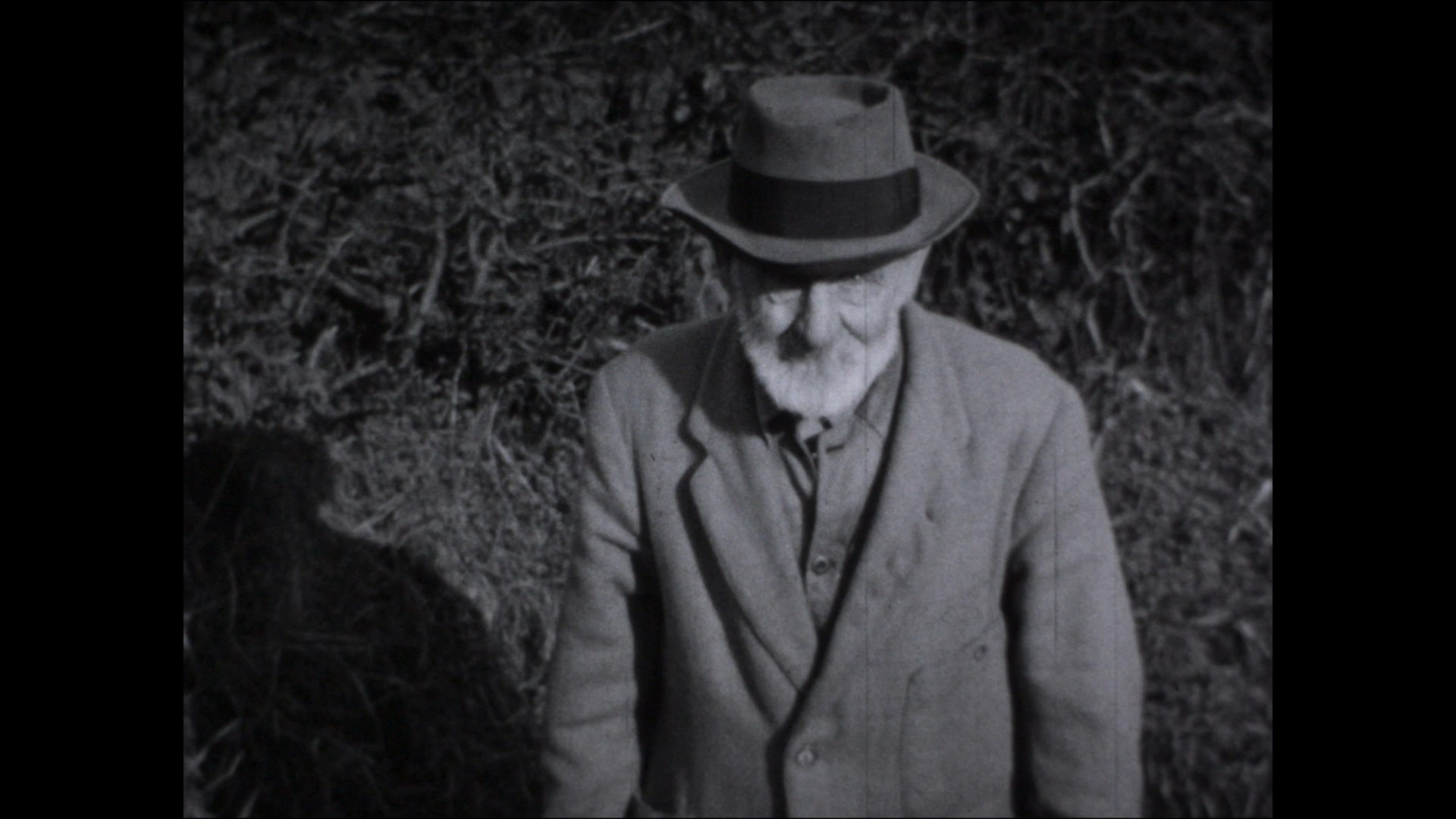
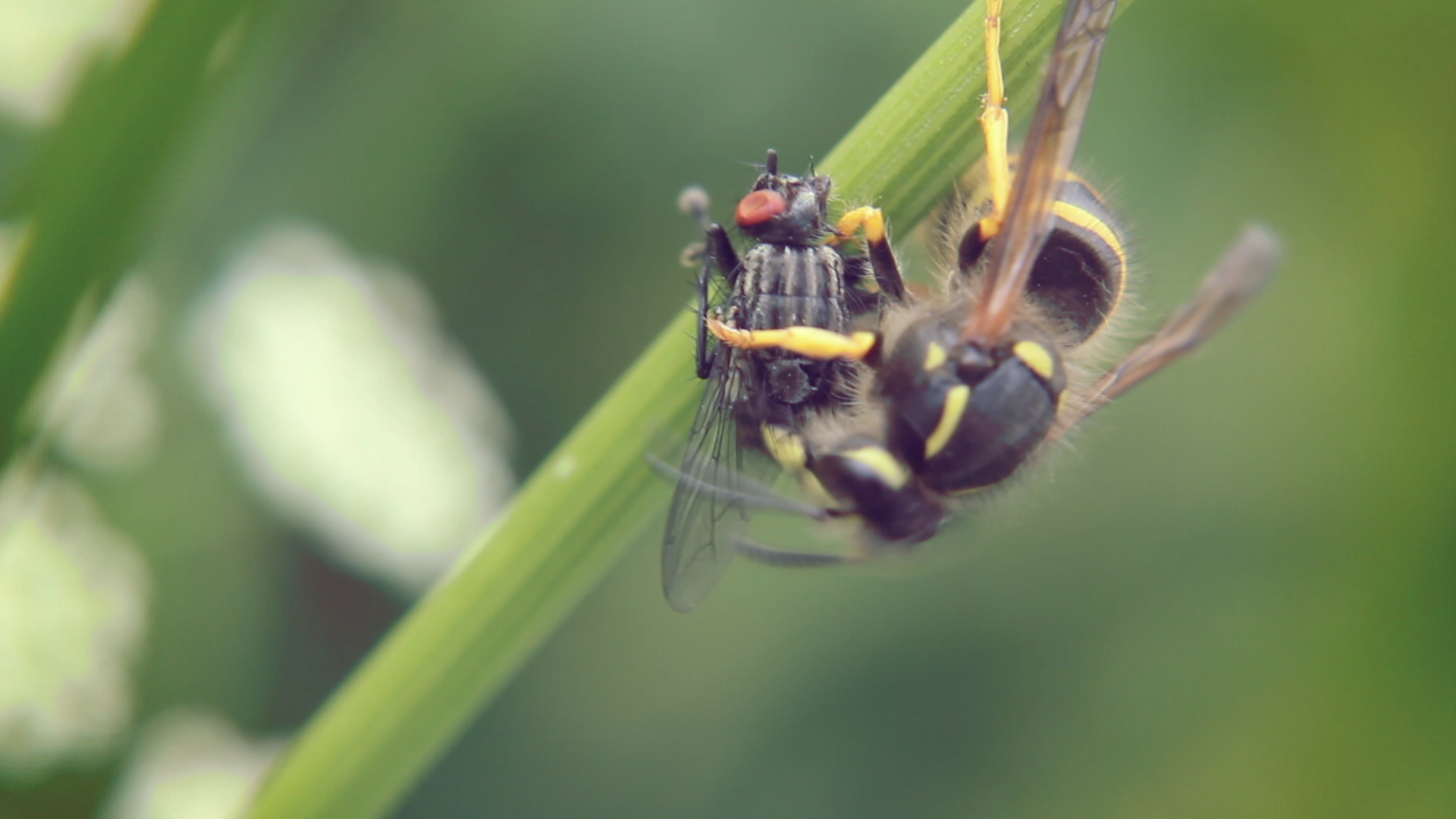
Over the course of the shoot, I talked with school kids, beekeepers, walkers, landowners, farmers, conservationists and a 97-year-old farm labourer who worked in meadows between the World Wars. I left a camera in a barn outside Kirkby Stephen to record a five-month time lapse of a meadow in growth. I learned more about slow motion video, and about macro photography. After ten months of searching, I tracked down an astonishing piece of archive film footage from the 1930s. Halfway through it, there’s a shot of an old tramp simply standing in a lane, staring at the camera. It’s haunted me ever since:
 *
*
All this was happening in the build-up to the Scottish referendum. Through the process of making this film, the two became inextricably linked around my realisation that if we are to survive – as a species – then it’s by being smaller. We need to reduce. To be less. Less ambitious, less hungry, less wasteful, less oblivious. We will survive in communities and cooperatives, not corporations. This was one of the many reasons I supported a Yes vote in Scotland. For me, the referendum went a long, long way beyond some petty nationalism. It would have swung a sword through the Gordian Knot of a corrupt, venal Britain. I cried my eyes out on the morning it was No. Being small and being nationalistic are not the same thing. We’ll be better as bees in hives, sharing the meadows. (This analogy does not, for me, extend as far as having Queens.)
 *
*
Anyway.
I found out this morning that To The End We Will Go has been selected for the CMAC Rural Film Festival. This will be my first ever festival screening, and I’m really pleased. It’s quietly astonishing to think about people on the other side of the world watching my wee film and spending a few moments in Cumbria. The last shot is a drift of swifts exploding past my window against a purple dusk. I love the thought that an audience in Minnesota will look out of the same window and see African swifts in a Cumbrian sky.
Red fur
The trail led through the house and up the stairs. Moss, feathers, tweaks of red fur. I peeked around the bedroom door.
She lay in the bed, head in her bloodstained hands. She’d been crying. The carcass of something, a pigeon or a dove, lay dismembered on the floor.
“Oh sweetheart,” I said, “not again.”
Trying to enjoy some living
Busy busy busy busy busy. This is what I am. I’m finalising my long-running hay meadows film for Cumbria Wildlife Trust, and I’ve just started work on another piece, a film I’m co-directing with my friend Dom Bush about an 1870s animal handler who bought an elephant at auction in Edinburgh, then walked it to Manchester; and the fantastic graphic novelist Oliver East who is retreading the same journey to write a new book. Perfectly normal stuff.
I’m still plugging away with my writing in the mornings, though it’s been slightly more erratic since the clocks went forward. I’ve struggled to catch up on that hour, but my body clock is finally starting to fall back into line. I’m making cautiously good progress. I still haven’t reached that tipping point I crave in my writing, but my new draft of The Hollows is up to about 55,000 words, which I reckon is pretty good going for two months of part-time work. I think I’m about halfway there. It’s starting to get exciting.
So all that, plus college, makes for the busy busy busy. Despite it all, we decided to flee for a couple of nights camping in Buttermere this week, and it was a glorious decision. We only went for two nights, but the lakes, the hills, were entirely perfect. Warm sun, tree swings, cold beers, cooking on a campfire. The forests around Loweswater and Buttermere resounded with woodpeckers. Each evening, we watched the farmer drive his eight cows past the campsite, through the car park, and up to the barns for milking.
The happiest part of the trip was seeing Dora playing outdoors. On a forest path or a pebble beach, her relentless curiosity has an infinite playground of climbing, counting, songs and stories. She tells herself stories, makes nests of magic twigs, decides where the treasure is hidden, then goes to find it.
We chatted to the farmer on our last morning as the tops of the mountains turned amber in sunrise. It’s been good to get away for a bit, we said. And Dora’s had a great time, too.
“Aye,” he said. “Well that’s what it’s all about. Trying to enjoy some living.”
On our last afternoon, we scratched letters to the universe on pebbles and skimmed them into Crummock Water. I hope the universe will write back.
Memory
Memory is the major theme of my current work-in-progress, The Hollows – how memory moves, evolves, adapts to be what it wants to be. Writer friend Kirsty Logan posted this the other day, and it’s too good not to share it further. I love how we tend to think of memories as the bricks that make up our experience, when really they’re no better than quicksand. In which case, what are we truly made of?
My life in… Fiction
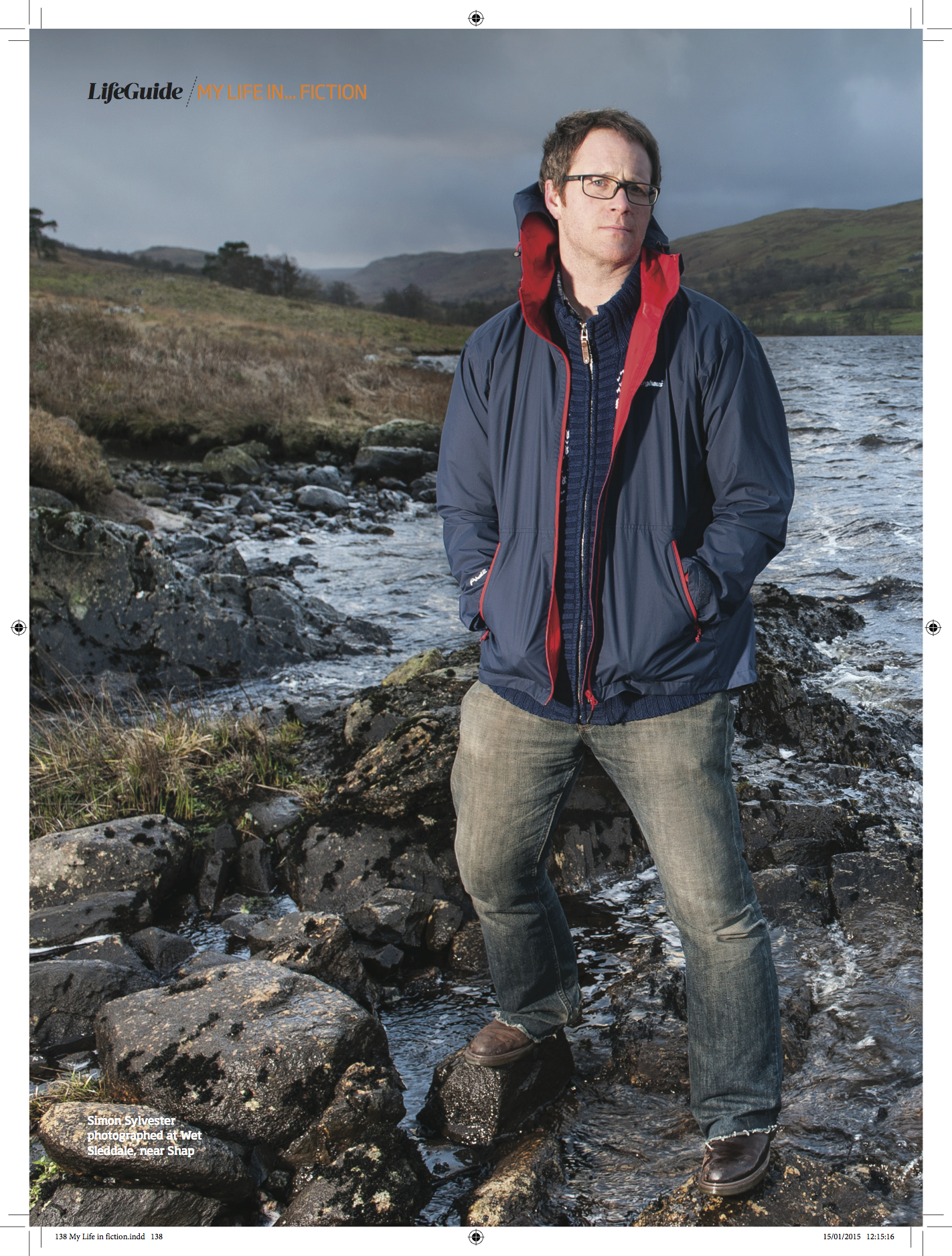
Here’s a nice interview I did with Sue Allan of Cumbria Life last year. It was very weird going out for my first proper photo shoot, standing on the shores of Wet Sleddale, in sight of the farm where Withnail & I was shot, clouds luminous with light, icy winds sweeping across Shap Fell. I even shaved and everything.

Terry Pratchett
I have an abominable memory – almost nothing has survived from before the time I was ten or so. But Terry Pratchett is there, in his black broad-brimmed hat and his carnivorous plants in the greenhouse. He’s absolutely present throughout my adolescence and my early twenties, when I devoured his Discworld books over and over again. He’s there in the first time I read Small Gods, and didn’t get it at all, although it didn’t matter because it was such a good story; and he’s there in the third time I read it, and got it completely. I haven’t read one of his books for several years, now, but they’re still there – on my shelf for when I need them. He taught me irreverence, fantasy, imagination, justice. He created a world I could lose myself in for hours at a time. He was ferocious, and he was a wonder.
When I was about fourteen, I went on a month-long exchange trip to France. I’d put about dozen books to one side to take with me, but forgot to pack them. The only book I had was Pratchett’s Soul Music, which I read cover to cover at least a dozen times over the next weeks, starting it again as soon as I’d finished it. It was already a dogeared brick before the roof leaked in a thunderstorm and glued it into pulp – but I still couldn’t throw it out. I don’t know where it is, now. It’s the only Pratchett I don’t have – except for Sir Terry himself, who has died after a long and vocal battle with Alzheimer’s. I’m sad, and I will miss him, but I also see him peeking out from Death’s cloak, wry grin on his face, pen in one hand and paper in the other. Terry Pratchett lives on in the Discworld – in the Luggage and the Librarian – in Ridcully and Rincewind, in Granny Weatherwax and Nanny Ogg, in Vetinari and Vimes – in Death – and in us.
Verbalise at the Brewery
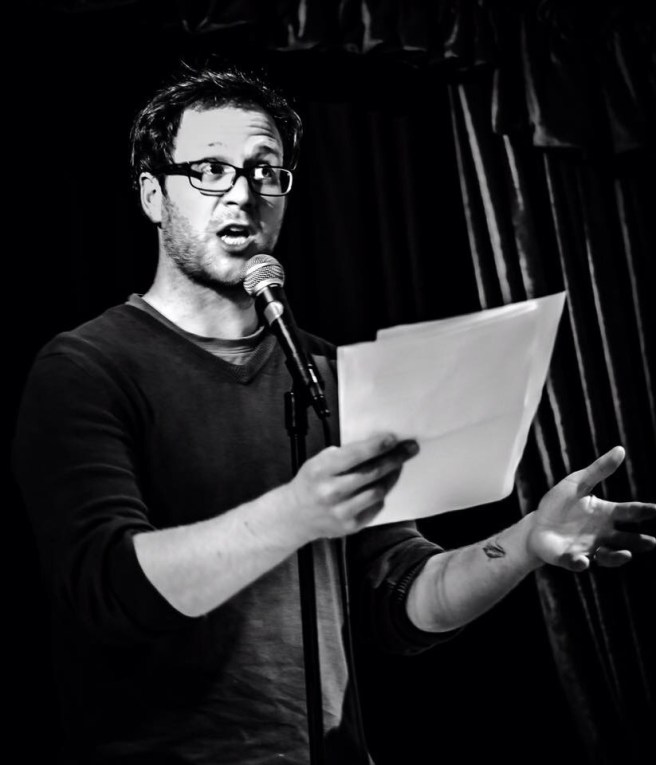
Last night was my third reading in a week, returning to Verbalise in the Brewery Arts Centre in Kendal. It was a quieter night, after a couple of busy ones, but I enjoyed it. I read from The Hollows for the first time – a draft piece about exploring something like a haunted house, which was a lot of fun to read. I also brought out a couple of older pieces for the first time. Books Like Grains Of Sand and Tank Trap are both flash stories in Marrow. I’ve never read them before, as I’ve always thought they were too weird, too abstract for performance. But after what happened with Dora and The Sea Tiger this week, I also wanted to draw a line in the sand for myself – to remember that magic and wonder is why I write. I’m not going to be scared of reading those pieces anymore. And in the end, I think they went better than I’d dared to hope. I’ve felt just slightly off the boil with my last few readings, but I enjoyed last night a lot. Dora’s given me courage.
I also sold three copies of Marrow, which was lovely – I now have fewer than ten copies for sale, so if you want one, get amongst it while you can.
Next gig is at the end of the month in Lancaster – Working Title in The Three Mariners – be great to see some of you hobbitses there.
 Simon Sylvester