Flow

On a good writing day, I write 2,000 words. When I’m working well, that’s fairly consistent. Whether it’s 1,800 or 2,500, I always seem to end up in the ballpark of 2,000. In terms of quantity alone, a month of 2,000 word days is a 60,000 word manuscript (which is the philosophy of NaNoWriMo, of course).

Obviously there’s an awful lot more to it than that – 2,000 a day doesn’t include all the back-peddling, redrafting, tea, editing, notes, research, cursing, blogging (!), procrastination and rewriting – and it doesn’t include the bad days, when it’s a struggle to carve out 400 words. I have plenty of bad days as well, especially at the start of a new project, when I’m still feeling out my way, finding the right path. For context, I don’t believe that the key to good writing is simply writing and writing and writing until something mystic clicks and the good stuff comes pouring out – check out J. Robert Lennon’s ‘ass-in-the-chair canard’.

When I started writing The Visitors, it was completely plotted out. There were about thirty chapters, and each chapter had a paragraph, or maybe just a line, detailing what would happen. That plan became redundant within weeks, if not days. By the time I was even a quarter of the way through, my chief antagonist had switched to someone completely new, and the plot expanded hugely – the final draft has around sixty chapters. But the biggest changes lay in how the characters escaped me. As I wrote them – as I spent more time with them, and came to know them better – I realised they were evolving. They were doing things I hadn’t expected, but those things became inevitable and essential as their personalities developed. Their autonomy dictated their story. Once that happened, and they were set upon a path of their own making, the manuscript generated a momentum that I could not control. In the final two or three months, I’d regularly write 4,000 or 5,000 words in a session. On the last day of writing, I wrote 11,000 words in 14 hours. That surge, that flow, was intoxicating. I drowned in my characters, drowned in the island I’d created. The story became a gyre, and I was tumbled in the centre.

I’m now about 16,000 words into The Hollows. On each of my last four writing sessions, I’ve cut around 1,000 words, and written around new 1,000 words. The overall count isn’t changing much, but I think I’m making progress. I’ve learned a number of things along the way, about writing, and about myself. Because I had to go through such an excruciating redraft with The Visitors, I originally tried to plot out The Hollows as tightly as I could. Each chapter had multiple paragraphs and notes, with detailed ideas about the how the story would unfold. It was comprehensive. I was decided: this time round, the novel was going to write itself.

I should have known better. I raced off to a strong start, writing the first 10,000 words in three days. Then I applied to the Northern Writers’ Awards for funding towards a research trip. As part of the application, I had to include a synopsis of The Hollows. Seeing the plot condensed into a single page, I realised at once that the story was too tight. It had no room to breathe – I’d strangled it with structure. It was far too dense. I ditched all my planning and rewrote the synopsis for the purest story I wanted to tell – about a man who loses his memories, and the woman who goes to find them – and sent it off. I haven’t heard back yet, but regardless of how my application turns out, the process of writing a new synopsis was revelatory, and for that alone I’m grateful.

I want to start The Hollows right. Unravelling some of my first draft has been heavy going, but it’s important to me to know I’m on a better path. I’m getting there. I’m starting to meet my characters. I’d forgotten that I didn’t always know Flora, and Izzy, and Ailsa, and John – it took time to find out who they were. I’d forgotten, in the dizzying exhilaration of finishing The Visitors, that it wasn’t always so easy to write. The flow comes only after all the hard graft has been done.

On Friday, I finished my novella The Year of the Whale. That’s been five years in the making, including sessions when I’d struggle to chip away at 200 rotten words. But on Thursday, the day before my deadline, I soared through 5,000 words with joy in my heart. That was the flow, and I’d forgotten how it felt. I’d forgotten that I could feel so engrossed in my stories – that I could drown. That’s where I want to get to with The Hollows. That’s how I want to finish, whether it’s in six months or one year or two years’ time. But I know, now, that all the graft comes first.

My friend Ali Shaw believes you can’t know if a novel will go all the way until you hit 20,000 words. Author Matt Haig feels the same, but his mark is 40,000. Word counts only matter for the person counting. Like climbing grades, they measure nothing but an individual’s own sense of progress. They are a poor measure, perhaps, but they are all I have to mark my way: yan, tan, tethera.

The Hollows has been stuck on 16,000 words for weeks, despite long, hard days of work. I haven’t enjoyed that. I crave that sense of flow, when everything makes perfect sense. When I had that moment in The Visitors, I described it as a ‘glittering open highway’. I suspect I’m still a long way off reaching that highway in The Hollows, but it has truly settled me, on completing The Year of the Whale, to remember that the flow comes from the writing – not from the writer. From the story, and not the storyteller. For all the times I beat myself up about not working hard enough, not writing fast enough, not doing more – finishing that novella has been a gift. It has helped me remember why I write. I write to drown. To drown, I need the gyre. To make the gyre, first I have to fill an ocean.


The Year of the Whale

Screen Shot 2014-05-24 at 15.53.44

Last night, with slightly more than an hour to go before the deadline of the MMU Novella Competition, I finally finished my novella The Year of the Whale. The image above is a randomised cloud of the most common words in the manuscript, which is a really satisfying way to look back on what I’ve made.

I started writing it in 2009, and it has spent entire years untouched, waiting for attention in the dusty recesses of my hard drive. It’s written in first person with a very particular voice, and it’s been strange to return to it so sporadically over the years, and take up the mantle of that voice again. I’ve wanted to finish it for a long time – it was one of my New Year’s resolutions, no less – and I’m thankful to the competition for giving me the spark to get it done. I don’t expect anything to come of it – that way madness lies – but I’m thrilled to have wrapped it up last.

The Year of the Whale is the story of a man called Henry Cowx. He is a fisherman and walking guide in Morecambe Bay, riddled with arthritis and wracked with guilt. His story explores that guilt, and gives some quiet thought to what it means to remember. It’s about walking and place and ghosts and folk tales, and our connections with the land. It’s at the heart of my obsession with threshold spaces. It’s a meditative, elegiac story, and a long way from where I’d like to develop my work – but Henry has never been far from my mind, and I’m glad to give him closure at last.

I discussed some of the genesis of the story in my Thievery post for Kirsty Logan.

I’m working my way through some film jobs at the moment, but it’s almost time to get back into The Hollows.

Thievery

I’m honoured and delighted to have contributed a post to Kirsty Logan‘s long-running series of story inspirations, Thievery. It’s entirely possible to drown yourself in the wealth of stories Kirsty has curated, and I thoroughly recommend you do.

For my post, I confessed about a novel I abandoned at 50,000 words, because I no longer knew what it was about. One day, it will be reborn as The Year Of The Whale.

Here’s the story so far: Northern Lights / The Year Of The Whale.

Playing the clown

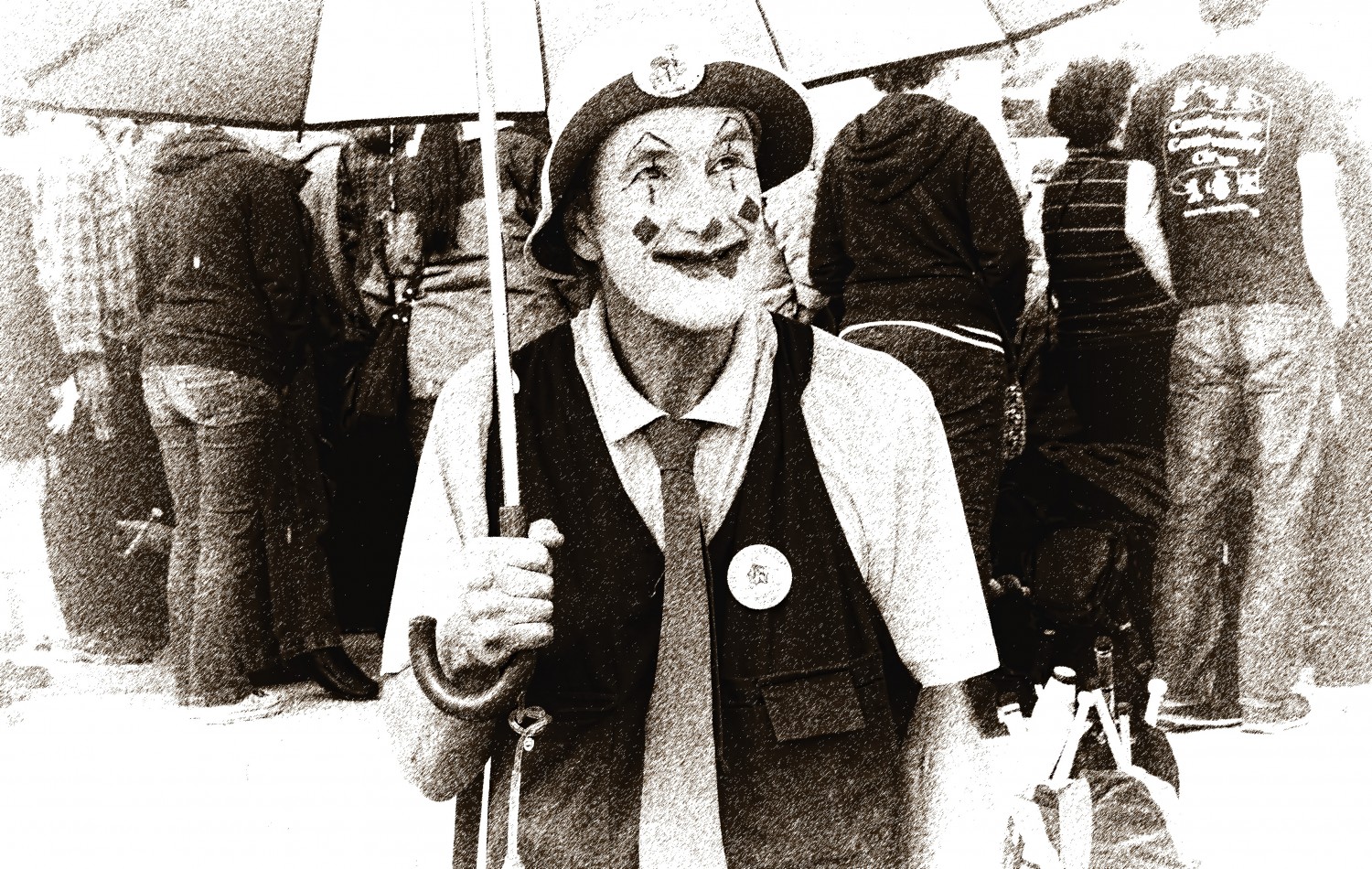
Last month, at Dreamfired, I saw storyteller Fred Versonnen perform the amazing Elephant Story. The next morning, I attended his clowning workshop in Arnside. This had almost nothing to do with the stereotypical idea of clowning – no silly noses, no silly shoes – and was essentially a 101 on delivery, performance and body language.

Fred warned us at the start of the session that it might take us to some uncomfortable places. I didn’t believe him, but he was right. It’s taken me this entire month to process some of the things that happened in that class. I’m not sure I’ll ever totally get to grips with it, but at the same time, I no longer think I need to. I just wanted to record a few thoughts on what clowning means to me.

I’m not going to talk about the specific activities Fred led us through. They were plentiful, varied, invigorating, intense and brilliantly useful, but they will mean different things to each person who attended, and I don’t feel the need to dissect the actual workshop. I want to talk about what I learned.

I learned that I’m frightened of embarrassment. Most of us are, probably. During the workshop, we performed tasks specifically designed to undermine dignity and strip away the topmost layers of self-respect. I found myself trying to rationalise the embarrassment by imposing a narrative upon it, but every time, Fred forced me to confront it.

‘For a clown, embarrassment is a gift,’ he said.

In this way, I learned that clowns are truly fearless.

I also learned to wait.

In a world consumed with noise and signals, the clown is silent. She waits, absorbing everything, and then she waits some more, until the wait itself becomes excruciating – until the pause itself becomes the embarrassment – and then she responds. In that pause, the clown is naked. Every part of her is laid open for the world to see. The clown waits long enough for the audience to connect, to project their own feelings onto the situation, to drown in empathy, to cringe in anticipation. Every part of them is laid wide open. This is the tragedy of the clown, and the triumph. It has nothing to do with face paint or comedy trousers. Laurel and Hardy are clowns, and Pennywise is not.

I couldn’t live that way, but I’m trying to bring some of it into in my own readings. At the Flashtag story slam, I made myself pause, and wait, then wait some more. I took a stupid hat onstage for my final story, and I forced myself to wear it. I tried to share anticipation of what was coming next with the audience. It was, without a doubt, the happiest I’ve ever been with my performance – the best I’ve ever read my stories. For everything I learned, I’m not sure I’ll ever know how to apply it properly. But I think I understand, now, that not knowing is itself part of clowning. It is Zen – pure action, without thought. I think too much.

At the start of this post, I said that the workshop had nothing to do with silly noses. That isn’t entirely true. At the very start of the session, as people were still arriving, we gathered in the kitchen to wait. Fred began to ransack the drawers, looking for props to use in the workshop. He found an orange ping pong ball. In a single, fluid motion, he spun to face me, bringing the ball to his nose, and he grinned. Just as quickly, he replaced the ball and closed the drawer. But in that second, or half a second, he’d become a clown. His face changed, his body changed – with the sheer, magnificent, wondrous joy of finding a ping pong ball in a kitchen drawer.

I don’t think I’ll ever be able to articulate what happened in that workshop. I don’t need to articulate it, of course, but I want to; and that is why I will never be a true clown. A clown wouldn’t need to analyse it, because they wouldn’t be scared of it. A clown would simply shrug, smile, and turn to embrace the vastness of this mad, sad, glorious thing that we call life.

old-clown-day

The Sprint Mill Sessions

I love this: my friend Dom has been filming the grassroots Cumbrian folk scene. Last summer he gathered dozens of people for a campfire session at Sprint Mill, and this was the result – young musicians, sharing their songs by firelight. The sessions so far can be found right here, but I’ll leave you with Paddy Rogan and The Way You Used To Do…

Islands

Islands are everything. Each of us lives on an island, and moves between them constantly. Your island might be called London, or Northumberland, or Withington. Or it might called the office, the supermarket, the bus. For a little while, your island might be as big as a cinema screen, and the population is the audience around you. Sometimes, it’s an island of three – my wife, and my daughter and me, drinking tea by the stove. Sometimes it’s an island of one, contained within the covers of a book. You know the shores of your island entirely, and you look beyond them often. All of life is an archipelago.

3b4b3d5ad01a137ec91e47af65b190fa

Coffin Routes

A couple of months ago, I posted about the Drowned Villages Poetry Competition. There are flooded villages in Cumbria, Gwynned and Lanarkshire; the competition was open to poets within those library regions, working with that theme. The top prize was having your poem soundtracked by Mogwai. I’m very guarded about my poetry, but Mogwai are one of my favourite ever bands and creators of my all-time favourite album, and so I entered the contest.

Rounding up what’s been an astonishing month for me, I’m both delighted and devastated to reveal that I won the regional contest for Cumbria. I’m absolutely elated that the judges enjoyed my work. I’m still brewing, awestruck, on the momentous thought that Liz Lochhead, Ian McMillan and Nicky Wire have read my poem. But I’m also utterly gutted that having come so close, top prize went to the contestant from North Lanarkshire.

I feel bad even writing that. The first place piece, Never Come Home, is a really striking poem, and I’m sincerely happy for winning writer Catherine Baird. I didn’t expect to feature in the competition at all, so taking a place as runner-up is excruciatingly bittersweet. Having Mogwai do something with my work would have been astonishing – I can’t even frame the shape of it in my mind. I can’t articulate the joy I would have felt. Coming so close has turned me upside-down. I’m genuinely thrilled for Catherine Baird, and delighted with my own poem doing so well, but this one hurts. So near, and yet so far.

I know this sounds churlish. I don’t mean it to. But I discovered Come On Die Young in 1999, and Mogwai have soundtracked the last fifteen years of my life. Without exaggeration, Mogwai’s music has accompanied at least half of my entire writing output. I feel ecstatic to have come so close, and I feel heartbroken to have come so close.

For Facebook users, here’s the winning poem by Catherine Baird. My heartfelt congratulations to Catherine, and I can’t wait to hear the finished song. Like all of Mogwai’s work, it will be extraordinary.

When I was writing the poem, I played Hungry Face from Les Revenants on repeat in the background, hour after hour. I’m listening to Come On Die Young as I write this blog post. May Nothing But Happiness Come Through Your Door is playing. It’s the pivotal point in the album. Next comes the calm before the storm of Oh! How The Dogs Stack Up, and then the astonishing, burning, towering trio of Ex-Cowboy, Chocky and Christmas Steps. I will never stop listening to this album – or the others – the otherworldly Rock Action, the ferocious Happy Songs For Happy People, the dreamworld EP+6, the snarling Young Team, the smouldering Les Revenants, the muscular Hardcore Will Never Die, the reflective Hawk Is Howling, the utter majesty of Government Commissions, the blistering uppercut of Rave Tapes.

I will never stop listening to Mogwai, and I will never, ever stop wondering what if…

What if.

Here’s my poem.

Drowned Village screenshot