‘Wino time’ is Beatnik slang for ‘Drunk & Disorderly’. I haven’t been arrested, but I am going on holiday for a couple of weeks, and I plan on drinking quite a lot of wine, so you never know. I’m taking books, notebooks and pens. See you in a couple of weeks, and thanks to everyone who’s stopped by in the first few months since I started this blog.
-
Last night I read two stories at the excellent Spotlight Club in Lancaster. Perhaps unsurprisingly, given the heat, it was a fairly sparse audience of only twenty people, but the wealth of talent was inspiring. I’d booked one of the open mic slots that open the show. The first two performers were Edward Fahey, reading from his novel The Mourning After, and poet Simon Hart a.k.a Big Charlie Poet. I was on third, and read two new short stories – one about home cooking gone wrong, and one about living in an umbrella. I’m pleased to say they went down fairly well. As ever, I felt wretched with nerves. When I’m reading live, I can feel my pulse pounding in my stomach, beating so violently that I’m certain people will notice – but then, when I’m settled, I start to enjoy the reading, to relax into the story and to remember why I wrote it in the first place. Reading aloud is engrained in my writing workflow. When I’m writing, I constantly read my work aloud, lips moving nonstop, speaking and repeating the phrases, looking for the way the words flow best, seeking out an organic rhythm to the story. It’s thrilling to take that back to a stage and a microphone. I’ll never be as good as performers like Alan Bissett, but I’m starting, at last, to really enjoy reading live.
Back to Spotlight: the open mic slots were followed by ‘ethnomusicologist of the imagination’ Deep Cabaret. He conjured incredible sounds from an apparently homemade instrument of wood and wire wrapped around a tin can (Steve Lewis, the man behind the music, has since been in touch to reveal that it’s not a DIY contraption, but a Delta Wedge, and manufactured right here – although it is based on the homemade instruments of early Bluesmen). With this extraordinary device, Deep Cabaret explored the music of a fictional world based on the fantastical fictions of Jorge Luis Borges. It was a truly original and engrossing performance.
Rosa Lucy Rogers followed with a series of haunting, abstract poems exploring emotional and physical space. Then came multi-slam-winning performance poet Trevor Meaney. He kicked off with a piece about Chris Huhne and Vicky Pryce entitled ‘Baby you can drive my car’, which gives you an idea about his work; excellent and very funny. Short story writer Scott Hammell gave us a dying man’s last moments, before veteran punk-poet Nick O’Neill delivered his tight, intense rhymes, taking on big themes with disarming simplicity.
The night was finished by acoustic guitarist and singer-songwriter David Kelly. There are some guitarists who seem in total mastery of their instrument, knowing exactly how it works, never out of control for even a moment – David was not one of those guitarists. He was the sort where the guitar seems to play him, using him as a fulcrum, his body all angles and awkwardness, legs twisted against one another, tapping out mad rhythms, shoulders hunched, head down. It was brilliant. His voice had a raw, urgent quality, and his songs were a little James Yorkston, a little Conor Oberst, all cracked and lo-fi, thrilling and real. I’ll definitely be keeping an ear out for more of his music. I can’t find a website for him, but he looks like this:

As we made to leave, the organisers asked if I’d come back to read again in September. Spotlight has been going for 17 years, and September will be their 200th show. I’m honoured to have been asked, and I gratefully accepted the invitation. I’ll have a 10-minute slot, so I can try a slightly longer story – but I’ll definitely be reading a variety of pieces again, too. Hopefully my DIY flash fiction collection Marrow will be ready by then. I’m delighted to have been invited back, and it was a great way to finish the show.
On the streets outside, Lancaster felt like London, the streets buzzing with people. We walked back to the car through one of the glorious Mediterranean nights this heatwave has delivered: warm, soft breezes, and dim bands of blue to the west.
-

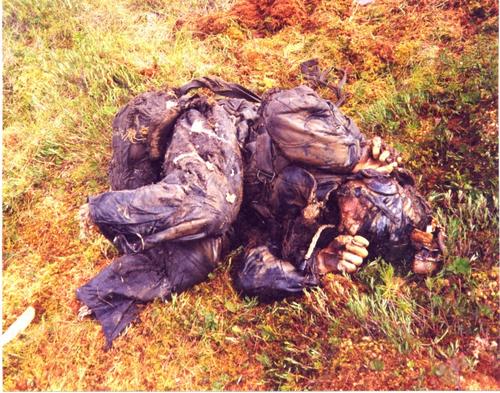
After the bog boats, here’s a bog body from WWII. This Soviet pilot was shot down at the age of 22. Boris Aleksandrovich Lazarev tried to escape from his Hurricane, but crash landed in a bog. The impact seems to have severed his feet, but the peat preserved him almost perfectly for over half a century. He has now been buried in a cemetry in the Karelian Republic in western Russia.
-
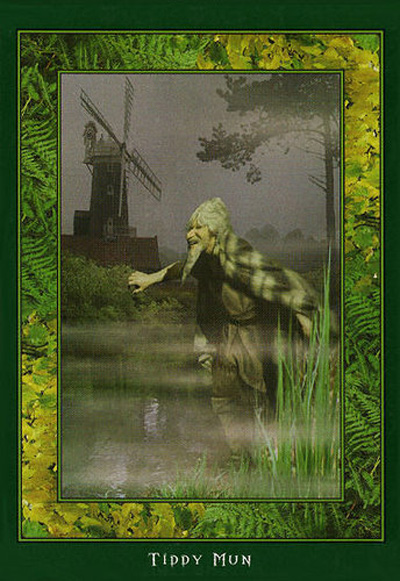
My reading lately has brought me to the Tiddy Mun. He’s a grumpy but rather sad spirit of the fenlands. There’s something very ancient and disconnected about him, as though he’s been left behind, and doesn’t entirely know why. People were actually quite fond of him, by all accounts, in the same way they’re fond of elderly and slightly addled relatives they see only every other Christmas.
Anyway. Tiddy Mun can summon water, mist and fevers from the marshes. He’s very much at home in the bogs, and he was incandescent about the draining of the fens by the Dutch. In his rage, he conjured pestilential swamp airs onto all Fenmen, and didn’t stop until everyone said they were sorry.
He sounds anachronistic even in the 1890s:
“He dwelt deep down in the green water holes, and came out at evenings when the mists rose. Then he came creeping out in the darklings, limppelty lobelty, like a dearie wee old granter, all matted and tangled, a long grey gown so that they could hardly see him in the dusk, but they could hear him whistling like the wind and laughing like a peewit. He was not wicked like the rest, but he was eerie enough, though the times were when he helped them. For on wet seasons when the water rose to their doorsteps, the whole family would go out together and shivering in the darkness they would call:
‘Tiddy Mun wi’out a name,
Tha watter thruff!’They would call it till they heard a cry like a peewit across the marsh, and they’d go home. And next morning the waters would be down.”
I feel quite sorry for the Tiddy Mun. He seems lonely and lost and utterly out of place, but I think he might have a role to play in the new novel. I especially like the idea that he isn’t “wicked like the rest”…
-

Here’s another gallery of awesome threshold spaces – thanks to Iain Maloney for pointing this one out to me. This is Hashima Island in Japan, also known as Battleship Island. It was used as a base for extracting and processing coal from the sea bed, and for housing the miners. The Mitsubishi corporation owned the island for almost a century, but the mines became unprofitable as coal was increasingly superseded by petroleum. Mitsubishi abandoned the place in 1974. Since then, the concrete has crumbled, the balconies have fallen from the buildings and plants have erupted in the courtyards. It’s an astonishing, ghostly space.
The sea will take its own.
-

I’ve booked an open mic slot at Lancaster’s Spotlight club next week. Mon’s driving, so I can even have a couple of ales. Happy days.
I haven’t totally settled on what to read yet, but I’ll probably try a new story from my flash fiction collection-in-progress, Marrow. There’s one about home cooking that I’d like to run past an audience, and another about guinea pigs that needs a first outing. I won’t have time to read both, but I’ll read one and save the other for when I try – again – to attend the Brewery’s open mic in August.
It really shouldn’t be so hard to make it to the Brewery. It’s one of my favourite pubs in Kendal, and it’s where we watch movies. I probably go a few times a month, but I haven’t managed to read at the open mic night for three years. Probably no coincidence that Dora is two and a half, come to think of it. Some strange alignment of the stars always seems to prevent me attending – something always comes up that means I can’t go. I’m determined to make it down at some point in the next few months, as reading live is becoming so much more important to me, and I want the practice.
Three years ago, before the fates decided I couldn’t go back, I read a short story about a WWII fighter pilot called ‘The Matador’. It was my first ever open mic. I was sick with nerves, but it went quite well, and it gave me the confidence to go on and read in Edinburgh and Glasgow for Words per Minute, Cargo Publishing and Gutter. I don’t think I’ll ever be totally secure in my public reading, but I’m improving all the time, and I’m enjoying it more with each performance.
All these open mics are building up to October, where I’ve landed a support slot for one of the Dreamfired story nights in Brigsteer. I’m reading in support of Emily Parrish and her retelling of the Loki myth. It should be an amazing night. To get into the storytelling spirit, I’ve decided to drop the notes and perform my work from memory. The thought makes me a little nauseous, even four months distant, but I think it’ll be a good thing to do. I’ll be reading ‘Gumbo’, which was published in the first issue of Fractured West. It’s one of my favourite stories, and fun to read aloud… though I doubt it’ll feel very funny when I’m performing without notes to an audience.
Back to Lancaster and the Spotlight Club. It’s a great line-up: amongst others, poets Trev Meaney and Nick O’Neill are headlining, and there’s music from experimental ethnomusicologist Deep Cabaret. Hopefully old friend, talented multi-instrumentalist, New Hawk and haikuist Rich Turner is coming along for a beer, too. He’s a good friend of ours, but we haven’t seen him in a year, because he has an amazing daughter, and we have an amazing daughter, and all children are black holes for time.
Anyway, it’s going to be a fantastic night. If you want to hear me read a story about guinea pigs and then crumple like a cheap suit, head down to the Storey Institute in Lancaster from 8pm on Friday 19th. See you there. Buy me a beer.
-
Reasons why my agent rocks, number 162:

-
Reasons why my agent rocks, number 162:
-
Physical work is a counterpart to writing. I wrote my first novel while working in a furniture workshop; I wrote dozens of short stories, and started Riptide, while making yurts for a carpenter.
As a teacher, my life is at once more manic and more sedentary, but my ongoing house restoration has provided frequent and occasionally brutal reminders of what it is to work with my hands. This weekend, it was the turn of the garden. Along with my dad and my father-in-law, I put up a fence, laid a patio, cut down two trees and cleared a ton of rubble. It’s been an exhausting, sweltering few days, and my hands and arms are riddled with scratches and grazes and splinters, but that seems a fair price to pay for the achievement.
Physical labour is good for my brain. It allows me to switch off, for a while, through either the concentration or monotony of the task, and the blank space it leaves allows the formation of thoughts. Climbing does the same trick. About halfway through the fencing, I had a mini-brainwave about my new novel. Two sequences quietly switched places, and the narrative opened up a little more. I’m coming closer to blocking out the plot all the time, just making notes and letting it simmer in the background. Even if my hands are cut to shreds, it’s healthy to remember how to use them for more than typing.