Smithereens

Afterwards, the walls of the villa leaned away from them, as though the stones themselves couldn’t bear to be near. The flies buzzed a fury, a demented mariachi band. Holebas was first to move. He ambled out of the shadows and onto the veranda, where he launched a wad of phlegm over the balcony. He flicked the polystyrene lid of the icebox onto the tiles and rummaged in the meltwater for a beer. He found two and opened them both, waiting for the American.

A minute or two later, Daniel followed. He leaned against the door, dizzy with light. Considering the patterns on the tiles, he thought: life should run in lines.

Holebas offered him one of the dripping beers. Daniel took a drink then gestured with the bottle.

‘Do you have limes?’

‘For the beer?’ Holebas understood. ‘Ha! You know why they have the lime?’

‘For the taste.’

‘Ha! No señor. Is to keep away the flies. The flies! You pop it in and out like this, see?’

He plugged his finger into the neck of the bottle, and Daniel looked away. Holebas sniggered about the flies and gazed out at the desert. The horizon shivered with heat, the land and the sky melted like a wax. The sky curved upwards and leaned across them, too heavy to hold. A porcelain bowl, balanced on edge, ready to fracture and fall.

Smithereens, thought Daniel.

He breathed out hard enough to hurt. ‘That’s my first time. Can I tell you that?’

Holebas grinned, then, all teeth and no humour. ‘Ah, señor! A part of me might envy you the first one. Is a special moment. You become a man, si? Daniel, the man! Is no going back from this now.’

‘No,’ said Daniel. ‘No, I guess not.’

He’d never looked more like a small boy. He wasn’t drinking anymore, and didn’t notice the flies that skirted the neck of his beer. He tried not to think about what waited in the villa, though they still had to tidy it up.

Everything would be so simple, if life ran in lines.
Little dignity

‘It was very peaceful, in the end,’ I said. ‘He was ready for it. I think he almost wanted it to happen, to go out with a little dignity. There was so much love in the room. He was surrounded by his… well. You know — by his family.’

There was a pause on the other end of the phone.

‘Don’t call here again,’ she said.

At the club

Things were getting heated, down at the club. Broadstairs and I were engaged in a ferocious battle of wits over the twin theories of the day. He’d published his nonsensical pamphlets, and I’d given my talk at the Royal Society. And now it came to this; the two great intellectuals of our time, exchanging arguments over brandy as skilled swordsmen might battle with sabres — feint and counter-feint, parry and strike. Broadstairs listened with scorn to my postulations, then drew himself up in riposte.

‘Don’t be an ass, Carruthers,’ he snorted.

I bristled, but kept my cool. ‘Your face is an ass, Broadstairs,’ I said.

Like a duck

The creature unfolded, expanding, snarling, rearing upwards, dripping venom, claws flexing, feathers scattered to the ground.

It had walked like a duck and talked like a duck.

But it was not a duck.

A good name

It was a good name. A strong, Danish name, a name that had travelled through his family as far back as his great-grandfather. It stood for strength, tradition, pride. But still, Cnut hated receiving mail. No matter how many times he told them, they always spelled it wrong.

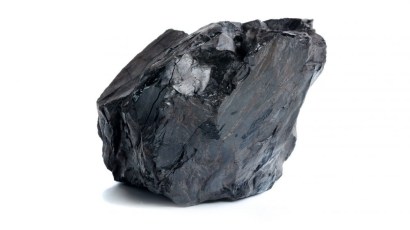
Coalface

Coalface, yes: a face made of coal. A coal golem, animated and at work, joints grinding, black dust squeezing from each movement. The Word in his head tells him to dig, to dig, to dig, to haul the substance of his own body from the ground, to pry it from the great seams that thread the earth, to smash it into bricks, to bag it and banish it into the light. He digs, yes, and he dreams — incineration, immolation, white heat.

I didn’t mean to start like that. Sorry. Just a thought that ran away with itself. Reminds me of a David Hartley story.

I’m trying to write a little. This year has been exhausting. As well as the house renovations, things have been difficult in college, where we’ve struggled to find regular staff and I’ve done double the admin. My brain has turned to glue. I’ve spent my evenings editing student scripts and then having no energy for my own, though that’s no one’s fault but mine. Something else I need to work on.

But yes — writing again, just a little. I don’t have a name for it yet, and I’m reluctant to share too much of it publicly. I’m very conscious of the hope, emotion and effort I’ve invested in the novella, two novels and three half-novels I’ve written since The Visitors was published. The ideas are still there, battling for attention, but in truth my confidence is shot. I’ve lost some of my sense of what and how to write — the compass that helps me navigate through plot, characters, prose.

Reading and writing (and rest, probably) are the only things that will help me get the balance back, but I’m not good at giving myself that sort of a break. I have such little time to write, and I feel a huge pressure to fill it with perfect words — to feel like I’m making progress. When I don’t it brings me down. Writing 4,000 or 5,000 words a day feels a lifetime ago. A good day is 1,000 now, but I guess that’s the deal. If you want the diamonds, you need to be carving out the coal.

Watch out for golems though.

coal1_158428490.jpg

Lost in the woods

20190715_213644.jpg

My reading time is pretty precious these days, and these three are monsters — but I’ve finally finished Brian Catling‘s epic Vorrh trilogy. It’s been quite the trip.

I could say I’ve never read anything like the first book, but that wouldn’t be true, because there are other stories that are as sublimely transporting and otherworldly as The Vorrh, and all of them are titans of their type: Gormenghast, Dune, Earthsea. I’m not exaggerating to place Catling in the company of Peake, Herbert and Le Guin. The Vorrh is a titanic work of imagination, simply sensational in its scope and reach. Essenwald and the forest make for a hypnotic kaleidoscope of the real, the surreal and the metaphysical, while the supporting characters simply sing, a chorus of humanity adrift in a world both wonderful and godless. 

Sequels The Erstwhile and The Cloven round off the trilogy, and they are narratively compelling, but flawed. Modern publishing hasn’t done Catling any favours, as both books are littered with typos and read as an edit short of finished — rushed to market, I suspect, when they needed the craft and care of the first one. The big ideas are undercooked and confusing. The trilogy consistently considers questions of being and belonging, but where The Vorrh explored the boundaries of human consciousness in a sort of careful, measured ambiguity, The Erstwhile and The Cloven crash through them in bouts of confusing exposition.

As works of speculative fiction, they’re essential. As works of literature, they offer diminishing returns on a staggering beginning — the sequels still brilliant, but bound to fall short of the first. Frustrating, inspiring, bewildering, mesmerising, sincere — completely crucial to all writers and readers of speculative fiction. I’ll carry The Vorrh with me for a long time.

Wolves and horses

I work in a school. I hate my job and I hate the children. After a bad day trying to deliver a lesson on the inevitable demise of the Cinque Ports in the 15th Century, I went home, put something awful in the oven, and turned on the television. I watched a documentary about a nomadic herder in Kyrgyzstan or somewhere like it. His entire life revolved around keeping the wolves away from his horses. All day, every day. Even as he talked to the camera, his eyes flicked beyond, scanning for dark dots on the horizon. I laughed out loud in my empty flat, trying to imagine what it would be like, living in such a ridiculous way, your entire existence reduced to a balance of wolves and horses.

Later that night, as my ceiling crawled with insomnia, I realised that I didn’t have to imagine. My life was exactly the same.