Mirror mirror

Earlier today, my heart broke. I’ve been working on my second novel, The Hollows, for almost exactly a year – I started it on Christmas Eve 2013, though I couldn’t write for half the year. I’m now 30,000 words into my first draft. It’s excruciatingly hard to write this, but I’m about to change it all. The reason is the best-selling author Kate Mosse, who appears to have written my book already. I haven’t read it, but her latest novel, The Taxidermist’s Daughter, explores the same themes of memory – suppressed, regressed and rediscovered – as The Hollows. Her novel revolves around a father-daughter dynamic, like The Hollows. Her novel is set in a huge marsh, like The Hollows. I could handle all of that. I’d guess that was true of lots of novels. But today, I also discovered that the lead character of The Taxidermist’s Daughter has no early memories after a traumatic childhood experience; that a modern crime begins to unlock those hidden memories; and that the unlocking of those memories reopens the wounds of an old injustice. That was basically the plot of The Hollows. I’m heartbroken, because I was finally beginning to gain some traction. It was finally starting to move, but I can’t stomach those similarities. It’s too close. It’s no good.

I’m not going to start again, because I’ve written some good stuff. But I am going to change it radically. That means significant cuts – again – and it means the whole enterprise will take longer than I’d hoped, and that’s devastating. I was almost halfway through, and now I’m back to the beginning. I can’t just get hold of The Taxidermist’s Daughter, read it, and rewrite around it; no story is built from omission, and the thought of it makes me sick. But it does mean revisiting the crossroads I discussed last week, and taking another path. It hurts, and I’ll set out with heavy heart, but I know, with every fibre of my being, that I’m nourishing the kernel of a good story, and I’m not going to let it go.

Whales, mandolins and singing bottles… and once again, I find myself staggered at how my stories hurt me.

Crossroads

I haven’t blogged for ages – sorry. The reasons are almost too mundane to mention, but the short version is that my workspace has been out of action for two months. This has cut my video editing and writing time down considerably, and in what time I’ve had, the video jobs have to take priority. I wrapped up my second promo for Born Survivor, and I’m a whisker away from finishing my long-running hay meadows project. I’ll write some more about that when it’s finally complete; unlike any other job I’ve taken on, the meadows film has changed the way I think about the world. This is tied up in Scottish independence, vegetarianism/veganism, and plastic. To be discussed.

I’m writing this post as something of a confession. After months away, the last fortnight has actually given me three solid days to write. In that time I’ve added 11,000 words, and surged from despondency to exhilaration. I’ve now levelled out somewhere in between. (I’m a lot more neurotic than I probably appear.) This is a confession because, in these last few days in particular, my imagination and awareness have been completely invested in The Hollows. I haven’t had much space for anything else. I’ve been ratty and irritable – not because I’m actually feeling ratty, but because this story is a sore tooth – constantly nagging, constantly distracting, always there – and I’m struggling to live in two realities at once. I’ve now written about 26,000 words, which I estimate is about a third of the finished manuscript, and I find myself in the extraordinary position of not knowing where to go from here.

That sounds bad, but it isn’t. I very much believe in giving stories space to breathe, in letting them evolve, and this one has evolved radically around the busiest year of my entire life. I’m positive about all of the routes I could take, though each of them entails some changes. I’m now brewing on which way to go. Bluntly speaking, my choices could be defined by genre, but it’s not that simple. It’s about my sense of self-worth, and the value I take from the act of writing. This story feels entirely right to me, but I don’t know what it is. It’s like reading a map in another alphabet: the world is removed from me yet fleetingly familiar, and I haven’t yet worked out where I am. At a crossroads, perhaps. Each route has pitfalls and detours and summits to climb. (My friend James Hannah says to turn left. If it all goes wrong, I’m blaming him.)

I’m spending hours at a time with my notebook. I’m listening to Rachel’s and Balmorhea. I’m floating in a sea of puzzle pieces. If I can pin down one or two, I’ll build the rest from there, but they are quick as fish.

Writing is easy, and writing is hard.

Notebook

On the rare occasions I’ve been asked for writing advice, one of the things I always suggest is to carry a notebook and a pen. I’ve lost count of the thoughts, ideas, plots, characters and dialogue I’ve let slip through the gaps in my atrocious memory. It’s heartbreaking. I took to carrying a pocket notebook years ago. Sometimes I fill one in a month, and sometimes in six months, until it disintegrates to dust and fibres and I need to tape the spine. I keep them all on a shelf above my desk. Once, while backpacking in Australia, I spilled a hipflask of Maker’s Mark all over my notebook, and the whiskey erased the ink. I lost my bourbon, and I lost weeks of passing thoughts. As my friend Ali said, it was the very definition of two wrongs not making a right.

Notebooks aren’t just for the utility of capturing ideas. It’s important to remember how to write the hard way. I’m a thug of a typist, but I’m pretty fast, and I spend a huge amount of time glued to my computer, whether that’s writing or editing. My default setting is electric, and when I have an idea, I tend to go to the computer first.

This is all relevant because I’m finally dipping my toes back into The Hollows. I started on Christmas Eve 2013, wrote sporadically through the new year, and hit 25,000 words around June. I haven’t worked on it at all since then, but last week I finally had the space to look at it again. On reading it through, I was a little unhappy with some of my work. Parts of it read well, but simply weren’t right for the story any more. No matter how much I shuffled chapters or copied and pasted paragraphs to try and make it fit, the story wouldn’t gel. Instead, I put on some music and sat back with a fountain pen and an old office diary I nabbed years ago to use as a notebook.

The diary was a red hardback day-to-a-page thing, brand new and unused from 2006, a ribbon bookmark folded flat between the crisp blank pages. It was perfect. I started scribbling down my worries and woes. I made lists of characters I liked and characters I didn’t need. I wrote down what worked, and what never could. I drew lots of dots and stars and arrows connecting things that wouldn’t make sense to anyone else. I wrote questions and answers. I wrote until my hand hurt and I had a dent in my forefinger. A few hours later, the mist was beginning to clear, and some new ideas were beginning to show themselves.

That night, I talked it through with Mon. She’s so good at giving me space to shape my ideas. Often the act of explaining a story to Mon explains the story to me, too. Vocalising something gives it clarity. After chatting it through, I spent another hour or two jotting down new ideas, new people, new places to explore.

This is all the planning I do when I’m writing. Rough notes and loose association. It works better with ink than on a screen. It makes the process tangible. I couldn’t do what Ali did with his last novel, and write the whole thing longhand – that wouldn’t work for me – but I’d forgotten how healthy it is to make a mark, to scribe into the fibres of the page. The act of writing with a pen has conjured new ideas, too – things that couldn’t have occurred in pixels.

The hardest part is making the decision. I went back to the manuscript, and cut 11,000 words. It hurt, but it was important. There were good scenes in there – good chapters – but they’d sent me off course, and they had to go. Now they’re gone. My draft is 11,000 words lighter, but I’m more confident in what is left. The shape of the story has changed. The characters are starting to stir, beginning to show themselves.

It’s insane to think I’ve achieved so little since starting it almost a year ago. I feel like I should have a finished draft by now. I know, looking back, that we’ve been extraordinarily busy this year, and that I’ve completed a multitude of other things, but The Hollows is back in my life and shouting louder than ever. I’ve spent some time on the wrong path, but now I think I’ve found my way. A pen, a compass.

A love letter to an island

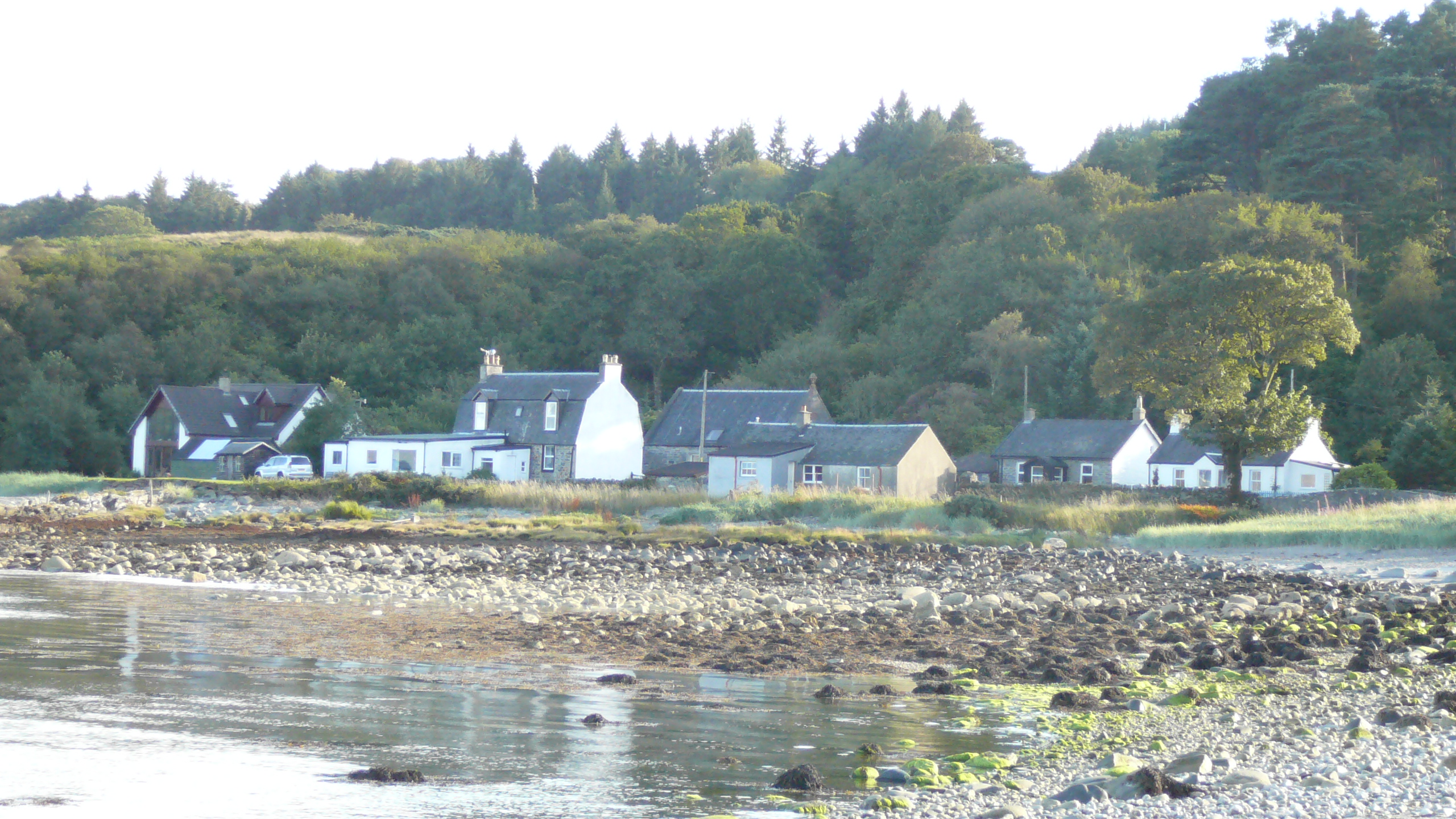
P1050513The idea for The Visitors fell into my head almost fully formed while on holiday in Grogport, a tiny hamlet on the east coast of the Kintyre peninsula. It’s connected to the mainland by a narrow isthmus, and it feels like an island. The beaches are sandy and studded with pebbles. Hills rise steeply from the shore and narrow roads wind around the coast, ducking inland to skirt the inlets. To the east, Arran lurks like a beached whale, and Gigha is smudge in the haze on the horizon to the west. Abandoned crofts explode with rowans, and in places the ferns fall into the road, wet and green.

P1050459My daughter was three months old, and the long drive from Cumbria had unsettled her. She started waking early – around five in the morning – and wouldn’t go back to sleep. My wife and I made coffee and watched the sun rise over Arran, casting blue light on the millpond Kilbrannan Sound. From the kitchen window, we saw herons stalk the surf, lashing down on crabs or minnows. Seals hunted in the bay every evening, and an otter dismembered fish on the shoreline. The garden thronged with little birds, and at one point I saw a kestrel sitting on the washing line, no more than five yards from the house. When we walked around the island, there were butterflies in the gorse, spiders on the sand, bees in the grass, gulls wheeling on the updrafts. I was shaken, at times, by how much life was around me, living as it always had, as though the land itself was alive and conscious. In so many places, it looked as though people, civilisation, had simply given up and moved elsewhere. It felt as though the land was waking after centuries of slumber, and just beginning to stretch.

On the third or fourth morning, watching a seal swim like quicksilver in the bay, the spark of a story flared brightly inside me. It caught fast, and began to smoulder. That story became The Visitors. Selkies, living in Grogport. A murder mystery. A young girl, desperate to leave an island. And it would be an island, I decided; the Kintyre peninsula was beautiful, but didn’t do everything I wanted for the story. I started drafting a sense of what the island looked like. I called it Bancree. As I began to write the story, the island evolved too, morphing into something real enough to touch.

P1050458Bancree is a scrapbook of my Scotland. I grew up in Inverness, where I could see Ben Wyvis from my bedroom window. We walked our dogs on the shingle beach at Ardersier and through the sodden plantations of Culloden. I’ve been canoeing and camping on Loch Maree in torrential rain, and climbed the boulder fields of Torridon and Glen Nevis. I’ve been to the top of Schiehallion, and walked on the clifftops of Dumfries, and fallen out of bars on Tobermory, and seen friends crash cars by the shore of Loch Ness. I’ve taken the train from Edinburgh to Inverness so many times that the journey is engrained in my memory. From the top of Glen Affric, with June snowmelt still feeding the burns, I’ve seen both coasts glitter in the sun. Scotland has a hundred landscapes that sing to me, and I collected something from each of them to build Bancree.

P1050526The island is my love letter to Islay, Jura, Gigha, Mull, Iona, Ullapool, the Highlands, the Black Isle, Moray and the Great Glen – to the landscapes I grew up in, the landscapes I love. I’ve never tried to sketch Bancree or make a map. I know what it looks like, and where to find Grogport, and Tighna, and Izzy’s hut, and the windfarm on the Ben. But more importantly, I can drive the road around Bancree simply by closing my eyes. I can feel the scrunch of shingle underfoot, and the batter and bluster of the Atlantic coast. There is dew sagging on spiderwebs, spun between the thorns of gorse, and rafts of flotsam hefted on the beaches. Dead, empty crabs still scuttle on the breeze. The twiggy scratch of heather, the rivulets of water in the bracken. Titanic clouds, dark and warm and scudding low enough to touch. The fluttering machair, alive with bees. Fog that swallows the tops of trees and telegraph poles. The water in the bog pools, dark with peat, staining all the world around, pouring brown from every tap. Sands that hiss and sing as the wind rolls across the beach in waves.

Bancree is as real as a dream to me. It is vivid and bursting with life. I can feel the rub of sand between my fingers, but there is no map to go there.

P1050540

The Blog Tour – answers

I was delighted when Elizabeth Stott invited me to follow her on the blog tour. I’m a fan of Elizabeth’s writing – I bought her short story Touch Me With Your Cold, Hard Fingers from Nightjar Press last year, and was engrossed in the tense, almost existential body horror she conjured in a few short pages. A lot of Elizabeth’s work generates that sense of claustrophobia – another of her stories, Mrs Wetherby, delivers simmering sexual tension amongst uptight ex-pats in the setting of a baking Gulf. Have a read – highly recommended.

Many thanks to Elizabeth for the invitation – here are her answers to the blog tour questions – and here are mine:

What am I working on?

More than I can handle! Foremost is new novel Grisleymires. Whenever possible, I’m trying to guide my rare writing days towards this; it’s the story of a man who loses his memories, and the woman who goes to find them. It’s set in a huge swamp, which is great fun to write, and I’m really excited by the characters and how they’re evolving. The issue is finding time to write around my other projects. I’ve been working on a novella called The Year Of The Whale for about five years (though I haven’t touched it for the last two). That’s about a whale beached in Morecambe Bay. It’s about 20,000 words finished, with only another 5 or 10k to go, but novels are taking precedence. I’d love to finish it soon, though – my partner Monica wants to make a series of linocut prints to illustrate it, and I think that could look fantastic – something like Alex Garland’s novella The Coma.

I’m also putting the finishing touches to my first flash fiction collection, Marrow, and starting to draft the second, which might be called Real Life. Around all this, I’m periodically developing my future novels – I already have plans for another four or five after Grisleymires. I’d love to write more often, but I struggle for time around my teaching and film jobs.

The final thing I’m working on is the copy edit of my first novel, The Visitors. The editor’s notes are due back next week, and I’ll need to go through those slowly and carefully (and with flagons of cider, according to Ali Shaw).

How does my work differ from others in its genre?

This is a difficult question to answer, as I believe all writers differ from others – that’s part of the wonderful polyphony of writing. As soon as a writer begins to speak in the first words of their own voice, they’re different. Genres are useful for sifting and gathering – I use genre far more as a reader than a writer.

That said, I guess I’m moving increasingly towards low fantasy. That’s where I can best tell the stories I want to tell. If my stories are in any way unique, it’s because of the themes I work in and the juxtapositions I explore. When I walk through woodlands, I worry about velociraptors. When I visit London, I imagine minotaurs haunt the Underground, dodging Tube trains as they roam beneath the city. There are doppelgängers watching from rooftops, waiting to make the switch. There are secret societies of pigeon fanciers that keep the internet alive, and kelpies working for the local council. I try to infuse my work with the same sense of magic I find in the world. I think every writer tries to do that. I’m interested in memories, and walking, and the idea of threshold spaces. I’m interested in myths and especially in folk tales. I’m interested in the breakdown in gender and what it is to be alive. Ultimately, though, lots of writers are interested in those things. What makes my work different is that it’s mine.

Why do I write what I do?

Writing brings me comfort through escapism, I suppose. I’m an army brat – we didn’t settle in one place until I started secondary school in Inverness, and I’ve often struggled to feel at home. Books and stories have been havens for as long as I can remember, and it was probably only a matter of time before I tried to create my own. As for the actual topics I write about – that’s evolved wildly over the six or seven years that I’ve been writing fiction. I started with experimental, deliberately obscure literary pieces, aping the styles of challenging writers like Hubert Selby Jnr and William S. Burroughs. After finishing my first attempt at a novel, which took me to some personally unpleasant places, I started to rediscover my love of stories that took me on adventures, rather than stories that were flayed to the bone. I reread David Mitchell and Sarah Waters and Jasper Fforde and Neil Gaiman – and I realised that those were the worlds that sang loudest to me. And so I started again, near enough, finding new ways to tell my stories. The more I’ve worked in this vein, the more I’ve enjoyed my writing.

How does my writing process work?

My ideas tend to arrive as acorns – I stumble upon them everywhere, buried in mud or blown into gutters. Some of those ideas never escape my notebook – and others explode, branching and sprouting into completely new directions. I can’t explain how an idea arrives already fully formed, but my best stories are already bristling with life. They evolve as I write. I know I’m working with strong characters when they start doing things I don’t expect; when it becomes inevitable, no matter what I’ve planned, that they’re going to do something else.

Landscape and place are important to the way I work – I like those strong characters to be in landscapes that I care about, so the air fills my lungs and I can feel the ground beneath my feet. In good locations, the story is a drop of water, taking the most organic route to ground. Place is as important to me as character, plot and emotion – when I write, I try to keep all those strands of story entwined together. Writing is a holistic process, following disparate elements all at once. That’s one of the things that makes extensive redrafting so hard. It’s easy for the fabric of the story to become tangled. When my stories are in a muddle, so am I.

Because I have so little time to work, I tend to write in fierce bursts. If I’m on a roll, I can manage more than 10,000 words a day, but that’s rare. A good writing day is 2,000-3,000 words I’m really pleased with. When I’m not writing, I think about my work constantly. I’m often awake at night, staring into darkness, tracing my way through story strands, trying to work out where they run to, where they meet. More often than not, I fall asleep without working it out – but sometimes I have to turn the light back on and write them down.

I’m also an helpless tinkerer. I can’t let go of my stories, and I return to them obsessively – even years after they’ve been published – to develop the story and tweak the prose. My flash fiction collection Marrow is typical of this – of the 28 pieces, around half have been published elsewhere – but in preparing the collected manuscript, I’ve spent months compulsively redrafting them. Some no longer bear any relation to the original. I can’t help myself. That tweaking and revising comes into first drafts, too. My stories are probably one third writing, two-thirds editing.

Another of the keys to my workflow is reading aloud – as I write, I constantly read, lips moving, shaping the phrases to find the most organic flow, and then reworking it on the page. On the rare occasions I’ve been asked for writing advice, that’s my first suggestion. Nothing has done as much for developing my work as reading aloud. My second suggestion is to carry a notebook. You never know when those acorns will tumble from the sky.

***

So there we have it. If anyone’s still reading, these are some of the things that go into my work. I’m now passing the baton on to David Hartley and Iain Maloney, who’ll publish their blog tour answers on Monday 3rd February. In their own words, they’re a bit like this:

David Hartley is a story botherer and blog tickler based in Manchester whose debut collection of flash fiction ‘Threshold’ was published by Gumbo Press precisely a year ago. He is one fifth of the writing collective Flashtag and can be regularly seen haunting the open mic stages of the North West. He blogs at http://davidhartleywriter.blogspot.co.uk/ and tweets at @DHartleyWriter

Iain Maloney was born in Aberdeen, Scotland and now lives in Komaki, Japan. A widely published writer of fiction, non-fiction and poetry, his debut novel, First Time Solo, a story of World War 2 RAF pilots and jazz, will be published be Freight Books in June 2014. He blogs at http://iainmaloney.wordpress.com
Thanks for reading.

Fenland wyrdly

I’ve lived in England for thirteen years, on and off, with stints in Edinburgh, Inverness and Australia. Aside from Cumbria, which is the closest thing to home I’ve felt in my adult life, and London, which is a bubble, I often feel a stranger here. Despite moving around so often, there are big chunks of the country I’ve never seen. East Anglia is one of them. We spent this weekend exploring the area as research for my next novel, which is called Grisleymires. On Friday we drove down a smart diagonal sweep across the country from Burneside in Cumbria to Kirby Cross, almost on the Naze, and stayed the night with friends. On Saturday morning we jagged back up to Wisbech, stopping at Wicken and Ely. For the first time, I’ve been to the Fens.

Grisleymires has been in the back of my head for a while. From the beginning, I knew that it was set in a swamp – the earliest incarnation of the story was essentially Time Bandits with bog bodies. It’s evolved massively since then, but the marsh has been a constant: I want to write about mud and water. I’m now quite secure in the plot, but the location has been troubling me. Location is crucial to the way I write, and I didn’t feel confident in my knowledge of any British bogs. I picked the Fens on instinct, and decided to find out more from there.

The first person I spoke to about Fenland felt so negatively about it that he could only laugh hysterically. He’s one of the most articulate people I’ve ever met, and he simply couldn’t formulate words to describe how powerfully it repelled him. That was exactly the sort of start I was hoping for. Since then, people have told me that the Fens are creepy, strange, powerful and weird. Everyone talks about ‘big skies’. Now that I’ve driven through them, I can understand why. It’s the flattest landscape I’ve ever seen. The horizon is broader, the perspective unnerving, the sky an impossible bowl. There are miles at a time without undulation – miles without trees. Ditches run in straight lines to vanishing points. In places, roads run lower than canals, with dykes and bridges guiding the contours. It’s especially strange near the coast, where the horizon is curtailed by the shore.

We stopped at Wicken Fen, where I stood in the blustering wind and stared into the winter sun. Tall grass became an ocean and hissed at me in waves. I never expected so much noise from emptiness. The sun turned orange, and the dusk turned blue, and pylons hung like giants against the scraps of cirrus. At one point, we drove along beneath a dyke for a mile or more. The road turned sharply up the bank and at the top, blinded by sunset, the world opened up like Noah’s flood – the entire horizon drowned in water, withered trees and battered shrubs emerging in silhouette against the sun. That was the road to Wisbech, submerged in wetlands.

sunset1

We drove the alternative route to Wisbech on undulating single track roads lined with Nissen huts and broken hedgerows, tumbledown houses and gigantic piles of sugar beet, surrounded all the while by thousands upon thousands of acres of thick, turned loam.

Wisbech was a strange town. The B&B was huge and empty. When we went to look for food, we found ourselves in what seemed to be a red light district. Drunken Polish men yelled at each other across the street, while girls on corners danced to techno on CD stereos. On Friday night, above the Naze, the stars were clearer than I’d seen in years; on Saturday, the sky was full of murk. On Sunday morning, we drove on Droves – lumpy roads, arrow straight for five miles or more, then zigzagging madly to meet the next. They separate broad strips of industrial agriculture, riven with canals, ditches and soakaways. All the trees wear killing coats of ivy. For the most part, we drove in silence, occasionally pointing things out to each other. The landscape was relentless without becoming monotonous.

The Fens is witchcraft and weak bridges; rotten thatch and revolution; gallows and windmills. At one point, we passed a narrowboat moored beneath a sickly weeping willow. It looked like it was about to break in half and sink. It was small, and covered with lichen, but I could still make out the name: it was called Icarus.

I don’t know if the Fens are creepy, but they are profoundly strange. We felt edgy all the time. We’re used to the cradle of the mountains, a constant presence in our peripheral vision. It’s incredibly strange to be without that subconscious company. Mon pointed out that the sheer amount of space makes you feel exposed – vulnerable. We didn’t find it creepy, so much as missing. It’s an absence, a nothing, a void. It felt like a sort of purgatory; fields unfolding endlessly, stretching on forever.

I went on this trip hoping for a sort of Green Venice, but that’s not what the Fens are about. They aren’t what I expected, or what I wanted, but maybe this trip has been exactly what I need, and here’s why:

I invented Bancree for The Visitors. It’s an amalgam of Islay, Jura, Gigha, Kintyre and the Black Isle, plus a host of other Scottish spots; and I’m already planning a novel set in a fictional city, based around my short story Vanishings. The point is this: I thought nothing of creating an island, and I can’t wait to write a city. I don’t know why it’s taken me this long to consider inventing a Fenland of my own. Writing a new region into an existing geography feels more daunting than something as self-contained as an island, but that would give me the perfect environment for Grisleymires.

I’ve only started considering this today, but it’s already gathering weight. It would let me combine the heat and life of Green Venice with the sodden bogs of Islay and the upland Cumbrian basin mires with the Fens and Norfolk Broads. I could do as I pleased with accents and geography and culture, and that’s a real magnet for me. I’d be sad to leave or even dilute the Fenland folklore, though – I’ve grown attached to Tiddy Mun and Old Shuck.

As a research trip, it’s thrown up more questions than it’s answered. But that, in itself, is part of the journey.

pylons1

Resolve

I’ve always been a little dismissive of New Year’s Resolutions, because if I want to make a change in my life, that can happen any time I choose. That remains true, but there are things I want to do differently going into 2014. Post-Christmas binging is a natural place to draw a line and make a start, and I quite like the idea of formalising the changes I want to make. So here’s what’s going to happen this year:

Exercise

Because I don’t really do any, other than the odd Lakes walk and the exhaustive mania of teaching. I’ve already started walking the 2 miles to work – which I enjoy for the headspace as much as the activity – but I miss my bike and I miss my climbing. So I’m going to start cycling the long way to work and back. That’s only about 6 miles a day, so it’s not a great deal really, but it’s more than I’m doing at the moment. I’m also really keen to get back to my climbing. When I lived in London, I climbed four or five times a week. Now it’s four or five times a year. I’m going to start going for a few hours at least once a week. That, supplemented by some pull-ups at home and the cycling, should be steps in the right direction. I might even join Mon for the odd yoga, too.

Writing

The best I can hope for here is more of the same, I think. I crave more time to write, but the day jobs don’t allow it. In a good week, I get two days and two nights on my stories every week. Within that, I have specific aims for 2014. First and most important, I want Grisleymires finished in a year. This is a big ask, but it’s well planned, I’m excited by the story, and I can do it if I work hard. Research trip to the Fens in January!

Second, I want to have my flash fiction collection Marrow typeset and printed by the end of February. I’m reading at Spoken Word at the Brewery on Saturday 22nd, and I want it in my hands by then. This isn’t as big a deal as it seems; the stories are written and redrafted ten times over, and having typeset it once already as practice, I know glimmers of InDesign. With some guidance from knowledgeable friends and a few late nights, I think I can send the manuscript off to Inky Little Fingers in a few weeks. I’ve already saved most of the £225 it’ll cost to print 100 copies, so that’s not going to hurt my wallet too much.

Third, I want to keep on performing. 2013 was a turning point for me in reading my work aloud, and I want to push that as far as I can. Reading live brings an entirely new aspect to the way I write, and this is something I want to keep developing – pushing towards more theatrical performance where my confidence allows it.

Fourth, I want to submit my work to more competitions. I’ve never entered any of the big short story competitions before now, and I’m going to try and start this year. And I want to write new pieces, too, if the ideas keep coming to me. I’m not going to rehash old stories. I’ve pretty much drawn a line under my older work, but for two particular pieces: the excellent people at Comma Press have been considering my short story Every State In America for their delayed Reveal anthology for a couple of years. They’ll have first refusal on it for as long as it takes; being published by Comma would be an incredible honour. The other piece is called Art Is Long, Life Is Short, which is perhaps three years old and freshly redrafted for the BBC Radio 4 Opening Lines strand. That’s ready to go when the submission window opens in January.

Fifth, I want to finish Year Of The Whale, my long-running novella about a whale beached in Morecambe Bay. It’s been work in progress for three or four years, and it’s overdue. But writing resolutions one through four come first.

That’s lots of resolutions wrapped up in two strands, really. Writing and exercise. I’m only going to buy the time for everything else if I start saying no to low-paid film jobs, so I’m not doing any freebies/cheapies this year unless they have a clear benefit further down the line. I’m also going to try and rein in my irrational compulsion to reply to emails RIGHT THIS SECOND. I just don’t have the time. Most of the email I receive can probably wait until I’m ready. The point of all of this is to spend more quality time with Mon and Dora. Unless deadlines get in the way for either of us, we’re generally good at keeping weekends as family time, and I want that set in stone. There are a host of other things I can do towards this – less time online, for a start – and turning off the computer on free evenings. I want to read more, too.

I guess I’ve picked out goals, rather than resolutions, but it’s all the same in the end. I haven’t kept a blog to monitor resolutions before; I’m curious to see to whether writing about my success or lack thereof will impact on my success or lack thereof. Gazing into the void and so on.

2013 was a great year in many ways. Here’s to 2014, people. Be safe, be happy. Here’s a 1921 picture of a cat and a goblin in a tree:

goblin

2013 and all that

Obviously, the end of every year gives pause for reflection. For me, this used to manifest itself in a range of Top Tens – films, albums, books, gigs – but these days I don’t really do enough of any of those things to justify it. So here’s my combined Top Ten of 2013 instead. They’re not in order.

1. Getting a book deal with Quercus

Securing a publishing deal with the wonderful Quercus Books has been one of the most amazing things to ever happen to me. I’m still waiting for someone to pull the rug out from under my feet, but until they do, I’ll keep enjoying every moment of this exhilarating, terrifying, extraordinary rollercoaster. I feel bowled over by the support for my writing, even as I feel a massive weight of pressure to deliver. I started the year with a manuscript called Riptide Heart; I finished with a rigorous redraft, now called The Visitors. Working with Quercus editor Jane Wood has made my writing tighter and my story much stronger. It has also given me a real hunger to push on with my work – I now have half-a-dozen novel ideas clamouring for my time.

This wouldn’t have happened without the hard work of my awesome agent, Sue Armstrong at Conville & Walsh, and the support of my amazing partner Monica. That brings me to the second thing on the list:

2. New work from Monica Metsers

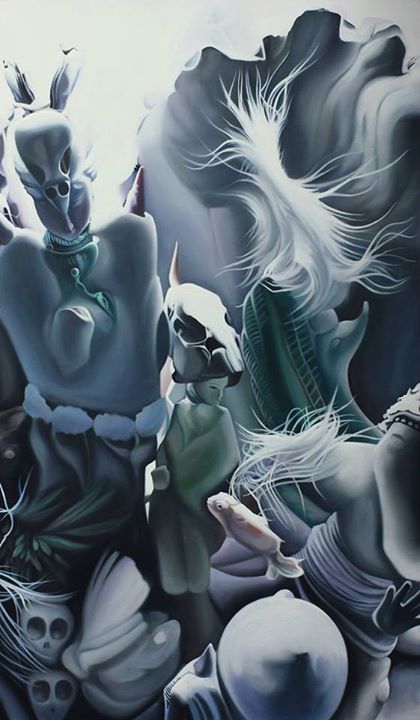
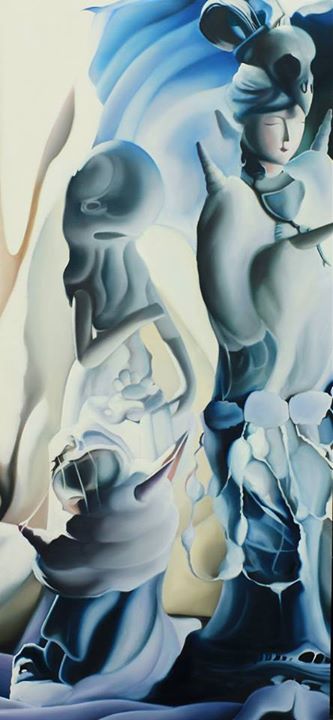
While she was pregnant, and in the first year of Dora’s life, Mon took time away from her painting. 2013 was the year she really started again, and the results have been amazing. She has a solo show in London next year, and as well as a few smaller paintings and a range of drawings, she’s made these two stunning large-scale paintings, which I think are amongst the best work she’s ever done:

BATALLA DE LOS GIGANTES                                                          BALLENA Y GEISHA

BATALLA DE LOS GIGANTES   ballena y geisha

2013 also marked our five-year anniversary – it’s been a blast.

3. Performing live

I’ve never been good at public reading, and this year I set myself the challenge of improving. I went on to read my work twice at Spotlight in Lancaster, once at Kendal’s Spoken Word, once (performing from memory) at Dreamfired in Brigsteer, and once at the Flashtag 2013 writing competition in Manchester, where I won second place. My confidence grew with each reading, though I still feel I’ve a way to go.

I also attended a spoken word workshop run by the excellent Brindley Hallam Dennis. One of the activities he set has changed everything: he had other members of the workshop read our stories. The lady who read my flash piece ‘Marrow’ performed it at a third of the pace I do. She relished every word, and it was three times better as a result. I haven’t performed since then, but I’m going to practice reading with that sort of gusto at the next opportunity. I’m booked in for a 20-minute slot at Spoken Word in February, and I’d like another couple of events under my belt by then. My goal has evolved a little, too: what I’m aiming for now is something closer to outright performance than simply reading. That will come with confidence, and confidence will come from practice.

4. Seven Seals – Plan of Salvation

After a whopping 18 months, I finally finished making this music video for amazing psychedelic synth punks Seven Seals. They’re an extraordinary band, and it was an honour to be involved. They’re working on new material, which will hopefully be available in 2014 for their ten-year anniversary gigs.


5. Amy Hempel – The Dog of the Marriage

Quite simply, the finest collection of short stories I’ve ever read. Hempel’s writing is so sensitive, so honest, that it infuses her stories with devastating grace. Unmissable.

6. Les Revenants

This French drama is the best thing I’ve seen on television in years, remarkable for its intrigue, restraint and power. It delivers on every level, exploring an extraordinary narrative without needless exposition to unravel the mysteries of the Returned, all of whom are troubled in different but connected ways. The locations and cinematography are stunning, while the soundtrack by Mogwai is my album of the year. There’s a startlingly surreal lucidity to the conclusion, and I think they could have left it there; but I’m delighted to see a second series in the works. Here’s the trailer for season one:

In TV terms, an honorable mention also goes to Game Of Thrones. Tyrion Lannister might be the finest character ever committed to screen, and the Red Wedding haunts me even now.

7. Success for friends

It’s been a good year for many of my friends and peers, too. Iain Maloney landed an agent and a book deal with Freight, Kirstin Innes found an agent, Anneliese Mackintosh got a book deal, Kirsty Logan landed a book deal and won everything in the world. Friends Andy and Gemma had a baby boy called Miles, and Ali and Iona had a little girl called Inka. There have been a lot of richly deserved congratulations this year. Good work, team.

8. Cats

Yup. Two of them. I wasn’t sure, at first, but then we met these two cats in the Wainwright Animal Rescue Centre, and it was an easy decision. They came to us with the names Remus and Teddy, which we’ve kept. They’re brothers, about three years old, and half-Persian. They’ve been an amazing addition to our house. They are incredibly relaxed and friendly, and they actively seek our company. That’s especially welcome when I’m having a writing day alone at home.

1174754_10153244876455551_211086219_n

9. Holiday in France

We were overdue a break, and this fortnight in France was exactly what we needed. We camped in half-a-dozen places, the best of which was Green Venice, a vast network of canals, ditches and overgrown waterways, crawling with vines and willows, alive with dragonflies and katydids. It was an extraordinary landscape. I read more in that fortnight than I’d managed in four months. Best of all, the holiday gave me enough mental space to plan my next novel, which will be called Grisleymires. That’s now blocked out on Scrivener, waiting for my next writing day.

10. Another year with Dora.

In their first year, babies are basically little puddings. Awesome little puddings, but puddings nonetheless. In their second year, they gather the basic tools to discover the world. And in year three, that toolkit expands exponentially; physically, vocally, intellectually and emotionally. Going through that with Dora has been nothing short of a joy. Seeing the world through her eyes has made me reevaluate so many things for myself. Her conversations leave me in stitches, and everything about her makes me smile. And she hasn’t been to A&E this year, which I consider something of a triumph. Though there’s still a week of 2013 left.

IMG_4758

So that’s my Top Ten. It’s been a good year, and 2014 is alive with possibilities. I might even pop some resolutions up in a few days.

RedraftredraftBRAINMELT

For the last eight weeks, this has what my life has looked like:

RedraftredraftredraftredraftredraftredraftredraftredraftredraftredraftredraftredraftredraftredraftredraftredraftredraftredraftredraftredraftredraftredraftredraftredraftredraftredraftredraftredraftredraftredraftredraftredraftredraftredraftredraftredraftredraftredraftredraftredraftredraftredraftredraftredraftredraftredraftredraftredraftredraftredraftredraftredraftredraftredraftredraftredraftredraftredraftredraftredraftredraftredraftredraftredraftredraftredraftredraftredraftredraftredraftredraftredraftredraftredraftredraftredraftredraftredraftredraftredraftredraftBRAINMELT.

In case you hadn’t noticed from my incessant moaning, I’ve been redrafting my novel. Again. It’s been a vast job, because – following discussions with Jane Wood, my amazing editor at Quercus – we decided to change the ending quite substantially. This isn’t as simple as knocking off the last few chapters and rewriting, alas; to make the climax and conclusion fit, organically and emotionally, the threads of the plot need to extend a long way back into the story. Because The Visitors is already woven rather tight, unravelling the narrative to make the new ending fit has been tough. Around college and film jobs, I’ve been working on it in evenings and spare days since mid-October. After the first fortnight, I took to saving the manuscript as a new document at the end of each session. This is what the folder looks like:

redraft of death

That’s right. It’s called the REDRAFT OF DEATH.

But check it out, humans; I have actually finished. I sent the new draft off to editor Jane and agent Sue late last night, along with a summary of everything I’ve changed. On reflection, it’s been a massive rewrite. As well as the new ending, I’ve changed names, moved locations, cut chapters, written new chapters, tightened dialogue, tightened prose, and – perhaps biggest of all – introduced an important character at the start of the story, rather than halfway through. Maintaining his presence from this early beginning meant a light rewrite of the entire first third. I’ve also made a big change in the death of another character, which brought a new angle to the idea of ‘killing your darlings’.

Dealing with the sheer volume of information is what causes brainmelt. Trying to keep everything in perspective – emotion, story, plot, character, description, geography, chronology – is exhausting. To help manage the changes, I riddled the manuscript with notes to myself, so I wouldn’t lose track of the things that needed work. It was quite telling to come across these messages, later on, and reflect on my thought processes. Here’s an example:

“Move the distillery to the island where it should have been from the beginning, you dick.”

So yeah, it’s been tough. I’m expecting another round of line edits, at the least, but hopefully the bigger structural stuff is now finished. I would have worked quicker but for the day jobs. Trying to switch into a more creative mode and recover a spark is tough. There have been times I’ve sought out any distraction to keep me from inflicting more destruction on my work. That’s where Freedom has really helped. I can’t recommend it to writers (and other procrastinators – YOU KNOW WHO YOU ARE) highly enough.

For all the effort, I still wouldn’t be doing anything else. I saw a great quote the other day. Though I can’t remember who said it, it was something like, “For all that writing is incredibly tough, it’s worth remembering that it’s still making up stuff for fun.”

True dat. More than anything else, I’m increasingly looking forward towards my next novel. It’s called The Hollows. It’s mostly planned, and I’m champing at the bit to start work. Now term is almost finished, I’m going to give myself a few days off to clear my backlog of video jobs, then try and take a day or two over Christmas to get writing.

After dealing so exhaustively with a manuscript of 94,500 words, it’s very strange to be faced again with all the promise and terror of a blank, white page.

A little light reading

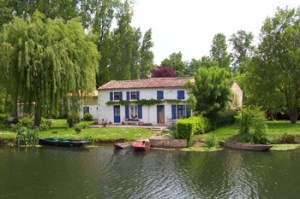
We’ve just returned from a brilliant fortnight in France. We racked up 2,500 miles in a round trip that encompassed Ile de Noirmoutier, which is reached by a two-mile causeway at low tide; Rauzan, where we camped in the shadow of a ruined medieval castle; and Marais Poitevin. This last spot, nicknamed ‘Green Venice’, is one of the most amazing places I’ve ever seen. Centuries ago, it was a vast swamp, but Dutch settlers drained it with a labyrinth of canals and ditches, leaving hundreds of island pastures connected by causeways and bridges. The architecture is just as unique, with balconies and shutters adorning every house, and punts moored to jetties in gardens. Poplars and alders tower into the sky, the canals are thick with lurid green algae. Fat dragonflies zip and pop between shrubs and creepers, and the trees are alive with cicadas. Filtered through high branches and reflected from the water, the light itself is tinted green.

marais_poitevin bluehouse

It’s genuinely one of the most incredible landscapes I’ve experienced and, much like Grogport for Riptide, it’s been a real inspiration for my next novel. In the space of a few days, I filled an A4 pad with notes and dialogue, and I feel really excited about starting work. There’s still plenty to do before I can begin, but the foundations now feel firmly set.

The other great thing about the holiday was having time to read. I managed six books, which is no mean feat when juggling a toddler in a campsite. And I had a great run of books – not a single dud:

The Tiger’s Wife by Tea Obreht was bold and convincing, subtly switching a range of voices to make folk myths contemporary through personal memory. I enjoyed it a lot, but found it ever so slightly cold, and wasn’t as blown away as its reputation suggests.

Cumbrian Folk Tales by Taffy Thomas was a fascinating collection of the county’s legends and myths, made all the more immediate through its connections to a landscape I’m starting to know. It was amusing to recognise the names of not just local places, but also local people – people I’ve met, worked with, drunk with. The tales were strongest when connected to geography, giving meaning and history to a witch’s cauldron or a devil’s bridge.

I read The Blackhouse by Peter May – this was a present from Jane Wood, my publisher at Quercus. She thought I’d like a look because, like Riptide, it’s a crime story set in the Hebrides, though it doesn’t have the supernatural elements of my book. I enjoyed it a lot. The plot was dovetail-tight and engrossing, and the landscape was intoxicating.

Next up was I Love You When I’m Drunk by Empar Moliner, Spanish short stories in translation through the tremendous Comma Press. Despite some uncharacteristic typos from an excellent publisher, it’s a solid collection, each story exploring and exploding conceits of modern life. Some of the stories felt a bit like shooting fish in a barrel – taking aim at soft targets of liberal, middle-class pomp – but the writing was good throughout, and there were many outstanding moments.

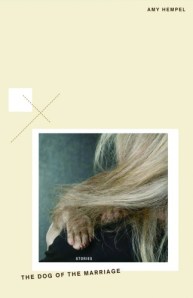
Moliner’s collection was good, but the next book was astonishing – a class apart. The Dog Of The Marriage gathers Amy Hempel‘s four short story collections into a single volume, and they are consistently superb. There isn’t a single wrong note across dozens of stories. Hempel’s work is voiced through emotionally damaged or stunted narrators, trapped or somehow left behind in their lives, caught between stasis and decay. The stories are not without hope, though, and Hempel writes with unceasing, unfailing humanity. Her sentences and structure are scintillating. I cannot recommend this highly enough. This is the sort of book I buy two copies of, expecting to have one out on loan.

the_dog_of_the_marriage.large

Finally, I read Snake Ropes by Jess Richards. This was another corker. Alternate narrators explore life on a mysterious island, ‘just off the edge of the map’, eventually combining to bring the distinct halves of the story together around a single, long-forgotten trauma. This novel holds trade and barter at its heart, exploring themes of presence and absence, balance and weight; of exchange, and what it means to give and get. It’s a real triumph, made all the more masterful in how Richards weaves the fantastical through the fabric of base human instinct, conjuring talking keys, sentient trees, and a walking doll with a seashell for a heart:

Moppet2

The last fortnight has reminded me, as stupid as it sounds, of how much I love to read, and made it painfully apparent how little reading time my regular schedule affords me. I’m determined – on top of carving out more writing time – to read more. I miss it.

This holiday has been essential. I’ve worked stupidly hard over the last two years without much of a break, and I’ve badly wanted some time off. Looking ahead, the next two months are going to be frantic – but I feel better for a break. I have my next novel blocked out and the sights and scents of a swamp fresh in my mind. One more draft of Riptide to go, and then I’ll be starting my new story.