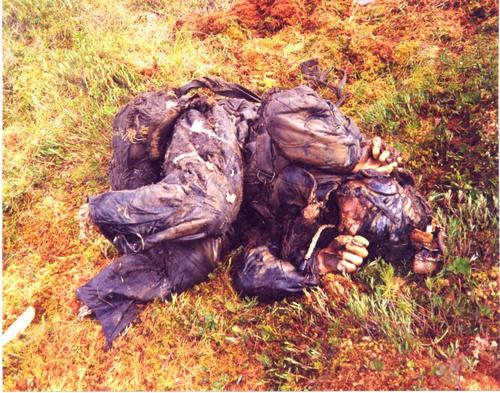
After the bog boats, here’s a bog body from WWII. This Soviet pilot was shot down at the age of 22. Boris Aleksandrovich Lazarev tried to escape from his Hurricane, but crash landed in a bog. The impact seems to have severed his feet, but the peat preserved him almost perfectly for over half a century. He has now been buried in a cemetry in the Karelian Republic in western Russia.
Tag: bogs
Limppelty lobelty
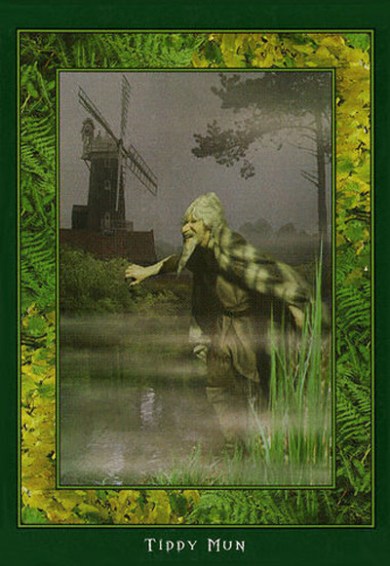
My reading lately has brought me to the Tiddy Mun. He’s a grumpy but rather sad spirit of the fenlands. There’s something very ancient and disconnected about him, as though he’s been left behind, and doesn’t entirely know why. People were actually quite fond of him, by all accounts, in the same way they’re fond of elderly and slightly addled relatives they see only every other Christmas.
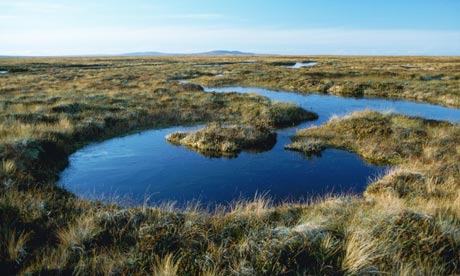
Anyway. Tiddy Mun can summon water, mist and fevers from the marshes. He’s very much at home in the bogs, and he was incandescent about the draining of the fens by the Dutch. In his rage, he conjured pestilential swamp airs onto all Fenmen, and didn’t stop until everyone said they were sorry.
He sounds anachronistic even in the 1890s:
“He dwelt deep down in the green water holes, and came out at evenings when the mists rose. Then he came creeping out in the darklings, limppelty lobelty, like a dearie wee old granter, all matted and tangled, a long grey gown so that they could hardly see him in the dusk, but they could hear him whistling like the wind and laughing like a peewit. He was not wicked like the rest, but he was eerie enough, though the times were when he helped them. For on wet seasons when the water rose to their doorsteps, the whole family would go out together and shivering in the darkness they would call:
‘Tiddy Mun wi’out a name,
Tha watter thruff!’
They would call it till they heard a cry like a peewit across the marsh, and they’d go home. And next morning the waters would be down.”
I feel quite sorry for the Tiddy Mun. He seems lonely and lost and utterly out of place, but I think he might have a role to play in the new novel. I especially like the idea that he isn’t “wicked like the rest”…
Labour
Physical work is a counterpart to writing. I wrote my first novel while working in a furniture workshop; I wrote dozens of short stories, and started Riptide, while making yurts for a carpenter.
As a teacher, my life is at once more manic and more sedentary, but my ongoing house restoration has provided frequent and occasionally brutal reminders of what it is to work with my hands. This weekend, it was the turn of the garden. Along with my dad and my father-in-law, I put up a fence, laid a patio, cut down two trees and cleared a ton of rubble. It’s been an exhausting, sweltering few days, and my hands and arms are riddled with scratches and grazes and splinters, but that seems a fair price to pay for the achievement.
Physical labour is good for my brain. It allows me to switch off, for a while, through either the concentration or monotony of the task, and the blank space it leaves allows the formation of thoughts. Climbing does the same trick. About halfway through the fencing, I had a mini-brainwave about my new novel. Two sequences quietly switched places, and the narrative opened up a little more. I’m coming closer to blocking out the plot all the time, just making notes and letting it simmer in the background. Even if my hands are cut to shreds, it’s healthy to remember how to use them for more than typing.
To Do
I haven’t been writing very much lately. I’ve been too busy with real life, scrapping my way through end-of-year marking for my film students and working on videos for Kendal College and Cumbria Wildlife Trust. I’ve still some way to go, and there’s plenty more to do – my Dad’s popping up to help me build a fence, and I need to build a log store. But hopefully the end is in sight. Most important, I should be getting Jane‘s notes for Riptide in the next few weeks, and then I need to work my way through that final draft.
For a bit of a change, I’ve been using the odd evening to (slowly) teach myself the basics of InDesign, trying to put together a booklet of my flash fiction. It’s no big deal – twenty-five stories between 50 and 500 words, provisionally entitled ‘Marrow’. I’ve also booked in my next two readings – first for the Spotlight open mic in Lancaster in July, and then as a support slot for Dreamfired in Brigsteer in October. And in the background, I’m reading and researching towards my next novel; quietly brewing on the story, blocking out the plot. I still have some narrative strands to tidy up, though I know where the book will finish emotionally.
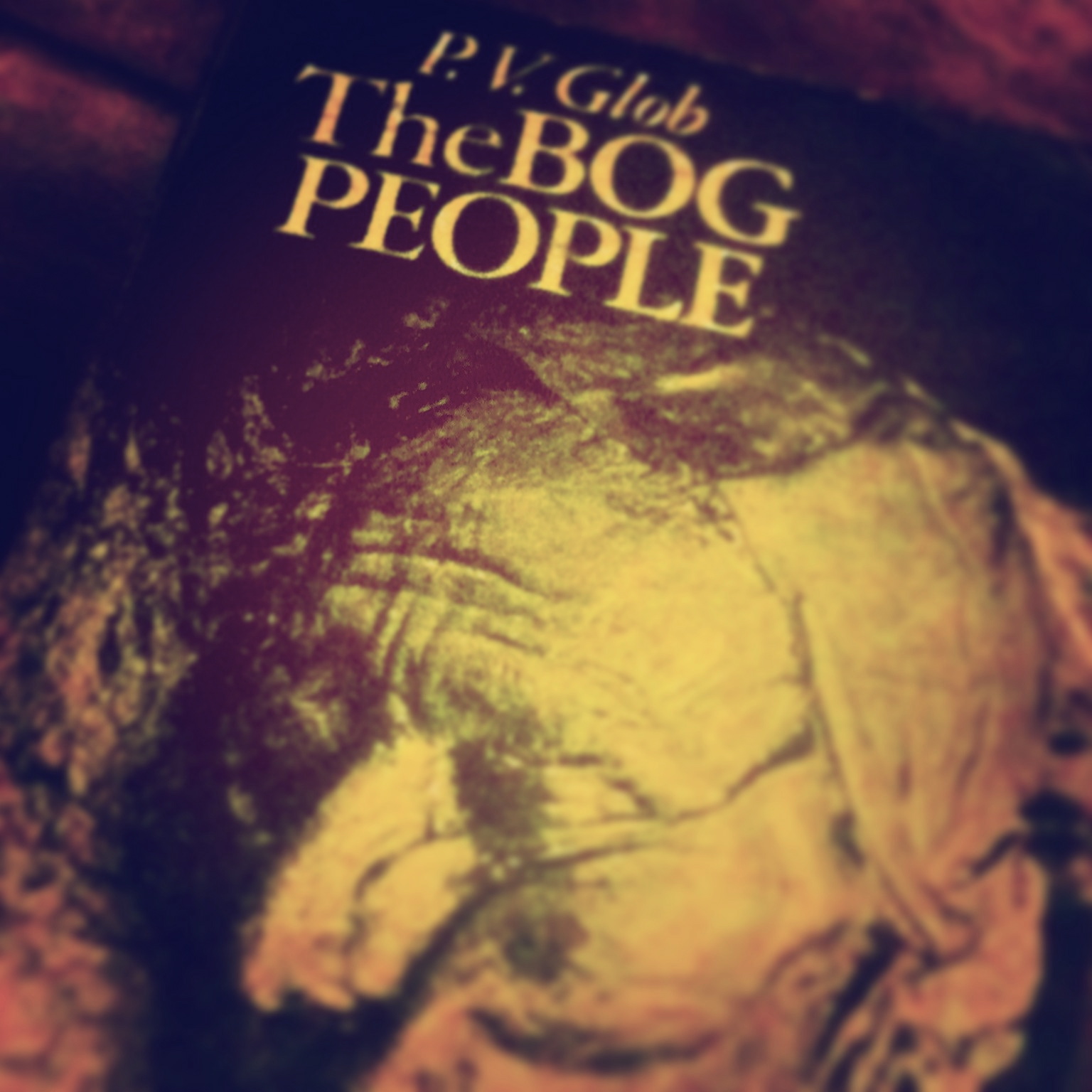
For the moment: research. I wrote about rediscovering P.V. Glob’s The Bog People a few months ago, and I’ve finally had a chance to actually read the thing. For a 1970s archaeological review – even one designed for jumblies – it’s surprisingly well-written. Some of the bog bodies have held astonishing secrets in their graves. One poor woman was staked down with crooks and buried alive. A man was stabbed through the heart, smashed on the head and strangled. It’s all great stuff for the novel, generating context and building ideas. By happy coincidence, one of the jobs I’m doing for Cumbria Wildlife Trust is on wetland restoration, so I’ve been spending some time ankle deep in peatland. I need some more books, and I’d like to take trips to fen country at some point.
It’s a thrilling stage, all the researching and blocking and plotting, preparing the ground before the hard work starts. I learned a lot from writing Riptide, and I’m excited to start work on a new book. Just need to clear away the hundred other things on my To Do list, first.
It hasn’t been all work. Friends Steve and Clare took us to Chester Zoo yesterday. We went straight to the orangutans, and spent a gloriously peaceful 20 minutes with them before a dozen school trips caught us up. Dora especially loved the bat enclosure, a vast warehouse where the bats swoop and skitter in artificial night. This morning we’re off to Dentdale Music & Beer festival, too. I’m going to take my story dice and drink ale.
Bog boats
This is brilliant – no fewer than eight Bronze Age boats have been discovered in a creek in Cambridgeshire. The boats have been preserved by dense layers of silt, to the point that the archaeologists have recorded games of noughts and crosses carved into the wood.
Bogs and marshes….
The full article is here.