Bookstores: may cause heartache

20081215a

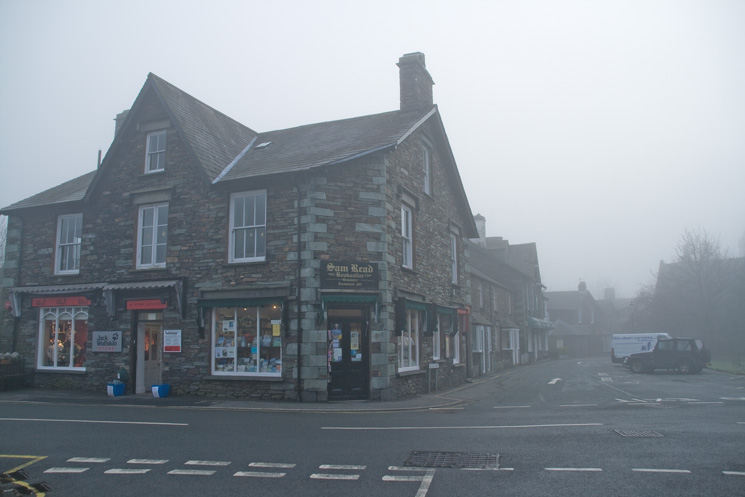
While in Grasmere, we made the mistake of going into Sam Read‘s bookstore. This was a mistake because I wanted to buy everything. Sam Read is one of those achingly wonderful bookshops with books packed into every corner, stuffed into racks and alcoves, and stacked loose above the rows on the shelves. A few years ago, I wouldn’t have strayed beyond the fiction section in any bookstore, but my daughter Dora loves books (current favourite: Six Dinner Sid) and being read to, so I’ve started looking at the children’s section as well. And oh, my; children’s books are simply sumptuous. The quality of illustration and storytelling is just stunning – browsing those shelves was like a treasure chest of my own childhood, a feast of imagination, all dragons and goblins and tunnels and talking dogs. I could have stayed all day to drink in the artwork alone.

I buy almost all my books from charity shops, because I can rarely afford them new. A well-made, well-written book is a real treat for me. I want to hug them close and read them carefully and show them to friends. The one which really stole my heart was A Monster Calls by Patrick Ness, based on an idea by Siobhan Dowd. I’ve only discovered Patrick Ness quite recently, having been blown away by The Knife Of Never Letting Go (I’ll race through the rest of the Chaos Walking trilogy once I’ve tracked down the second part – the third book already sits on my shelves, waiting…). I love his writing – and he quoted on the jacket of Ali Shaw‘s Girl With Glass Feet, so he knows what he’s talking about.

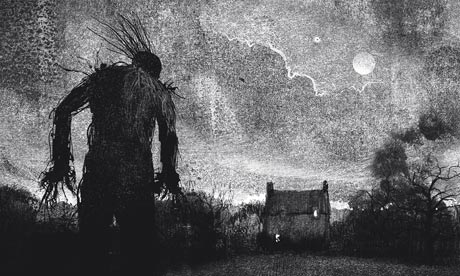
The illustrated version of A Monster Calls is heart-stoppingly beautiful. Just look at this work by Jim Kay:

Illustration from A Monster Calls

A-Monster-Calls-007

I covet this book more than I’ve coveted any book for years – but I didn’t buy it. I bought Cumbrian Folk Tales by Grasmere legend and master storyteller Taffy Thomas. I could only afford one book, and Taffy’s was the reason we’d gone into Sam Read’s in the first place. I’m truly delighted I bought Cumbrian Folk Tales, and I’m looking forward to immersing myself in Taffy’s take on local mythology, but I walked away from A Monster Calls with unbearable reluctance. Still – it’s my birthday in July. Fingers crossed.

Bookstores should carry warnings: may cause heartache…

Swamp Thing indahouse

Image

Friends Iona and Ali Shaw stayed with us this week. Ali and I studied English at Lancaster University, many moons ago, long before I started writing and when Ali was already laying the groundwork for his career. He’s a brilliant author, with novels The Girl With Glass Feet and The Man Who Rained winning awards and translations all over the place. I was privileged enough to read an early draft of Glass Feet, and Ali kindly took the time to read through my first draft of Riptide. His subsequent advice, notes and hour-long phonecalls were extremely helpful in shaping my third and final draft. Over the last few months, I’ve leaned heavily on Ali’s experience of being published, and his knowledge has helped me work out some of what I’m doing with the good people at Quercus Books.

Mon and I don’t get to see Ali and Iona very often, so it was fantastic to have a long overdue catch-up. We mostly nattered about babies, but we also discussed our current projects (his new book sounds AMAZING) and some wider publishing news. Ali recommended two things: firstly, that I try Scrivener. It’s a writing program dedicated towards managing large documents, with all kinds of bells and whistles for organising plots, characters, locations and notes. The various features sound extremely useful, and it’s available on a free 30-day trial, so I’ll definitely give it a go.

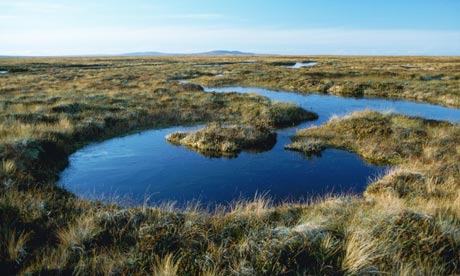
The second recommendation was for Alan Moore’s Swamp Thing. I was describing my own new work, which is set in a maze of bogs and marshes, and Ali (who reads more graphic novels than me), thought Swamp Thing might be good for inspiration and ideas; another book on my birthday wishlist, then. I enjoy graphic novels, and own several of the real classics (Maus, Watchmen, From Hell, Ghost World, etc.) but seldom know where to begin with trying something new. Good stuff.

Quercus Books

Now then, people: I’m pleased to be writing with some extremely good news. After weeks of turmoil and torment, I am utterly delighted to announce that my first novel will be published by Quercus Books in 2014. The last month has been something of a rollercoaster, to say the least, but I’m just blown away to have landed Riptide with such an amazing publisher. It’s still sinking in, but I’m starting to believe it.

My editor, Jane Wood, is really enthusiastic about the novel, and I can’t wait to work with her on the manuscript. I’m just home from meeting with Jane and Sue, my brilliant agent with the bodacious Conville & Walsh team. It was an incredibly surreal experience to talk about release dates, discuss options for the cover art and explore where I’d like to go with my next few novels. I have three solid ideas plotted out and ready for writing; I know what I want to do with the stories, but it was very odd to expose them to publishing professionals for the first time, as I hadn’t had to vocalise or pitch them before.

So what happens next? For now, it’s business as usual: I’m working on a number of films for Cumbria Wildlife Trust, and college is about to go ballistic with end of term projects and paperwork. I’ll have the summer holidays to get my teeth stuck into another draft of Riptide, then we’ll be looking at proofs in Autumn, and publication in Spring 2014. Around all that, I’m keen to get my head down and start making progress on my second novel. The bogs and marshes idea I mentioned last month is shouting louder and louder – I think I’m going to work on that one next. It’s great to have the ideas lined up – it’ll take me years to complete them all – but now I need to carve out some defined, scheduled writing time. I don’t know where that time is going to come from, but I’ll find it. The further I take my writing, the further I want it to go.

I’ve worked hard to reach these early stages, and I feel extremely humble to have had that work embraced by such amazing people. It makes me want to strive even harder with my stories. I wouldn’t have come this far without the support from Sue, from writer friends Ali Shaw, Iain Maloney and Steven John Malcolm, and most of all from my wonderful wife Monica – and my daughter Dora, in her own way – because this is all for her. I’m fortunate and grateful to have such incredible people in my life.

It’s a sunny day in the Lake District, and I’m going to have a wee celebration – time to take the family for some cider in the park…

Flashtag at The Nook & Cranny

Mon and I drove down to Manchester on Wednesday night for the live final of the Flashtag writing competition. Flashtag Writers are a five-strong collective of flash fiction devotees, organising and performing their work across Manchester, the northwest and beyond. This writing contest was part of Chorlton Arts Festival. Downstairs at the Nook & Cranny pub was the perfect place for my first reading in three years – small, close, and dark. It reminded me a little of Twin Peaks. I think the brightest thing in there was my shirt.

images-1      cache_2410604838

With eight writers on the shortlist, four Flashtaggers (plus a few of Benjamin Judge‘s excellent ‘Very Short Stories About Very Good Writers‘ read out in his absence – check out the blog – they’re brilliant. My favourite so far is Haruki Murakami…) and headlined by yer actual flash fiction titan David Gaffney, there was an astounding breadth and depth of storytelling on offer. I’m consistently delighted with the sensations and stories that can be conveyed in remarkably few words: Allie Rodgers gave us a dystopia without printed books; Dale Lately perfectly captured the melancholy of an empty nightclub after hours; Sarah Butler told the tale of a girl who lived on a bus stop. Michael Conley read my favourite story – ‘Looking for an Astrolabe’ was perfect flash fiction, bundling the profound into the darkly comic. David Gaffney’s piece conjured an infestation of acoustic singer-songrwriters, and blamed it all on Badly Drawn Boy. I also loved the work of Flashtaggers Sarah Clare Conlon, Fat Roland, Tom Mason and David Hartley.

I was the last of the shortlisted writers to perform, and – as ever – I was terrified. But the reading went quite well, the audience were very generous and it left me craving more live events. Despite the fear, I always end up enjoying myself. I’d like to think that a few more readings might settle my nerves, but maybe they’re there to stay. Ach weel.

Up against consistently strong competition, I was genuinely blown away to be awarded second place for ‘This Kitten I Knew‘. That was really humbling. I was delighted that Michael’s ‘Astrolabe’ won first prize – it was easily my favourite on the night, and I feel honoured to come second against such a great story.

More than anything else, it was truly uplifting to have some social contact centred around writing. Facing a late drive back to Kendal, we couldn’t stay very long, but it was a real thrill to stop and chat with the audience, the Flashtaggers, the shortlistees and Mr Gaffney. It’s strange, sometimes, to live in relative isolation halfway between the vibrant literary scenes of Manchester and Glasgow. Nights like Wednesday help me remember that other people are excited by stories – by writing and reading.

Iain Banks

Image

I was saddened yesterday by the terrible news that Iain Banks, one of my favourite authors, is suffering with terminal cancer. I enjoy his sci-fi novels (written as Iain M. Banks), but his literary fiction in particular has been a huge influence on my reading and my writing.

Three books have stuck with me above all others: Banks’ debut novel The Wasp Factory was the first of his works that I read, and it completely blew me away. Isolated and domestic but universal and thrilling, I think it was probably the first work of contemporary literary fiction I really tackled, and it paved the way for the next decade of my reading. Short and nasty, The Wasp Factory is also incredibly sad. The images in the final pages are impossibly moving. I remember being astonished that the publishers juxtaposed negative reviews – and there were plenty – alongside positive reviews. It was a gigantic two fingers raised to the establishment. Who gets to decide what constitutes literature? It was a sword in the dirt, a statement of intent: HERE I AM.

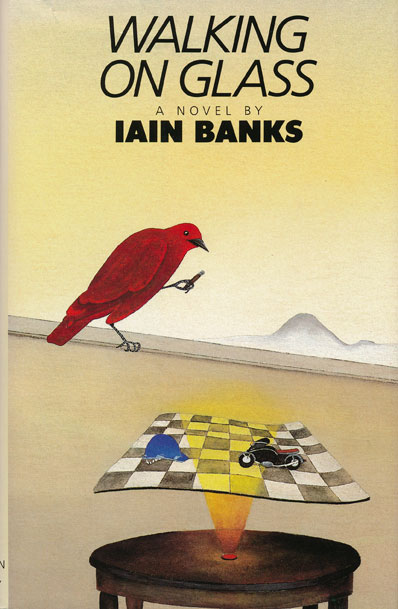
As much as I love Whit, The Crow Road, Excession, Use of Weapons, Consider Phlebas or Transition, the other two novels which really stand out for me are Walking on Glass and The Bridge. Their intricate layers of narrative, meaning and genre opened my eyes to what literature was capable of. The Bridge maps out loneliness as well as any other novel I’ve read, while Walking on Glass simultaneously combines existential nothingness with predetermined destiny.

It’s sad to think that forthcoming novel The Quarry will also be his last. More than anything else, Banks is a fantastic read, and – like Roberto Bolano, Neil Gaiman, Terry Pratchett, Denis Johnson, Sarah Waters or Jasper Fforde – I return to his books time and time again. There is nothing pompous or pretentious about his work, and like all great writers, he ultimately delivers great stories above all else. I’ve loaned his novels out to friends over the years, and I’m now missing many of my favourites; this sad news makes me want to track them down and read them again.

Books in boxes

IMG_0088       IMG_0090

IMG_0089       IMG_0091

For the last three years, Mon and I have been living with her parents. All of our things have been stored in boxes in the cellar, with the inevitable result that whenever we’ve needed a particular item – a plug adaptor, a passport, a DVD – we’ve had to rummage and excavate our possessions to find the missing thing. Some boxes were needed regularly, and these stayed on the surface. Others were out of sight and out of mind, and they sunk deeper into the mire, their contents forgotten.

We moved into our own house on Christmas Eve. Moving has been a slow process, and it’s only today that we brought across the last of our boxes. As we unpacked and sorted the contents, I was delighted to discover my research books. These are the weird volumes that have grabbed my interest in charity shops and jumble sales. I seldom know exactly why they spark my interest, but they’re always about something peculiar, and they trigger my imagination. After three years, it was a strange feeling, both energising and nostalgic, to unpack this box of forgotten books and browse again through a treasure trove of ideas and inspiration. There are studies of sumo wrestling, devils, tattoos, smuggling, bicycle mechanics, Vikings, saints, medicine, art, juggling and more…

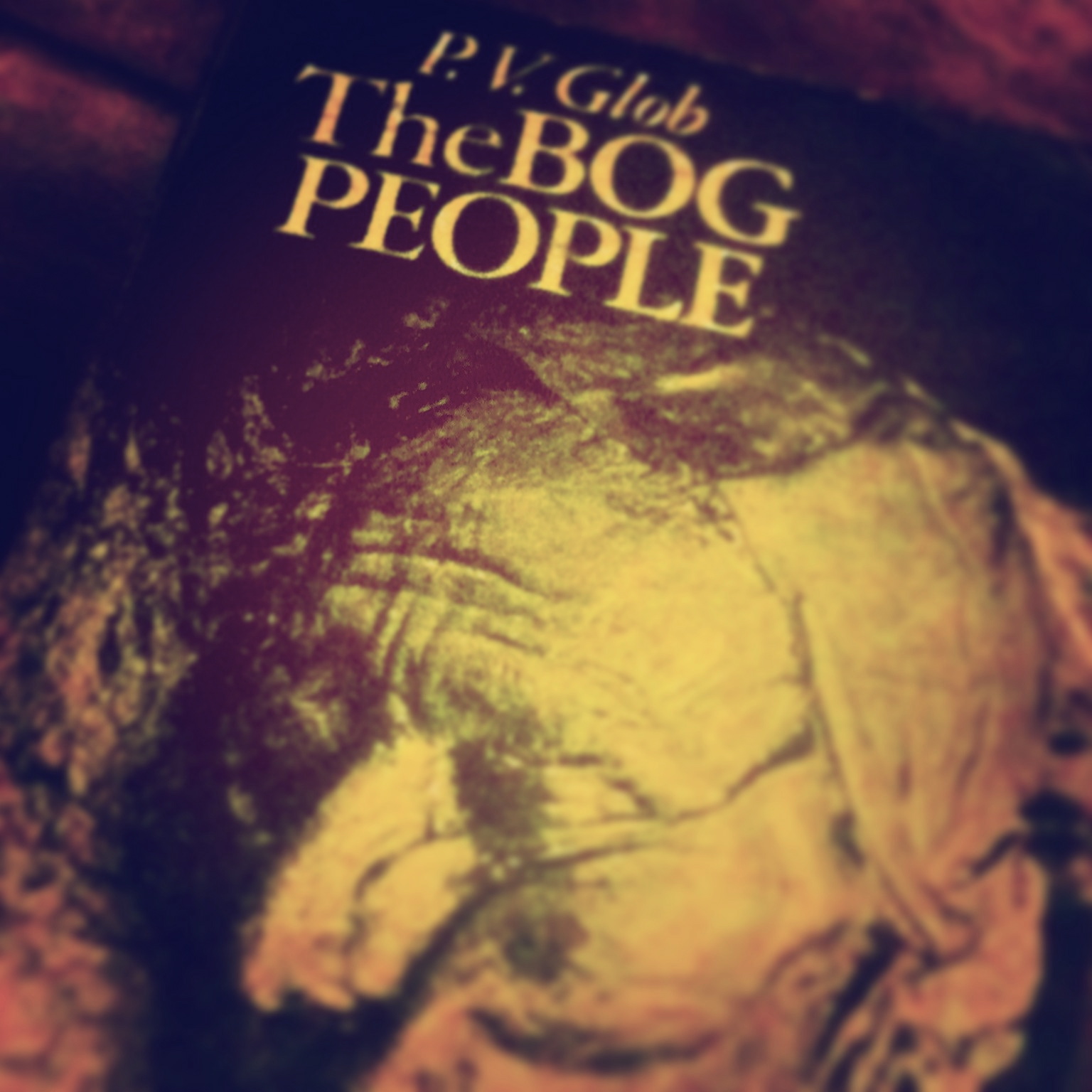
Of the titles pictured here, Whale Nation inspired my long-running novella-in-progress, Year of the Whale, while David Pelham’s Kites (a classic of the kiting genre) and Stephen Turnbull’s Ninja are dripfeeding imagery and history into plans for my next novel. Finally, P.V. Glob’s The Bog People (1971) is research for another story to be written in the distant future, if I ever have the time to write it.

Part of me wishes I was called P.V. Glob.