Battleship Island

Image

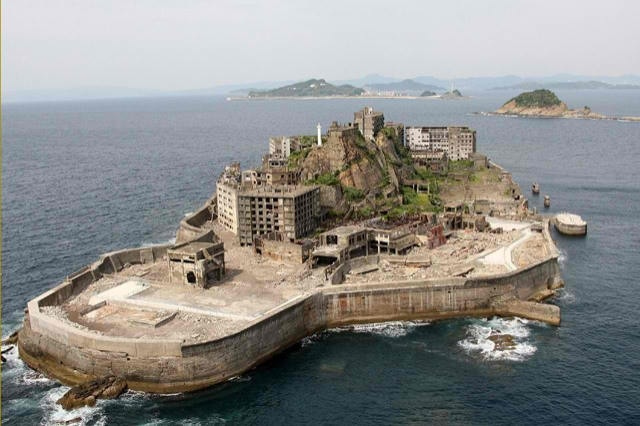
Here’s another gallery of awesome threshold spaces – thanks to Iain Maloney for pointing this one out to me. This is Hashima Island in Japan, also known as Battleship Island. It was used as a base for extracting and processing coal from the sea bed, and for housing the miners. The Mitsubishi corporation owned the island for almost a century, but the mines became unprofitable as coal was increasingly superseded by petroleum. Mitsubishi abandoned the place in 1974. Since then, the concrete has crumbled, the balconies have fallen from the buildings and plants have erupted in the courtyards. It’s an astonishing, ghostly space.

The sea will take its own.

To Do

I haven’t been writing very much lately. I’ve been too busy with real life, scrapping my way through end-of-year marking for my film students and working on videos for Kendal College and Cumbria Wildlife Trust. I’ve still some way to go, and there’s plenty more to do – my Dad’s popping up to help me build a fence, and I need to build a log store. But hopefully the end is in sight. Most important, I should be getting Jane‘s notes for Riptide in the next few weeks, and then I need to work my way through that final draft.

For a bit of a change, I’ve been using the odd evening to (slowly) teach myself the basics of InDesign, trying to put together a booklet of my flash fiction. It’s no big deal – twenty-five stories between 50 and 500 words, provisionally entitled ‘Marrow’. I’ve also booked in my next two readings – first for the Spotlight open mic in Lancaster in July, and then as a support slot for Dreamfired in Brigsteer in October. And in the background, I’m reading and researching towards my next novel; quietly brewing on the story, blocking out the plot. I still have some narrative strands to tidy up, though I know where the book will finish emotionally.

IMG_0091

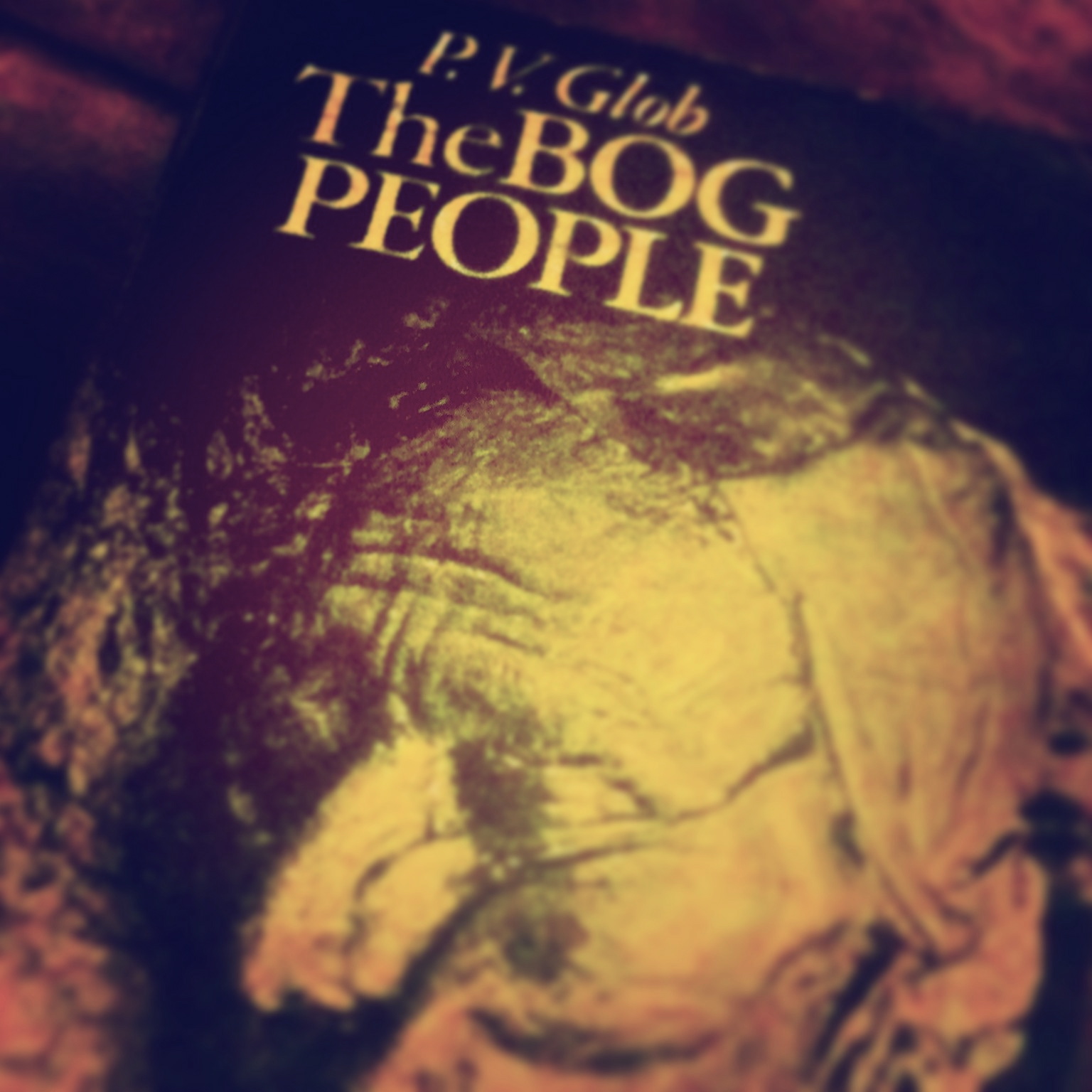
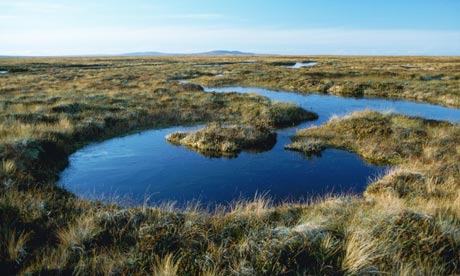
For the moment: research. I wrote about rediscovering P.V. Glob’s The Bog People a few months ago, and I’ve finally had a chance to actually read the thing. For a 1970s archaeological review – even one designed for jumblies – it’s surprisingly well-written. Some of the bog bodies have held astonishing secrets in their graves. One poor woman was staked down with crooks and buried alive. A man was stabbed through the heart, smashed on the head and strangled. It’s all great stuff for the novel, generating context and building ideas. By happy coincidence, one of the jobs I’m doing for Cumbria Wildlife Trust is on wetland restoration, so I’ve been spending some time ankle deep in peatland. I need some more books, and I’d like to take trips to fen country at some point.

Image

It’s a thrilling stage, all the researching and blocking and plotting, preparing the ground before the hard work starts. I learned a lot from writing Riptide, and I’m excited to start work on a new book. Just need to clear away the hundred other things on my To Do list, first.

It hasn’t been all work. Friends Steve and Clare took us to Chester Zoo yesterday. We went straight to the orangutans, and spent a gloriously peaceful 20 minutes with them before a dozen school trips caught us up. Dora especially loved the bat enclosure, a vast warehouse where the bats swoop and skitter in artificial night. This morning we’re off to Dentdale Music & Beer festival, too. I’m going to take my story dice and drink ale.

Swamp Thing indahouse

Image

Friends Iona and Ali Shaw stayed with us this week. Ali and I studied English at Lancaster University, many moons ago, long before I started writing and when Ali was already laying the groundwork for his career. He’s a brilliant author, with novels The Girl With Glass Feet and The Man Who Rained winning awards and translations all over the place. I was privileged enough to read an early draft of Glass Feet, and Ali kindly took the time to read through my first draft of Riptide. His subsequent advice, notes and hour-long phonecalls were extremely helpful in shaping my third and final draft. Over the last few months, I’ve leaned heavily on Ali’s experience of being published, and his knowledge has helped me work out some of what I’m doing with the good people at Quercus Books.

Mon and I don’t get to see Ali and Iona very often, so it was fantastic to have a long overdue catch-up. We mostly nattered about babies, but we also discussed our current projects (his new book sounds AMAZING) and some wider publishing news. Ali recommended two things: firstly, that I try Scrivener. It’s a writing program dedicated towards managing large documents, with all kinds of bells and whistles for organising plots, characters, locations and notes. The various features sound extremely useful, and it’s available on a free 30-day trial, so I’ll definitely give it a go.

The second recommendation was for Alan Moore’s Swamp Thing. I was describing my own new work, which is set in a maze of bogs and marshes, and Ali (who reads more graphic novels than me), thought Swamp Thing might be good for inspiration and ideas; another book on my birthday wishlist, then. I enjoy graphic novels, and own several of the real classics (Maus, Watchmen, From Hell, Ghost World, etc.) but seldom know where to begin with trying something new. Good stuff.

Bog boats

This is brilliant – no fewer than eight Bronze Age boats have been discovered in a creek in Cambridgeshire. The boats have been preserved by dense layers of silt, to the point that the archaeologists have recorded games of noughts and crosses carved into the wood.

Bogs and marshes….

The full article is here.

Exclusion

Image

Here’s another gallery of those threshold spaces I’m so drawn to; though far grimmer than the edgelands I wrote about a few weeks ago.

These photos were taken within the exclusion zone at Chernobyl. These buildings have been sterilised, rather than evolved through abandonment. The atmosphere is flat and repellent, rather than mysterious or melancholic. The sadness is so heavy, so austere. The ghosts weigh heavy, and I never want to go there.

Thanks to Billy Kinnear Photography for pointing out this site.

Ladders upon ladders

Image

This brilliant photo gallery shows the vertical commute to school taken by mountain-dwelling children in rural China. This is exactly the sort of imagery which is feeding into my plans and dreams about the next novel – ladders upon ladders, and buildings upon buildings. I can picture the world and the culture so clearly, and I’ve almost finished blocking out the plot. The weight of my workload is making me hesitate a little, but I think it’s almost time to start writing.

Kingfisher

Image  Image

I used to go climbing several nights a week, but I haven’t the time any more. And when we lived in the old house, I cycled to work; now my wife drops me off at the college before she goes to paint. In short, I don’t do any exercise. I’m constantly zipping about at a thousand miles an hour, juggling my different jobs, but that’s hardly a substitute.

Walking is the only activity I can really make time for. Mon and I both love walking. We’re lucky enough to live in an amazing part of the planet, and our little corner of it has some excellent trails. We can walk from our wee cottage in Burneside to see friends in town – or strike out in any other direction to find open countryside.

I’m not a purist about the countryside. I like edgelands and places of threshold where the natural and the man-made have grown old together. Yesterday, we walked to Staveley in Kentmere and back. It’s a great walk for rusted farm machinery, gnarly stiles, fallen trees and tumbledown barns. There’s a troll bridge with missing slats, and a beech tree strangled by a noose of barbed wire. The tree’s bark has enveloped the wire completely, lapping over it like the slowest wooden wave. In one spot, a fence has been mended with an old iron bedhead. It’s lambing season – we passed new lambs, minutes old. I saw my first ever kingfisher.

Walking gives me more than physical exercise. It’s a source of constant, ever-changing inspiration. Walking around London fuelled my first short stories. My walks on Islay, Gigha and Kintyre fed into Riptide Heart and the fictional island of Bancree. My longstanding work-in-progress, Year of the Whale, is about walking – and the need to walk. Location is crucial to the way I write, and walking in real places fires my imagination. I try to create a geography – physical, atmospheric and emotional – that I believe in. When I get it right, my characters play out the story in that environment like a drop of water on a slope, finding the simplest route to ground.

Walking is good for the soul.

I’m calling a character in my next novel Kingfisher.

Edgelands

Image

I’ve always been drawn to places and spaces that in some way evolve beyond their origins or conventions – places of threshold, places of change. The stunning photos in this link show factories, fairgrounds and entire towns left to ruin. Caught between wilderness and control, they collapse, combine and intertwine with nature, creating something entirely new. These photos reveal abandonment as a creative act. They show us a vision of the future – of the mortality of our species. 

When I was about 10 years old, my brother and I played in an abandoned, fallen-in building, choked with sycamores and wild garlic. It was close to our house, but I hated being there alone. I remember virtually nothing of my childhood, but the oppressive sense of presence that radiated from those old stones has stayed with me.

The less control we have on our buildings, the more control they take back for themselves.