2013 and all that

Obviously, the end of every year gives pause for reflection. For me, this used to manifest itself in a range of Top Tens – films, albums, books, gigs – but these days I don’t really do enough of any of those things to justify it. So here’s my combined Top Ten of 2013 instead. They’re not in order.

1. Getting a book deal with Quercus

Securing a publishing deal with the wonderful Quercus Books has been one of the most amazing things to ever happen to me. I’m still waiting for someone to pull the rug out from under my feet, but until they do, I’ll keep enjoying every moment of this exhilarating, terrifying, extraordinary rollercoaster. I feel bowled over by the support for my writing, even as I feel a massive weight of pressure to deliver. I started the year with a manuscript called Riptide Heart; I finished with a rigorous redraft, now called The Visitors. Working with Quercus editor Jane Wood has made my writing tighter and my story much stronger. It has also given me a real hunger to push on with my work – I now have half-a-dozen novel ideas clamouring for my time.

This wouldn’t have happened without the hard work of my awesome agent, Sue Armstrong at Conville & Walsh, and the support of my amazing partner Monica. That brings me to the second thing on the list:

2. New work from Monica Metsers

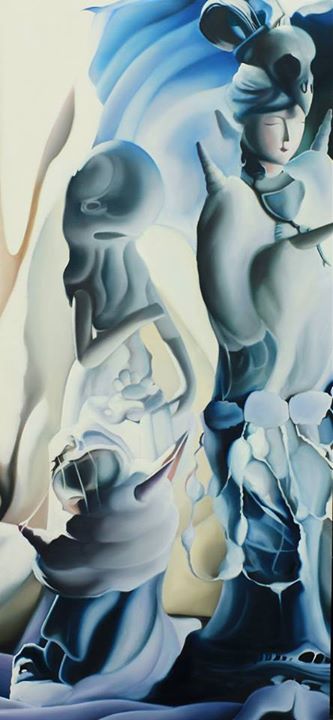
While she was pregnant, and in the first year of Dora’s life, Mon took time away from her painting. 2013 was the year she really started again, and the results have been amazing. She has a solo show in London next year, and as well as a few smaller paintings and a range of drawings, she’s made these two stunning large-scale paintings, which I think are amongst the best work she’s ever done:

BATALLA DE LOS GIGANTES                                                          BALLENA Y GEISHA
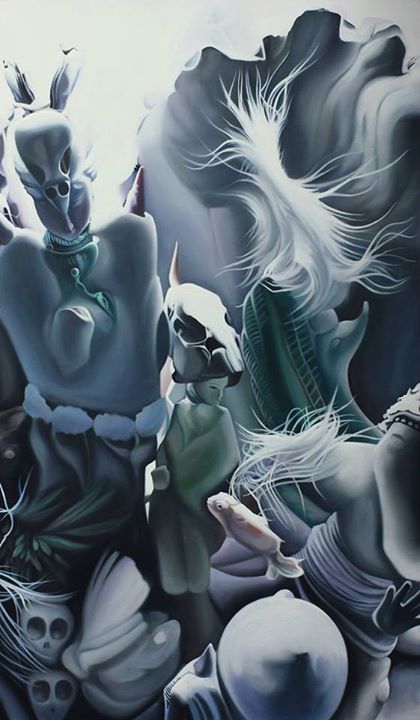
BATALLA DE LOS GIGANTES   ballena y geisha

2013 also marked our five-year anniversary – it’s been a blast.

3. Performing live

I’ve never been good at public reading, and this year I set myself the challenge of improving. I went on to read my work twice at Spotlight in Lancaster, once at Kendal’s Spoken Word, once (performing from memory) at Dreamfired in Brigsteer, and once at the Flashtag 2013 writing competition in Manchester, where I won second place. My confidence grew with each reading, though I still feel I’ve a way to go.

I also attended a spoken word workshop run by the excellent Brindley Hallam Dennis. One of the activities he set has changed everything: he had other members of the workshop read our stories. The lady who read my flash piece ‘Marrow’ performed it at a third of the pace I do. She relished every word, and it was three times better as a result. I haven’t performed since then, but I’m going to practice reading with that sort of gusto at the next opportunity. I’m booked in for a 20-minute slot at Spoken Word in February, and I’d like another couple of events under my belt by then. My goal has evolved a little, too: what I’m aiming for now is something closer to outright performance than simply reading. That will come with confidence, and confidence will come from practice.

4. Seven Seals – Plan of Salvation

After a whopping 18 months, I finally finished making this music video for amazing psychedelic synth punks Seven Seals. They’re an extraordinary band, and it was an honour to be involved. They’re working on new material, which will hopefully be available in 2014 for their ten-year anniversary gigs.


5. Amy Hempel – The Dog of the Marriage

Quite simply, the finest collection of short stories I’ve ever read. Hempel’s writing is so sensitive, so honest, that it infuses her stories with devastating grace. Unmissable.

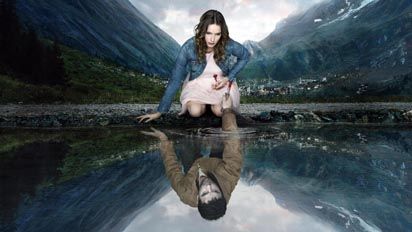
6. Les Revenants

This French drama is the best thing I’ve seen on television in years, remarkable for its intrigue, restraint and power. It delivers on every level, exploring an extraordinary narrative without needless exposition to unravel the mysteries of the Returned, all of whom are troubled in different but connected ways. The locations and cinematography are stunning, while the soundtrack by Mogwai is my album of the year. There’s a startlingly surreal lucidity to the conclusion, and I think they could have left it there; but I’m delighted to see a second series in the works. Here’s the trailer for season one:

In TV terms, an honorable mention also goes to Game Of Thrones. Tyrion Lannister might be the finest character ever committed to screen, and the Red Wedding haunts me even now.

7. Success for friends

It’s been a good year for many of my friends and peers, too. Iain Maloney landed an agent and a book deal with Freight, Kirstin Innes found an agent, Anneliese Mackintosh got a book deal, Kirsty Logan landed a book deal and won everything in the world. Friends Andy and Gemma had a baby boy called Miles, and Ali and Iona had a little girl called Inka. There have been a lot of richly deserved congratulations this year. Good work, team.

8. Cats

Yup. Two of them. I wasn’t sure, at first, but then we met these two cats in the Wainwright Animal Rescue Centre, and it was an easy decision. They came to us with the names Remus and Teddy, which we’ve kept. They’re brothers, about three years old, and half-Persian. They’ve been an amazing addition to our house. They are incredibly relaxed and friendly, and they actively seek our company. That’s especially welcome when I’m having a writing day alone at home.

1174754_10153244876455551_211086219_n

9. Holiday in France

We were overdue a break, and this fortnight in France was exactly what we needed. We camped in half-a-dozen places, the best of which was Green Venice, a vast network of canals, ditches and overgrown waterways, crawling with vines and willows, alive with dragonflies and katydids. It was an extraordinary landscape. I read more in that fortnight than I’d managed in four months. Best of all, the holiday gave me enough mental space to plan my next novel, which will be called Grisleymires. That’s now blocked out on Scrivener, waiting for my next writing day.

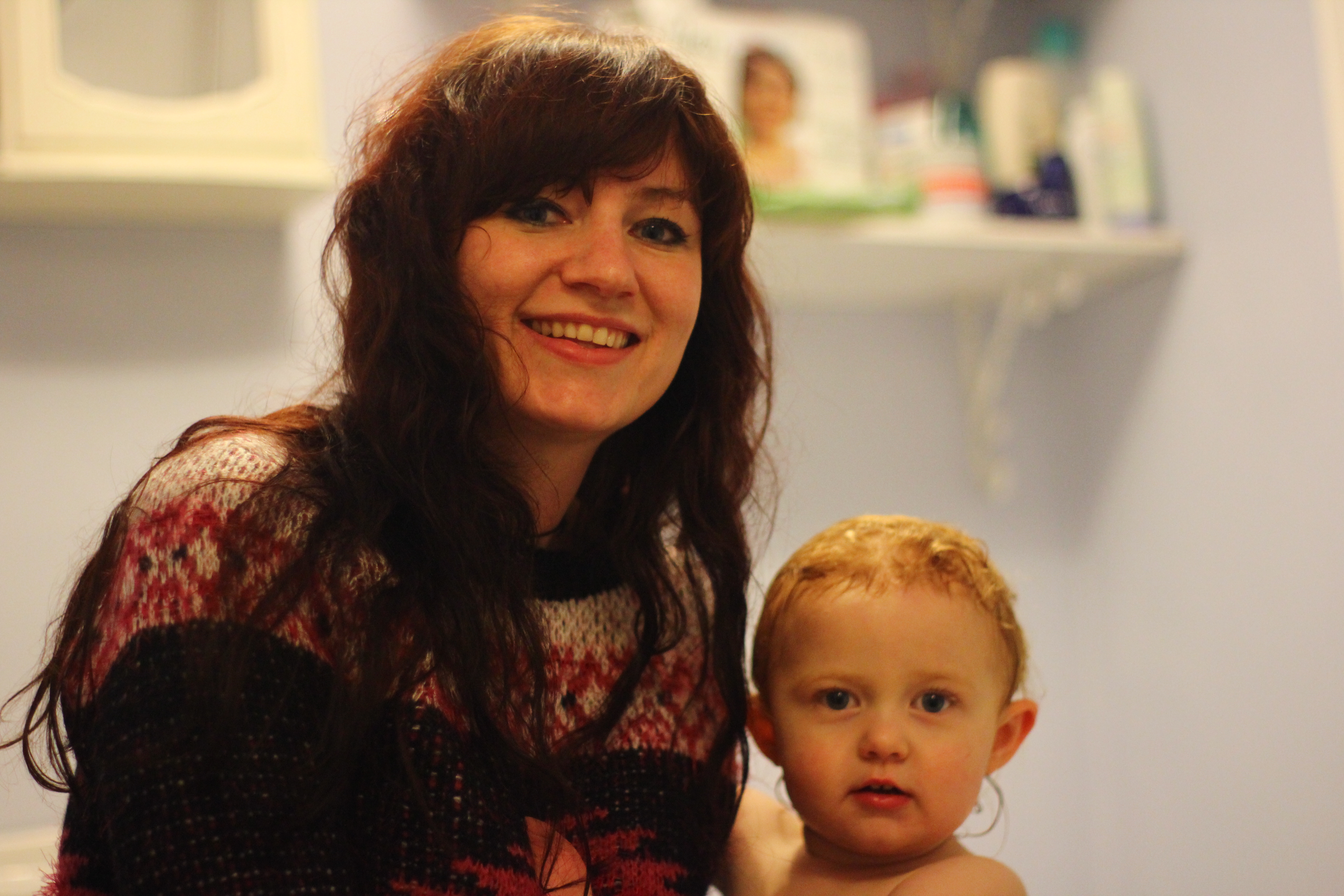
10. Another year with Dora.

In their first year, babies are basically little puddings. Awesome little puddings, but puddings nonetheless. In their second year, they gather the basic tools to discover the world. And in year three, that toolkit expands exponentially; physically, vocally, intellectually and emotionally. Going through that with Dora has been nothing short of a joy. Seeing the world through her eyes has made me reevaluate so many things for myself. Her conversations leave me in stitches, and everything about her makes me smile. And she hasn’t been to A&E this year, which I consider something of a triumph. Though there’s still a week of 2013 left.
IMG_4758

So that’s my Top Ten. It’s been a good year, and 2014 is alive with possibilities. I might even pop some resolutions up in a few days.

RedraftredraftBRAINMELT

For the last eight weeks, this has what my life has looked like:

RedraftredraftredraftredraftredraftredraftredraftredraftredraftredraftredraftredraftredraftredraftredraftredraftredraftredraftredraftredraftredraftredraftredraftredraftredraftredraftredraftredraftredraftredraftredraftredraftredraftredraftredraftredraftredraftredraftredraftredraftredraftredraftredraftredraftredraftredraftredraftredraftredraftredraftredraftredraftredraftredraftredraftredraftredraftredraftredraftredraftredraftredraftredraftredraftredraftredraftredraftredraftredraftredraftredraftredraftredraftredraftredraftredraftredraftredraftredraftredraftredraftBRAINMELT.

In case you hadn’t noticed from my incessant moaning, I’ve been redrafting my novel. Again. It’s been a vast job, because – following discussions with Jane Wood, my amazing editor at Quercus – we decided to change the ending quite substantially. This isn’t as simple as knocking off the last few chapters and rewriting, alas; to make the climax and conclusion fit, organically and emotionally, the threads of the plot need to extend a long way back into the story. Because The Visitors is already woven rather tight, unravelling the narrative to make the new ending fit has been tough. Around college and film jobs, I’ve been working on it in evenings and spare days since mid-October. After the first fortnight, I took to saving the manuscript as a new document at the end of each session. This is what the folder looks like:

redraft of death

That’s right. It’s called the REDRAFT OF DEATH.

But check it out, humans; I have actually finished. I sent the new draft off to editor Jane and agent Sue late last night, along with a summary of everything I’ve changed. On reflection, it’s been a massive rewrite. As well as the new ending, I’ve changed names, moved locations, cut chapters, written new chapters, tightened dialogue, tightened prose, and – perhaps biggest of all – introduced an important character at the start of the story, rather than halfway through. Maintaining his presence from this early beginning meant a light rewrite of the entire first third. I’ve also made a big change in the death of another character, which brought a new angle to the idea of ‘killing your darlings’.

Dealing with the sheer volume of information is what causes brainmelt. Trying to keep everything in perspective – emotion, story, plot, character, description, geography, chronology – is exhausting. To help manage the changes, I riddled the manuscript with notes to myself, so I wouldn’t lose track of the things that needed work. It was quite telling to come across these messages, later on, and reflect on my thought processes. Here’s an example:

“Move the distillery to the island where it should have been from the beginning, you dick.”

So yeah, it’s been tough. I’m expecting another round of line edits, at the least, but hopefully the bigger structural stuff is now finished. I would have worked quicker but for the day jobs. Trying to switch into a more creative mode and recover a spark is tough. There have been times I’ve sought out any distraction to keep me from inflicting more destruction on my work. That’s where Freedom has really helped. I can’t recommend it to writers (and other procrastinators – YOU KNOW WHO YOU ARE) highly enough.

For all the effort, I still wouldn’t be doing anything else. I saw a great quote the other day. Though I can’t remember who said it, it was something like, “For all that writing is incredibly tough, it’s worth remembering that it’s still making up stuff for fun.”

True dat. More than anything else, I’m increasingly looking forward towards my next novel. It’s called The Hollows. It’s mostly planned, and I’m champing at the bit to start work. Now term is almost finished, I’m going to give myself a few days off to clear my backlog of video jobs, then try and take a day or two over Christmas to get writing.

After dealing so exhaustively with a manuscript of 94,500 words, it’s very strange to be faced again with all the promise and terror of a blank, white page.

Farewell to the Gold

Eleanor Catton won the 2013 Man Booker with her gigantic novel The Luminaries last week. First of all, congratulations to her. Secondly, a pox on the condescending sexist drivel surrounding her win. I’m looking forward to reading The Luminaries when I get a chance. (My reading is list is currently stacked longer than my arm.)

I know Catton’s novel is partly about gold-panning in New Zealand, and it’s a neat connection to this song by my father-in-law, Paul Metsers. He wrote ‘Farewell to the Gold’ thirty-three years ago, not long before leaving New Zealand for the UK. It’s his best-known song, having been covered by Nic Jones, Bob Dylan and countless dozens of folk singers through the decades. I still think Paul sings it best. I made the video and Paul’s son, Ben Metsers, recorded the sound.


Here Be Monsters

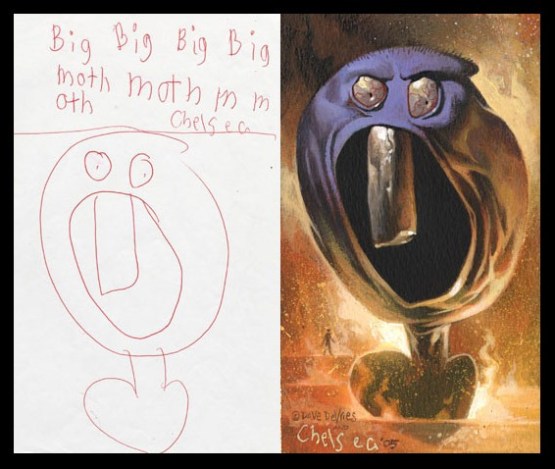
My amazing partner Monica brought this to my attention today: The Monster Engine, a series of children’s nightmares made ferociously lifelike by talented DC comics artist Dave Devries. His skill as an illustrator makes the imagination of these kids all the more fantastical, and all the more frightening. These are just astonishing – and their naivety, their anatomical awkwardness, makes them so sinister. This is true horror:

Image

Image

You can see more of The Monster Engine here. I’m going to try and get the book.

These images resonate very strongly with me, because I don’t remember much of my dreams or my childhood. I remember virtually nothing before the age of ten – just scraps of memories, like the time I snapped a penknife shut on my finger, and the time I didn’t realise I was standing in an ants’ nest. I do remember some of my nightmares, though I can’t attach them to any sense of how old I was, or where. I remember watching the shadow of a man stalking up the stairs towards me, infinitely slowly – even though the door was closed and there was no way I could see the stairs. I remember a white face watching from a mezzanine. I remember lying in bed, early one morning, frozen with fear while a fog boiled from the bottom of my cupboard.

This sounds daft, but I sometimes wonder if I write precisely because I don’t recall my dreams.

If dreams are how we interpret the world and remember events, perhaps we need access to that process of recording and interpretation, just to be reassured that we have been alive despite it all. That access comes from remembering dreams, or scraps of dreams. I don’t remember mine, and so I’ve found another way to interpret my life. It probably doesn’t work so simply, but writing, for me, is the wax crayon drawing of things that might have happened. Reading is what makes them spring to life, and growl from underneath the bed.


Atlantis

ku-xlarge

This is pure gold: a gallery of real-life sunken cities.

For me, Atlantis has always been a gigantic city, sitting in a natural amphitheater, the houses and temples still essentially the same – only drowned and crusted in shells and weed. Ghosts still haunt the city, sharing terracotta pots with octopi and crabs. They watch the transatlantic liners and factory trawlers comb the seas above them.

Have a browse right here, and lose yourself underwater…

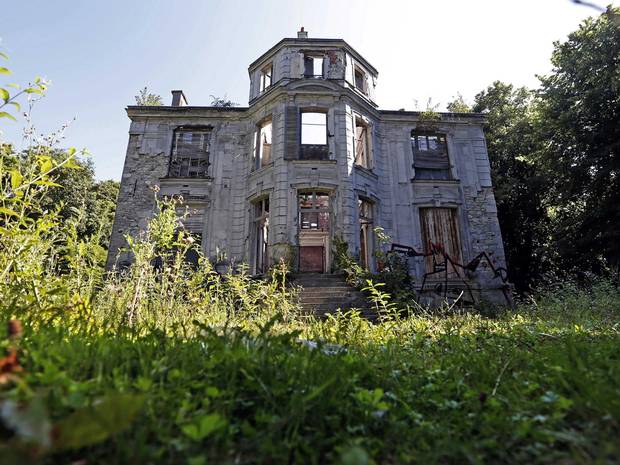
Goussainville ghost town

Goussainville-6

I’m such a sucker for ghost towns and abandoned places. This gallery explores the village of Goussainville-Vieux Pays, abandoned after first a plane crash, and then the opening of Charles De Gaulle airport, drove the residents into Paris or the quieter villages nearby.

I think, for me, that silence – or at least natural sound – is an important part of defining a true edgeland, and the incessant roar of aeroplanes would discount Goussainville. But there’s something so sad about the sight of deserted buildings. The energy that comes from their construction – and the energy needed to sustain the life, and love, and relationships inside them – doesn’t dissipate when the people leave.

This comes hot on the heels of Les Revenants, too…

Valve and Hound

newlogo

170 unread emails greeted my return from holiday, and this almost passed me by in a whirl of administration – but while I was in France, I received the great news that Valve have accepted two of my short stories for the third edition of their excellent journal.

The first story is ‘When The Bough Breaks’. It’s a brutish, experimental piece about a life-term prisoner trying to deal with horticulture in his halfway house.

The second story is called ‘Hound’. I consider ‘Hound’ to be my only true story, so much as any story can be true; I wrote it when I lived in Manchester, back in 2009, and it’s about a stray dog that haunted the streets of Withington. For a month, or maybe six weeks, I saw him again and again, scavenging in the alleys and lanes around our flat. Mon and I would often stop to talk to him, though he became increasingly scared of people. When he finally vanished, as I think I’d always known he would, I looked for him; and when I couldn’t find him nearby, I searched for him on the city’s animal rescue websites. I never discovered what happened to him, but I’ll always feel guilty that I didn’t do more when I had the chance. We left about a month after the dog had gone.

Dog-by-Giacomo-Brunelli-001

Manchester was a strange time in my life. Three days a week I worked on my first book, a novel-length prose-poem called ‘Meat’, and three days a week, I worked in a bespoke veneer workshop in Stockport. I lost my job when the owner died suddenly from complications of swine flu. On Monday he was there, and on Tuesday he was dead. We finished the last order, then the workshop closed. Desperate for work, I applied for about a hundred jobs in a month: in delis, cafes, factories, shops, offices. I received two rejections and approximately ninety-eight silences. We packed everything we owned into a hired van and drove to Kendal twice in a day. On the second trip, dumb with tiredness, I had to do an emergency stop on the M6 near Preston. There were swans waddling across the motorway. Goddamn swans.

Each of my stories means something to me, but ‘Hound’ is special. Unlike the majority of my work, it is mostly true, and it records a turning point in my life. I had finished ‘Meat’, which took me to some extremely dark and upsetting places, but exorcised a lot of the poison I’d carried through my twenties. I received some good feedback on the manuscript from friends, writers, indie publishers and agents, but the consensus was that it was too dark for a first novel. I think this is probably fair. My reading and writing began to evolve again after Manchester, and ‘Hound’ marks the start of this change in my work: becoming more constructive, more concise and more direct. After ‘Hound’, I became interested in writing as a vehicle for immersive storytelling, rather than writing for the brutality of raw emotion.

As well as being one of my favourites, ‘Hound’ is also the most rejected of all my short stories. I don’t interpret rejection as a validation of the quality of a story, but I’ve been a little dismayed that no-one wanted to take it. I really wanted ‘Hound’ to go to the right home, and I’m humbled and delighted that Valve have taken it on.

I didn’t mean to write so much about this, or to get quite so personal. We only lived in Manchester for eleven months, but when I pull it apart, I feel surprisingly emotional about this point in my life. It marked a step change in who I was and who I am, and ‘Hound’ is a measure of that change. And this perhaps is mostly why I write: to interpret and record my world and myself.

Les Revenants

returned1_A2

I’ve finally caught up with The Returned, which has not just maintained the quality of the first episode, but consistently improved across the series, growing in confidence, becoming ever stranger, madder, sadder. It’s the most exciting thing I’ve watched on television for a very long time: it’s Lynch without the hysteria; it’s Lost without the sensationalist cliffhangers. When a show is this good, eight episodes is not enough, and I’m glad there’s a second series on the way.

That said…

There’s a habit in these long-running ensemble shows – and increasingly in big-budget films, too – of ‘concluding’ with threads left untied – or introducing tantalising new story strands. Sequels and follow-ups have therefore become implicit. The gradual switch from ‘series’ to ‘season’ is an ingenious use of weasel words; season implies annual regularity, and makes the show a fixture, part of an ongoing narrative, integrated into the cycle of the year. New instalments are seen as part of a continuum; rather than stand-alone, self-contained sequences. This has clear drawbacks: I loved Lost, but the final conclusion to the show was incredibly weak. It felt increasingly apparent, as the show expanded, that they had started without knowing how it would end, and that each successive series was created to generate the next, rather than conclude the previous. With such a weight of expectation piled onto the final episodes, it was always going to fall short. The conclusion of Lost was less than the sum of its many, flawed, dazzling parts.

With a little courage, I think The Returned could probably have finished at the end of the first series, even with so many questions still unanswered. It would have been bold, but the last sight of the flooded town would have made the metaphor of the draining dam all the more apparent… but we have expectations of closed narratives, and there’s too much still unsaid. And when it is so incredibly well-made, a second series will be very welcome. Now it’s just a matter of waiting until November next year – and what’s 18 months for the best thing on television?

In the meantime, I’ll console myself with the breathtaking Mogwai soundtrack. I reckon it’s their best work since Come On Die Young. You can listen to some of the songs here, but you’d better get the real thing, just to be on the safe side.

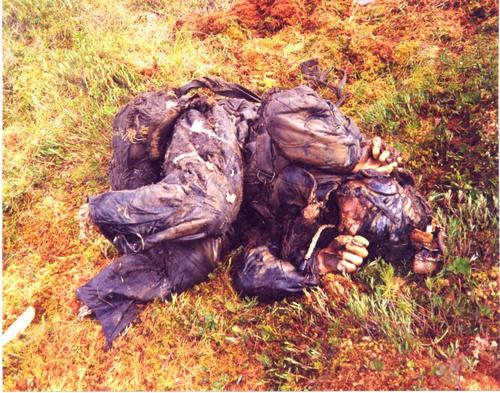
WWII bog body

pilot

After the bog boats, here’s a bog body from WWII. This Soviet pilot was shot down at the age of 22. Boris Aleksandrovich Lazarev tried to escape from his Hurricane, but crash landed in a bog. The impact seems to have severed his feet, but the peat preserved him almost perfectly for over half a century. He has now been buried in a cemetry in the Karelian Republic in western Russia.