Limppelty lobelty

Image

My reading lately has brought me to the Tiddy Mun. He’s a grumpy but rather sad spirit of the fenlands. There’s something very ancient and disconnected about him, as though he’s been left behind, and doesn’t entirely know why. People were actually quite fond of him, by all accounts, in the same way they’re fond of elderly and slightly addled relatives they see only every other Christmas.

Anyway. Tiddy Mun can summon water, mist and fevers from the marshes. He’s very much at home in the bogs, and he was incandescent about the draining of the fens by the Dutch. In his rage, he conjured pestilential swamp airs onto all Fenmen, and didn’t stop until everyone said they were sorry.

He sounds anachronistic even in the 1890s:

“He dwelt deep down in the green water holes, and came out at evenings when the mists rose. Then he came creeping out in the darklings, limppelty lobelty, like a dearie wee old granter, all matted and tangled, a long grey gown so that they could hardly see him in the dusk, but they could hear him whistling like the wind and laughing like a peewit. He was not wicked like the rest, but he was eerie enough, though the times were when he helped them. For on wet seasons when the water rose to their doorsteps, the whole family would go out together and shivering in the darkness they would call:

‘Tiddy Mun wi’out a name,
Tha watter thruff!’

They would call it till they heard a cry like a peewit across the marsh, and they’d go home. And next morning the waters would be down.”

I feel quite sorry for the Tiddy Mun. He seems lonely and lost and utterly out of place, but I think he might have a role to play in the new novel. I especially like the idea that he isn’t “wicked like the rest”…
Battleship Island

Image

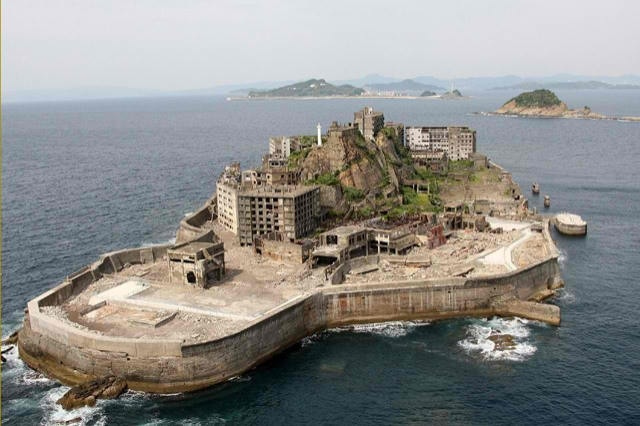
Here’s another gallery of awesome threshold spaces – thanks to Iain Maloney for pointing this one out to me. This is Hashima Island in Japan, also known as Battleship Island. It was used as a base for extracting and processing coal from the sea bed, and for housing the miners. The Mitsubishi corporation owned the island for almost a century, but the mines became unprofitable as coal was increasingly superseded by petroleum. Mitsubishi abandoned the place in 1974. Since then, the concrete has crumbled, the balconies have fallen from the buildings and plants have erupted in the courtyards. It’s an astonishing, ghostly space.

The sea will take its own.

Will Wordsworth’s Lancrigg DIY

I’m not big on classic literature. I usually find the language – whether in prose or verse – too staid. There are exceptions – I love Shakespeare, I love Bronte’s Villette – but for the most part, my interest in writing starts with the First World War poets, and steps up a notch during the 1960s and beyond – decidedly modern literature, really. I’m always slightly embarrassed I haven’t read more of the classics, but those I’ve persevered with – and I have tried, believe me – simply don’t do anything for me: reading Middlemarch was like pulling teeth.

Image

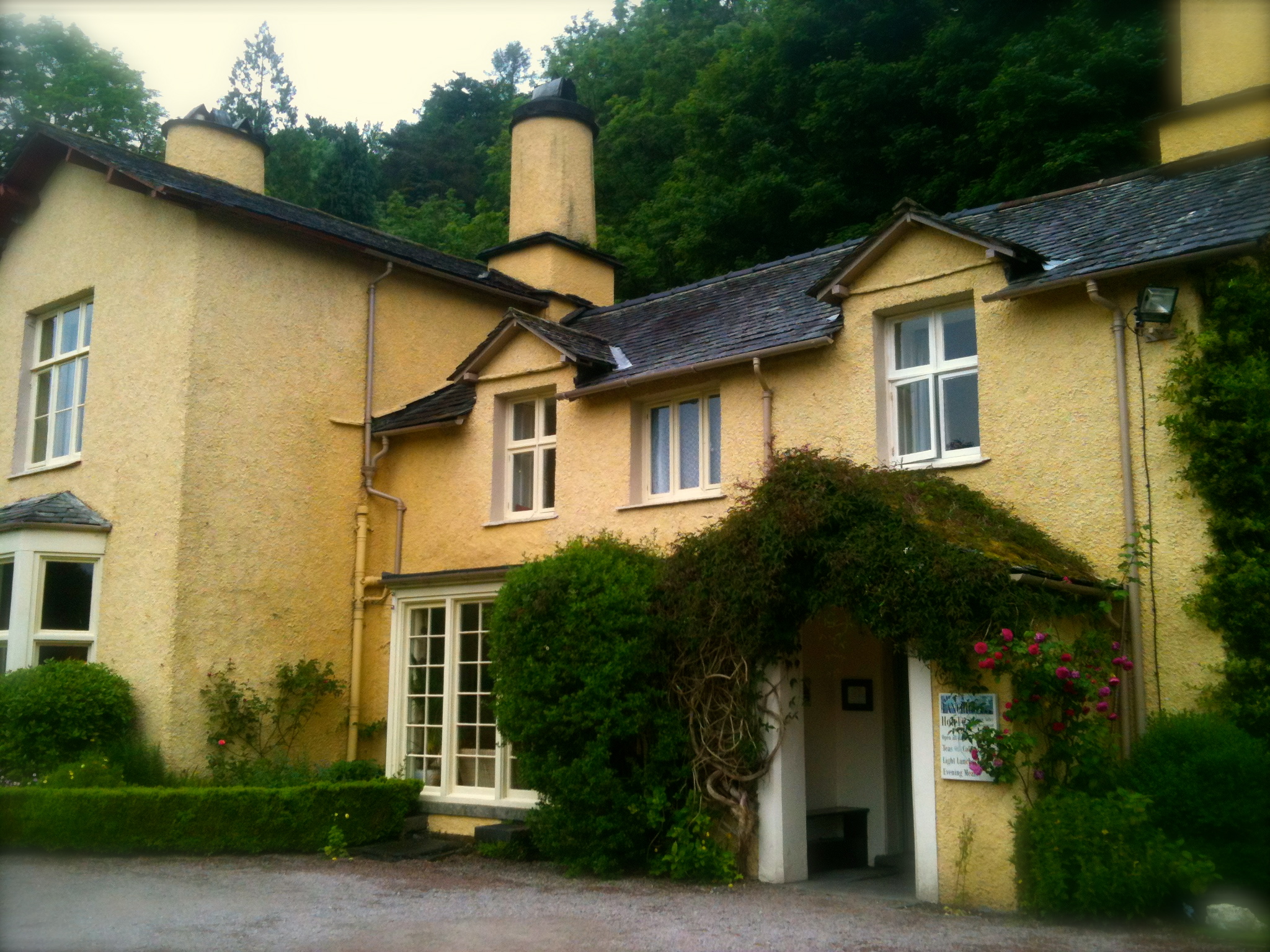
With that confession out of the way, here’s the Lancrigg Hotel. It’s a great vegetarian hotel and restaurant, half a mile outside of Grasmere in the Lake District. Monica and I went to stay a night to celebrate our five-year anniversary. While walking in the grounds, we discovered that William Wordsworth had been instrumental in renovating the house for a friend of his – that he’d often dined and slept there – and so had Charles Dickens, a generation later. Robert Burns stayed at the house and taught one of the subsequent owners, too. I can’t pretend the place felt haunted by the ghosts of these literary giants, but I liked the idea of Bill Wordsworth rolling up his sleeves to strip out rotten plaster, of Dickens playing pranks on his pals, and of Rabbie Burns warming his feet by the fire. That tickled me.

Image

Image

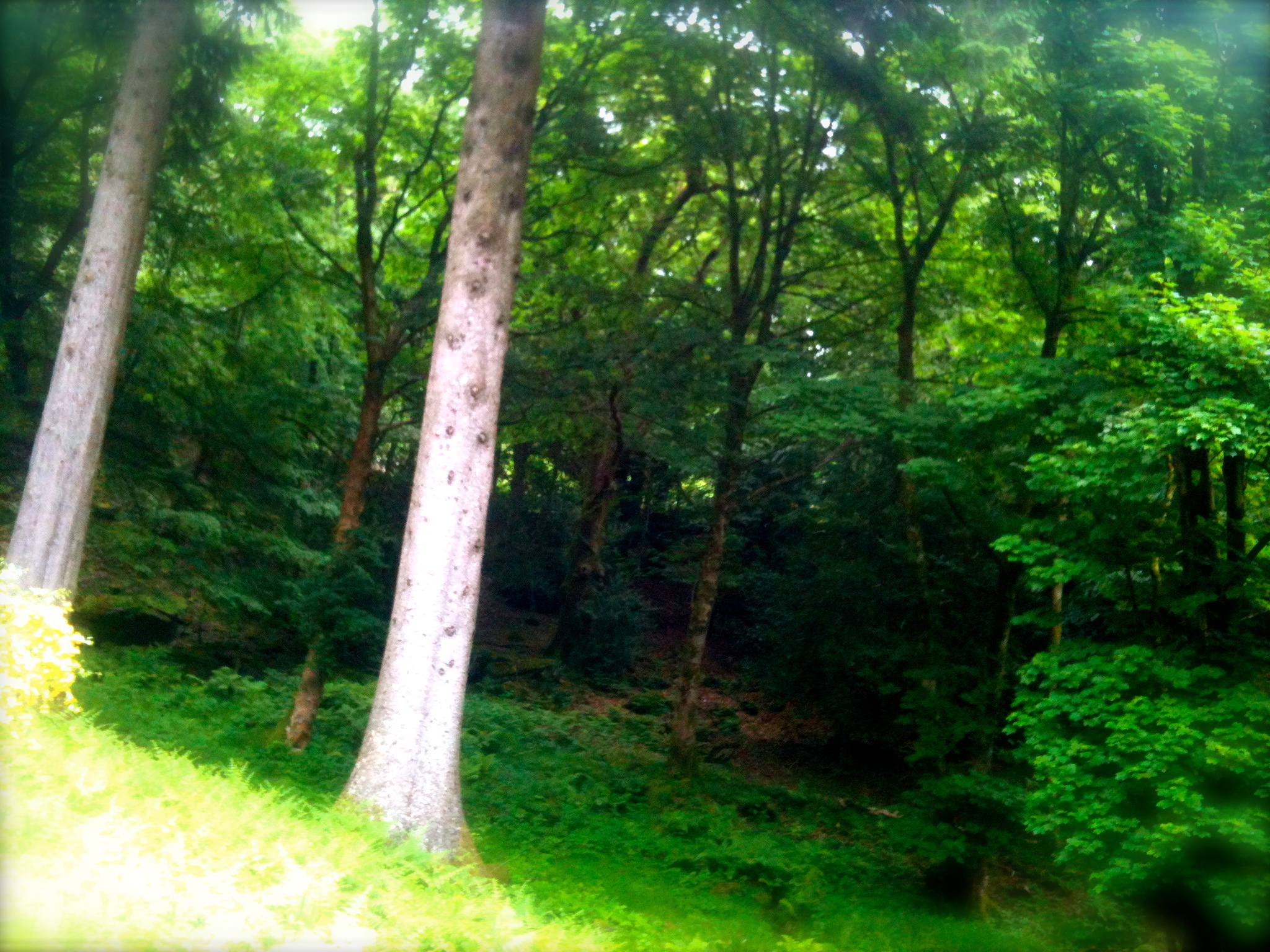
The woods around Lancrigg feel quiet and ancient. Sprouting from cracks in the limestone and carpeted in deep green moss, the trees could be Tolkein’s ents, hibernating through the decades. There’s a profound, tangible stillness beneath the canopy, and the light is filtered dark and green, drawing you into the forest.

After tea, we walked into town for a drink. I’ve had my differences with Grasmere in the past – during the summer, it’s infested with tourists, most of whom wear very expensive, very clean walking gear – but the town was fairly quiet. The heat of the day, freshened by a late shower, left the meadows heady with scent. The smells were intoxicating – the Lakes felt almost Mediterranean. We stood beside Wordsworth’s grave and watched bats skitter above the river, and walked back to Lancrigg in a deep blue midsummer gloaming. It was a long overdue break after months of hard work.

Image

Teaching has finished for the summer, though I still have a fortnight of marking and admin to finish. Then there’s a fence to build, some films to edit, a holiday to go on (glory be) and what should be the final draft of Riptide. Around all this, I’d really like to start work on writing my next novel. I’m already reading and researching and starting to block out the plot; the issue, as ever, is time to write.

Ghosts in kelp

seal

Mon pointed this excellent photo out to me – it’s Kyle McBurnie’s winning picture from the University of Miami’s Underwater Photography competition.

This seal seems to be floating in air, rather than water, and I love the way the strands of kelp drift like ghosts. This remarkable picture also strikes a chord for me as it brings a scene from Riptide to life…

The Returned

Caught up with the first episode of The Returned (Les Revanants) last night – and loved it. In exploring the impact of the dead returning to a small Alpine town, it oozes the same surreal menace as Twin Peaks or Lost – but already feels more cohesive than those stunning, albeit deeply flawed, masterpieces. The story was thrilling and compelling without being sensationalist, the human reactions were as convincing as The Killing, and the cinematography, direction and editing combined into a breathtaking aesthetic. I’m really excited about the next few episodes.

Even better, the show is gloriously soundtracked by one of my favourite bands, Mogwai. (This trailer actually features the Raveonettes, who are also great, but they’re no Mogwai.) Follow this link for an E.P. of the soundtrack; I’ll definitely be tracking down the full album for writing music.

R.I.P. Iain Banks

R.I.P. Iain Banks

Iain Banks has died at the age of 59, barely two months after announcing his terminal cancer. He’s been one of my favourite writers since I was about 15. He was a ferocious, consummate story-teller. I never met him, but somehow, the knowledge that his books will survive doesn’t shake the sadness of having lost one of the good guys:

“Fuck every cause that ends in murder and children crying.”

Won’t You Marry Me?

4848b

We don’t have a TV aerial in our house, so when we watch anything, it tends to be on DVD. One of the films we sometimes watch with Dora is a frankly astonishing 1980s compilation of classic nursery rhymes. The rhymes are sung by a raft of top folk singers like Martin Carthy, while the stories are acted out in a combination of puppets, animation, or against nascent green screen technology. Taken in one sitting, it’s like Alice is having a nightmare. WHILE in Wonderland. The whole collection swings between the trippy and terrifying, but there are a few surprisingly haunting songs in there. One in particular has stuck with me; it’s an old song, but I don’t think I’d heard it before watching the film. It’s called ‘Soldier Soldier, Won’t You Marry Me?’. It’s a duet between a young lass and a soldier, and it goes a bit like this:

 “Oh soldier, soldier; won’t you marry me?
With your musket, fife and drum.”
 
“Oh no sweet maid, I cannot marry you,
For I have no boots to put on.”
 
So off she went to her grandfather’s chest
And brought him some boots of the very very best
And the soldier put them on. 
 
“Oh soldier, soldier; won’t you marry me?
With your musket, fife and drum.”
 
“Oh no sweet maid, I cannot marry you,
For I have no coat to put on.”
 
So off she went to her grandfather’s chest
And brought him a coat of the very very best
And the soldier put it on. 
 
“Oh soldier, soldier; won’t you marry me?
With your musket, fife and drum.”
 
“Oh no sweet maid, I cannot marry you,
For I have no hat to put on.”
 
So off she went to her grandfather’s chest
And brought him a hat of the very very best
And the soldier put it on. 
 
“Oh soldier, soldier; won’t you marry me?
With your musket, fife and drum.”
 
“Oh no sweet maid, I cannot marry you,

For I have a wife of own…”

It’s really sad, isn’t it? It reminds me of Alan Garner. I sing it to Dora every now and then – it’s one of the few songs she doesn’t try to sing along with. She prefers to listen. It feels curiously grave. And what happens next? Does the sweet maid pine after the soldier, or pick herself up and find another man? I feel like she needs vengeance. I’ve been imagining another verse:

So off she went to her grandfather’s chest
And fetched out a pistol of the very very best

And the sweet maid shot him down…..

It doesn’t make the song any happier, of course, but the soldier needs comeuppance.I haven’t yet decided whether I can sing it to my daughter.

Exclusion

Image

Here’s another gallery of those threshold spaces I’m so drawn to; though far grimmer than the edgelands I wrote about a few weeks ago.

These photos were taken within the exclusion zone at Chernobyl. These buildings have been sterilised, rather than evolved through abandonment. The atmosphere is flat and repellent, rather than mysterious or melancholic. The sadness is so heavy, so austere. The ghosts weigh heavy, and I never want to go there.

Thanks to Billy Kinnear Photography for pointing out this site.