Little paranoias

Jane Wood, my editor at Quercus Books, sent her notes on my novel this week. It’s a moment I’ve been dreading and craving in equal measure, and I wanted to take a moment to think about what it means now it’s actually here.

I’ve already done four drafts of The Visitors. Some of the drafts were very heavy, and some were extremely light. Redrafting is essential to all writing – I still, even now, return to stories published years ago to tweak and rework them. I have little paranoias about all my work, and can’t help but return to it. Sometimes I make changes of single words, and other times I excise entire scenes. Sometimes I catch myself totally rewriting published work, and I have to make myself leave it behind – I have to take stock and force myself to walk away.

On the second draft of The Visitors, I pussyfooted around Sue’s notes, making tiny changes, scared of diving in. When I came to a third draft, I made myself stamp on it, brutalising the manuscript with broad changes and moving onto the next alteration, no matter how ugly the massacre I left behind. Then, when it looked like a crime scene, I started rebuilding again. That’s what I’ll do this time, too, no matter how hard I find it. And I’m going to find it hard.

Whenever I come to editing and redrafting, I think there are two broad categories of change:

Cosmetic

These are the easy ones, often little more involved than line edits. Cosmetic changes this time include switching a character’s name, cutting some internal monologue and reconsidering some of the vocabulary used by my main character. I could blitz through that in a day, tops. Unfortunately, the other editing category is:

Structural

…and this is the big stuff. Making structural alterations means redrawing the map of the story while trying to maintain the same emotional trajectory, and that can be difficult to keep in balance. In this case, I have two substantial changes to make. Firstly, a minor character needs to become a major character, and he needs to appear much sooner in the story. I already know this is going to be awkward, because I attempted something similar in the third draft, and I struggled to bump him up the narrative even to his current position. It’s going to be tough to find or create somewhere to introduce him sooner.

The second change initially felt even more challenging, but on reflection perhaps isn’t quite so bad. Jane has suggested a different direction for the ending that I’m really excited about. At first I was really worried about it, but I’m starting to see it as a case of unravelling the current conclusion and retying the strands of story into a different shape of knot. This will involve more writing, but actually it’s less of a challenge – with the current ending gone, I’ll be writing into blank space. That’s a thrilling proposition at this late stage of the manuscript.

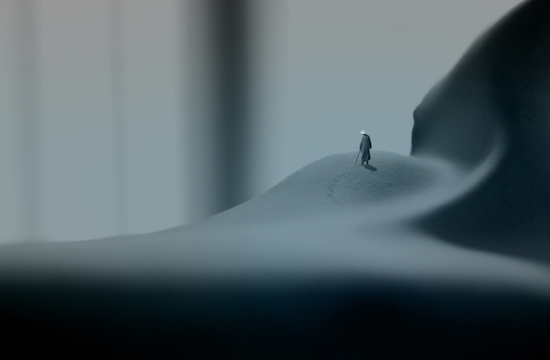
While it’s still a skeleton, a novel plot is essentially arbitrary. Things can be changed extremely quickly and easily. New characters come and go, and the story shifts like a dune, blown into organic and occasionally bizarre shapes by the wind of imagination. But the more developed a story becomes, the less arbitrarily it can change. There comes a point where making big alterations means breaking the momentum you’ve fought to generate, then patching up the holes and hoping no-one can tell the difference. That’s where a writer needs to have paranoid convictions about the emotional tone of their work, and strive to make it as cohesive as possible in plot, character, voice and soul, then work it again and again and again, hammering and thrashing and beating and combing through the manuscript until it’s carved against your optic nerve.

Editing is frantic. It’s really hard. Throughout the process, a storm cloud hangs over you, an implicit sense that you didn’t do it well enough the first time. Then there’s the crashing changes you wreak on something you loved. And then there’s the dread that whatever you make to take its place won’t come close to what you had before. It’s an exciting time, too, but the whole process is riven with a crawling, monstrous, excruciating anxiety.

This is mostly my load to carry, but I’m glad I’m not taking the journey alone. I’m now far too close to The Visitors to critically appreciate it, and working with other people helps triangulate my own perspective about the story. I’ve often stated my belief that writing is as much about the community as the individual – not least as it counts for little without a reader. When I write short stories, I read them to Mon, and I send them to writer friends. And I pay attention to what they say, even if I disagree. Working with other people – and working with Jane and Sue, now – has repeatedly shown me the importance of opening myself and my ideas to an audience. I have people I can talk to, and that makes me lucky.

Of course, I say this before actually beginning the edits. Try me in a week.
miniscule

Photo lifted from ‘Minuscule Series’ by Maité Guerrero

The horizon

What a couple of weeks. The start of college has been a bit rough, but we’re getting there. I’m spread fairly thin at the moment, and it doesn’t feel like I’m getting much done… but in the background I’ve completely redrafted my flash fiction collection Marrow, so that’s ready for typesetting when I find the time to get to grips with InDesign. Paragraph Planet published a 75-word story from that collection last week, too, which is pretty cool. I’ve also redrafted the longer short story I talked about in my last post, and started blocking out my new novel in the excellent Scrivener.

Even more exciting, Riptide is beginning to gather pace. I’m expecting notes from my editor this week, so I can start work on what should be the final draft, and I’ve just had a sneak peek at a rough of the cover art, which is scintillating. While I’ve been so busy drowning in real life, just trying to stay afloat, seeing the cover has been a timely reminder of what I’m working towards. The artwork is simply perfect, but I’ll wait for a final version before I share it.

paddy

The 200th Spotlight Club in Lancaster is looming on the horizon. It feels like only last week I was reading at their open mic night. I’m excited about performing there again, and hopefully catching up with old friends Rich Turner, Dan Haywood and Paddy Garrigan (pictured above) – Paddy’s playing out the night, which should be a blast. I have two or three new pieces lined up. I’m going to start with a short story about guinea pigs, and finish with a very short 75-word piece about avocados. I think there’s probably time for another story in between, but I haven’t decided what just yet.

After Spotlight comes the Brewery open mic, if I can get a spot, and then Dreamfired in October. By happy coincidence, my storytelling uncle Rich Sylvester is up from London that night. I don’t get to see Rich very often, so if we’re organised enough, I’ll try and knock up a quick video of one of his stories.

OLYMPUS DIGITAL CAMERA

Who likes short shorts?

I’m between novels – making notes for the second while working on edits for the first – and as a result of this fairly disjointed workflow, I’ve also been writing a lot of flash fiction. I write flash fiction for three reasons. In order of importance, these are:

1. To keep my writing and imagination ticking over.
2. As a depository for the ideas I haven’t time to develop.
3. To create short sharp stories for readings.

However you feel about flash fiction – and there are a lot of people who deem it totally irrelevant – these reasons are good enough for me. Number one, in particular, is very important to me when I’m so busy. I can’t work on a novel if I have a spare hour – I need more space in my head – but I can write flash. For me, flash fiction is a fun and constructive way to write more often (notwithstanding J. Robert Lennon’s excellent ‘ass-in-the-chair canard’, of course).

Like most writers, I suppose, I started learning my craft with short stories. In the first two years, almost all of them fell between 1,500 and 2,500 words. This wasn’t deliberate – I was simply writing stories that told themselves in that sort of space. As my writing developed, the scope of my ambition widened; I wrote Meat (mentioned briefly here), abandoned a subsequent novel at 50,000 words, and started work on my extremely long-running novella The Year of The Whale, which I had almost finished when Riptide exploded in my life. Over the following year, Riptide was pretty much the only thing I worked on. By this point, my longer pieces had absorbed any time for short story writing, with flash fiction increasingly fitting into the small hours between proper writing sessions.

In essence, then, I’d stopped writing short stories. But I’ve had an idea nagging me for a while, and it clearly wanted to be a short story. I decided to make it a little more considered than my older shorts, and spend more time letting the character paint the world around her. I finally settled down to work on it last week, and I finished a first draft last night. In my head, I expected it to be about 5,000 words, which is easily double the length of my next-longest short story. It has been a very strange space to work in, especially after so long away from the form.

Some flash fiction packs a conventional narrative into a smaller space, and some flash fiction snatches at a single moment, a single voice – a heartbeat – and gives the reader just enough to fill in the blanks themselves. The short story expands on those themes (obviously), giving them greater room to grow, but for the form to have an inherent function, it needs to achieve more than simply stretching out those moments – more than filling in some of those blanks.

I seem to recall a quote – possibly by Chekhov, though I can’t find a source – declaring that all short stories are the end of longer stories. I think there’s something in that, and I like the abstraction inherent to the form. My best short stories – the ones I personally consider most successful – are the ones where I’ve managed to hardwire some sense of trajectory. I want my writing to have momentum. I aspire to a ferocity, a certainty of narrative. I don’t know how well I achieve that, but it’s what I’m working towards.

I have now finished this new piece, and I think it’s come the closest yet to what I’m trying to create. It’s abstract and a little dangerous, but I think I’ve generated the emotional whirlpool I strive for, with discontiguous strands of story focused to a single point. After so much time away from the medium, I found it quite difficult to write. Although I knew my character’s voice right away, and I knew what I wanted to achieve in the story, it took me a long time to untangle the threads and find my way. I’ve been plodding through it, whisky in hand, on odd nights for a couple of weeks. Last night I finally had the breakthrough, which involved redrafting the whole thing from present into past tense, cutting a couple of sections and writing a new scene. I’m now going to take a day or two away from it, and see if a little distance helps with the redraft. Happily, the first draft came to 5,220 words.

I’m now waiting for feedback from a couple of readers, but I wanted to write this post before talking to anyone about the story; I needed to get my own thoughts in order. At some point I’m going to write more about my ultra-flash fiction on Twitter, but I wanted to use my first short story in a year to have a think about why I don’t write them any more.

Keys

I’ve just been paid for a big film job I completed earlier in the year, and I decided to treat myself. It’s not exactly special, but I’ve invested in a new keyboard. Here’s why:

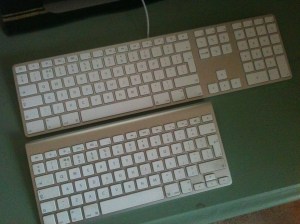
I work on a Mac, which is the only sensible choice for my video editing. The Mac came with a wireless keyboard and magic mouse. Now, the mouse is superb. No complaints. It’s a dream to use, and I don’t begrudge it batteries. And in isolation, the feel of the keyboard is ideal – the keys are low and responsive, and for a clumsy typist like me (for the most part, I’m a four-finger thug) there’s nothing to trip over. As a result, it helps me type quickly and efficiently.

BUT… it’s too damn short. Look at it against the new one. It’s smaller than my last laptop keyboard. Where are the number keys?

IMG_0492

I fact, I don’t care about the number keys. But why are the cursor keys packed together like urchins in a bus stop? My hands are big and I type too fast, so I constantly hit Shift when I’m pitching at Up. And where are the Home/End travel keys? And where’s the Delete key? I miss all of that, and I want it back. Pus I resent dripfeeding batteries into it every two months. Plus it gives me RSI in my right hand little finger, which hangs useless and suspended while my middle and forefingers hammer out der stories. I don’t know why, but the pain goes away with a bigger keyboard. A wired mouse is a pain in the ass, but when I work glued to a screen, a wired keyboard makes no difference whatsoever to my workflow, either for editing or writing.

So there you have it: time for a new, full-size, slimline, wired keyboard. Happy days. If you write a lot, then it’s important to be comfortable in the tools of your trade; over the last few years, I’ve used keyboards that I cursed every time I touched them. Or thought about them. Keyboards with stuck or missing letters. A keyboard where the space bar only worked if it was smashed on the left. A keyboard with a dodgy USB cable, leading to entire lost paragraphs when the thing came loose; though maybe this is my fault for staring at the keyboard, rather than the screen. I wore through the keyboard on my old laptop to the point that my most frequent letters ceased to function. I’ve written on typewriters before, too. I love the clunk-thwack-bang of a solid metal typewriter, but all romance aside, those things are completely unsuited to the way I work: constantly revising, deleting, reshuffling, backtracking, jumping ahead, cutting and pasting and stitching it together. I use Cmd+S, X, C and V more often than full stops. And I often work out of sequence, too; a necessarily chronological workflow would drive me distracted.

Speaking of which – I’m currently giving the free trial of Scrivener a run, on the advice of novelist pals Ali Shaw and Iain Maloney. For the most part, I’m extremely impressed at how it helps me organise my work – but I’ll write more on this another time.

For now – a pox on miniaturisation!

huge_hands_10_Reasons_Why_Big_Boobs_Suck_King_of_Fighters_Animation-s425x535-278909-535

Postscript: my friend Tom has just alerted me to this. Oh, my.

Sue Armstrong: spy

Image

I’m delighted to share the news that my bodacious agent Sue Armstrong has been promoted to Senior Agent at Conville & Walsh. Now, first of all, this makes her sound more like a spy, which is obviously very cool. But it is also testament to her talent, character and drive. She has been unremittingly excellent to work with, helping me develop my ideas and secure the deal with Quercus. I’m so pleased for her: well done Sue!

To Do: Part Two

Okay, back to work. College returns in three weeks, which feels frighteningly imminent. I’ve films to finish for Cumbria Wildlife Trust, Three Dimensional Tanx and Seven Seals, some short stories to write, the Riptide edits to complete for Quercus, Scrivener to learn, family and friends coming to stay, a log store to build, readings to practice, paperwork as deep as my hand, and Marrow to edit and complete.

Head down. Press on. Fail better.

miranda3a

A little light reading

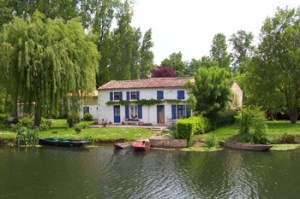
We’ve just returned from a brilliant fortnight in France. We racked up 2,500 miles in a round trip that encompassed Ile de Noirmoutier, which is reached by a two-mile causeway at low tide; Rauzan, where we camped in the shadow of a ruined medieval castle; and Marais Poitevin. This last spot, nicknamed ‘Green Venice’, is one of the most amazing places I’ve ever seen. Centuries ago, it was a vast swamp, but Dutch settlers drained it with a labyrinth of canals and ditches, leaving hundreds of island pastures connected by causeways and bridges. The architecture is just as unique, with balconies and shutters adorning every house, and punts moored to jetties in gardens. Poplars and alders tower into the sky, the canals are thick with lurid green algae. Fat dragonflies zip and pop between shrubs and creepers, and the trees are alive with cicadas. Filtered through high branches and reflected from the water, the light itself is tinted green.

marais_poitevin bluehouse

It’s genuinely one of the most incredible landscapes I’ve experienced and, much like Grogport for Riptide, it’s been a real inspiration for my next novel. In the space of a few days, I filled an A4 pad with notes and dialogue, and I feel really excited about starting work. There’s still plenty to do before I can begin, but the foundations now feel firmly set.

The other great thing about the holiday was having time to read. I managed six books, which is no mean feat when juggling a toddler in a campsite. And I had a great run of books – not a single dud:

The Tiger’s Wife by Tea Obreht was bold and convincing, subtly switching a range of voices to make folk myths contemporary through personal memory. I enjoyed it a lot, but found it ever so slightly cold, and wasn’t as blown away as its reputation suggests.

Cumbrian Folk Tales by Taffy Thomas was a fascinating collection of the county’s legends and myths, made all the more immediate through its connections to a landscape I’m starting to know. It was amusing to recognise the names of not just local places, but also local people – people I’ve met, worked with, drunk with. The tales were strongest when connected to geography, giving meaning and history to a witch’s cauldron or a devil’s bridge.

I read The Blackhouse by Peter May – this was a present from Jane Wood, my publisher at Quercus. She thought I’d like a look because, like Riptide, it’s a crime story set in the Hebrides, though it doesn’t have the supernatural elements of my book. I enjoyed it a lot. The plot was dovetail-tight and engrossing, and the landscape was intoxicating.

Next up was I Love You When I’m Drunk by Empar Moliner, Spanish short stories in translation through the tremendous Comma Press. Despite some uncharacteristic typos from an excellent publisher, it’s a solid collection, each story exploring and exploding conceits of modern life. Some of the stories felt a bit like shooting fish in a barrel – taking aim at soft targets of liberal, middle-class pomp – but the writing was good throughout, and there were many outstanding moments.

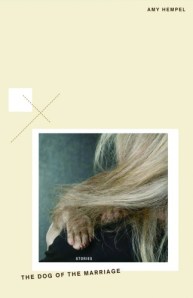
Moliner’s collection was good, but the next book was astonishing – a class apart. The Dog Of The Marriage gathers Amy Hempel‘s four short story collections into a single volume, and they are consistently superb. There isn’t a single wrong note across dozens of stories. Hempel’s work is voiced through emotionally damaged or stunted narrators, trapped or somehow left behind in their lives, caught between stasis and decay. The stories are not without hope, though, and Hempel writes with unceasing, unfailing humanity. Her sentences and structure are scintillating. I cannot recommend this highly enough. This is the sort of book I buy two copies of, expecting to have one out on loan.

the_dog_of_the_marriage.large

Finally, I read Snake Ropes by Jess Richards. This was another corker. Alternate narrators explore life on a mysterious island, ‘just off the edge of the map’, eventually combining to bring the distinct halves of the story together around a single, long-forgotten trauma. This novel holds trade and barter at its heart, exploring themes of presence and absence, balance and weight; of exchange, and what it means to give and get. It’s a real triumph, made all the more masterful in how Richards weaves the fantastical through the fabric of base human instinct, conjuring talking keys, sentient trees, and a walking doll with a seashell for a heart:

Moppet2

The last fortnight has reminded me, as stupid as it sounds, of how much I love to read, and made it painfully apparent how little reading time my regular schedule affords me. I’m determined – on top of carving out more writing time – to read more. I miss it.

This holiday has been essential. I’ve worked stupidly hard over the last two years without much of a break, and I’ve badly wanted some time off. Looking ahead, the next two months are going to be frantic – but I feel better for a break. I have my next novel blocked out and the sights and scents of a swamp fresh in my mind. One more draft of Riptide to go, and then I’ll be starting my new story.

Limppelty lobelty

Image

My reading lately has brought me to the Tiddy Mun. He’s a grumpy but rather sad spirit of the fenlands. There’s something very ancient and disconnected about him, as though he’s been left behind, and doesn’t entirely know why. People were actually quite fond of him, by all accounts, in the same way they’re fond of elderly and slightly addled relatives they see only every other Christmas.

Anyway. Tiddy Mun can summon water, mist and fevers from the marshes. He’s very much at home in the bogs, and he was incandescent about the draining of the fens by the Dutch. In his rage, he conjured pestilential swamp airs onto all Fenmen, and didn’t stop until everyone said they were sorry.

He sounds anachronistic even in the 1890s:

“He dwelt deep down in the green water holes, and came out at evenings when the mists rose. Then he came creeping out in the darklings, limppelty lobelty, like a dearie wee old granter, all matted and tangled, a long grey gown so that they could hardly see him in the dusk, but they could hear him whistling like the wind and laughing like a peewit. He was not wicked like the rest, but he was eerie enough, though the times were when he helped them. For on wet seasons when the water rose to their doorsteps, the whole family would go out together and shivering in the darkness they would call:

‘Tiddy Mun wi’out a name,
Tha watter thruff!’

They would call it till they heard a cry like a peewit across the marsh, and they’d go home. And next morning the waters would be down.”

I feel quite sorry for the Tiddy Mun. He seems lonely and lost and utterly out of place, but I think he might have a role to play in the new novel. I especially like the idea that he isn’t “wicked like the rest”…

Labour

Physical work is a counterpart to writing. I wrote my first novel while working in a furniture workshop; I wrote dozens of short stories, and started Riptide, while making yurts for a carpenter.

As a teacher, my life is at once more manic and more sedentary, but my ongoing house restoration has provided frequent and occasionally brutal reminders of what it is to work with my hands. This weekend, it was the turn of the garden. Along with my dad and my father-in-law, I put up a fence, laid a patio, cut down two trees and cleared a ton of rubble. It’s been an exhausting, sweltering few days, and my hands and arms are riddled with scratches and grazes and splinters, but that seems a fair price to pay for the achievement.

Physical labour is good for my brain. It allows me to switch off, for a while, through either the concentration or monotony of the task, and the blank space it leaves allows the formation of thoughts. Climbing does the same trick. About halfway through the fencing, I had a mini-brainwave about my new novel. Two sequences quietly switched places, and the narrative opened up a little more. I’m coming closer to blocking out the plot all the time, just making notes and letting it simmer in the background. Even if my hands are cut to shreds, it’s healthy to remember how to use them for more than typing.

To Do

I haven’t been writing very much lately. I’ve been too busy with real life, scrapping my way through end-of-year marking for my film students and working on videos for Kendal College and Cumbria Wildlife Trust. I’ve still some way to go, and there’s plenty more to do – my Dad’s popping up to help me build a fence, and I need to build a log store. But hopefully the end is in sight. Most important, I should be getting Jane‘s notes for Riptide in the next few weeks, and then I need to work my way through that final draft.

For a bit of a change, I’ve been using the odd evening to (slowly) teach myself the basics of InDesign, trying to put together a booklet of my flash fiction. It’s no big deal – twenty-five stories between 50 and 500 words, provisionally entitled ‘Marrow’. I’ve also booked in my next two readings – first for the Spotlight open mic in Lancaster in July, and then as a support slot for Dreamfired in Brigsteer in October. And in the background, I’m reading and researching towards my next novel; quietly brewing on the story, blocking out the plot. I still have some narrative strands to tidy up, though I know where the book will finish emotionally.

IMG_0091

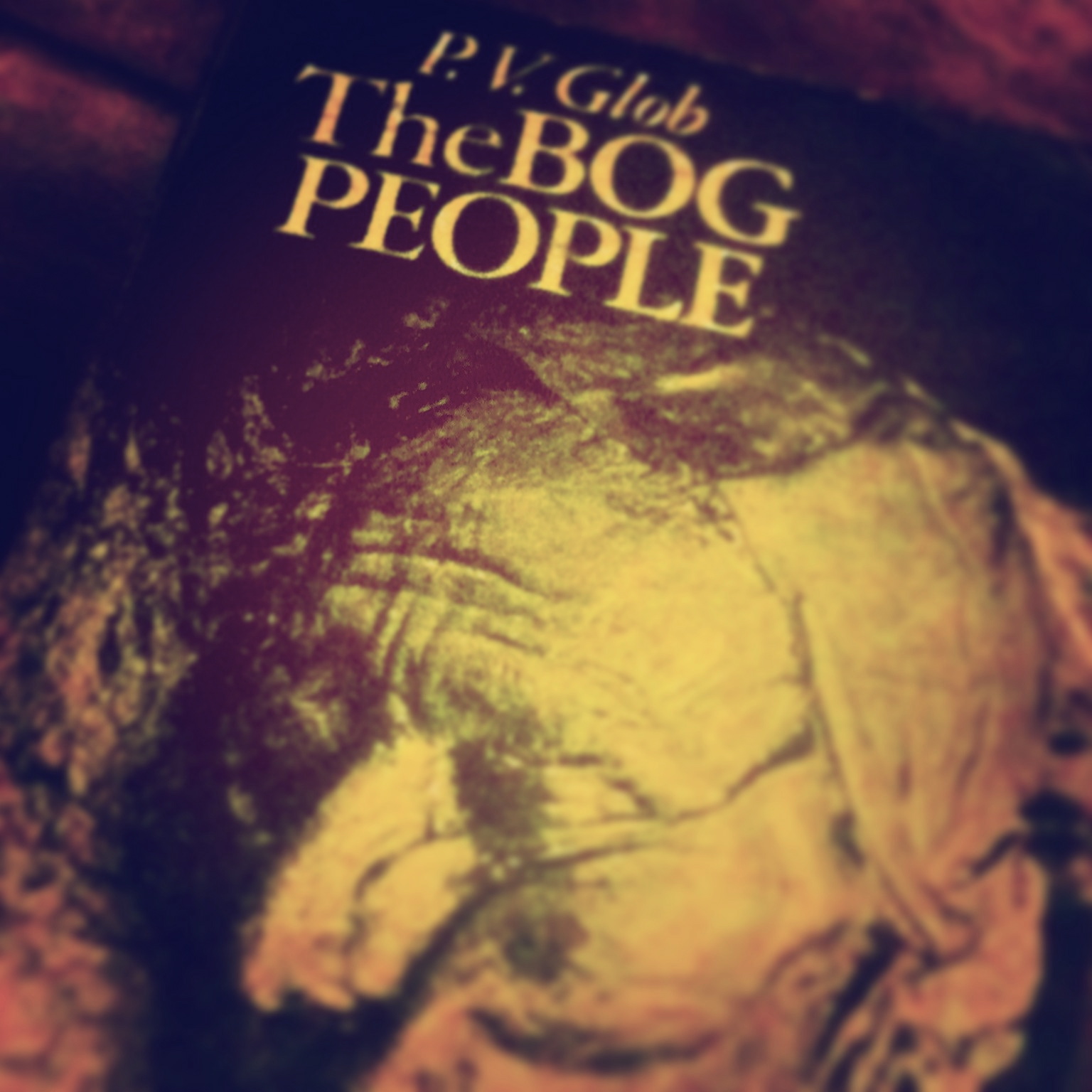
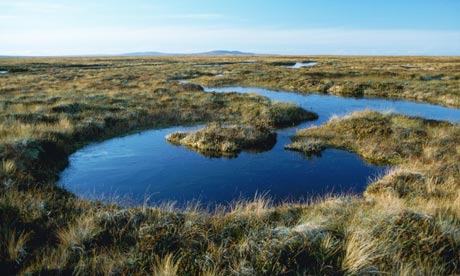
For the moment: research. I wrote about rediscovering P.V. Glob’s The Bog People a few months ago, and I’ve finally had a chance to actually read the thing. For a 1970s archaeological review – even one designed for jumblies – it’s surprisingly well-written. Some of the bog bodies have held astonishing secrets in their graves. One poor woman was staked down with crooks and buried alive. A man was stabbed through the heart, smashed on the head and strangled. It’s all great stuff for the novel, generating context and building ideas. By happy coincidence, one of the jobs I’m doing for Cumbria Wildlife Trust is on wetland restoration, so I’ve been spending some time ankle deep in peatland. I need some more books, and I’d like to take trips to fen country at some point.

Image

It’s a thrilling stage, all the researching and blocking and plotting, preparing the ground before the hard work starts. I learned a lot from writing Riptide, and I’m excited to start work on a new book. Just need to clear away the hundred other things on my To Do list, first.

It hasn’t been all work. Friends Steve and Clare took us to Chester Zoo yesterday. We went straight to the orangutans, and spent a gloriously peaceful 20 minutes with them before a dozen school trips caught us up. Dora especially loved the bat enclosure, a vast warehouse where the bats swoop and skitter in artificial night. This morning we’re off to Dentdale Music & Beer festival, too. I’m going to take my story dice and drink ale.