Fenland wyrdly

I’ve lived in England for thirteen years, on and off, with stints in Edinburgh, Inverness and Australia. Aside from Cumbria, which is the closest thing to home I’ve felt in my adult life, and London, which is a bubble, I often feel a stranger here. Despite moving around so often, there are big chunks of the country I’ve never seen. East Anglia is one of them. We spent this weekend exploring the area as research for my next novel, which is called Grisleymires. On Friday we drove down a smart diagonal sweep across the country from Burneside in Cumbria to Kirby Cross, almost on the Naze, and stayed the night with friends. On Saturday morning we jagged back up to Wisbech, stopping at Wicken and Ely. For the first time, I’ve been to the Fens.

Grisleymires has been in the back of my head for a while. From the beginning, I knew that it was set in a swamp – the earliest incarnation of the story was essentially Time Bandits with bog bodies. It’s evolved massively since then, but the marsh has been a constant: I want to write about mud and water. I’m now quite secure in the plot, but the location has been troubling me. Location is crucial to the way I write, and I didn’t feel confident in my knowledge of any British bogs. I picked the Fens on instinct, and decided to find out more from there.

The first person I spoke to about Fenland felt so negatively about it that he could only laugh hysterically. He’s one of the most articulate people I’ve ever met, and he simply couldn’t formulate words to describe how powerfully it repelled him. That was exactly the sort of start I was hoping for. Since then, people have told me that the Fens are creepy, strange, powerful and weird. Everyone talks about ‘big skies’. Now that I’ve driven through them, I can understand why. It’s the flattest landscape I’ve ever seen. The horizon is broader, the perspective unnerving, the sky an impossible bowl. There are miles at a time without undulation – miles without trees. Ditches run in straight lines to vanishing points. In places, roads run lower than canals, with dykes and bridges guiding the contours. It’s especially strange near the coast, where the horizon is curtailed by the shore.

We stopped at Wicken Fen, where I stood in the blustering wind and stared into the winter sun. Tall grass became an ocean and hissed at me in waves. I never expected so much noise from emptiness. The sun turned orange, and the dusk turned blue, and pylons hung like giants against the scraps of cirrus. At one point, we drove along beneath a dyke for a mile or more. The road turned sharply up the bank and at the top, blinded by sunset, the world opened up like Noah’s flood – the entire horizon drowned in water, withered trees and battered shrubs emerging in silhouette against the sun. That was the road to Wisbech, submerged in wetlands.

sunset1

We drove the alternative route to Wisbech on undulating single track roads lined with Nissen huts and broken hedgerows, tumbledown houses and gigantic piles of sugar beet, surrounded all the while by thousands upon thousands of acres of thick, turned loam.

Wisbech was a strange town. The B&B was huge and empty. When we went to look for food, we found ourselves in what seemed to be a red light district. Drunken Polish men yelled at each other across the street, while girls on corners danced to techno on CD stereos. On Friday night, above the Naze, the stars were clearer than I’d seen in years; on Saturday, the sky was full of murk. On Sunday morning, we drove on Droves – lumpy roads, arrow straight for five miles or more, then zigzagging madly to meet the next. They separate broad strips of industrial agriculture, riven with canals, ditches and soakaways. All the trees wear killing coats of ivy. For the most part, we drove in silence, occasionally pointing things out to each other. The landscape was relentless without becoming monotonous.

The Fens is witchcraft and weak bridges; rotten thatch and revolution; gallows and windmills. At one point, we passed a narrowboat moored beneath a sickly weeping willow. It looked like it was about to break in half and sink. It was small, and covered with lichen, but I could still make out the name: it was called Icarus.

I don’t know if the Fens are creepy, but they are profoundly strange. We felt edgy all the time. We’re used to the cradle of the mountains, a constant presence in our peripheral vision. It’s incredibly strange to be without that subconscious company. Mon pointed out that the sheer amount of space makes you feel exposed – vulnerable. We didn’t find it creepy, so much as missing. It’s an absence, a nothing, a void. It felt like a sort of purgatory; fields unfolding endlessly, stretching on forever.

I went on this trip hoping for a sort of Green Venice, but that’s not what the Fens are about. They aren’t what I expected, or what I wanted, but maybe this trip has been exactly what I need, and here’s why:

I invented Bancree for The Visitors. It’s an amalgam of Islay, Jura, Gigha, Kintyre and the Black Isle, plus a host of other Scottish spots; and I’m already planning a novel set in a fictional city, based around my short story Vanishings. The point is this: I thought nothing of creating an island, and I can’t wait to write a city. I don’t know why it’s taken me this long to consider inventing a Fenland of my own. Writing a new region into an existing geography feels more daunting than something as self-contained as an island, but that would give me the perfect environment for Grisleymires.

I’ve only started considering this today, but it’s already gathering weight. It would let me combine the heat and life of Green Venice with the sodden bogs of Islay and the upland Cumbrian basin mires with the Fens and Norfolk Broads. I could do as I pleased with accents and geography and culture, and that’s a real magnet for me. I’d be sad to leave or even dilute the Fenland folklore, though – I’ve grown attached to Tiddy Mun and Old Shuck.

As a research trip, it’s thrown up more questions than it’s answered. But that, in itself, is part of the journey.

pylons1

Resolve

I’ve always been a little dismissive of New Year’s Resolutions, because if I want to make a change in my life, that can happen any time I choose. That remains true, but there are things I want to do differently going into 2014. Post-Christmas binging is a natural place to draw a line and make a start, and I quite like the idea of formalising the changes I want to make. So here’s what’s going to happen this year:

Exercise

Because I don’t really do any, other than the odd Lakes walk and the exhaustive mania of teaching. I’ve already started walking the 2 miles to work – which I enjoy for the headspace as much as the activity – but I miss my bike and I miss my climbing. So I’m going to start cycling the long way to work and back. That’s only about 6 miles a day, so it’s not a great deal really, but it’s more than I’m doing at the moment. I’m also really keen to get back to my climbing. When I lived in London, I climbed four or five times a week. Now it’s four or five times a year. I’m going to start going for a few hours at least once a week. That, supplemented by some pull-ups at home and the cycling, should be steps in the right direction. I might even join Mon for the odd yoga, too.

Writing

The best I can hope for here is more of the same, I think. I crave more time to write, but the day jobs don’t allow it. In a good week, I get two days and two nights on my stories every week. Within that, I have specific aims for 2014. First and most important, I want Grisleymires finished in a year. This is a big ask, but it’s well planned, I’m excited by the story, and I can do it if I work hard. Research trip to the Fens in January!

Second, I want to have my flash fiction collection Marrow typeset and printed by the end of February. I’m reading at Spoken Word at the Brewery on Saturday 22nd, and I want it in my hands by then. This isn’t as big a deal as it seems; the stories are written and redrafted ten times over, and having typeset it once already as practice, I know glimmers of InDesign. With some guidance from knowledgeable friends and a few late nights, I think I can send the manuscript off to Inky Little Fingers in a few weeks. I’ve already saved most of the £225 it’ll cost to print 100 copies, so that’s not going to hurt my wallet too much.

Third, I want to keep on performing. 2013 was a turning point for me in reading my work aloud, and I want to push that as far as I can. Reading live brings an entirely new aspect to the way I write, and this is something I want to keep developing – pushing towards more theatrical performance where my confidence allows it.

Fourth, I want to submit my work to more competitions. I’ve never entered any of the big short story competitions before now, and I’m going to try and start this year. And I want to write new pieces, too, if the ideas keep coming to me. I’m not going to rehash old stories. I’ve pretty much drawn a line under my older work, but for two particular pieces: the excellent people at Comma Press have been considering my short story Every State In America for their delayed Reveal anthology for a couple of years. They’ll have first refusal on it for as long as it takes; being published by Comma would be an incredible honour. The other piece is called Art Is Long, Life Is Short, which is perhaps three years old and freshly redrafted for the BBC Radio 4 Opening Lines strand. That’s ready to go when the submission window opens in January.

Fifth, I want to finish Year Of The Whale, my long-running novella about a whale beached in Morecambe Bay. It’s been work in progress for three or four years, and it’s overdue. But writing resolutions one through four come first.

That’s lots of resolutions wrapped up in two strands, really. Writing and exercise. I’m only going to buy the time for everything else if I start saying no to low-paid film jobs, so I’m not doing any freebies/cheapies this year unless they have a clear benefit further down the line. I’m also going to try and rein in my irrational compulsion to reply to emails RIGHT THIS SECOND. I just don’t have the time. Most of the email I receive can probably wait until I’m ready. The point of all of this is to spend more quality time with Mon and Dora. Unless deadlines get in the way for either of us, we’re generally good at keeping weekends as family time, and I want that set in stone. There are a host of other things I can do towards this – less time online, for a start – and turning off the computer on free evenings. I want to read more, too.

I guess I’ve picked out goals, rather than resolutions, but it’s all the same in the end. I haven’t kept a blog to monitor resolutions before; I’m curious to see to whether writing about my success or lack thereof will impact on my success or lack thereof. Gazing into the void and so on.

2013 was a great year in many ways. Here’s to 2014, people. Be safe, be happy. Here’s a 1921 picture of a cat and a goblin in a tree:

goblin

The Curse of White Paper

There are few things as scary to me as blank white paper. Gorgons live in blank paper. A ream of paper holds universes. The infinite weight of that potential is a terror.

I’ve been shying away from it for weeks, claiming other jobs and seeking different priorities, but yesterday I finally started work on Grisleymires. It’s been roughly planned for months (the plan gets vaguer towards the end, allowing for inevitable mutation, but it’s all there). Yesterday, at last, I had the brain space AND the opportunity to sit down and start work. I’m still expecting another draft of The Visitors, but hopefully that should be fairly light, and this novel has been clamouring at me. I didn’t want to wait any more.

Working in the wonderful Scrivener, I sat down and blasted through most of the first chapter. 2,750 words, which is pretty good for a disjointed day. A dozen words came easily, and the word count raced to the first hundred. From there, progress slowed. The thousands took hours, and tens of thousands will take weeks or months. A hundred thousand might take me a year, around my various jobs, and that’s how it goes.

To be clear, I don’t think word counts are important to anyone but the person counting. It’s not something to boast about, and it in no way measures the quality of those words. I’ve had great writing days when I’ve written 11,500 words in twelve hours, great writing days where I’ve written a single sentence, and great writing days when I’ve deleted 10,000 words over a pint of beer. I’ve also had a stupendous amount of terrible writing days, where every word is a breeze block.

I think it was Graham Greene who advocated writing no more than 500 words a day. I guess the idea was to make sure those words were perfect, and to be fresh the next day. That doesn’t work for me. I need a word processor, I need to copy and paste and cut as I work. I need to work fast if it suits, or to dawdle over minutiae, depending on what the story wants from me. When I worked as a feature writer for a magazine, I wrote well over 10,000 words of published copy each month, not counting the blogs, the emails, the phone calls or the coffee run. Word counts became the way I managed my work. I had deadlines, and I hit them fast, because that was what paid the bills. When I started writing fiction, looking for a way to save some of my sanity, I brought the same workflow into my stories. Workflow is an interesting word. The flow is one of the things that generates the work. I’m talking about immersion; I’m talking about drowning in a story, and writing as though words are air. Anthony Burgess wrote A Clockwork Orange in a month.

I count climbing grades, too, when I go bouldering. Like writing, climbing is a competition of one. And exactly like the grades of rock climbing routes, word counts measure personal progress. In other words, they exist for me alone.

So, why share them? That comes back to my feeling that writing is a profoundly lonely thing to do – not simply being shut away for the time it takes to actually get words on paper, but to be lost in another world, to know characters better than best friends, to be so buried in a story that big chunks of real life feel like something to endure between writing sessions. Counterintuitively, this is also the good stuff – this is why I write. Redrafting makes something worth reading, but that first draft is where the magic is. Sharing the progress of a story is how I connect with the world outside – how I remember that there is a world outside.

RedraftredraftBRAINMELT

For the last eight weeks, this has what my life has looked like:

RedraftredraftredraftredraftredraftredraftredraftredraftredraftredraftredraftredraftredraftredraftredraftredraftredraftredraftredraftredraftredraftredraftredraftredraftredraftredraftredraftredraftredraftredraftredraftredraftredraftredraftredraftredraftredraftredraftredraftredraftredraftredraftredraftredraftredraftredraftredraftredraftredraftredraftredraftredraftredraftredraftredraftredraftredraftredraftredraftredraftredraftredraftredraftredraftredraftredraftredraftredraftredraftredraftredraftredraftredraftredraftredraftredraftredraftredraftredraftredraftredraftBRAINMELT.

In case you hadn’t noticed from my incessant moaning, I’ve been redrafting my novel. Again. It’s been a vast job, because – following discussions with Jane Wood, my amazing editor at Quercus – we decided to change the ending quite substantially. This isn’t as simple as knocking off the last few chapters and rewriting, alas; to make the climax and conclusion fit, organically and emotionally, the threads of the plot need to extend a long way back into the story. Because The Visitors is already woven rather tight, unravelling the narrative to make the new ending fit has been tough. Around college and film jobs, I’ve been working on it in evenings and spare days since mid-October. After the first fortnight, I took to saving the manuscript as a new document at the end of each session. This is what the folder looks like:

redraft of death

That’s right. It’s called the REDRAFT OF DEATH.

But check it out, humans; I have actually finished. I sent the new draft off to editor Jane and agent Sue late last night, along with a summary of everything I’ve changed. On reflection, it’s been a massive rewrite. As well as the new ending, I’ve changed names, moved locations, cut chapters, written new chapters, tightened dialogue, tightened prose, and – perhaps biggest of all – introduced an important character at the start of the story, rather than halfway through. Maintaining his presence from this early beginning meant a light rewrite of the entire first third. I’ve also made a big change in the death of another character, which brought a new angle to the idea of ‘killing your darlings’.

Dealing with the sheer volume of information is what causes brainmelt. Trying to keep everything in perspective – emotion, story, plot, character, description, geography, chronology – is exhausting. To help manage the changes, I riddled the manuscript with notes to myself, so I wouldn’t lose track of the things that needed work. It was quite telling to come across these messages, later on, and reflect on my thought processes. Here’s an example:

“Move the distillery to the island where it should have been from the beginning, you dick.”

So yeah, it’s been tough. I’m expecting another round of line edits, at the least, but hopefully the bigger structural stuff is now finished. I would have worked quicker but for the day jobs. Trying to switch into a more creative mode and recover a spark is tough. There have been times I’ve sought out any distraction to keep me from inflicting more destruction on my work. That’s where Freedom has really helped. I can’t recommend it to writers (and other procrastinators – YOU KNOW WHO YOU ARE) highly enough.

For all the effort, I still wouldn’t be doing anything else. I saw a great quote the other day. Though I can’t remember who said it, it was something like, “For all that writing is incredibly tough, it’s worth remembering that it’s still making up stuff for fun.”

True dat. More than anything else, I’m increasingly looking forward towards my next novel. It’s called The Hollows. It’s mostly planned, and I’m champing at the bit to start work. Now term is almost finished, I’m going to give myself a few days off to clear my backlog of video jobs, then try and take a day or two over Christmas to get writing.

After dealing so exhaustively with a manuscript of 94,500 words, it’s very strange to be faced again with all the promise and terror of a blank, white page.

Soundscape

Image

When I’m writing, I listen to music. I can barely type a word without it. Music helps me focus. Occasionally, I’ll use music to steer my emotional response towards a certain tone in my writing, but more usually, I simply need a soundscape filling the space in my head. I tend to avoid music with vocals – or rather, if there is someone singing, I prefer the vocal to blend tonally with the track.

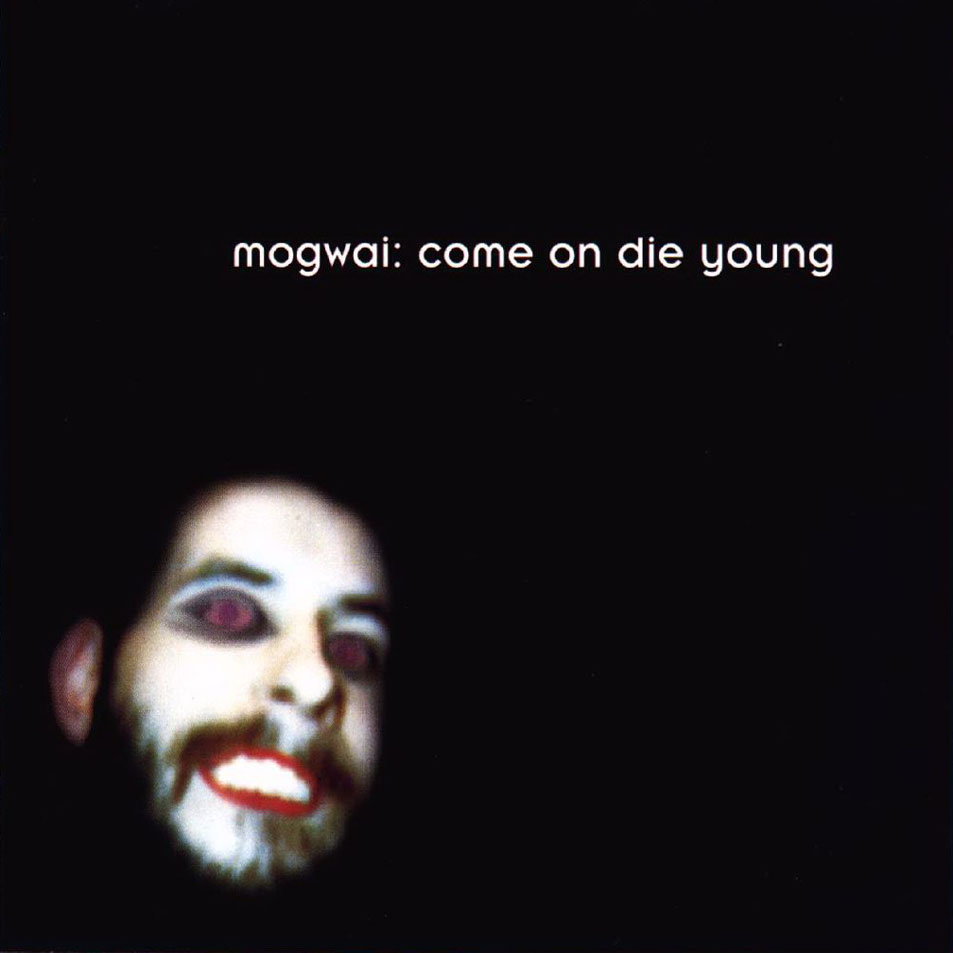
I’ve returned to some records endlessly over the years. I’ve listened to Mogwai‘s Come On Die Young literally thousands of times. I’ve spent entire weeks working to the British Sea Power back catalogue on repeat – or Arcade FireArab Strap, Throwing Muses, The Antlers or Godspeed You Black Emperor.

All these bands have similar musical themes: they drone and fuzz, they soar and soothe – but ultimately, the music they create is cohesive, regular or continuous. Their albums tend to run without breaks or interruptions, creating sonic soundscapes. Call it post-rock – call it what you like – it works for me. It helps me tune out and focus on the story.

I develop different soundtracks for different projects. My 2008-2009 novel-length prose-poem Meat was soundtracked almost exclusively by Godspeed You Black Emperor’s 2-disc, 4-track epic album Lift Yr. Skinny Fists Like Antennas To Heaven!, while first novel The Visitors was heavy on Mogwai and British Sea Power (two of Flora’s favourite bands). As I moved from writing to editing and redrafting, the soundtrack changed, and I built a playlist that was energetic and snappy; exactly what I needed to fuel my 12-hour redrafting sessions.

Now I’ve started work on my second novel, the music has changed again. At the moment, if I listen to Mogwai or BSP – as much as I love them both – it takes me back into The Visitors. So I need something new, at least while I’m making the transition from one novel to another. Even as I’m feeling out a fresh vocabulary, I’m developing a different soundtrack. While working on Grisleymires, I’ve been listening to a lot of Beirut, Bat For Lashes, The Antlers and Super Furry Animals. Thanks to Last FM, I’ve discovered Portico Quartet, Hidden Orchestra and Bersarin Quartett, all whom play organic, slightly sinister trip-hoppy movie-type soundtracks. At the other end of the spectrum, childhood favourites Crowded House are also back on the stereo, though I’m not totally certain why, as they go against all the conditions I suggested above; but they just fit, and that’s fine. Most startling (to me) is that I found myself wanting the sound of wind chimes to work to, and downloaded an hour-long track of chimes and trees designed for meditation. I can’t see it lasting, but for now, it helps me into the world of my story.

Does anyone else need music to work? Who and what soundtracks your writing?