Melville House

I’ve been keeping this schtumm for a wee while, but I am now absolutely thrilled to share the news that The Visitors has packed a suitcase to go travelling, and will be published in America this December by the good folks at Melville House Books. I’m delighted the U.S. edition is in the hands of such an exciting publisher. You know you’re in a good place when you see a thing like this:

Dora’s dream

I woke early and spent a few minutes listening to the sparrows, then made a cup of tea and settled down to work. With a first draft complete, The Hollows is off to one side, ready for a redraft when it has finished steeping. At something of a loss for what to do, I worked on an older piece, making some overdue tweaks. It was slow, frustrating progress and I was relieved, an hour or so later, when Dora thundered on the ceiling overhead. She clattered down the stairs and burst into the room, as she does every morning, and threw herself at me.

‘Morning sweetheart. It’s good to see you. Did you have any dreams?’

‘Yes.’

‘Good dreams or bad dreams?’

‘It was a bad dream.’

‘Oh no. What happened?’

Her face fuzzled as she remembered it.

‘There was a big swamp. And a little girl went into the swamp, and she stole a ribbon.’

I frowned. This reminded me of something. Dora continued:

‘And the little girl was chased in the swamp by a very bad man.’

I realised what she was saying. I knew what she would say next. My skin began to tingle, crawling upwards from my ankles.

‘And the bad man took the ribbon, and he took the little girl as well, and then there was nothing but the swamp.’

My four-year-old daughter had just relayed to me the plot of the first chapter of The Hollows. Which would be fine, except for the fact that no one else knows it but me. I haven’t shared it with anyone. No one has read it, and I’m the only person in the entire world who knows what happens.

I’ve been ransacking my brain to work out what happened. I’ve never told Dora any part of the story, and she can’t read for herself. Mon hasn’t seen it yet, so she couldn’t have told Dora either, and no one else has access to my computer. I have no idea how she knew this part of the plot. There must be a rational explanation, but I can’t work it out.

There’s just no way. There is simply no way it could have happened.

And yet it did.

A woman always, always tripped on the bottom tread of the stairs in her new house, her muscle memory convinced and compelled to make an extra step for a stair that wasn’t there. This happened for years. When the house was renovated, and the floor was lifted, the builders discovered an extra step at the bottom of the flight. People wake from comas speaking Latin, or dream across a continent of their brother drowning at sea, and wake to bad news on the phone.

I don’t believe in ghosts as sentient beings. I don’t believe in the supernatural as an anthropology. But human imagination is an engine of staggering power, and we are utterly corruptible. The weight of human history drops away below our feet, and we walk in the shadows and the hollows of what has gone before. Like crossing a clay field after the rain, it sticks to our feet in clumps.

Holloways are ancient droving roads. The weight of carts and cattle through the roads caused the ground below to erode and sink, even as the verges to the side of the road stayed the same. Protected from the passing herds, trees grew on the verges and knotted overhead, while below, the path continued to erode, ground away by centuries of cattle, and so, over time, the roads became tunnels: hollow ways.

That’s where we are, all of us. The trees have been cut and the verges levelled and all of it coated with tarmac, but we still walk along the holloways. A sideways glimpse is all it takes to see the fleeting, teeming strata of the lives we’ve lived before.

ttf-french-holloway1

Radio silence

My blogging has been exceptionally poor since returning from Thailand. And I’d apologise for such awful radio silence, were it not for the fact that I’ve done exactly what I wanted to do, which is to get my head down in The Hollows and write my ass off. Five months later, I have no ass left. It’s completely gone. That’s how much writing I’ve done. No ass.

Last night, I finished a very first, very rough draft of The Hollows. It comes in at just over 101,000 words. I started in February, and couldn’t work in May (because of this). If I add up my two days a week of writing time, and the myriad mornings of sentences and paragraphs, I estimate the draft has taken me a total of approximately 35 days. That’s a ludicrously short space of time, and I’m still not sure how it happened. The Visitors took me near enough six months, I think, while my first (and thankfully forever unpublished) novel demanded a year of full-time work. I don’t think I’m getting any faster, though the muscle memory will be there – this chair, this keyboard, this notebook, this pen – but perhaps I’m believing a little more in what I want to do, where I want to go.

After spending all of 2014 torturously writing the wrong book, I’ve reached the conclusion that the key to writing is writing the right damn book. And The Hollows is right – right for me. I know it to my fibres. Even though there are weeks or months of editing still to come before I’ll feel ready to share it with my wife, I’m pleased with it. My first instinct for this story revolved around memories and mud, and while it has taken a roundabout route to get here, morphing through a dozen incarnations, it has finally come around, finally delivered what I wanted. My heart broke when I realised I was writing someone else’s story. The subsequent weeks spent with a notebook and a pen were some of the most productive of my life, but none of it could have happened without setting off along the wrong path. Sometimes it takes the wrong path to find the right one. Right? Write.

So there it is. We write to the universe. Sometimes it writes back.

I have a full week of college work to come, then ten days camping on Tiree and Coll with my wife and daughter. I’m going to print my rough draft and take a bag of pens, and read through the manuscript while the sea hushes in the simmer dim. Then comes the edit. See you on the other side.

Edinburgh International Book Festival

I haven’t really had a chance to share this yet, but I’m thrilled to report that I’ll be at Edinburgh International Book Festival this year, appearing alongside the intimidatingly talented Chigozie Obioma to discuss his debut novel, The Fishermen, and mine, The Visitors. This is really exciting, and very humbling. I’m delighted to be contributing to such an amazing event.

I have also just discovered that all debut novelists are entered into the First Book Award. I’m up against some outstanding competition, so if you’ve read and enjoyed The Visitors, I’d be hugely grateful for your vote: mosey over here for the full longlist.

Crumbs chief!

Solstice Songs

11243281064_7a896ac1e2_b

After mugging my way through a wonderful intimate spoken word night at Sprint Mill last year as part of the C-Art Open Studios, I’m delighted to say that I’ve thrown myself into running a follow-up event.

Solstice Songs will be held on midsummer’s eve in the amazing 18th century Sprint Mill near Burneside in Cumbria. I’ve gathered the estimable talents of some wonderful writers throughout the northwest and Scotland to read at the event, and you – yes, you – should come along and hear them do their thing.

I’m honoured to share the line-up. In alphabetical order, we have:

Edward Acland The owner and curator of Sprint Mill shares his startling, disarming and heartfelt reflections on people and place, distilling a lifetime of collection into magical focus.

BigCharlie Poet As well as hosting and running Lancaster’s Working Title night, BigCharlie Poet is a ferocious slam poet with word-perfect visions of life and love, all skewed nicely through a balance of wit and wonder.

Alan Bissett Fresh from having a street in his native Falkirk named after him, we’re thrilled to be joined by the multi-award-winning playwright, actor, poet, novelist, essayist and consummate performer Alan Bissett. I don’t know what he’s going to read, but whatever it is will be good.

Luke Brown Writing without exaggeration, I consider Luke to be a true heir to Roald Dahl. He is a superb storyteller of the macabre, bringing a host of weird and wonderful alter-egos to life in his darkly humorous tales.

Joy France The inexhaustible slam-winning poetry powerhouse that is Joy France joins us from Wigan with her witty and reflective take on life – life in the world, in the north, in the past, in the present, and in the weirder corners of her own wonderful mind. Here she is performing one of her signature poems, Hey Mrs B:

Harriet Fraser A multi-media poet of landscape, dreamscape, place and unusual word projects of all sorts: this summer she is poet in residence for a hay meadow, and one of Harriet’s most recent canvases was a herd of sheep.

Jonathan Humble Following the launch of his excellent debut collection My Camel’s Name Is Brian, the Tripe Poet Laureate™ brings his brilliant, laugh aloud ballads of tea cosies, leeks and rhubarb.

Kirstin Innes The multi-award-winning journalist, essayist, playwright and novelist brings her astonishing new novel Fishnet to Sprint Mill. Meticulously researched and brilliantly observed, Fishnet ducks sensationalism to explore the sex industry through the prism of a missing person.

Ann Wilson Fresh from the launch of her second collection Straight Bananas, the former South Lakes Poet Laureate and driving force behind spoken word night Verbalise delivers her unique blend of stand-up, song and rhyme.

…and me. Just me. (Sorry.)

All this wondrous wordsmithery comes for FREE, so bring a bottle, bring yourself, and shake your rump. Let’s get pagan.

Solstice Songs | Sunday 21st June | 7pm | Sprint Mill near Burneside, Cumbria

Memory

Memory is the major theme of my current work-in-progress, The Hollows – how memory moves, evolves, adapts to be what it wants to be. Writer friend Kirsty Logan posted this the other day, and it’s too good not to share it further. I love how we tend to think of memories as the bricks that make up our experience, when really they’re no better than quicksand. In which case, what are we truly made of?

Verbalise at the Brewery

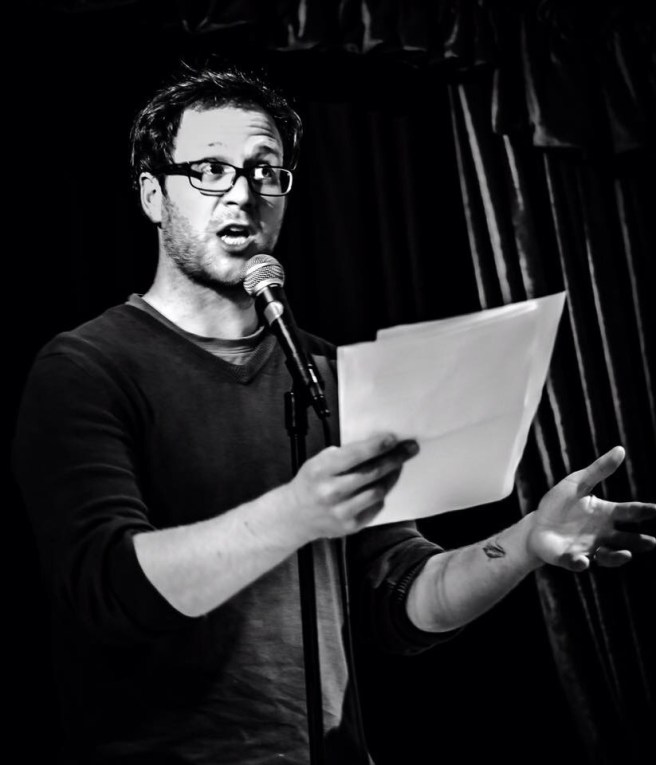
Last night was my third reading in a week, returning to Verbalise in the Brewery Arts Centre in Kendal. It was a quieter night, after a couple of busy ones, but I enjoyed it. I read from The Hollows for the first time – a draft piece about exploring something like a haunted house, which was a lot of fun to read. I also brought out a couple of older pieces for the first time. Books Like Grains Of Sand and Tank Trap are both flash stories in Marrow. I’ve never read them before, as I’ve always thought they were too weird, too abstract for performance. But after what happened with Dora and The Sea Tiger this week, I also wanted to draw a line in the sand for myself – to remember that magic and wonder is why I write. I’m not going to be scared of reading those pieces anymore. And in the end, I think they went better than I’d dared to hope. I’ve felt just slightly off the boil with my last few readings, but I enjoyed last night a lot. Dora’s given me courage. 

I also sold three copies of Marrow, which was lovely – I now have fewer than ten copies for sale, so if you want one, get amongst it while you can.

Next gig is at the end of the month in Lancaster – Working Title in The Three Mariners – be great to see some of you hobbitses there.


Baby steps

In the end, I decided to start again. I didn’t feel I could salvage enough of The Hollows (take one) to make it worth the while. I was certain I’d be left with a scrappy patchwork of pieces, and that joining the dots between them would give me more trouble than reward – as well as colouring whatever came next with so many prior wrong turns. So I started again.

As I mentioned in my last post, I probably shared too much about The Hollows (take one) last year, and I’m not going to to do that again. I feel like I got ahead of myself, and jinxed it. This post is more of a reflection on how freeing the Kate Mosse incident has been for me. Having decided to bin all 30,000 words of the first draft, I was a little intimidated about starting again. But the huge amount of time I spent with pen and paper in Thailand – dozens of hours – gave me the space I needed to settle myself. Having transcribed thousands of words of notes into Scrivener, I found I had a chapter structure. And having fleshed out each of those chapters, joined a few dots and bridged a few gaps, I realised that, with as much luck as design, the narrative was essentially complete.

I found myself almost arbitrarily drawn to a chapter somewhere in the middle of the story, and tentatively started work. I’ve now had five full writing days on the second draft, as well as five or six mornings before work, and somehow I’ve written 23,000 words. Here’s the thing. I’ve written damn near the same inside two weeks as I managed in all of last year put together, except it’s better. That’s left me feeling slightly staggered. What the hell was I doing last year? Did I really wallow so much in the first draft? For a whole year? What made it so hard? I can’t remember. I suspect, in essence, it’s because I was writing fundamentally the wrong story, and I therefore owe Kate Mosse a debt of thanks.

Nothing guarantees the quality of what I’ve written so far, other than I’m feeling curiously relaxed and cautiously happy in what I’m doing, and excited about what comes next. That’s a far better measure than word counts. (Although, if I’m being honest, word counts help – as long as I’m content with the words.) I don’t even yet feel that I’m immersed, that I’m drowning, and that’s what I’m pitching for, that’s what I want. These first sessions are building my sense of the world. It’s knitting together geographically, culturally, socially. It’s growing. It’s almost ready to get lost in.

Thailand two

Bangkok is smoke, Samui is steam. Flying into the airport was like flying into Jurassic Park. Even as we arrived, a cloudburst yammered on the tarmac, and the airport sprouted with gigantic, alien plants I’d never seen before, spines folded back on themselves like Escher prints. Samui has mountains in its interior, all pasted in dense jungle, crisscrossed with broken roads and coconut plantations. The coast is a ring road of shacks, tourist bars and holiday resorts. We stayed on the north-eastern tip of the island in an apartment overlooking the sea. On our first day, we saw Brahminy kites cruising above directly above us, hanging on the breezes, terrifying the coast. Tiny tailor birds perched on palm fronds beside the balcony, and myna birds hung upside-down from the rafters while we drank our beers and watched the sea.

I’m not very good at relaxing. Even the things I do for fun – writing, climbing, drinking with my friend Banks – are bruising, high-impact activities. So it was strange to have so much enforced time away from home, away from work, away from my computer. I even felt a little edgy during the first few days, but soon drifted into a gentle routine of swimming, reading, telling stories, and writing. The writing in particular was vital time for me. I sat with my pen and notebook and spent a few hours every day battering out what The Hollows is about.

Each night, we went to eat in local restaurants or hooked up with with friends. We’d gone to Samui in particular because our pals Helen and Michael were getting married on the beach. We spent a few days either side of the celebration with their excellent Australian mates – really good people. On the way back from their wonderful wedding, we were driven by the craziest taxi driver I’ve ever met. He laughed without pause for the entire twenty minute ride. He had a photo of his son on the dashboard.

‘What’s your boy called?’ I said.

‘His name is Mr. iPhone,’ said the driver, wiping tears of mirth from his eyes. ‘England is cold, cold, cold, cold, cold, cold, cold!’

Ang Thong marine park is an extraordinary place. After a stomach-churning ninety minute boat ride to the first of the two islands we were allowed to visit, we climbed lethally steep stairs to a viewpoint, overlooking a hidden lagoon on one side and the marine park archipelago on the other. With a little help, Dora counted off every one of the hundred and fifty steps, chanting all the way. Having climbed down to the lagoon, we told her about pirates and mermaids and the giant fish that eats little girls who don’t listen to their mummies and daddies about not swimming in the water because that’s what the sign says, poppet.

On the second island we visited, we stood no more than two metres away from wild monkeys. They sat at head height in scrubby trees above the flat white sand, eating figs. They weren’t even slightly interested in us. We watched them for a long time before they disappeared into the jungle. In the trees behind them, set back from the beach, was a shrine. Dolphin skulls, monkey skulls. Shrines everywhere.

The sea had blown up by the time we had to leave. We’d taken seasickness tablets, and Dora promptly passed out on me, but there were people screaming as this horrible damned tub of a boat skidded and crashed and shuddered in the waves. There were three Irish women on the boat – a mother and two daughters, I think – and they started singing in Gaelic, sweet and soft as nursery rhymes. I don’t know if it helped the shrieking Finnish lady, but it helped me. I believed them to be songs of sailors’ wives, praying for the safe return of their men from stormy seas. They might have been pop songs, I guess, but hopefully I’ll never know.

On our third-to-last day, we had the truly bittersweet experience of taking a Samui tour. Every island tour offers elephant and monkey shows. You can’t do it without. So we went, agreeing that we simply weren’t going to take part in the animal shows.

The first part of the trip was a visit to some extraordinary floating temples. We’d driven past them in tuk-tuks a dozen times without knowing they were even there, these gigantic statues of Buddha. That was special. I have no religious faith, but I respect and enjoy the measured spectacle of religious achievement – of cathedrals, of temples, of such conviction. Wandering amongst the statues in the fire of early morning – the first of the day’s tourists, joined only by the temple dogs – was awe-inspiring in the true sense of the word.

The elephant show was next on the itinerary. We were swept along with the crowd, and ended up watching it. There were two elephants. They were brought from different parts of the compound. As soon as they met, they touched trunks, then their handlers finagled them into jigs, into standing on their hind legs, their fore legs. One kicked footballs. One of them was bleeding from the skull. A string of cheery, gormless volunteers came down from the crowd, and the elephants placed a foot on their backs. One elephant pretended to give a honeymoon massage, rubbing a man’s penis with her trunk. We felt humiliated for her. What was worse was realising that at least the show was something to do. Immediately afterwards, the elephants were chained up again – far apart – and each began a heartbreaking, relentless, moronic swaying. One elephant waved her head for a minute or so, then lifted her trunk, as though she’d heard something – and resumed her swaying. I watched her repeat this for twenty minutes. The other did an imbecile dance, lifting her left foreleg, waggling it in the air, replacing it, lifting it, replacing it, lifting it. It was depressing beyond measure.

We explained to Dora that the elephants were unhappy. She was at first puzzled, then very upset. When we came to the monkey show, the first thing anyone heard was Dora, asking why the sad monkey had a chain around his neck.

‘Jesus Christ,’ said the Australian lady beside us, ‘if a three-year-old can see it, what’s wrong with the rest of them?’

There’s nothing to say to that.

After these miseries, we powered up and down gut-squeezing mountain roads in ferocious 4x4s. A Latvian girl we’d collected from a yoga retreat (‘I no eat, I no eat, I on detox, of course!’) had a shrieking meltdown when we went off-road, and demanded to be let out and abandoned in the middle of the jungle. ‘Faster, faster!’ yelled Dora. The Thai drivers adored her for that.

Orchids overgrowing in the road. Bamboo exploding skywards in thickets too dense for light. Coffee growing wild in the hills. Palm trees fifteen metres high, clustered with coconuts. The mummified monk. He claimed he knew he was about to die, so had the others build a glass case around him, and spent his last months meditating inside. That was forty years ago. The case was only opened to give him sunglasses after his eyes had desiccated. The heat, the haze. I dropped our camera in the river. We swam in a waterfall, against the current, with the setting sun glittering in the top few metres of the water and the rest of it falling into jungle gloom.

The hours before evening, when the heat had gone from the sun, and the wet fragrance of the jungle filled our lungs. Arguing with drivers, taking the tuk-tuk into town, decoding every menu for vegetarian options. The warmth of night envelops and cradles and doesn’t want to let you go.

We found a thousand shells on the beach, all their perfect whorls and spirals broken open by the sea. I found ten metres of rope, as thick as my wrist, and dragged it along the beach in an anaconda trail. I left it in a spiral. The plastic bottles that wash up in the foam, each encrusted with a hundred tiny mussels. I found a shark’s tooth and a sunhat.

Mosquitoes. The microcosm of expats. A wasp, longer than my finger, black as jet, trapped beneath a glass and rattling a fury.

‘Of course, I emigrated when they started letting just anyone into Britain,’ he said without irony. ‘I couldn’t handle it now.’

A butterfly, purple and white, the size of both palms together, shadow shapes on candlelit walls. The beaming Thai waitress, eight months’ pregnant, pointing a lost Westerner towards his friends. He didn’t give her so much as a look in acknowledgment.

‘The slitty-eyed gits,’ said another. ‘They’ve stitched me up again.’

Everywhere we went, the Thais continued to be the friendliest, most welcoming people we’d ever met. In one local restaurant, where they spoke no English and we communicated in gestures and smiles, they took Dora off to play. In another, they brought her nine peeled tangerines. She ate them in a state of grateful awe, watching the ceiling fan spin beneath the palm frond ceiling. Pat and Enjoy, the girls who ran the cafe where we ate our breakfast, took endless pictures of her running around the garden, leaping between stepping stones, a bundle of sweat and freckles. One morning, she spontaneously told us her first ever story.

We couldn’t escape the end. It gathered into the last days, mountains on a long-distance drive. Normally I sleep like a bag of bricks, but for some weird reason, on our last night on Samui, and then again at our stopover in Bangkok, I managed only two hours a night; and none at all on the 14-hour flight home. I was in something of a delirium by the time we actually made it back. In Heathrow, a drunk man had been stopped at Arrivals, and was howling at a security guard.

‘I’m a citizen of the UK! This never happened before we let people like you come in here!’

Welcome home. I can’t even use the word Great anymore. It was great meeting my dad in Manchester airport, though, and catching up with our families over the next days; then floating back to ground, restocking the fridge, washing our clothes, putting the suitcases away, putting the books back on the shelf.

I usually read relentlessly on holiday, but this time was different. The only book I really enjoyed was the incomparable Wolf Hall. I spent far more time with pen and paper, working on The Hollows. I’m not going to talk much about it, this time. I feel very much like I overextended myself in discussing the book prior to the Kate Mosse incident, and I’m not going to do that again, other than to say that I talked it through at great length with Mon, who is the most amazing reader I could ever ask for. I’m excited by what I have planned, and I’ve written the first 12,000 words in three days. In this respect, jet lag has been a friend to me; I’ve been waking at 5.30 in the morning, ready for my day, and writing before I go to work. I’ve always been envious of writers who wake early to write – it’s never worked for me before – but it’s working this time. I’m not going to set an alarm for it, but if my body keeps waking, I’ll keep writing. No matter how rough my day at college, there’s a little kernel in my heart that knows I’ve written something, anything – a hundred words, five hundred words. That burns inside me even if I’m too wasted to write at night.

So that was Thailand. Every travel, every trip, is an inherent contradiction, both coming and going. The xenophobic ex-pats were outnumbered a thousand times over by the honest, open smiles of friends and strangers; for every caged bird and poor demented elephant, there were Brahminy kites, indigo butterflies and geckos inside paper lanterns.

When I first left Britain, I was wired with stress, working too much, making myself ill. Thailand gave me the space to recover, to triangulate the things I want to do, and to spend time with the people who matter most to me. That’s what this life is about, if it’s about anything at all. Ultimately, I don’t feel like I’ve travelled very far, because distance is measured from home, and I took mine with me.