Goussainville ghost town

Goussainville-6

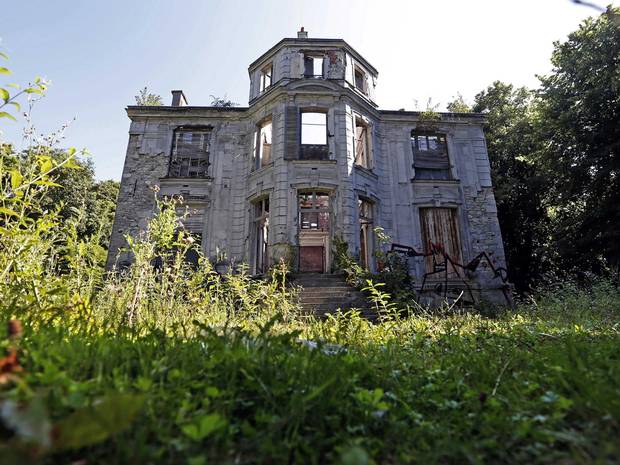
I’m such a sucker for ghost towns and abandoned places. This gallery explores the village of Goussainville-Vieux Pays, abandoned after first a plane crash, and then the opening of Charles De Gaulle airport, drove the residents into Paris or the quieter villages nearby.

I think, for me, that silence – or at least natural sound – is an important part of defining a true edgeland, and the incessant roar of aeroplanes would discount Goussainville. But there’s something so sad about the sight of deserted buildings. The energy that comes from their construction – and the energy needed to sustain the life, and love, and relationships inside them – doesn’t dissipate when the people leave.

This comes hot on the heels of Les Revenants, too…

Battleship Island

Image

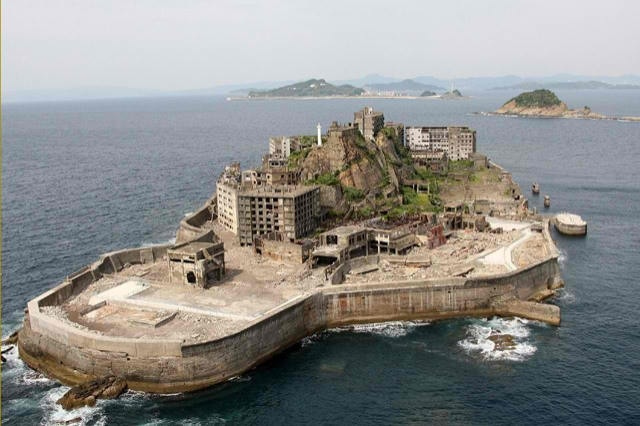
Here’s another gallery of awesome threshold spaces – thanks to Iain Maloney for pointing this one out to me. This is Hashima Island in Japan, also known as Battleship Island. It was used as a base for extracting and processing coal from the sea bed, and for housing the miners. The Mitsubishi corporation owned the island for almost a century, but the mines became unprofitable as coal was increasingly superseded by petroleum. Mitsubishi abandoned the place in 1974. Since then, the concrete has crumbled, the balconies have fallen from the buildings and plants have erupted in the courtyards. It’s an astonishing, ghostly space.

The sea will take its own.

Bog boats

This is brilliant – no fewer than eight Bronze Age boats have been discovered in a creek in Cambridgeshire. The boats have been preserved by dense layers of silt, to the point that the archaeologists have recorded games of noughts and crosses carved into the wood.

Bogs and marshes….

The full article is here.

Exclusion

Image

Here’s another gallery of those threshold spaces I’m so drawn to; though far grimmer than the edgelands I wrote about a few weeks ago.

These photos were taken within the exclusion zone at Chernobyl. These buildings have been sterilised, rather than evolved through abandonment. The atmosphere is flat and repellent, rather than mysterious or melancholic. The sadness is so heavy, so austere. The ghosts weigh heavy, and I never want to go there.

Thanks to Billy Kinnear Photography for pointing out this site.

Ladders upon ladders

Image

This brilliant photo gallery shows the vertical commute to school taken by mountain-dwelling children in rural China. This is exactly the sort of imagery which is feeding into my plans and dreams about the next novel – ladders upon ladders, and buildings upon buildings. I can picture the world and the culture so clearly, and I’ve almost finished blocking out the plot. The weight of my workload is making me hesitate a little, but I think it’s almost time to start writing.

Shap Fell Road

Image

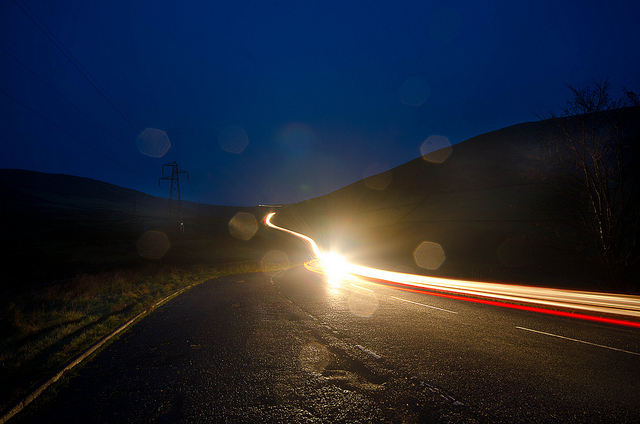
I had a few hours to write, yesterday, and managed to burn through the first draft of a 2,500 word ghost story. It’s set on the drive between Kendal and Shap on the surprisingly desolate A6 – a road I’ve driven hundreds of times when working in Great Strickland. This atmospheric photo, pinched from a very talented photographer called Richard Berry, shows the pylons that stalk the route just visible against the dusk. It’s a phenomenally stark landscape, with sections of the road blasted through steep slate hillside, and gigantic quarried cliffs glaring dark against a backdrop of the Lakes. Perfect for a foggy day and a haunting…

Mon read the story last night and gave me some great ideas for developing it further – obvious tweaks that I don’t always see on a first draft. Looking forward to working through a second draft and thinking about submission.

Kingfisher

Image  Image

I used to go climbing several nights a week, but I haven’t the time any more. And when we lived in the old house, I cycled to work; now my wife drops me off at the college before she goes to paint. In short, I don’t do any exercise. I’m constantly zipping about at a thousand miles an hour, juggling my different jobs, but that’s hardly a substitute.

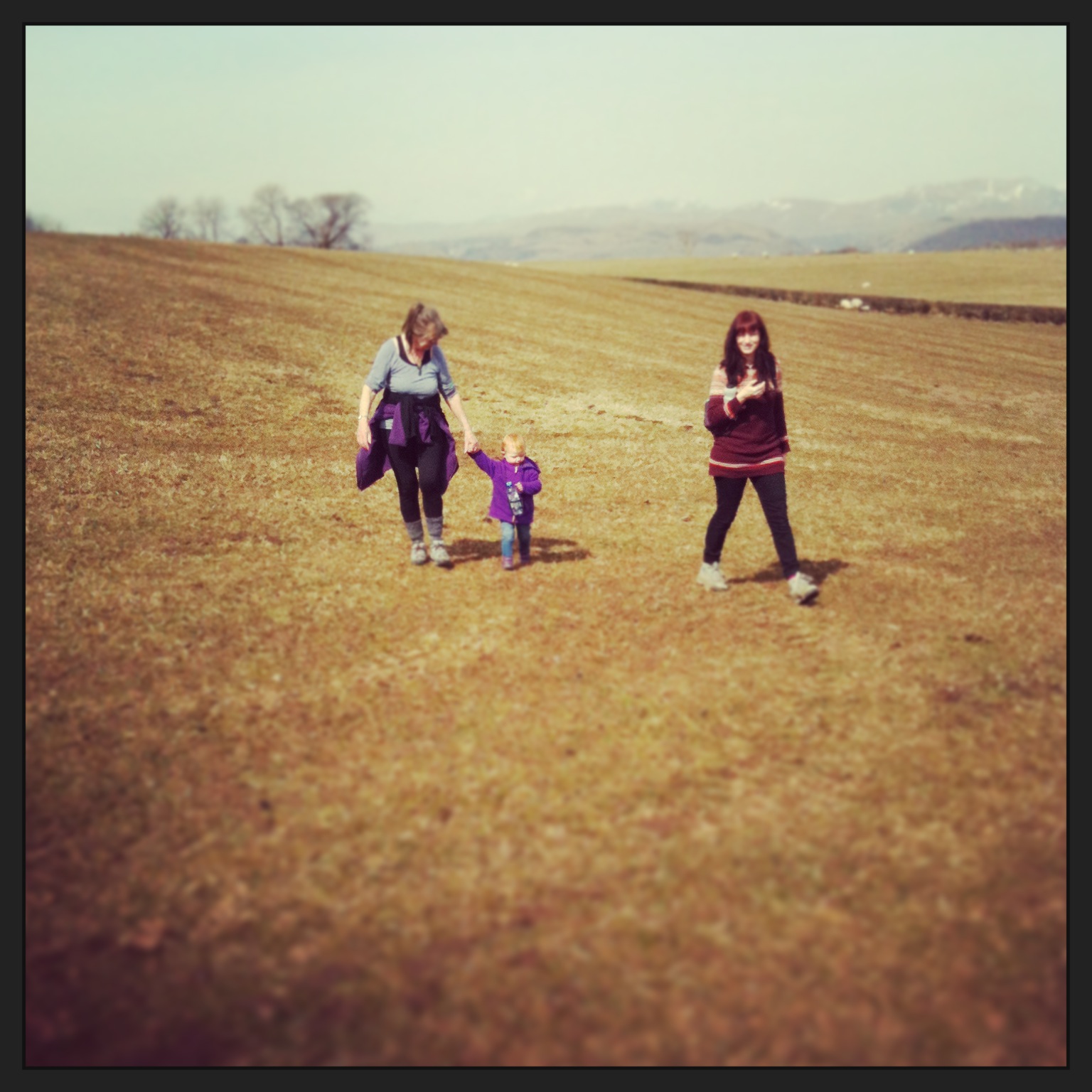
Walking is the only activity I can really make time for. Mon and I both love walking. We’re lucky enough to live in an amazing part of the planet, and our little corner of it has some excellent trails. We can walk from our wee cottage in Burneside to see friends in town – or strike out in any other direction to find open countryside.

I’m not a purist about the countryside. I like edgelands and places of threshold where the natural and the man-made have grown old together. Yesterday, we walked to Staveley in Kentmere and back. It’s a great walk for rusted farm machinery, gnarly stiles, fallen trees and tumbledown barns. There’s a troll bridge with missing slats, and a beech tree strangled by a noose of barbed wire. The tree’s bark has enveloped the wire completely, lapping over it like the slowest wooden wave. In one spot, a fence has been mended with an old iron bedhead. It’s lambing season – we passed new lambs, minutes old. I saw my first ever kingfisher.

Walking gives me more than physical exercise. It’s a source of constant, ever-changing inspiration. Walking around London fuelled my first short stories. My walks on Islay, Gigha and Kintyre fed into Riptide Heart and the fictional island of Bancree. My longstanding work-in-progress, Year of the Whale, is about walking – and the need to walk. Location is crucial to the way I write, and walking in real places fires my imagination. I try to create a geography – physical, atmospheric and emotional – that I believe in. When I get it right, my characters play out the story in that environment like a drop of water on a slope, finding the simplest route to ground.

Walking is good for the soul.

I’m calling a character in my next novel Kingfisher.