Spotlight turns 200

Now then, humans. I’m off to Lancaster tonight for the 200th Spotlight Club at the Storey Institute. I’m really excited to be reading again at such a great event – I have four flash stories lined up for my 10 minute slot, and the other performers look a brilliant crew. Please come if you can – all the details are right here.

Curiously, I’m not terrified yet. That will probably kick in about 4 or 5 in the afternoon, when the stories I’ve worked on for weeks and weeks spontaneously turn into this:

house-falling-apart

The horizon

What a couple of weeks. The start of college has been a bit rough, but we’re getting there. I’m spread fairly thin at the moment, and it doesn’t feel like I’m getting much done… but in the background I’ve completely redrafted my flash fiction collection Marrow, so that’s ready for typesetting when I find the time to get to grips with InDesign. Paragraph Planet published a 75-word story from that collection last week, too, which is pretty cool. I’ve also redrafted the longer short story I talked about in my last post, and started blocking out my new novel in the excellent Scrivener.

Even more exciting, Riptide is beginning to gather pace. I’m expecting notes from my editor this week, so I can start work on what should be the final draft, and I’ve just had a sneak peek at a rough of the cover art, which is scintillating. While I’ve been so busy drowning in real life, just trying to stay afloat, seeing the cover has been a timely reminder of what I’m working towards. The artwork is simply perfect, but I’ll wait for a final version before I share it.

paddy

The 200th Spotlight Club in Lancaster is looming on the horizon. It feels like only last week I was reading at their open mic night. I’m excited about performing there again, and hopefully catching up with old friends Rich Turner, Dan Haywood and Paddy Garrigan (pictured above) – Paddy’s playing out the night, which should be a blast. I have two or three new pieces lined up. I’m going to start with a short story about guinea pigs, and finish with a very short 75-word piece about avocados. I think there’s probably time for another story in between, but I haven’t decided what just yet.

After Spotlight comes the Brewery open mic, if I can get a spot, and then Dreamfired in October. By happy coincidence, my storytelling uncle Rich Sylvester is up from London that night. I don’t get to see Rich very often, so if we’re organised enough, I’ll try and knock up a quick video of one of his stories.

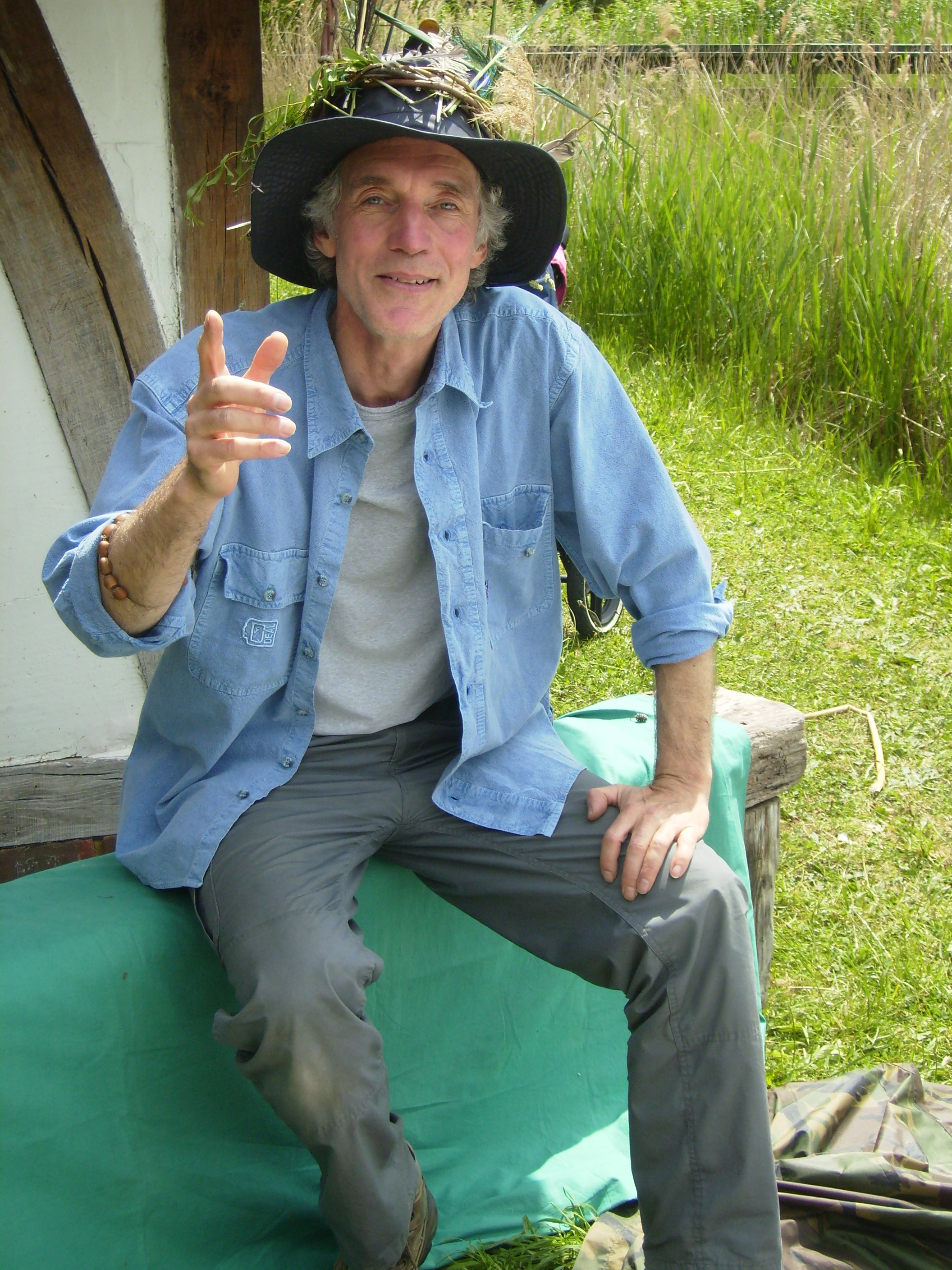
OLYMPUS DIGITAL CAMERA

Who likes short shorts?

I’m between novels – making notes for the second while working on edits for the first – and as a result of this fairly disjointed workflow, I’ve also been writing a lot of flash fiction. I write flash fiction for three reasons. In order of importance, these are:

1. To keep my writing and imagination ticking over.
2. As a depository for the ideas I haven’t time to develop.
3. To create short sharp stories for readings.

However you feel about flash fiction – and there are a lot of people who deem it totally irrelevant – these reasons are good enough for me. Number one, in particular, is very important to me when I’m so busy. I can’t work on a novel if I have a spare hour – I need more space in my head – but I can write flash. For me, flash fiction is a fun and constructive way to write more often (notwithstanding J. Robert Lennon’s excellent ‘ass-in-the-chair canard’, of course).

Like most writers, I suppose, I started learning my craft with short stories. In the first two years, almost all of them fell between 1,500 and 2,500 words. This wasn’t deliberate – I was simply writing stories that told themselves in that sort of space. As my writing developed, the scope of my ambition widened; I wrote Meat (mentioned briefly here), abandoned a subsequent novel at 50,000 words, and started work on my extremely long-running novella The Year of The Whale, which I had almost finished when Riptide exploded in my life. Over the following year, Riptide was pretty much the only thing I worked on. By this point, my longer pieces had absorbed any time for short story writing, with flash fiction increasingly fitting into the small hours between proper writing sessions.

In essence, then, I’d stopped writing short stories. But I’ve had an idea nagging me for a while, and it clearly wanted to be a short story. I decided to make it a little more considered than my older shorts, and spend more time letting the character paint the world around her. I finally settled down to work on it last week, and I finished a first draft last night. In my head, I expected it to be about 5,000 words, which is easily double the length of my next-longest short story. It has been a very strange space to work in, especially after so long away from the form.

Some flash fiction packs a conventional narrative into a smaller space, and some flash fiction snatches at a single moment, a single voice – a heartbeat – and gives the reader just enough to fill in the blanks themselves. The short story expands on those themes (obviously), giving them greater room to grow, but for the form to have an inherent function, it needs to achieve more than simply stretching out those moments – more than filling in some of those blanks.

I seem to recall a quote – possibly by Chekhov, though I can’t find a source – declaring that all short stories are the end of longer stories. I think there’s something in that, and I like the abstraction inherent to the form. My best short stories – the ones I personally consider most successful – are the ones where I’ve managed to hardwire some sense of trajectory. I want my writing to have momentum. I aspire to a ferocity, a certainty of narrative. I don’t know how well I achieve that, but it’s what I’m working towards.

I have now finished this new piece, and I think it’s come the closest yet to what I’m trying to create. It’s abstract and a little dangerous, but I think I’ve generated the emotional whirlpool I strive for, with discontiguous strands of story focused to a single point. After so much time away from the medium, I found it quite difficult to write. Although I knew my character’s voice right away, and I knew what I wanted to achieve in the story, it took me a long time to untangle the threads and find my way. I’ve been plodding through it, whisky in hand, on odd nights for a couple of weeks. Last night I finally had the breakthrough, which involved redrafting the whole thing from present into past tense, cutting a couple of sections and writing a new scene. I’m now going to take a day or two away from it, and see if a little distance helps with the redraft. Happily, the first draft came to 5,220 words.

I’m now waiting for feedback from a couple of readers, but I wanted to write this post before talking to anyone about the story; I needed to get my own thoughts in order. At some point I’m going to write more about my ultra-flash fiction on Twitter, but I wanted to use my first short story in a year to have a think about why I don’t write them any more.

A little light reading

We’ve just returned from a brilliant fortnight in France. We racked up 2,500 miles in a round trip that encompassed Ile de Noirmoutier, which is reached by a two-mile causeway at low tide; Rauzan, where we camped in the shadow of a ruined medieval castle; and Marais Poitevin. This last spot, nicknamed ‘Green Venice’, is one of the most amazing places I’ve ever seen. Centuries ago, it was a vast swamp, but Dutch settlers drained it with a labyrinth of canals and ditches, leaving hundreds of island pastures connected by causeways and bridges. The architecture is just as unique, with balconies and shutters adorning every house, and punts moored to jetties in gardens. Poplars and alders tower into the sky, the canals are thick with lurid green algae. Fat dragonflies zip and pop between shrubs and creepers, and the trees are alive with cicadas. Filtered through high branches and reflected from the water, the light itself is tinted green.

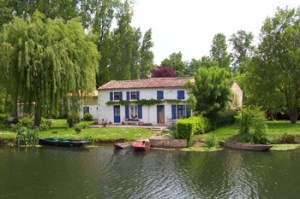
marais_poitevin bluehouse

It’s genuinely one of the most incredible landscapes I’ve experienced and, much like Grogport for Riptide, it’s been a real inspiration for my next novel. In the space of a few days, I filled an A4 pad with notes and dialogue, and I feel really excited about starting work. There’s still plenty to do before I can begin, but the foundations now feel firmly set.

The other great thing about the holiday was having time to read. I managed six books, which is no mean feat when juggling a toddler in a campsite. And I had a great run of books – not a single dud:

The Tiger’s Wife by Tea Obreht was bold and convincing, subtly switching a range of voices to make folk myths contemporary through personal memory. I enjoyed it a lot, but found it ever so slightly cold, and wasn’t as blown away as its reputation suggests.

Cumbrian Folk Tales by Taffy Thomas was a fascinating collection of the county’s legends and myths, made all the more immediate through its connections to a landscape I’m starting to know. It was amusing to recognise the names of not just local places, but also local people – people I’ve met, worked with, drunk with. The tales were strongest when connected to geography, giving meaning and history to a witch’s cauldron or a devil’s bridge.

I read The Blackhouse by Peter May – this was a present from Jane Wood, my publisher at Quercus. She thought I’d like a look because, like Riptide, it’s a crime story set in the Hebrides, though it doesn’t have the supernatural elements of my book. I enjoyed it a lot. The plot was dovetail-tight and engrossing, and the landscape was intoxicating.

Next up was I Love You When I’m Drunk by Empar Moliner, Spanish short stories in translation through the tremendous Comma Press. Despite some uncharacteristic typos from an excellent publisher, it’s a solid collection, each story exploring and exploding conceits of modern life. Some of the stories felt a bit like shooting fish in a barrel – taking aim at soft targets of liberal, middle-class pomp – but the writing was good throughout, and there were many outstanding moments.

Moliner’s collection was good, but the next book was astonishing – a class apart. The Dog Of The Marriage gathers Amy Hempel‘s four short story collections into a single volume, and they are consistently superb. There isn’t a single wrong note across dozens of stories. Hempel’s work is voiced through emotionally damaged or stunted narrators, trapped or somehow left behind in their lives, caught between stasis and decay. The stories are not without hope, though, and Hempel writes with unceasing, unfailing humanity. Her sentences and structure are scintillating. I cannot recommend this highly enough. This is the sort of book I buy two copies of, expecting to have one out on loan.

the_dog_of_the_marriage.large

Finally, I read Snake Ropes by Jess Richards. This was another corker. Alternate narrators explore life on a mysterious island, ‘just off the edge of the map’, eventually combining to bring the distinct halves of the story together around a single, long-forgotten trauma. This novel holds trade and barter at its heart, exploring themes of presence and absence, balance and weight; of exchange, and what it means to give and get. It’s a real triumph, made all the more masterful in how Richards weaves the fantastical through the fabric of base human instinct, conjuring talking keys, sentient trees, and a walking doll with a seashell for a heart:

Moppet2

The last fortnight has reminded me, as stupid as it sounds, of how much I love to read, and made it painfully apparent how little reading time my regular schedule affords me. I’m determined – on top of carving out more writing time – to read more. I miss it.

This holiday has been essential. I’ve worked stupidly hard over the last two years without much of a break, and I’ve badly wanted some time off. Looking ahead, the next two months are going to be frantic – but I feel better for a break. I have my next novel blocked out and the sights and scents of a swamp fresh in my mind. One more draft of Riptide to go, and then I’ll be starting my new story.

Wino time

‘Wino time’ is Beatnik slang for ‘Drunk & Disorderly’. I haven’t been arrested, but I am going on holiday for a couple of weeks, and I plan on drinking quite a lot of wine, so you never know. I’m taking books, notebooks and pens. See you in a couple of weeks, and thanks to everyone who’s stopped by in the first few months since I started this blog.

‘The software of our minds’

This is a fascinating article, examining the quasi-neurological process through which stories develop emotional punch. I’ve long believed that empathy is the quality a writer needs more than other; this article seems to give my belief a little foundation. Put simply, stories engage readers through exploiting our empathy with the character and their situation. Writers therefore need to assume the mantle of that empathy and project it onto their characters.

Read on:

Six Ways to Make Sure Your Reader’s Brain Syncs with Your Protagonist’s Brain.

Limppelty lobelty

Image

My reading lately has brought me to the Tiddy Mun. He’s a grumpy but rather sad spirit of the fenlands. There’s something very ancient and disconnected about him, as though he’s been left behind, and doesn’t entirely know why. People were actually quite fond of him, by all accounts, in the same way they’re fond of elderly and slightly addled relatives they see only every other Christmas.

Anyway. Tiddy Mun can summon water, mist and fevers from the marshes. He’s very much at home in the bogs, and he was incandescent about the draining of the fens by the Dutch. In his rage, he conjured pestilential swamp airs onto all Fenmen, and didn’t stop until everyone said they were sorry.

He sounds anachronistic even in the 1890s:

“He dwelt deep down in the green water holes, and came out at evenings when the mists rose. Then he came creeping out in the darklings, limppelty lobelty, like a dearie wee old granter, all matted and tangled, a long grey gown so that they could hardly see him in the dusk, but they could hear him whistling like the wind and laughing like a peewit. He was not wicked like the rest, but he was eerie enough, though the times were when he helped them. For on wet seasons when the water rose to their doorsteps, the whole family would go out together and shivering in the darkness they would call:

‘Tiddy Mun wi’out a name,
Tha watter thruff!’

They would call it till they heard a cry like a peewit across the marsh, and they’d go home. And next morning the waters would be down.”

I feel quite sorry for the Tiddy Mun. He seems lonely and lost and utterly out of place, but I think he might have a role to play in the new novel. I especially like the idea that he isn’t “wicked like the rest”…

Some strange alignment of the stars

mic-teal

I’ve booked an open mic slot at Lancaster’s Spotlight club next week. Mon’s driving, so I can even have a couple of ales. Happy days.

I haven’t totally settled on what to read yet, but I’ll probably try a new story from my flash fiction collection-in-progress, Marrow. There’s one about home cooking that I’d like to run past an audience, and another about guinea pigs that needs a first outing. I won’t have time to read both, but I’ll read one and save the other for when I try – again – to attend the Brewery’s open mic in August.

It really shouldn’t be so hard to make it to the Brewery. It’s one of my favourite pubs in Kendal, and it’s where we watch movies. I probably go a few times a month, but I haven’t managed to read at the open mic night for three years. Probably no coincidence that Dora is two and a half, come to think of it. Some strange alignment of the stars always seems to prevent me attending – something always comes up that means I can’t go. I’m determined to make it down at some point in the next few months, as reading live is becoming so much more important  to me, and I want the practice.

Three years ago, before the fates decided I couldn’t go back, I read a short story about a WWII fighter pilot called ‘The Matador’. It was my first ever open mic. I was sick with nerves, but it went quite well, and it gave me the confidence to go on and read in Edinburgh and Glasgow for Words per Minute, Cargo Publishing and Gutter. I don’t think I’ll ever be totally secure in my public reading, but I’m improving all the time, and I’m enjoying it more with each performance.

All these open mics are building up to October, where I’ve landed a support slot for one of the Dreamfired story nights in Brigsteer. I’m reading in support of Emily Parrish and her retelling of the Loki myth. It should be an amazing night. To get into the storytelling spirit, I’ve decided to drop the notes and perform my work from memory. The thought makes me a little nauseous, even four months distant, but I think it’ll be a good thing to do. I’ll be reading ‘Gumbo’, which was published in the first issue of Fractured West. It’s one of my favourite stories, and fun to read aloud… though I doubt it’ll feel very funny when I’m performing without notes to an audience.

Back to Lancaster and the Spotlight Club. It’s a great line-up: amongst others, poets Trev Meaney and Nick O’Neill are headlining, and there’s music from experimental ethnomusicologist Deep Cabaret. Hopefully old friend, talented multi-instrumentalist, New Hawk and haikuist Rich Turner is coming along for a beer, too. He’s a good friend of ours, but we haven’t seen him in a year, because he has an amazing daughter, and we have an amazing daughter, and all children are black holes for time.

Anyway, it’s going to be a fantastic night. If you want to hear me read a story about guinea pigs and then crumple like a cheap suit, head down to the Storey Institute in Lancaster from 8pm on Friday 19th. See you there. Buy me a beer.

Bookstores: may cause heartache

20081215a

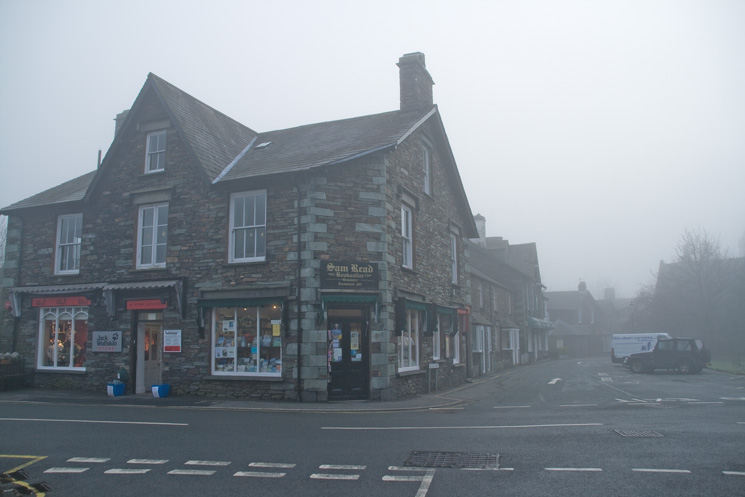
While in Grasmere, we made the mistake of going into Sam Read‘s bookstore. This was a mistake because I wanted to buy everything. Sam Read is one of those achingly wonderful bookshops with books packed into every corner, stuffed into racks and alcoves, and stacked loose above the rows on the shelves. A few years ago, I wouldn’t have strayed beyond the fiction section in any bookstore, but my daughter Dora loves books (current favourite: Six Dinner Sid) and being read to, so I’ve started looking at the children’s section as well. And oh, my; children’s books are simply sumptuous. The quality of illustration and storytelling is just stunning – browsing those shelves was like a treasure chest of my own childhood, a feast of imagination, all dragons and goblins and tunnels and talking dogs. I could have stayed all day to drink in the artwork alone.

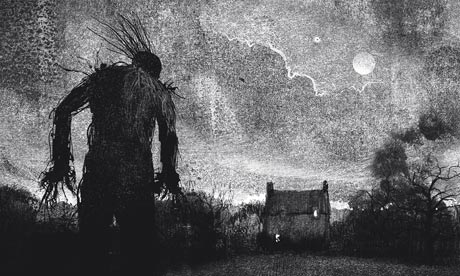
I buy almost all my books from charity shops, because I can rarely afford them new. A well-made, well-written book is a real treat for me. I want to hug them close and read them carefully and show them to friends. The one which really stole my heart was A Monster Calls by Patrick Ness, based on an idea by Siobhan Dowd. I’ve only discovered Patrick Ness quite recently, having been blown away by The Knife Of Never Letting Go (I’ll race through the rest of the Chaos Walking trilogy once I’ve tracked down the second part – the third book already sits on my shelves, waiting…). I love his writing – and he quoted on the jacket of Ali Shaw‘s Girl With Glass Feet, so he knows what he’s talking about.

The illustrated version of A Monster Calls is heart-stoppingly beautiful. Just look at this work by Jim Kay:

Illustration from A Monster Calls

A-Monster-Calls-007

I covet this book more than I’ve coveted any book for years – but I didn’t buy it. I bought Cumbrian Folk Tales by Grasmere legend and master storyteller Taffy Thomas. I could only afford one book, and Taffy’s was the reason we’d gone into Sam Read’s in the first place. I’m truly delighted I bought Cumbrian Folk Tales, and I’m looking forward to immersing myself in Taffy’s take on local mythology, but I walked away from A Monster Calls with unbearable reluctance. Still – it’s my birthday in July. Fingers crossed.

Bookstores should carry warnings: may cause heartache…