Spoken Word at the Brewery: Take Two

For one reason or another, something has arisen on the last Saturday of the month – every month – for well over a year. And that’s a real shame, because Spoken Word is on at the Brewery Arts Centre in Kendal on those last Saturdays, and I’ve therefore missed well over a dozen of my local literature night. Yesterday, however – at last – I was able to make it across town to the Brew, and I read at the open mic.

This won’t mean anything to anyone but me, but Spoken Word was also the place of my first ever live reading, more than three years ago. That’s why this post is called Take Two. It was curiously satisfying to take to the stage again and remember how I was shredded with nerves back then. And another first for me, this time round – I’ve never read without Monica in the audience. I missed her. It’s much easier to perform knowing at least one person out there is absolutely rooting for you.

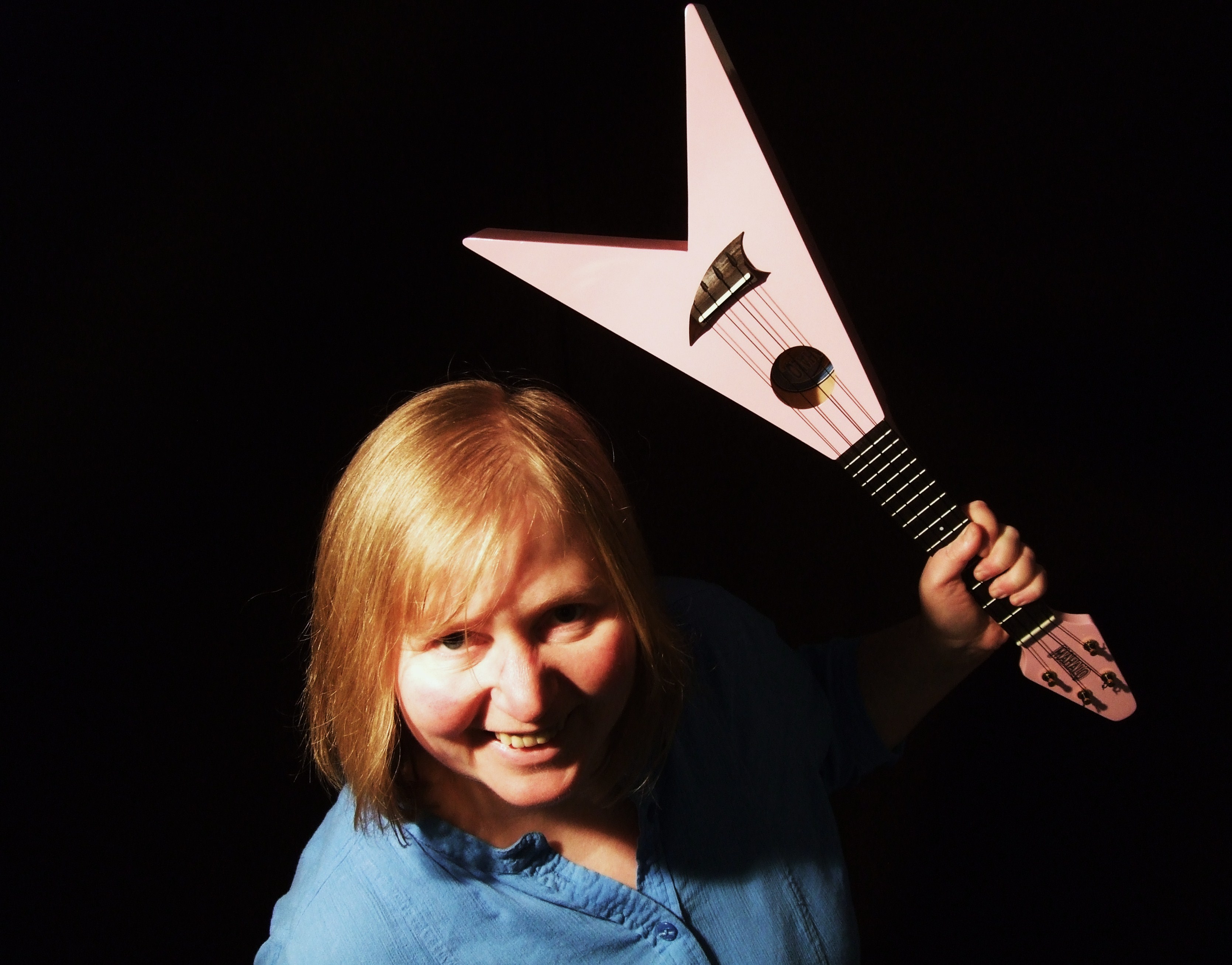
I was first to sign up to the open mic, so I was first onstage after excellent compere Ann the Poet had introduced the night and read a couple of her poems. I always enjoy Ann’s work – it’s witty, it’s wise, it has energy, and her poems tell stories about people. For me, that’s what all this is about. She’s also a very funny host. She looks like this:

annuke

It was weird being the first reader onstage. There hadn’t been a chance to gauge the audience, and so I didn’t know entirely how to pitch my work. With a five-minute slot to play with, I read The Lion Tamer’s Daughter and Circle Stone. I didn’t exactly pick up where I left my last reading in terms of confidence, but I tried to invest a little more faith in my stories. They seemed to go down quite well, and Circle Stone found a bigger laugh than at Spotlight.

The other open mic readers were brilliant – I especially enjoyed poet Kate Davies. She had polio as a child, and her second piece was a stunning juxtaposition of that experience with a car maintenance manual; the more of an automaton she made the child, the more human she became. It was mesmerising.

After the break, Luke Brown read two of his short stories. He’s a young writer of great reputation round Cumbria, so I was really excited to see him live – and he didn’t disappoint. His work was engrossing, and both his stories had killer, killer pay-offs. I really hope I can see him again. I haven’t found a website for him yet, but if I do, I’ll update the blog.

Second headliner Louise Mary Martin topped out the bill. I’ve come across her work before – she’s the singer in South Lakes reggae group Righteous Bees, and my brother-in-law Ben Metsers has used her vocals in some of his work. Last night she played four songs – two bluesy Americana/alt.country covers, played with guitar, and two extraordinary songs in which she used live loops of her vocals in dense layers, beautifully timed to create a stunning collage of sound. I’ve seen it before from Adam Stafford:

…but it was quite something else to watch live. The focus and the timing required is amazing. Just astonishing stuff.

It was a great night, with one slight downer. During the interlude, while I was chatting with Kate Davies, a man I didn’t know joined us. He was perfectly friendly, but our conversation left me feeling strange. He told me that the trouble with my story was the moment he knew it was about lion tamers (i.e., from the title), he thought of a news article from the 1960s about a lion tamer who was attacked by his own lion – and he thought of that instead of my piece. Which I guess is fine, but I don’t know how any writer can future-proof their work against audience association. Indeed, writers need audiences to bring their own associations with them; it’s a reader’s empathy that brings a story to life. Anything less would be exposition. The man also thought I was self-conscious during my reading. Maybe I was, a little, but I was a goddamn powerhouse compared to a year ago. That was a bit of a funny one to leave me with.

I wanted to talk to Luke Brown afterwards and congratulate him on such a great show, but he was swamped with other people wishing him well, and I had to go. I walked home through Kendal listening to a playlist I’m making for Monica. As I headed out of town, taking the back road to Burneside, the last streetlight made a giant of my shadow, casting it far up the road into the night. The further I went, the dimmer the streetlamp, until my shadow and I were absorbed entirely by the darkness. It was a clear night, but there was no moon. My eyes adjusted to the gloom and I walked a mile or so lit only by stars, pinpricks of light lifting the path half a shade above the vegetation.

I thought a lot about my reading, and about what the man said. By the time I reached my house, my mind was clear. Different opinions are how we know ourselves as individuals, and I’m sure I’ll hear much worse when The Visitors hits the shelves. I can’t do anything about an audience’s associations, and nor would I want to. And if I seemed self-conscious, then that’s partly because I am, and it’s something I need to keep working on. I do want to improve my performance even further, to be bolder, to be more technically confident in how I speak into a microphone, to relax into my stories, to try different voices. And I’ve another date in the diary to aim towards, now: Ann has asked me back to read as one of the guest slots for February’s Spoken Word. I feel deeply honoured to have that as something to work towards. I’ll go back to the open mic whenever I can, too, and I’ll keep trying new stories. Because I have to.

Spotlight turns 200

Now then, humans. I’m off to Lancaster tonight for the 200th Spotlight Club at the Storey Institute. I’m really excited to be reading again at such a great event – I have four flash stories lined up for my 10 minute slot, and the other performers look a brilliant crew. Please come if you can – all the details are right here.

Curiously, I’m not terrified yet. That will probably kick in about 4 or 5 in the afternoon, when the stories I’ve worked on for weeks and weeks spontaneously turn into this:

house-falling-apart

The horizon

What a couple of weeks. The start of college has been a bit rough, but we’re getting there. I’m spread fairly thin at the moment, and it doesn’t feel like I’m getting much done… but in the background I’ve completely redrafted my flash fiction collection Marrow, so that’s ready for typesetting when I find the time to get to grips with InDesign. Paragraph Planet published a 75-word story from that collection last week, too, which is pretty cool. I’ve also redrafted the longer short story I talked about in my last post, and started blocking out my new novel in the excellent Scrivener.

Even more exciting, Riptide is beginning to gather pace. I’m expecting notes from my editor this week, so I can start work on what should be the final draft, and I’ve just had a sneak peek at a rough of the cover art, which is scintillating. While I’ve been so busy drowning in real life, just trying to stay afloat, seeing the cover has been a timely reminder of what I’m working towards. The artwork is simply perfect, but I’ll wait for a final version before I share it.

paddy

The 200th Spotlight Club in Lancaster is looming on the horizon. It feels like only last week I was reading at their open mic night. I’m excited about performing there again, and hopefully catching up with old friends Rich Turner, Dan Haywood and Paddy Garrigan (pictured above) – Paddy’s playing out the night, which should be a blast. I have two or three new pieces lined up. I’m going to start with a short story about guinea pigs, and finish with a very short 75-word piece about avocados. I think there’s probably time for another story in between, but I haven’t decided what just yet.

After Spotlight comes the Brewery open mic, if I can get a spot, and then Dreamfired in October. By happy coincidence, my storytelling uncle Rich Sylvester is up from London that night. I don’t get to see Rich very often, so if we’re organised enough, I’ll try and knock up a quick video of one of his stories.

OLYMPUS DIGITAL CAMERA

R.I.P. Elmore Leonard

leonard

American crime maestro Elmore Leonard has passed away at the age of 87.

I’ll remember him best for ‘The Tonto Woman and other stories‘, his excellent collection of Western short stories, including the classic ‘Three-ten to Yuma’.

Leonard’s prose became increasingly minimalistic as his work developed, stripping away everything but story. This led to very stark, albeit engrossing, reading. Here are his famous rules for writers. I’m partially guilty of breaking some of these… even though I agree with most of them.

Valve and Hound

newlogo

170 unread emails greeted my return from holiday, and this almost passed me by in a whirl of administration – but while I was in France, I received the great news that Valve have accepted two of my short stories for the third edition of their excellent journal.

The first story is ‘When The Bough Breaks’. It’s a brutish, experimental piece about a life-term prisoner trying to deal with horticulture in his halfway house.

The second story is called ‘Hound’. I consider ‘Hound’ to be my only true story, so much as any story can be true; I wrote it when I lived in Manchester, back in 2009, and it’s about a stray dog that haunted the streets of Withington. For a month, or maybe six weeks, I saw him again and again, scavenging in the alleys and lanes around our flat. Mon and I would often stop to talk to him, though he became increasingly scared of people. When he finally vanished, as I think I’d always known he would, I looked for him; and when I couldn’t find him nearby, I searched for him on the city’s animal rescue websites. I never discovered what happened to him, but I’ll always feel guilty that I didn’t do more when I had the chance. We left about a month after the dog had gone.

Dog-by-Giacomo-Brunelli-001

Manchester was a strange time in my life. Three days a week I worked on my first book, a novel-length prose-poem called ‘Meat’, and three days a week, I worked in a bespoke veneer workshop in Stockport. I lost my job when the owner died suddenly from complications of swine flu. On Monday he was there, and on Tuesday he was dead. We finished the last order, then the workshop closed. Desperate for work, I applied for about a hundred jobs in a month: in delis, cafes, factories, shops, offices. I received two rejections and approximately ninety-eight silences. We packed everything we owned into a hired van and drove to Kendal twice in a day. On the second trip, dumb with tiredness, I had to do an emergency stop on the M6 near Preston. There were swans waddling across the motorway. Goddamn swans.

Each of my stories means something to me, but ‘Hound’ is special. Unlike the majority of my work, it is mostly true, and it records a turning point in my life. I had finished ‘Meat’, which took me to some extremely dark and upsetting places, but exorcised a lot of the poison I’d carried through my twenties. I received some good feedback on the manuscript from friends, writers, indie publishers and agents, but the consensus was that it was too dark for a first novel. I think this is probably fair. My reading and writing began to evolve again after Manchester, and ‘Hound’ marks the start of this change in my work: becoming more constructive, more concise and more direct. After ‘Hound’, I became interested in writing as a vehicle for immersive storytelling, rather than writing for the brutality of raw emotion.

As well as being one of my favourites, ‘Hound’ is also the most rejected of all my short stories. I don’t interpret rejection as a validation of the quality of a story, but I’ve been a little dismayed that no-one wanted to take it. I really wanted ‘Hound’ to go to the right home, and I’m humbled and delighted that Valve have taken it on.

I didn’t mean to write so much about this, or to get quite so personal. We only lived in Manchester for eleven months, but when I pull it apart, I feel surprisingly emotional about this point in my life. It marked a step change in who I was and who I am, and ‘Hound’ is a measure of that change. And this perhaps is mostly why I write: to interpret and record my world and myself.

A little light reading

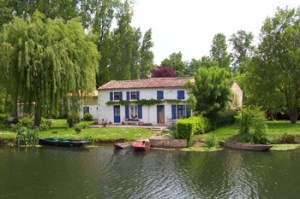
We’ve just returned from a brilliant fortnight in France. We racked up 2,500 miles in a round trip that encompassed Ile de Noirmoutier, which is reached by a two-mile causeway at low tide; Rauzan, where we camped in the shadow of a ruined medieval castle; and Marais Poitevin. This last spot, nicknamed ‘Green Venice’, is one of the most amazing places I’ve ever seen. Centuries ago, it was a vast swamp, but Dutch settlers drained it with a labyrinth of canals and ditches, leaving hundreds of island pastures connected by causeways and bridges. The architecture is just as unique, with balconies and shutters adorning every house, and punts moored to jetties in gardens. Poplars and alders tower into the sky, the canals are thick with lurid green algae. Fat dragonflies zip and pop between shrubs and creepers, and the trees are alive with cicadas. Filtered through high branches and reflected from the water, the light itself is tinted green.

marais_poitevin bluehouse

It’s genuinely one of the most incredible landscapes I’ve experienced and, much like Grogport for Riptide, it’s been a real inspiration for my next novel. In the space of a few days, I filled an A4 pad with notes and dialogue, and I feel really excited about starting work. There’s still plenty to do before I can begin, but the foundations now feel firmly set.

The other great thing about the holiday was having time to read. I managed six books, which is no mean feat when juggling a toddler in a campsite. And I had a great run of books – not a single dud:

The Tiger’s Wife by Tea Obreht was bold and convincing, subtly switching a range of voices to make folk myths contemporary through personal memory. I enjoyed it a lot, but found it ever so slightly cold, and wasn’t as blown away as its reputation suggests.

Cumbrian Folk Tales by Taffy Thomas was a fascinating collection of the county’s legends and myths, made all the more immediate through its connections to a landscape I’m starting to know. It was amusing to recognise the names of not just local places, but also local people – people I’ve met, worked with, drunk with. The tales were strongest when connected to geography, giving meaning and history to a witch’s cauldron or a devil’s bridge.

I read The Blackhouse by Peter May – this was a present from Jane Wood, my publisher at Quercus. She thought I’d like a look because, like Riptide, it’s a crime story set in the Hebrides, though it doesn’t have the supernatural elements of my book. I enjoyed it a lot. The plot was dovetail-tight and engrossing, and the landscape was intoxicating.

Next up was I Love You When I’m Drunk by Empar Moliner, Spanish short stories in translation through the tremendous Comma Press. Despite some uncharacteristic typos from an excellent publisher, it’s a solid collection, each story exploring and exploding conceits of modern life. Some of the stories felt a bit like shooting fish in a barrel – taking aim at soft targets of liberal, middle-class pomp – but the writing was good throughout, and there were many outstanding moments.

Moliner’s collection was good, but the next book was astonishing – a class apart. The Dog Of The Marriage gathers Amy Hempel‘s four short story collections into a single volume, and they are consistently superb. There isn’t a single wrong note across dozens of stories. Hempel’s work is voiced through emotionally damaged or stunted narrators, trapped or somehow left behind in their lives, caught between stasis and decay. The stories are not without hope, though, and Hempel writes with unceasing, unfailing humanity. Her sentences and structure are scintillating. I cannot recommend this highly enough. This is the sort of book I buy two copies of, expecting to have one out on loan.

the_dog_of_the_marriage.large

Finally, I read Snake Ropes by Jess Richards. This was another corker. Alternate narrators explore life on a mysterious island, ‘just off the edge of the map’, eventually combining to bring the distinct halves of the story together around a single, long-forgotten trauma. This novel holds trade and barter at its heart, exploring themes of presence and absence, balance and weight; of exchange, and what it means to give and get. It’s a real triumph, made all the more masterful in how Richards weaves the fantastical through the fabric of base human instinct, conjuring talking keys, sentient trees, and a walking doll with a seashell for a heart:

Moppet2

The last fortnight has reminded me, as stupid as it sounds, of how much I love to read, and made it painfully apparent how little reading time my regular schedule affords me. I’m determined – on top of carving out more writing time – to read more. I miss it.

This holiday has been essential. I’ve worked stupidly hard over the last two years without much of a break, and I’ve badly wanted some time off. Looking ahead, the next two months are going to be frantic – but I feel better for a break. I have my next novel blocked out and the sights and scents of a swamp fresh in my mind. One more draft of Riptide to go, and then I’ll be starting my new story.

In the Spotlight

Last night I read two stories at the excellent Spotlight Club in Lancaster. Perhaps unsurprisingly, given the heat, it was a fairly sparse audience of only twenty people, but the wealth of talent was inspiring. I’d booked one of the open mic slots that open the show. The first two performers were Edward Fahey, reading from his novel The Mourning After, and poet Simon Hart a.k.a Big Charlie Poet. I was on third, and read two new short stories – one about home cooking gone wrong, and one about living in an umbrella. I’m pleased to say they went down fairly well. As ever, I felt wretched with nerves. When I’m reading live, I can feel my pulse pounding in my stomach, beating so violently that I’m certain people will notice – but then, when I’m settled, I start to enjoy the reading, to relax into the story and to remember why I wrote it in the first place. Reading aloud is engrained in my writing workflow. When I’m writing, I constantly read my work aloud, lips moving nonstop, speaking and repeating the phrases, looking for the way the words flow best, seeking out an organic rhythm to the story. It’s thrilling to take that back to a stage and a microphone. I’ll never be as good as performers like Alan Bissett, but I’m starting, at last, to really enjoy reading live.

Back to Spotlight: the open mic slots were followed by ‘ethnomusicologist of the imagination’ Deep Cabaret. He conjured incredible sounds from an apparently homemade instrument of wood and wire wrapped around a tin can (Steve Lewis, the man behind the music, has since been in touch to reveal that it’s not a DIY contraption, but a Delta Wedge, and manufactured right here – although it is based on the homemade instruments of early Bluesmen). With this extraordinary device, Deep Cabaret explored the music of a fictional world based on the fantastical fictions of Jorge Luis Borges. It was a truly original and engrossing performance.

Rosa Lucy Rogers followed with a series of haunting, abstract poems exploring emotional and physical space. Then came multi-slam-winning performance poet Trevor Meaney. He kicked off with a piece about Chris Huhne and Vicky Pryce entitled ‘Baby you can drive my car’, which gives you an idea about his work; excellent and very funny. Short story writer Scott Hammell gave us a dying man’s last moments, before veteran punk-poet Nick O’Neill delivered his tight, intense rhymes, taking on big themes with disarming simplicity.

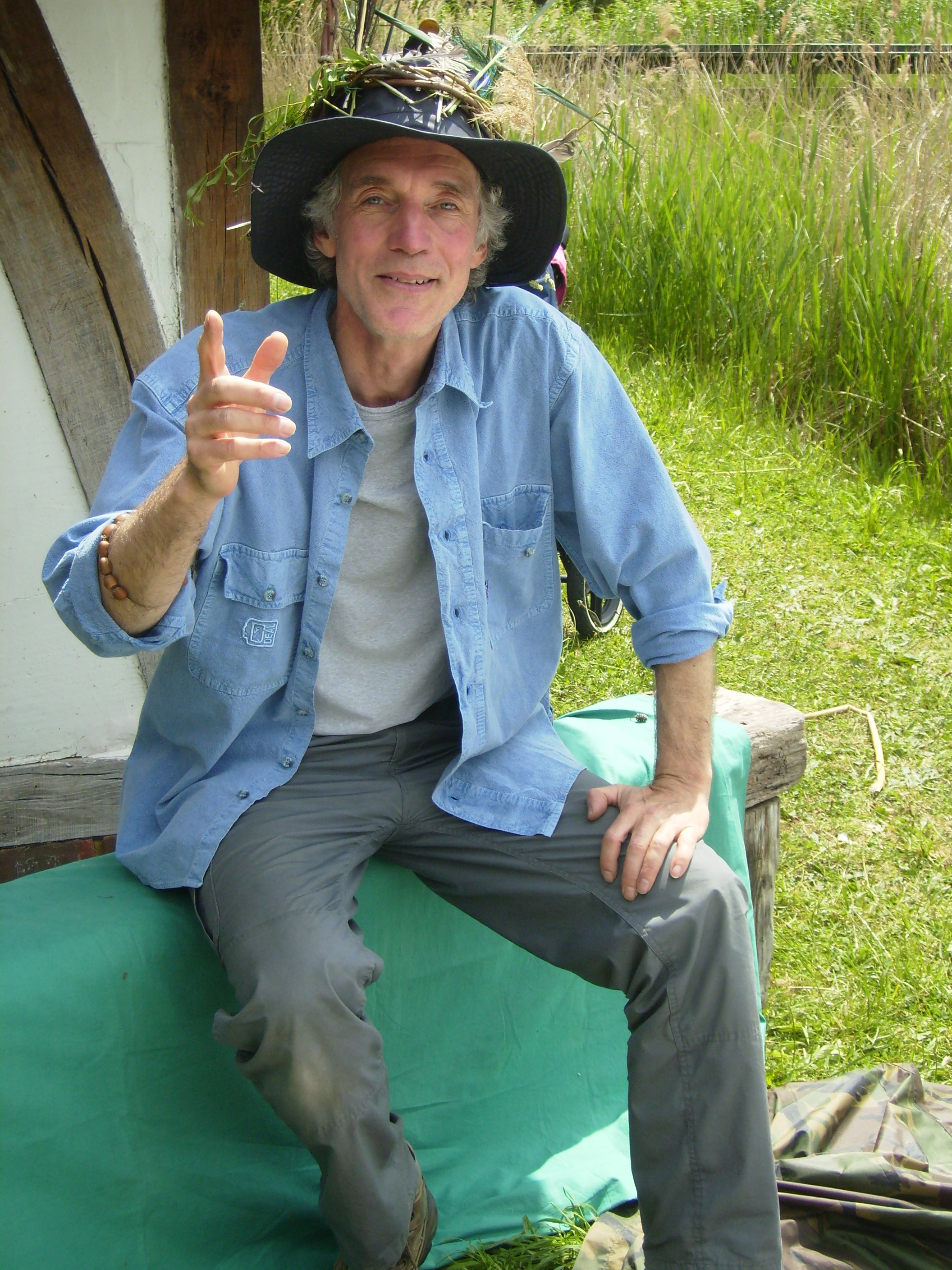
The night was finished by acoustic guitarist and singer-songwriter David Kelly. There are some guitarists who seem in total mastery of their instrument, knowing exactly how it works, never out of control for even a moment – David was not one of those guitarists. He was the sort where the guitar seems to play him, using him as a fulcrum, his body all angles and awkwardness, legs twisted against one another, tapping out mad rhythms, shoulders hunched, head down. It was brilliant. His voice had a raw, urgent quality, and his songs were a little James Yorkston, a little Conor Oberst, all cracked and lo-fi, thrilling and real. I’ll definitely be keeping an ear out for more of his music. I can’t find a website for him, but he looks like this:

IMG_0474

As we made to leave, the organisers asked if I’d come back to read again in September. Spotlight has been going for 17 years, and September will be their 200th show. I’m honoured to have been asked, and I gratefully accepted the invitation. I’ll have a 10-minute slot, so I can try a slightly longer story – but I’ll definitely be reading a variety of pieces again, too. Hopefully my DIY flash fiction collection Marrow will be ready by then. I’m delighted to have been invited back, and it was a great way to finish the show.

On the streets outside, Lancaster felt like London, the streets buzzing with people. We walked back to the car through one of the glorious Mediterranean nights this heatwave has delivered: warm, soft breezes, and dim bands of blue to the west.

‘The software of our minds’

This is a fascinating article, examining the quasi-neurological process through which stories develop emotional punch. I’ve long believed that empathy is the quality a writer needs more than other; this article seems to give my belief a little foundation. Put simply, stories engage readers through exploiting our empathy with the character and their situation. Writers therefore need to assume the mantle of that empathy and project it onto their characters.

Read on:

Six Ways to Make Sure Your Reader’s Brain Syncs with Your Protagonist’s Brain.

Some strange alignment of the stars

mic-teal

I’ve booked an open mic slot at Lancaster’s Spotlight club next week. Mon’s driving, so I can even have a couple of ales. Happy days.

I haven’t totally settled on what to read yet, but I’ll probably try a new story from my flash fiction collection-in-progress, Marrow. There’s one about home cooking that I’d like to run past an audience, and another about guinea pigs that needs a first outing. I won’t have time to read both, but I’ll read one and save the other for when I try – again – to attend the Brewery’s open mic in August.

It really shouldn’t be so hard to make it to the Brewery. It’s one of my favourite pubs in Kendal, and it’s where we watch movies. I probably go a few times a month, but I haven’t managed to read at the open mic night for three years. Probably no coincidence that Dora is two and a half, come to think of it. Some strange alignment of the stars always seems to prevent me attending – something always comes up that means I can’t go. I’m determined to make it down at some point in the next few months, as reading live is becoming so much more important  to me, and I want the practice.

Three years ago, before the fates decided I couldn’t go back, I read a short story about a WWII fighter pilot called ‘The Matador’. It was my first ever open mic. I was sick with nerves, but it went quite well, and it gave me the confidence to go on and read in Edinburgh and Glasgow for Words per Minute, Cargo Publishing and Gutter. I don’t think I’ll ever be totally secure in my public reading, but I’m improving all the time, and I’m enjoying it more with each performance.

All these open mics are building up to October, where I’ve landed a support slot for one of the Dreamfired story nights in Brigsteer. I’m reading in support of Emily Parrish and her retelling of the Loki myth. It should be an amazing night. To get into the storytelling spirit, I’ve decided to drop the notes and perform my work from memory. The thought makes me a little nauseous, even four months distant, but I think it’ll be a good thing to do. I’ll be reading ‘Gumbo’, which was published in the first issue of Fractured West. It’s one of my favourite stories, and fun to read aloud… though I doubt it’ll feel very funny when I’m performing without notes to an audience.

Back to Lancaster and the Spotlight Club. It’s a great line-up: amongst others, poets Trev Meaney and Nick O’Neill are headlining, and there’s music from experimental ethnomusicologist Deep Cabaret. Hopefully old friend, talented multi-instrumentalist, New Hawk and haikuist Rich Turner is coming along for a beer, too. He’s a good friend of ours, but we haven’t seen him in a year, because he has an amazing daughter, and we have an amazing daughter, and all children are black holes for time.

Anyway, it’s going to be a fantastic night. If you want to hear me read a story about guinea pigs and then crumple like a cheap suit, head down to the Storey Institute in Lancaster from 8pm on Friday 19th. See you there. Buy me a beer.