‘Selkie’ by Robin Robertson

Thanks to Iain Maloney for sending this poem my way; it’s a cracking wee piece by poet Robin Robertson.

In memory of Michael Donaghy

“I’m not stopping,”
he said, shrugging off his skin
like a wet-suit, then stretching it
on the bodhran’s frame,
“let’s play.”
And he played till dawn:
all the jigs and reels
he knew, before he stood
and drained the last
from his glass, slipped back in
to the seal-skin,
into a new day, saluting us
with that famous grin:
“That’s me away.”

There’s talk of selkies in The Visitors, and this chimes nicely with the last stages of my redraft. It also makes me want to read more of Robertson’s work. Try reading this aloud; the scan is sensational.

Grimm’s Sheesha

peter-full

Last night, storyteller Peter Chand performed his show Grimm’s Sheesha at Dreamfired in Cumbria, and it was bloody brilliant.

A sheesha is a mirror, and you probably all know about the Brothers Grimm; throughout the 19th Century, brothers Wilhelm and Jacob Grimm collected and published folk stories from across Germany and beyond. Their books preserved many – if not most – of our classic fairytales. When they feel so intrinsically European, hard-wired into grey stone and rain and winter, it’s crazy to discover that threads of those same tales have existed in India for centuries. In retrieving and retelling the original stories, Peter’s show gives the Grimms an Indian incarnation – or, more accurately, reflection – and hence the titular sheesha.

Just like people, stories evolve as they travel, building on a core, becoming something new, fitting themselves around each new place. The same elements are plain to see in the fairytales of both cultures – family discord, revenge, blood, luck, magic – but Peter’s stories explode with language and laughter. His characters flit between between Punjabi and English – sometimes with translations, sometimes without – and the seamless interplay of both languages is dizzying, dazzling, mesmerising. The stories balance violence with humour, using voice and movement and body language and expression to conjure holy men and jealous sisters, gods and donkeys, poison and pakora, loom shuttles, bloody shawls and magic mango stones.

It was an electrifying show and an inspiring night. By the end of the performance, my face ached with so much smiling and laughing. I can’t do it justice; hunt down Peter Chand and hurl yourself headfirst into his stories.

I’m fascinated by the evolution of stories, and it was a delight to chat to Peter after the show and hear more about how he’d found and developed the show – and how the show had then evolved again, changing around him with each new performance. His medium is more dynamic than mine, but that idea of evolution is something I can understand; it’s there in my inability to let go of written work, returning to it time and time again, even years after publication, tweaking and cutting and expanding, improving, building towards something ever new. We also spoke about his performance style, which is both relaxed and spontaneous – at one point he said “Bless you” to an audience sneeze without breaking the suspense – and he was kind enough to give me some advice on how to improve. I’ll never be a storyteller of his calibre, and that’s not really where I want to take my work – but I absolutely strive to read and perform my stories with greater confidence, and it was useful to talk to a master! Peter also put me onto Festival At The Edge – the country’s oldest storytelling festival – which I think we’ll try and attend next year.

As a tangent to all this, my friend (and real-life Lovejoy) Ben Piggott claims there are actually only two stories: 

  1. Boy/girl leaves to find fortune
  2. Trouble comes to town

I’ve tried, but I can’t think of a story worth its salt where one or both of these sound hollow. And yes, they’re vast catch-alls, but that’s okay, because they’re also entirely true.

For a number of reasons, I’ve stalled on the novel redraft since discussing Freedom. As of today, I think I’ve found a way back into the light – but I need to brew on it for a couple of days, so that’s for another post. For now, here’s an illustration from The Old Woman In The Wood.

the_old_woman_in_the_wood

Freedom

This is another post about editing. Until today, it hasn’t been going very well. A variety of things have built into a general malaise, and I’ve been struggling to get myself out of it. Yesterday, I read this from Matt Haig: “As a writer, you need to have a thick skin. But you also need to be a hypersensitive wreck to write in the first place.”

Well, for the last few days, I’ve been in hypersensitive wreck mode. I swing in and out of these phases. When a novel is going well, I’m buoyed up and float through life, with at least half my mind firmly in my story, and nothing else really gets in the way. But when it’s going badly, I obsess over and over again on all my many failings and how terrible the novel is, convinced that the universe is going to wake up at any moment and realise that I shouldn’t have made it even this far.

This is my half-term from college. Although I’d done a few line edits on The Visitors, I hadn’t had a chance to really get to work until this week, and it began really badly. I started by making the huge, ugly structural changes I was worried about, cutting and pasting and wreaking a sweeping destruction on the first third of my manuscript. And that left me really despondent. I won’t run through all my paranoias here, but I was really wallowing. There seemed an insurmountable amount of work to do, and part of the plot was now back to front. I convinced myself that I’d shattered whatever was good about it in the first place. I spent some time moaning on Twitter, and went to bed feeling very sorry for myself. At the end of the day, I listened to this about twenty times, trying to summon some strength:


…but to little avail. I started today prepared for more of the same. Scared of going back to the manuscript, I farted around on Twitter, and on Facebook, and read the paper, and spent half an hour trying to read all of the internet. I’d made myself quite genuinely scared of the novel, and was looking for distractions to keep myself away from it. Then I remembered reading about something called Freedom. It’s a program which blocks the internet completely, and can’t be disabled without turning your computer off and on again. It cost $10, and I bought it. I installed it, and I set it to run for eight hours. Then I opened the novel, returned to the redraft, and tried to spend the day at work. Here’s how it went:

There are obvious breaks – between chapters, mostly – when I used to check my email. I couldn’t do that. Instead, I had to keep writing. I used to post updates about my progress, or lack thereof – I couldn’t do that. I couldn’t build a Spotify playlist. I couldn’t read my students’ blogs. I couldn’t add to my Pinterest boards. I couldn’t check my bank balance, or look at lenses I can’t afford on eBay. I couldn’t blog about how shitty I was feeling. I could only work, and so I did. I only stopped for cups of tea and to feed the cats. I checked my email at lunchtime on the iPad, but otherwise went without. And it was brilliant. Immersed in the novel, without distractions, I worked hard, fast, and well. I was coming up with good stuff for the first time in a week, building bridges between ripped sections, smoothing out the prose, and even discovering new connections to expand and consolidate the plot. More importantly, I was feeling good about again. That feeling is so important. Without confidence in your story, it’s impossible to write with conviction.

Strange to reflect that I needed technology to rid me of technology. Freedom truly gave me freedom to work. I know it’s daft to spend money on something willpower should do for free, but Freedom even removed the choice. Even after a single session, I believe it’s the best money I’ve ever spent on my writing. To be clear, I don’t have a motivation problem. When I’m in the flow of my story, I can write continually for hours without stopping. But when I’m as full of dread as I was yesterday, I seek any reason to avoid dealing with the thing that causes me dread.

This redraft is hard. I’m making big changes, and some of them have left me feeling a little divorced from the story. One of my characters has changed her name, and it’s taken me a full fortnight to feel like I know her again. As petty as it sounds, I worked with MS Word’s ‘Track Changes’ function for the first few sessions, and it was driving me distracted, churning out balloons and dotted lines for every tiny change. Thankfully, Jane at Quercus gave her blessing for me to move onto a plain document. I know it’s daft, but that’s helped a lot.

I suppose that demolishing parts of the story was always going to be demoralising, and perhaps it’s no surprise I’ve found it so hard to stay positive about the redraft. But now most of the destruction is done, and I’m starting to rebuild, I’m feeling better all the time. When things go well, it gives me a surge of confidence in what I do, and where I want the story to go. I’m not all the way there yet, and there’s still an awful lot to do, but – for now – I’ve turned a corner.

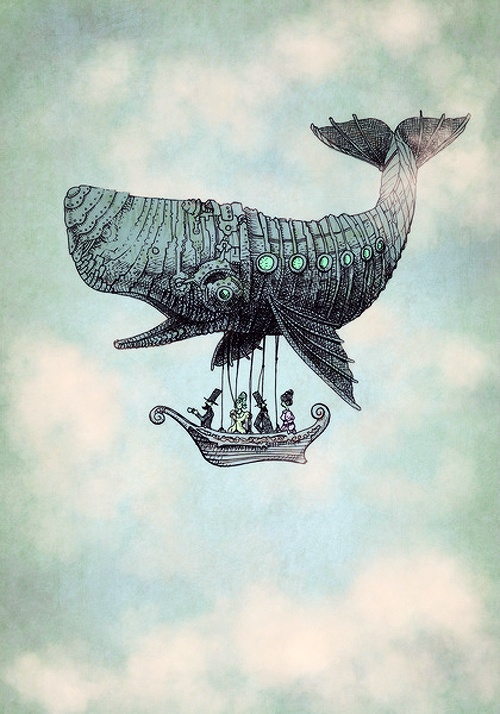
Okay, that’s enough for now. Here’s a picture of a steampunk sperm whale hot air balloon. Writers – get Freedom. It changes everything.

whale balloon

Loki

Well, that’s my first Dreamfired done and dusted. It was a really good night – more people need to know about the Storynights.

First up was banjo virtuoso Bill Lloyd. He’s a legend in Cumbria and the north, and he didn’t disappoint, starting with a haunting ‘Wayfaring Stranger’, and segueing into a range of folk songs from America and Ireland. My storyteller uncle Rich Sylvester had the next slot, relating an anecdote about exploring the London Olympic equestrian venue at midnight with a bellyful of Russian beer. It was very funny. Rich is an extremely affable raconteur, and his stories are always engaging – I haven’t seen his work for a few years, and it was great to be part of the audience.

I was on after Rich. I’d decided to get into the traditional spirit by performing without notes. In the minutes before going onstage, my nerves were worse than ever, but I settled fairly quickly.  I read two stories I’ve been practising lately – Circle Stone and The Lion Tamer’s Daughter.  I stumbled once in Lion Tamer, and for a moment I thought I would go entirely blank – but I recovered, found my place and delivered the rest without a hitch. Circle Stone is an extremely quick flash piece of only 75 words, and it’s surreal enough to counter the darkness of Lion Tamer. The two work well in combination, but I’m going to semi-retire them now. They’re both destined for my flash fiction collection Marrow, and I’ll try and get them published elsewhere first, but I’ve read them a lot recently, and it’s time for some new material. On reflection, though, the reading went well. I don’t think I’ll make a habit of performing without notes, but Dreamfired was a perfect place to give it a whirl.

After me came a poet, whose name I didn’t catch, who read some playfully nostalgic pieces; and then a story about a 21st century Grim Reaper. Bill Lloyd returned to round off the first part of the night with another couple of songs – his cover of Frankie’s Gun, which I absolutely love – it was Bill who introduced me to the music of The Felice Brothers – and one of his own compositions, a haunting Armenian lament.

This is what Frankie’s Gun looks like:

After the interval came Emily Parrish, aka Scandalmongers. She walked onto the stage singing and beating a drum, and launched without preamble into the Norse creation myth. Her show explores the role of Loki, the trickster god, and all his jealousies and cruelty and fun. What made the show all the more remarkable was the way she entwined Norse mythology with her own childhood. The transitions between the Cotswolds and Asgard were frankly astonishing – from the top of a perfect climbing tree to the horrors whispered into Baldr’s troubled brain. It was lyrical, visceral and intense, and it left the audience stunned.

emily-loki

Loki comes highly recommended from me – catch it if you can.

Thanks, too, to Kat Quatermass, who organises and hosts Dreamfired. Lovely to meet her after months of email contact. I’m definitely going back in November to catch Peter Chand performing Grimm’s Sheesha.

What’s next for me, then? I’ve been thinking about my novel edits for a week or so – a process I refer to as ‘brewing’ – and I’m almost ready to start work. I mentioned in a previous post the structural changes I need to make, and my uncertainty about how to make some of those changes. That has passed. I now know where that character is going to enter the story. Although it means a lot of work, I feel secure in the knowledge of how to do it, so a lot of that worry has eased.

My next booked reading is at the Brewery’s Spoken Word night in February, though I’ll try and land a few more open mic spots before then. Stay tuned. And go to Dreamfired.

What’s in a font?

Quick on the uptake, as ever, but I’ve just caught this excellent video on the history of typography:

It’s funny how much the right font matters. There are some fonts I cannot abide to work with, and others I’ll use fleetingly but intensively. More than once, I’ve given up on reading a book because I found the font so unpleasant. When I first started writing, I only used Courier. With the benefit of hindsight, this was pretty much exactly as juvenile as my early stories. Then, after working in Times New Roman for years, I switched to Arial for The Visitors. I’ve started my new novel in Baskerville, which I love. At college, I use Gill Sans for all my planning documents, and in my video work I tend to use Century Gothic or Mrs Strange, which could scarcely be further apart.

The more I discover about fonts, the more I come to appreciate the vast psychology behind typography. It’s a gigantic field, and I tend to stick to knowing what I like.

One of my Twitter very short stories is about fonts:

She was Arial Black. He was Wingdings. “Why can’t you take anything seriously?” she wept. “Maybe you need to lighten up,” he snarled.

Any favourite fonts out there? I’m assuming, of course, that everyone avoids Comic Sans.


Little paranoias

Jane Wood, my editor at Quercus Books, sent her notes on my novel this week. It’s a moment I’ve been dreading and craving in equal measure, and I wanted to take a moment to think about what it means now it’s actually here.

I’ve already done four drafts of The Visitors. Some of the drafts were very heavy, and some were extremely light. Redrafting is essential to all writing – I still, even now, return to stories published years ago to tweak and rework them. I have little paranoias about all my work, and can’t help but return to it. Sometimes I make changes of single words, and other times I excise entire scenes. Sometimes I catch myself totally rewriting published work, and I have to make myself leave it behind – I have to take stock and force myself to walk away.

On the second draft of The Visitors, I pussyfooted around Sue’s notes, making tiny changes, scared of diving in. When I came to a third draft, I made myself stamp on it, brutalising the manuscript with broad changes and moving onto the next alteration, no matter how ugly the massacre I left behind. Then, when it looked like a crime scene, I started rebuilding again. That’s what I’ll do this time, too, no matter how hard I find it. And I’m going to find it hard.

Whenever I come to editing and redrafting, I think there are two broad categories of change:

Cosmetic

These are the easy ones, often little more involved than line edits. Cosmetic changes this time include switching a character’s name, cutting some internal monologue and reconsidering some of the vocabulary used by my main character. I could blitz through that in a day, tops. Unfortunately, the other editing category is:

Structural

…and this is the big stuff. Making structural alterations means redrawing the map of the story while trying to maintain the same emotional trajectory, and that can be difficult to keep in balance. In this case, I have two substantial changes to make. Firstly, a minor character needs to become a major character, and he needs to appear much sooner in the story. I already know this is going to be awkward, because I attempted something similar in the third draft, and I struggled to bump him up the narrative even to his current position. It’s going to be tough to find or create somewhere to introduce him sooner.

The second change initially felt even more challenging, but on reflection perhaps isn’t quite so bad. Jane has suggested a different direction for the ending that I’m really excited about. At first I was really worried about it, but I’m starting to see it as a case of unravelling the current conclusion and retying the strands of story into a different shape of knot. This will involve more writing, but actually it’s less of a challenge – with the current ending gone, I’ll be writing into blank space. That’s a thrilling proposition at this late stage of the manuscript.

While it’s still a skeleton, a novel plot is essentially arbitrary. Things can be changed extremely quickly and easily. New characters come and go, and the story shifts like a dune, blown into organic and occasionally bizarre shapes by the wind of imagination. But the more developed a story becomes, the less arbitrarily it can change. There comes a point where making big alterations means breaking the momentum you’ve fought to generate, then patching up the holes and hoping no-one can tell the difference. That’s where a writer needs to have paranoid convictions about the emotional tone of their work, and strive to make it as cohesive as possible in plot, character, voice and soul, then work it again and again and again, hammering and thrashing and beating and combing through the manuscript until it’s carved against your optic nerve.

Editing is frantic. It’s really hard. Throughout the process, a storm cloud hangs over you, an implicit sense that you didn’t do it well enough the first time. Then there’s the crashing changes you wreak on something you loved. And then there’s the dread that whatever you make to take its place won’t come close to what you had before. It’s an exciting time, too, but the whole process is riven with a crawling, monstrous, excruciating anxiety.

This is mostly my load to carry, but I’m glad I’m not taking the journey alone. I’m now far too close to The Visitors to critically appreciate it, and working with other people helps triangulate my own perspective about the story. I’ve often stated my belief that writing is as much about the community as the individual – not least as it counts for little without a reader. When I write short stories, I read them to Mon, and I send them to writer friends. And I pay attention to what they say, even if I disagree. Working with other people – and working with Jane and Sue, now – has repeatedly shown me the importance of opening myself and my ideas to an audience. I have people I can talk to, and that makes me lucky.

Of course, I say this before actually beginning the edits. Try me in a week.
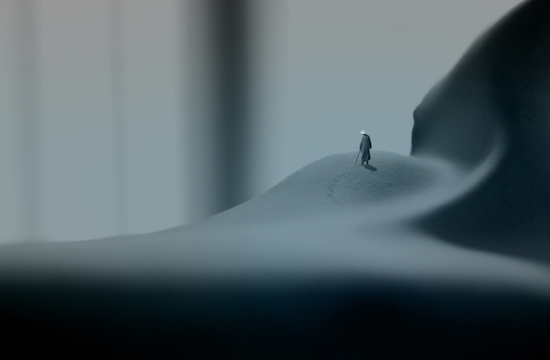
miniscule

Photo lifted from ‘Minuscule Series’ by Maité Guerrero

What’s in a name…

This post is about names for stories. Sometimes I come up with a title first – I have a story called You Don’t Talk To The Driver, The Driver Talks To You, which developed entirely from the title. And sometimes the title is really obvious – The Lion Tamer’s Daughter couldn’t be anything else. Sometimes it’s lifted from a phrase in the story, like The First Time I Died. Sometimes it evolves after a struggle, like my novella The Year Of The Whale (which I will finish one day). And sometimes, I just can’t think of anything at all. And all this is relevant because we’ve just changed the name of my novel.

I’ve been calling it Riptide for the last six months, but my novel has had dozens of different names. I went through bucketfuls of working titles – occasionally to the point that I was changing it two or three times in a single writing session. Nothing stuck. I’d reached a point where the novel was finished, and I wanted to send it away, but it didn’t have a name. After another few days dedicated only to looking for titles, I called it Riptide Heart because it had to be called something, then sent it to some friends.

“Love the book, mate,” came one of my first responses, “but the title’s balls.”

In the end, a lot of people said pretty much the same thing. But no-one had any better ideas, so I sent it off to Sue as Riptide Heart. I used Dora’s grubby paw to click the send button. A week later, Sue got back to me, and here we are – a year has passed, and once more I’ve been driving myself up the fucking wall looking for a name for the book.

We moved on from Riptide Heart fairly quickly, and I was fine with that. Everyone involved has been calling it Riptide, because that’s better than ‘the book’ or the ‘the novel’. But the closer we’ve moved towards publication, the more important the title has become. Sue and Jane and I have been searching for a month. Churning through endless combinations of possibilities has turned my brain to mush. I’ve ransacked the manuscript half a dozen times and tried literally hundreds of potential titles. Last week it reached a point where not only could I not think of anything better, but I was no longer capable of judging other suggestions. That’s one of the reasons I’m fortunate to be working with such professional people at Quercus and Conville & Walsh. Linking wonderfully to the stunning cover art commissioned by Jane, I’m delighted that we’ve finally settled on a name which I’m happy with – my first novel is now and forevermore called The Visitors.

So, what’s in a name? A rose would smell as sweet, and so on… but a novel is like a child, and you spend so much time with it as it grows, learning what it wants to be, getting to grips with its tantrums and moods, guiding its ambitions, and being constantly surprised and amazed by what it becomes… I can’t imagine Dora by any other name. Knowing that Riptide was a temporary title hasn’t lessened the jolt of losing it; after so many months, it had become Riptide.

The Visitors grows on me by the day. It has the human element I wanted so badly, and it has a ghostly feel which I love. As my friend Iain pointed out, I spent so long looking for The Best Name Of Any Book In The World Ever Ever Ever – which doesn’t exist, of course – that I stopped being able to consider what was right in front of me. I’ve often used the idiom of not seeing the wood for trees when discussing writing – and writing novels in particular – and it’s proved true for this title search as well.

I can barely express my relief of being out of those woods…

Jane’s editorial notes have arrived, and I’m really excited about some of her ideas. Next stop: the final draft.

trees

Soundscape

Image

When I’m writing, I listen to music. I can barely type a word without it. Music helps me focus. Occasionally, I’ll use music to steer my emotional response towards a certain tone in my writing, but more usually, I simply need a soundscape filling the space in my head. I tend to avoid music with vocals – or rather, if there is someone singing, I prefer the vocal to blend tonally with the track.

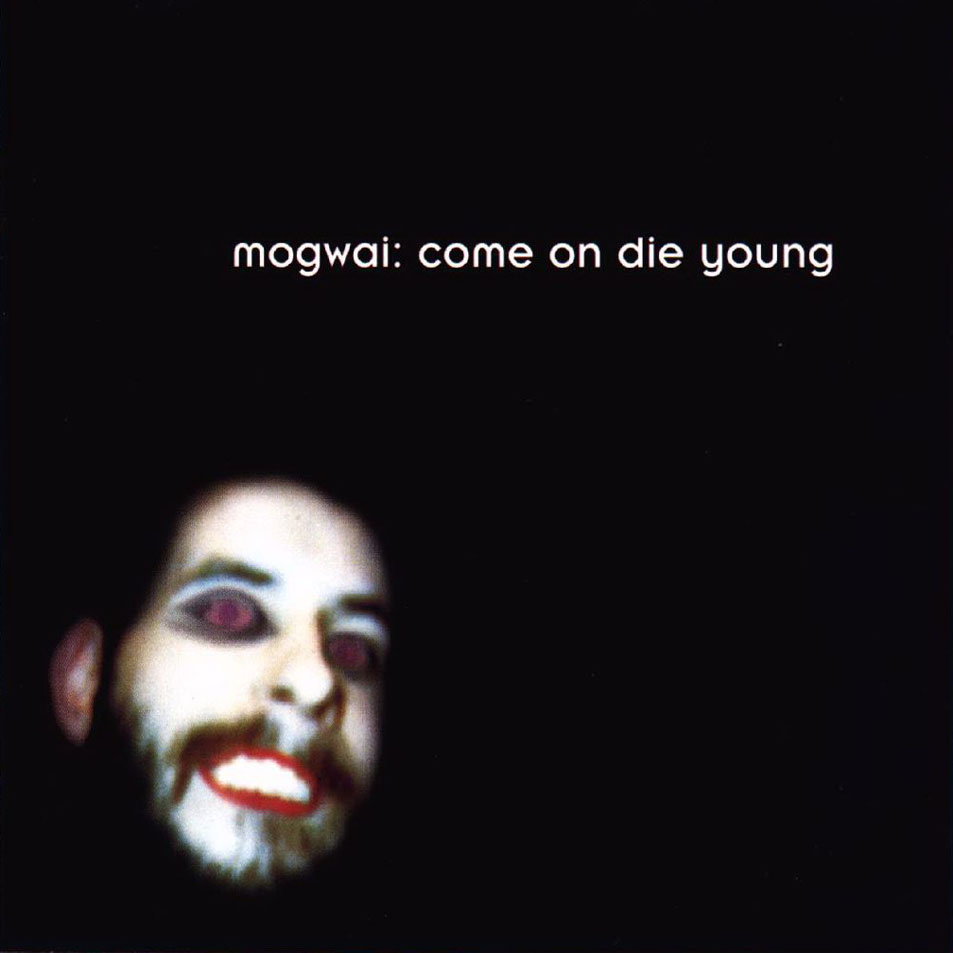
I’ve returned to some records endlessly over the years. I’ve listened to Mogwai‘s Come On Die Young literally thousands of times. I’ve spent entire weeks working to the British Sea Power back catalogue on repeat – or Arcade FireArab Strap, Throwing Muses, The Antlers or Godspeed You Black Emperor.

All these bands have similar musical themes: they drone and fuzz, they soar and soothe – but ultimately, the music they create is cohesive, regular or continuous. Their albums tend to run without breaks or interruptions, creating sonic soundscapes. Call it post-rock – call it what you like – it works for me. It helps me tune out and focus on the story.

I develop different soundtracks for different projects. My 2008-2009 novel-length prose-poem Meat was soundtracked almost exclusively by Godspeed You Black Emperor’s 2-disc, 4-track epic album Lift Yr. Skinny Fists Like Antennas To Heaven!, while first novel The Visitors was heavy on Mogwai and British Sea Power (two of Flora’s favourite bands). As I moved from writing to editing and redrafting, the soundtrack changed, and I built a playlist that was energetic and snappy; exactly what I needed to fuel my 12-hour redrafting sessions.

Now I’ve started work on my second novel, the music has changed again. At the moment, if I listen to Mogwai or BSP – as much as I love them both – it takes me back into The Visitors. So I need something new, at least while I’m making the transition from one novel to another. Even as I’m feeling out a fresh vocabulary, I’m developing a different soundtrack. While working on Grisleymires, I’ve been listening to a lot of Beirut, Bat For Lashes, The Antlers and Super Furry Animals. Thanks to Last FM, I’ve discovered Portico Quartet, Hidden Orchestra and Bersarin Quartett, all whom play organic, slightly sinister trip-hoppy movie-type soundtracks. At the other end of the spectrum, childhood favourites Crowded House are also back on the stereo, though I’m not totally certain why, as they go against all the conditions I suggested above; but they just fit, and that’s fine. Most startling (to me) is that I found myself wanting the sound of wind chimes to work to, and downloaded an hour-long track of chimes and trees designed for meditation. I can’t see it lasting, but for now, it helps me into the world of my story.

Does anyone else need music to work? Who and what soundtracks your writing?