Valve and Hound

newlogo

170 unread emails greeted my return from holiday, and this almost passed me by in a whirl of administration – but while I was in France, I received the great news that Valve have accepted two of my short stories for the third edition of their excellent journal.

The first story is ‘When The Bough Breaks’. It’s a brutish, experimental piece about a life-term prisoner trying to deal with horticulture in his halfway house.

The second story is called ‘Hound’. I consider ‘Hound’ to be my only true story, so much as any story can be true; I wrote it when I lived in Manchester, back in 2009, and it’s about a stray dog that haunted the streets of Withington. For a month, or maybe six weeks, I saw him again and again, scavenging in the alleys and lanes around our flat. Mon and I would often stop to talk to him, though he became increasingly scared of people. When he finally vanished, as I think I’d always known he would, I looked for him; and when I couldn’t find him nearby, I searched for him on the city’s animal rescue websites. I never discovered what happened to him, but I’ll always feel guilty that I didn’t do more when I had the chance. We left about a month after the dog had gone.

Dog-by-Giacomo-Brunelli-001

Manchester was a strange time in my life. Three days a week I worked on my first book, a novel-length prose-poem called ‘Meat’, and three days a week, I worked in a bespoke veneer workshop in Stockport. I lost my job when the owner died suddenly from complications of swine flu. On Monday he was there, and on Tuesday he was dead. We finished the last order, then the workshop closed. Desperate for work, I applied for about a hundred jobs in a month: in delis, cafes, factories, shops, offices. I received two rejections and approximately ninety-eight silences. We packed everything we owned into a hired van and drove to Kendal twice in a day. On the second trip, dumb with tiredness, I had to do an emergency stop on the M6 near Preston. There were swans waddling across the motorway. Goddamn swans.

Each of my stories means something to me, but ‘Hound’ is special. Unlike the majority of my work, it is mostly true, and it records a turning point in my life. I had finished ‘Meat’, which took me to some extremely dark and upsetting places, but exorcised a lot of the poison I’d carried through my twenties. I received some good feedback on the manuscript from friends, writers, indie publishers and agents, but the consensus was that it was too dark for a first novel. I think this is probably fair. My reading and writing began to evolve again after Manchester, and ‘Hound’ marks the start of this change in my work: becoming more constructive, more concise and more direct. After ‘Hound’, I became interested in writing as a vehicle for immersive storytelling, rather than writing for the brutality of raw emotion.

As well as being one of my favourites, ‘Hound’ is also the most rejected of all my short stories. I don’t interpret rejection as a validation of the quality of a story, but I’ve been a little dismayed that no-one wanted to take it. I really wanted ‘Hound’ to go to the right home, and I’m humbled and delighted that Valve have taken it on.

I didn’t mean to write so much about this, or to get quite so personal. We only lived in Manchester for eleven months, but when I pull it apart, I feel surprisingly emotional about this point in my life. It marked a step change in who I was and who I am, and ‘Hound’ is a measure of that change. And this perhaps is mostly why I write: to interpret and record my world and myself.

A little light reading

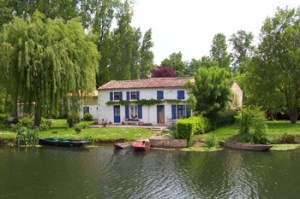
We’ve just returned from a brilliant fortnight in France. We racked up 2,500 miles in a round trip that encompassed Ile de Noirmoutier, which is reached by a two-mile causeway at low tide; Rauzan, where we camped in the shadow of a ruined medieval castle; and Marais Poitevin. This last spot, nicknamed ‘Green Venice’, is one of the most amazing places I’ve ever seen. Centuries ago, it was a vast swamp, but Dutch settlers drained it with a labyrinth of canals and ditches, leaving hundreds of island pastures connected by causeways and bridges. The architecture is just as unique, with balconies and shutters adorning every house, and punts moored to jetties in gardens. Poplars and alders tower into the sky, the canals are thick with lurid green algae. Fat dragonflies zip and pop between shrubs and creepers, and the trees are alive with cicadas. Filtered through high branches and reflected from the water, the light itself is tinted green.

marais_poitevin bluehouse

It’s genuinely one of the most incredible landscapes I’ve experienced and, much like Grogport for Riptide, it’s been a real inspiration for my next novel. In the space of a few days, I filled an A4 pad with notes and dialogue, and I feel really excited about starting work. There’s still plenty to do before I can begin, but the foundations now feel firmly set.

The other great thing about the holiday was having time to read. I managed six books, which is no mean feat when juggling a toddler in a campsite. And I had a great run of books – not a single dud:

The Tiger’s Wife by Tea Obreht was bold and convincing, subtly switching a range of voices to make folk myths contemporary through personal memory. I enjoyed it a lot, but found it ever so slightly cold, and wasn’t as blown away as its reputation suggests.

Cumbrian Folk Tales by Taffy Thomas was a fascinating collection of the county’s legends and myths, made all the more immediate through its connections to a landscape I’m starting to know. It was amusing to recognise the names of not just local places, but also local people – people I’ve met, worked with, drunk with. The tales were strongest when connected to geography, giving meaning and history to a witch’s cauldron or a devil’s bridge.

I read The Blackhouse by Peter May – this was a present from Jane Wood, my publisher at Quercus. She thought I’d like a look because, like Riptide, it’s a crime story set in the Hebrides, though it doesn’t have the supernatural elements of my book. I enjoyed it a lot. The plot was dovetail-tight and engrossing, and the landscape was intoxicating.

Next up was I Love You When I’m Drunk by Empar Moliner, Spanish short stories in translation through the tremendous Comma Press. Despite some uncharacteristic typos from an excellent publisher, it’s a solid collection, each story exploring and exploding conceits of modern life. Some of the stories felt a bit like shooting fish in a barrel – taking aim at soft targets of liberal, middle-class pomp – but the writing was good throughout, and there were many outstanding moments.

Moliner’s collection was good, but the next book was astonishing – a class apart. The Dog Of The Marriage gathers Amy Hempel‘s four short story collections into a single volume, and they are consistently superb. There isn’t a single wrong note across dozens of stories. Hempel’s work is voiced through emotionally damaged or stunted narrators, trapped or somehow left behind in their lives, caught between stasis and decay. The stories are not without hope, though, and Hempel writes with unceasing, unfailing humanity. Her sentences and structure are scintillating. I cannot recommend this highly enough. This is the sort of book I buy two copies of, expecting to have one out on loan.

the_dog_of_the_marriage.large

Finally, I read Snake Ropes by Jess Richards. This was another corker. Alternate narrators explore life on a mysterious island, ‘just off the edge of the map’, eventually combining to bring the distinct halves of the story together around a single, long-forgotten trauma. This novel holds trade and barter at its heart, exploring themes of presence and absence, balance and weight; of exchange, and what it means to give and get. It’s a real triumph, made all the more masterful in how Richards weaves the fantastical through the fabric of base human instinct, conjuring talking keys, sentient trees, and a walking doll with a seashell for a heart:

Moppet2

The last fortnight has reminded me, as stupid as it sounds, of how much I love to read, and made it painfully apparent how little reading time my regular schedule affords me. I’m determined – on top of carving out more writing time – to read more. I miss it.

This holiday has been essential. I’ve worked stupidly hard over the last two years without much of a break, and I’ve badly wanted some time off. Looking ahead, the next two months are going to be frantic – but I feel better for a break. I have my next novel blocked out and the sights and scents of a swamp fresh in my mind. One more draft of Riptide to go, and then I’ll be starting my new story.

Will Wordsworth’s Lancrigg DIY

I’m not big on classic literature. I usually find the language – whether in prose or verse – too staid. There are exceptions – I love Shakespeare, I love Bronte’s Villette – but for the most part, my interest in writing starts with the First World War poets, and steps up a notch during the 1960s and beyond – decidedly modern literature, really. I’m always slightly embarrassed I haven’t read more of the classics, but those I’ve persevered with – and I have tried, believe me – simply don’t do anything for me: reading Middlemarch was like pulling teeth.

Image

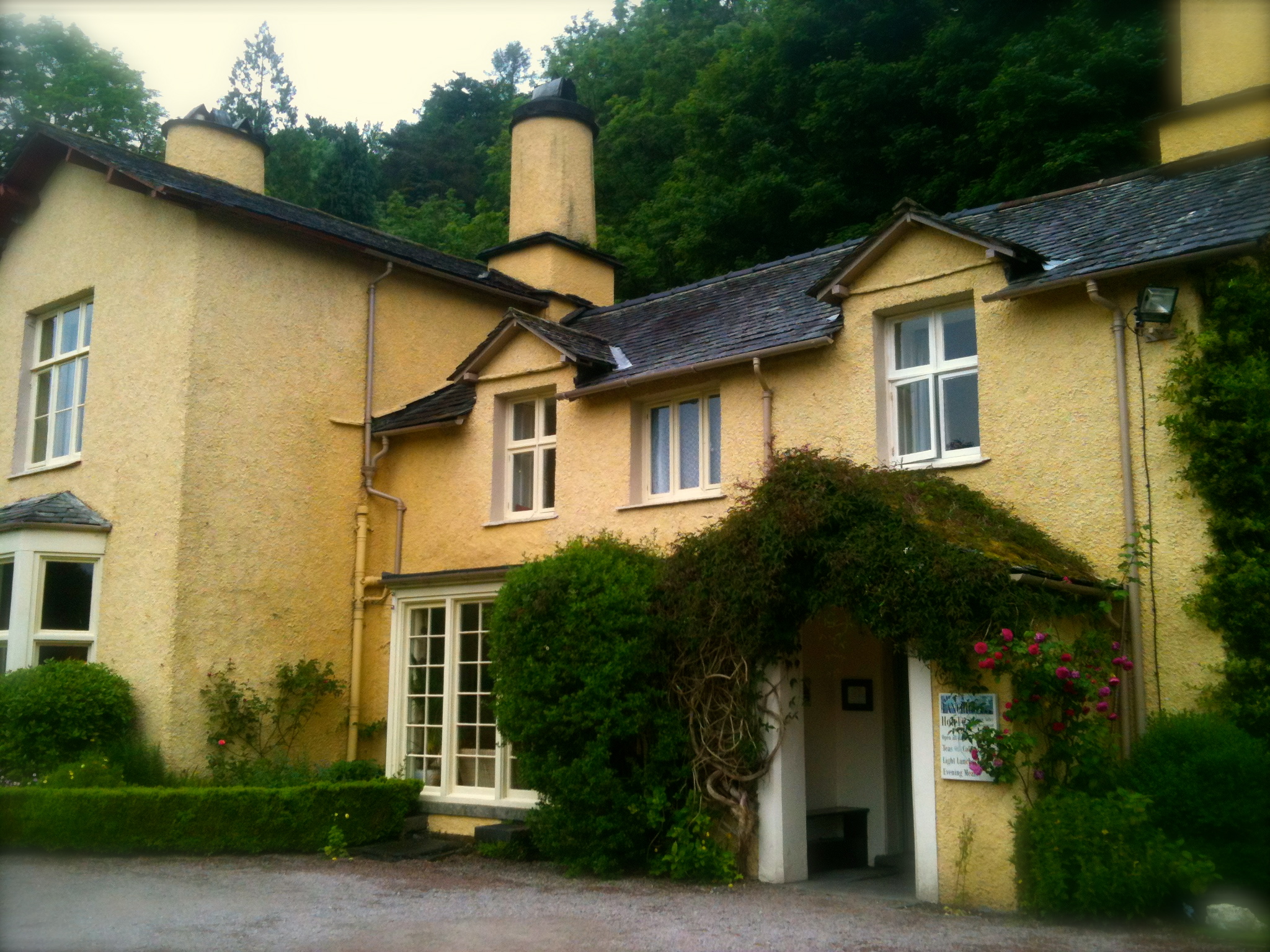
With that confession out of the way, here’s the Lancrigg Hotel. It’s a great vegetarian hotel and restaurant, half a mile outside of Grasmere in the Lake District. Monica and I went to stay a night to celebrate our five-year anniversary. While walking in the grounds, we discovered that William Wordsworth had been instrumental in renovating the house for a friend of his – that he’d often dined and slept there – and so had Charles Dickens, a generation later. Robert Burns stayed at the house and taught one of the subsequent owners, too. I can’t pretend the place felt haunted by the ghosts of these literary giants, but I liked the idea of Bill Wordsworth rolling up his sleeves to strip out rotten plaster, of Dickens playing pranks on his pals, and of Rabbie Burns warming his feet by the fire. That tickled me.

Image

Image

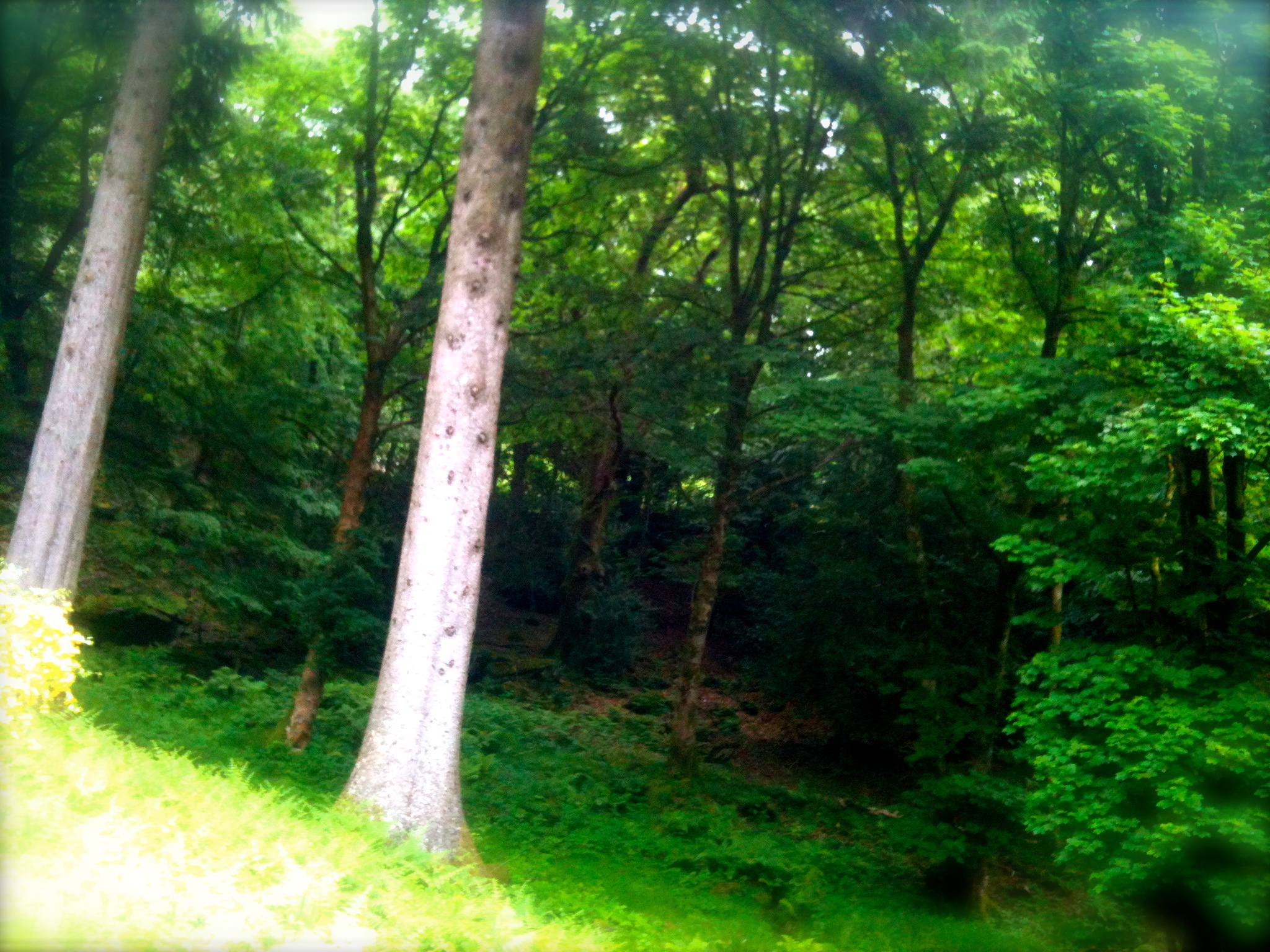
The woods around Lancrigg feel quiet and ancient. Sprouting from cracks in the limestone and carpeted in deep green moss, the trees could be Tolkein’s ents, hibernating through the decades. There’s a profound, tangible stillness beneath the canopy, and the light is filtered dark and green, drawing you into the forest.

After tea, we walked into town for a drink. I’ve had my differences with Grasmere in the past – during the summer, it’s infested with tourists, most of whom wear very expensive, very clean walking gear – but the town was fairly quiet. The heat of the day, freshened by a late shower, left the meadows heady with scent. The smells were intoxicating – the Lakes felt almost Mediterranean. We stood beside Wordsworth’s grave and watched bats skitter above the river, and walked back to Lancrigg in a deep blue midsummer gloaming. It was a long overdue break after months of hard work.

Image

Teaching has finished for the summer, though I still have a fortnight of marking and admin to finish. Then there’s a fence to build, some films to edit, a holiday to go on (glory be) and what should be the final draft of Riptide. Around all this, I’d really like to start work on writing my next novel. I’m already reading and researching and starting to block out the plot; the issue, as ever, is time to write.

Kingfisher

Image  Image

I used to go climbing several nights a week, but I haven’t the time any more. And when we lived in the old house, I cycled to work; now my wife drops me off at the college before she goes to paint. In short, I don’t do any exercise. I’m constantly zipping about at a thousand miles an hour, juggling my different jobs, but that’s hardly a substitute.

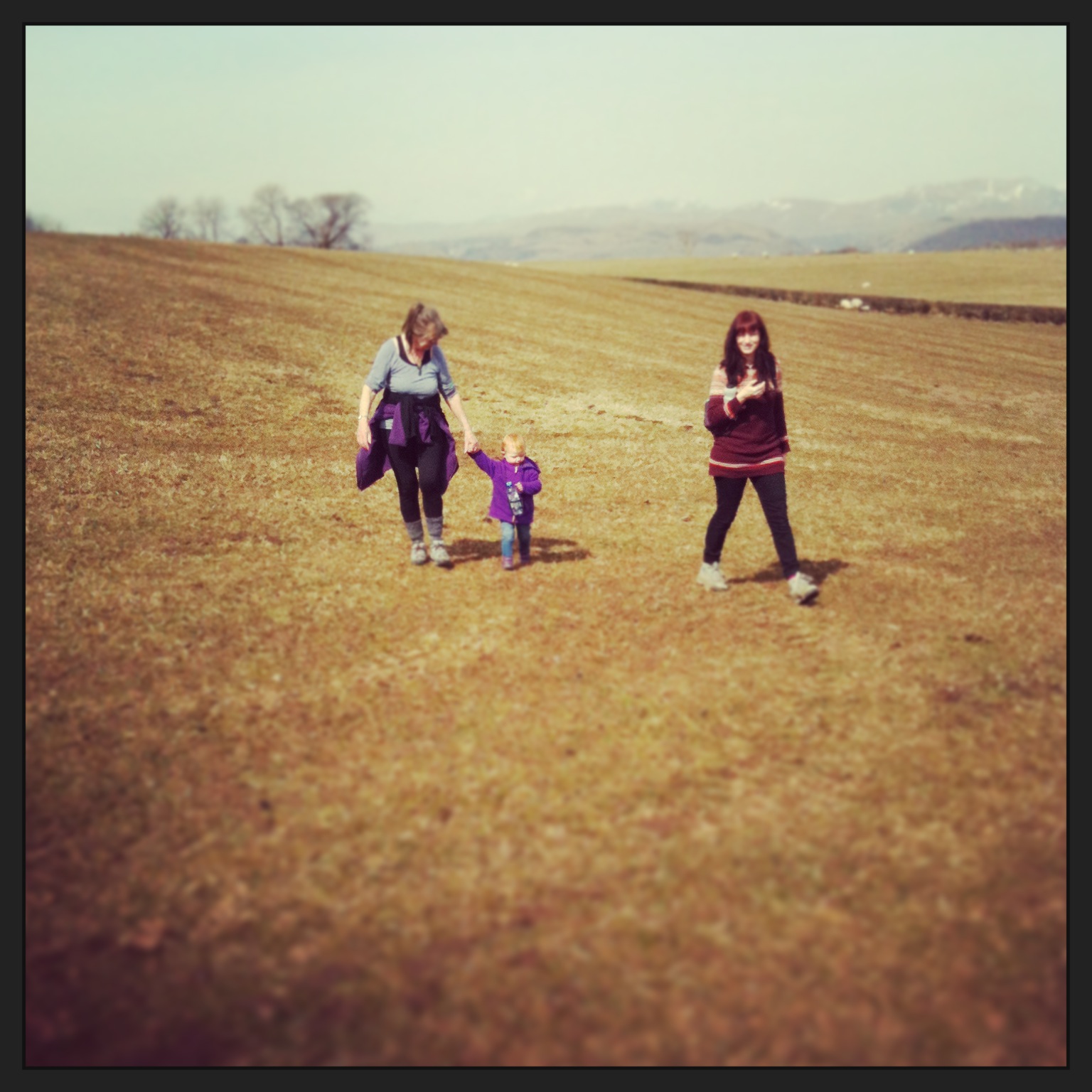
Walking is the only activity I can really make time for. Mon and I both love walking. We’re lucky enough to live in an amazing part of the planet, and our little corner of it has some excellent trails. We can walk from our wee cottage in Burneside to see friends in town – or strike out in any other direction to find open countryside.

I’m not a purist about the countryside. I like edgelands and places of threshold where the natural and the man-made have grown old together. Yesterday, we walked to Staveley in Kentmere and back. It’s a great walk for rusted farm machinery, gnarly stiles, fallen trees and tumbledown barns. There’s a troll bridge with missing slats, and a beech tree strangled by a noose of barbed wire. The tree’s bark has enveloped the wire completely, lapping over it like the slowest wooden wave. In one spot, a fence has been mended with an old iron bedhead. It’s lambing season – we passed new lambs, minutes old. I saw my first ever kingfisher.

Walking gives me more than physical exercise. It’s a source of constant, ever-changing inspiration. Walking around London fuelled my first short stories. My walks on Islay, Gigha and Kintyre fed into Riptide Heart and the fictional island of Bancree. My longstanding work-in-progress, Year of the Whale, is about walking – and the need to walk. Location is crucial to the way I write, and walking in real places fires my imagination. I try to create a geography – physical, atmospheric and emotional – that I believe in. When I get it right, my characters play out the story in that environment like a drop of water on a slope, finding the simplest route to ground.

Walking is good for the soul.

I’m calling a character in my next novel Kingfisher.