Tipping

I had two brilliant days on The Hollows last week, and it’s entirely thanks to my friend Ali. I’d just finished reading a draft of his new novel – which is absolutely scintillating and is going to be massive – and called to talk to him about it. We spoke for a long time about lots of things, and he ended up clearing my head of cobwebs I didn’t know I was carrying.

This is how it is: I’ve been enjoying my first forays The Hollows, but it’s been tough going in places, because I’ve been trying to build the story chronologically, making each current chapter as clean and tight as possible before developing the next. It was only through talking to Ali that I remembered that I don’t write like that. I’d forgotten that I’m writing for me. Or, as Ali put it: “Writing’s a big fuck you to the world.”

This is an abstract thing to explain to myself. It’s not like I was writing someone else’s story, or writing with someone else in mind. But I think I’d spent so long redrafting The Visitors that I’d forgotten that it was rough, too, at the beginning; and, in starting to write The Hollows, I essentially picked up the same point of bug-eyed perfectionism that I left The Visitors. I was working back-to-front. I’d forgotten that some of whatever strength I might have as a writer comes from rewriting – from redrafting and reworking. I’d forgotten the unfolding joy of a first draft – of cutting loose, of jumping feet-first into all that glorious blank white empty space. Talking to Ali reminded me that this is my story, and I need to tell it my way.

When I had my next writing day, I sat down, disabled the internet, and raced through 3,500 words. The next day, I wrote the same again, as well as tearing apart swathes of what I’d already written, rebuilding the plot of the first third. It was exhilarating. I ignored the chronology and jumped ahead to work on scenes and chapters I’ve been dreaming of for months. In writing them, brand new scenes unfolded as though they’d been there all along. I worked late, and it hurt to blink by the end of day two, but I’d turned 18,000 words of clunky plot into 25,000 of viable draft. There’s a forever still to go, but the story is starting to move.

It’s funny how time and memory contrive to fool us. The Visitors didn’t write itself until I was well over halfway through. The first 50,000 words were hard, and the second didn’t need me there at all. That’s the bit I remember. Since then, I’ve been so immersed in my redrafts that I’d forgotten it took six months of slog to hit that tipping point.

First drafts are where the fun is. I’m going to dive in and get messy, and rejoice, and despair, and laugh, and burn myself out, and despair some more, because that’s how I live, and that’s how I write. It’ll take months from now, or years, but I finally feel like I’m getting The Hollows on course for where I want to go.
timthumb.php

Author interview at Scottish Book Trust

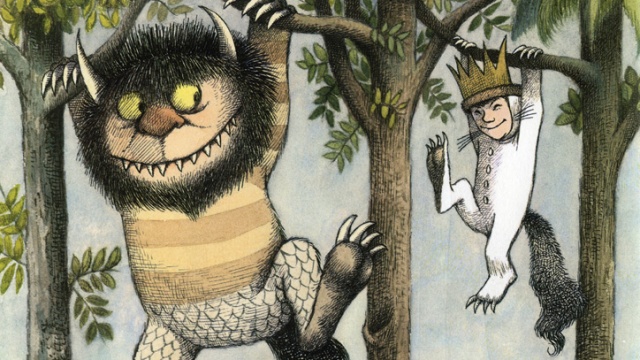
The good folks at Scottish Book Trust have interviewed me for their regular series of author confessions. They gave me interesting questions, and I enjoyed working on the answers. I talked about word counts, dream jobs, my favourite bookshop and Where The Wild Things Are. The full interview is here. I also confessed that I’m the spitting image of godlike genius Ben Folds. Here’s the proof:

IMG_3768

Ben Folds

BenFolds480

Simon Sylvester

Man, I love Ben Folds. Listening to Rockin’ The Suburbs as I write. What a glorious album.

Here’s something more recent:

This one book – Henry Sugar

A couple of weeks ago, Daniel Carpenter came up with the idea to blog about a book that changed everything he knew about reading and writing, then pass the baton onto others. He wrote, brilliantly, about The Wasp Factory, then nominated David Hartley and myself to continue the chain. David wrote, promptly and also brilliantly, about Frankenstein, then picked Benjamin Judge and Nija Dalal to follow. Benjamin Judge (seriously: who is Benjamin Judge? I’ve read in Manchester three times, and never met him. He’s either a front, Lawnmower Man, or a ghost) then wrote with intimidating speed and grace about Tom Clancy’s Red Storm Rising, which means I’m late and under pressure.

The brief is to write about a book that changed the way I understood literature – that made me realise “what writing could do”. That’s a tough call. My first instinct was also for The Wasp Factory, which had a massive impact on me. But I think, on reflection, that others that hit me deeper, if not harder, and I can’t come close to Dan’s thoughts on what remains an astonishing book. I’ve spent a lot of time weighing up what to write about instead. Fingersmith by Sarah Waters is my biggest recent influence, but that was more like rebalancing my compass. Bruce Chatwin’s Songlines shook me to my core, and Jasper Fforde’s Bookworld series changed the way I thought about stories. Before that, the Harry Potter books got me reading again after a long period of not reading at all.

In the first draft of this post, I wrote 500 words about The Proud Highway by Hunter S. Thompson. The first scintillating volume of his letters was the inspiration that started me blogging while I was backpacking in Australia; that blog taught me to write (albeit like him), which led to a job in magazine journalism, which led to me writing fiction in my words of my own…

I love Hunter S. Thompson. He remains an inspiration for his sheer, indomitable rage against the greed, corruption, insanity and monstrous terror of corporate government. His prose is flawless, and The Proud Highway was the book that definitively led me to becoming a writer.

But – having written 500 words about Thompson and his letters – I stopped short. A book I hadn’t thought about for years swum into my head, and I knew it mattered more. It’s The Wonderful Story of Henry Sugar (and Six More) by Roald Dahl. I don’t know when I first read Henry Sugar, but I think it was during the single year I spent in an Edinburgh boarding school while my parents lived in Germany.

I remember almost nothing before the age of 10 or 11, and my time at the boarding school sneaks up on me like spidersilk – fleeting, single strands, flickering with light, then gone. And although I don’t remember exactly, I know that I spent a lot of time in the school library. I know I read King Solomon’s Mines, and all The Hardy Boys books, and a bunch of Stephen Kings. I would have read Dahl’s children’s fiction when I was younger, but I’m pretty sure that was when I stumbled upon his more adult stories.

I rediscovered Dahl when I was in my early twenties. I found all his works in a charity shop in London, and bought the lot. I gorged on them. His stories are consistently excellent, but Henry Sugar is the strongest of many extraordinary collections. The tale of the boy and the turtle, or the mysterious hitchhiker, or the greedy landowner and the treasure hoard, or the title story, all explore the no-man’s-land, the thin threshold between the real and the impossible. They are all perfect stories, delivering just desserts to protagonists and antagonists alike. Another of the pieces, The Swan, haunts me still; Dahl’s tale of bullies brutalising a class loner is gut-wrenching, brilliant, beautiful, devastatingly sad and entirely magical.

Henry Sugar is ferocious. But how does it redefine my idea of what books can do? It didn’t have that impact on me as a child, certainly, because I had no concept of books doing anything other than taking me away – I simply read and read. But in my twenties, on rereading Henry Sugar, the ghost of it flooded back – the sad magic of The Swan sluiced through me, and it was utterly transporting. Where Sarah Waters holds back from explicit fantasy, and Neil Gaiman commits to it completely, The Wonderful Story Of Henry Sugar perfectly inhabits that edgeland between reality and fantasy. This is important because I see, now, how I’m drawn to that same space in my own work. I don’t want to write like Roald Dahl – I couldn’t – but I’m trying to walk that same tightrope between two places. And in that sense, no other book has so changed the way I think about books – about writing – about reading – about living.

So that’s me. I’m going to nominate Iain Maloney and Ali Shaw to continue the series, though I haven’t asked them yet.

The destination

The Visitors was officially published on Thursday, and I was away all day on a college trip – for the second year in a row, four of my students had made it to the semi-finals of the World Skills competition. We’d driven down to Hinckley on Wednesday, stayed up till 1am practicing their pitch, then risen at 6am to practice and get to the venue. They had a 5-minute presentation to deliver, and we stayed all day, waiting for feedback. Throughout that time, I was quietly flooded with emails, texts and messages – so many that I felt helpless – I could barely respond. Friends sent me photos of the delivered book – out of my hands, now, and into theirs – and all the while I sat with my students, and talked with other tutors, and wandered round Hinckley College. It felt incredibly weird to be so far removed from the book on its publication day. The students succeeded with their presentation, and won a place at the finals in November. We left at 4pm. It was supposed to be a three-hour drive back to Kendal, but took more than five. The motorway was a purgatory of second gear. It flattened me. I sat in traffic jams and wished I could walk along the central reservation, alone in a sea of stationary cars, the hubcaps and ring pulls and single shoes scattered all around.

Back in Cumbria at last, I dropped off the college car and walked an hour through the gloom to get home to my amazing wife. By the time I turned the computer back on, I’d had scores of congratulations from friends and family. I felt humbled and very lucky. Then, in a mark of the rollercoaster this trip has become, I received an email saying I hadn’t been awarded a Northern Writers’ Award. That’s disappointing, though I’m still very glad I applied.

Thursday was a topsyturvy day, but then I woke on Friday to the news that my short story What I’ll Do To Be In Love With You had been accepted by the National Flash Fiction Day anthology – and then, a few hours later, the amazing Tania Hershman alerted me to the presence of my story Art Is Long, Life Is Short on the BBC Opening Lines longlist. I’d long-since written that off as a rejection. Talk about frazzled. On Friday night, Mon and I drank a bottle of posh fizz and sat and talked it over. That felt good.

I don’t entirely know what to say about The Visitors being published. I’m proud of what I’ve made, and I’m delighted to share it with other people, but my good friend Ali Shaw warned me that it might feel something of an anticlimax, and he was right. I don’t feel any different in myself. I’m still planning lessons, ploughing through my mountain of marking, and stressing about whether my four-month hay meadow time lapse is going to work out. Publication hasn’t changed any of that. But it is an affirmation of all I want to do – to coax the stories in my head out into the light. It has also reminded me how blessed I am in my friends – I feel almost ashamed to have had such support from such incredible people. These few days have made my heart beat bigger, and I’m thankful.

All this has whetted my hunger to push on with the next novel. In that respect, I guess The Visitors is the culmination of the first stage of a long road. More than anything else, I know, with every cord of my being, that this is the right path for me. Writing is a journey, but publication is not a destination. I don’t want it to ever end. I want to walk till my heart gives out.

The Year of the Whale

Screen Shot 2014-05-24 at 15.53.44

Last night, with slightly more than an hour to go before the deadline of the MMU Novella Competition, I finally finished my novella The Year of the Whale. The image above is a randomised cloud of the most common words in the manuscript, which is a really satisfying way to look back on what I’ve made.

I started writing it in 2009, and it has spent entire years untouched, waiting for attention in the dusty recesses of my hard drive. It’s written in first person with a very particular voice, and it’s been strange to return to it so sporadically over the years, and take up the mantle of that voice again. I’ve wanted to finish it for a long time – it was one of my New Year’s resolutions, no less – and I’m thankful to the competition for giving me the spark to get it done. I don’t expect anything to come of it – that way madness lies – but I’m thrilled to have wrapped it up last.

The Year of the Whale is the story of a man called Henry Cowx. He is a fisherman and walking guide in Morecambe Bay, riddled with arthritis and wracked with guilt. His story explores that guilt, and gives some quiet thought to what it means to remember. It’s about walking and place and ghosts and folk tales, and our connections with the land. It’s at the heart of my obsession with threshold spaces. It’s a meditative, elegiac story, and a long way from where I’d like to develop my work – but Henry has never been far from my mind, and I’m glad to give him closure at last.

I discussed some of the genesis of the story in my Thievery post for Kirsty Logan.

I’m working my way through some film jobs at the moment, but it’s almost time to get back into The Hollows.

Thievery

I’m honoured and delighted to have contributed a post to Kirsty Logan‘s long-running series of story inspirations, Thievery. It’s entirely possible to drown yourself in the wealth of stories Kirsty has curated, and I thoroughly recommend you do.

For my post, I confessed about a novel I abandoned at 50,000 words, because I no longer knew what it was about. One day, it will be reborn as The Year Of The Whale.

Here’s the story so far: Northern Lights / The Year Of The Whale.

Playing the clown

Last month, at Dreamfired, I saw storyteller Fred Versonnen perform the amazing Elephant Story. The next morning, I attended his clowning workshop in Arnside. This had almost nothing to do with the stereotypical idea of clowning – no silly noses, no silly shoes – and was essentially a 101 on delivery, performance and body language.

Fred warned us at the start of the session that it might take us to some uncomfortable places. I didn’t believe him, but he was right. It’s taken me this entire month to process some of the things that happened in that class. I’m not sure I’ll ever totally get to grips with it, but at the same time, I no longer think I need to. I just wanted to record a few thoughts on what clowning means to me.

I’m not going to talk about the specific activities Fred led us through. They were plentiful, varied, invigorating, intense and brilliantly useful, but they will mean different things to each person who attended, and I don’t feel the need to dissect the actual workshop. I want to talk about what I learned.

I learned that I’m frightened of embarrassment. Most of us are, probably. During the workshop, we performed tasks specifically designed to undermine dignity and strip away the topmost layers of self-respect. I found myself trying to rationalise the embarrassment by imposing a narrative upon it, but every time, Fred forced me to confront it.

‘For a clown, embarrassment is a gift,’ he said.

In this way, I learned that clowns are truly fearless.

I also learned to wait.

In a world consumed with noise and signals, the clown is silent. She waits, absorbing everything, and then she waits some more, until the wait itself becomes excruciating – until the pause itself becomes the embarrassment – and then she responds. In that pause, the clown is naked. Every part of her is laid open for the world to see. The clown waits long enough for the audience to connect, to project their own feelings onto the situation, to drown in empathy, to cringe in anticipation. Every part of them is laid wide open. This is the tragedy of the clown, and the triumph. It has nothing to do with face paint or comedy trousers. Laurel and Hardy are clowns, and Pennywise is not.

I couldn’t live that way, but I’m trying to bring some of it into in my own readings. At the Flashtag story slam, I made myself pause, and wait, then wait some more. I took a stupid hat onstage for my final story, and I forced myself to wear it. I tried to share anticipation of what was coming next with the audience. It was, without a doubt, the happiest I’ve ever been with my performance – the best I’ve ever read my stories. For everything I learned, I’m not sure I’ll ever know how to apply it properly. But I think I understand, now, that not knowing is itself part of clowning. It is Zen – pure action, without thought. I think too much.

At the start of this post, I said that the workshop had nothing to do with silly noses. That isn’t entirely true. At the very start of the session, as people were still arriving, we gathered in the kitchen to wait. Fred began to ransack the drawers, looking for props to use in the workshop. He found an orange ping pong ball. In a single, fluid motion, he spun to face me, bringing the ball to his nose, and he grinned. Just as quickly, he replaced the ball and closed the drawer. But in that second, or half a second, he’d become a clown. His face changed, his body changed – with the sheer, magnificent, wondrous joy of finding a ping pong ball in a kitchen drawer.

I don’t think I’ll ever be able to articulate what happened in that workshop. I don’t need to articulate it, of course, but I want to; and that is why I will never be a true clown. A clown wouldn’t need to analyse it, because they wouldn’t be scared of it. A clown would simply shrug, smile, and turn to embrace the vastness of this mad, sad, glorious thing that we call life.

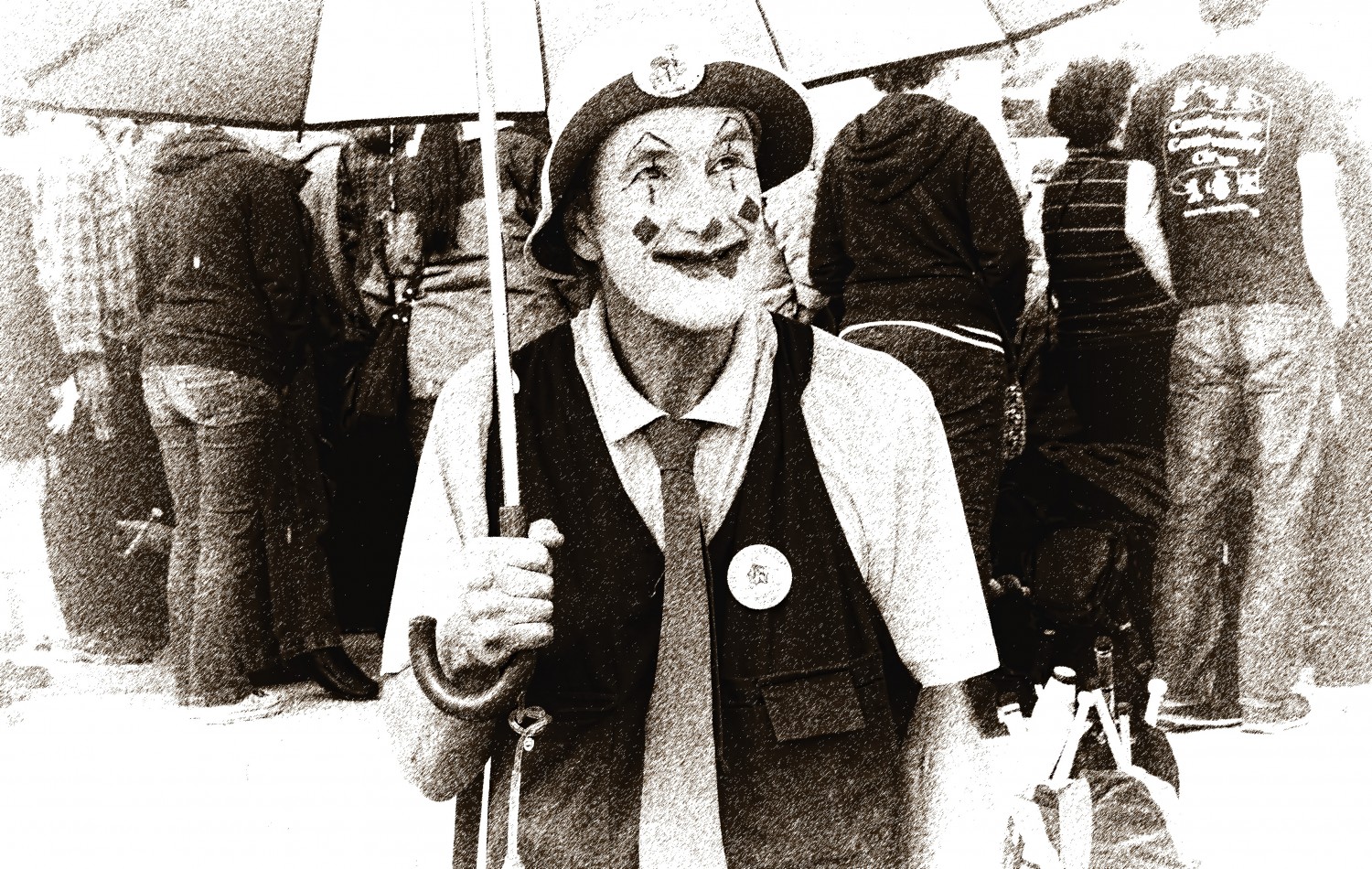
old-clown-day

Coffin Routes

A couple of months ago, I posted about the Drowned Villages Poetry Competition. There are flooded villages in Cumbria, Gwynned and Lanarkshire; the competition was open to poets within those library regions, working with that theme. The top prize was having your poem soundtracked by Mogwai. I’m very guarded about my poetry, but Mogwai are one of my favourite ever bands and creators of my all-time favourite album, and so I entered the contest.

Rounding up what’s been an astonishing month for me, I’m both delighted and devastated to reveal that I won the regional contest for Cumbria. I’m absolutely elated that the judges enjoyed my work. I’m still brewing, awestruck, on the momentous thought that Liz Lochhead, Ian McMillan and Nicky Wire have read my poem. But I’m also utterly gutted that having come so close, top prize went to the contestant from North Lanarkshire.

I feel bad even writing that. The first place piece, Never Come Home, is a really striking poem, and I’m sincerely happy for winning writer Catherine Baird. I didn’t expect to feature in the competition at all, so taking a place as runner-up is excruciatingly bittersweet. Having Mogwai do something with my work would have been astonishing – I can’t even frame the shape of it in my mind. I can’t articulate the joy I would have felt. Coming so close has turned me upside-down. I’m genuinely thrilled for Catherine Baird, and delighted with my own poem doing so well, but this one hurts. So near, and yet so far.

I know this sounds churlish. I don’t mean it to. But I discovered Come On Die Young in 1999, and Mogwai have soundtracked the last fifteen years of my life. Without exaggeration, Mogwai’s music has accompanied at least half of my entire writing output. I feel ecstatic to have come so close, and I feel heartbroken to have come so close.

For Facebook users, here’s the winning poem by Catherine Baird. My heartfelt congratulations to Catherine, and I can’t wait to hear the finished song. Like all of Mogwai’s work, it will be extraordinary.

When I was writing the poem, I played Hungry Face from Les Revenants on repeat in the background, hour after hour. I’m listening to Come On Die Young as I write this blog post. May Nothing But Happiness Come Through Your Door is playing. It’s the pivotal point in the album. Next comes the calm before the storm of Oh! How The Dogs Stack Up, and then the astonishing, burning, towering trio of Ex-Cowboy, Chocky and Christmas Steps. I will never stop listening to this album – or the others – the otherworldly Rock Action, the ferocious Happy Songs For Happy People, the dreamworld EP+6, the snarling Young Team, the smouldering Les Revenants, the muscular Hardcore Will Never Die, the reflective Hawk Is Howling, the utter majesty of Government Commissions, the blistering uppercut of Rave Tapes.

I will never stop listening to Mogwai, and I will never, ever stop wondering what if…

What if.

Here’s my poem.

Drowned Village screenshot


Slamming

After a wild and wonderful night in Manchester, I’m bowled over to report that I somehow managed to win the Flashtag Short Short Story Slam. It’s still sinking in, but I’m delighted.

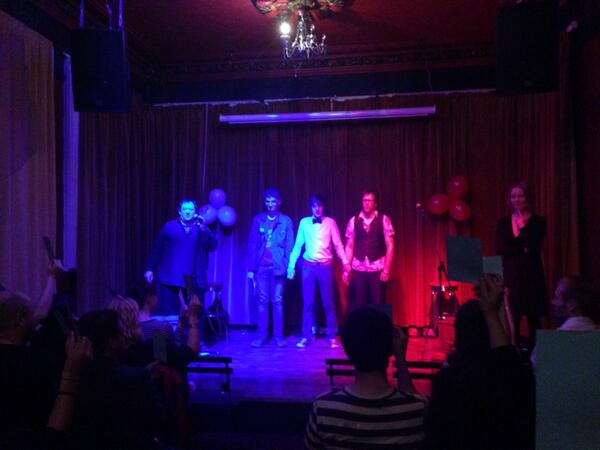
It was something of a journey – we left Dora with her grandparents, and drove down from Cumbria in the afternoon. Mon and I met friends Steve and Clare in the Northern Quarter, ate in the revelation that is V Revolution, then headed across the road to Gullivers to scope the venue: a brilliant space of worn floorboards and ornate plaster ceilings. The stage was bathed in blue and red light, creating corners from which the writers would prowl to read their stories. For the first round, competitors were paired off at random, with names plucked from a bowl and a coin toss to decide who read first. Once each writer had performed their story, the audience voted blue or red to decide a victor, and that writer continued to the next round.

Bl2YKBRIEAA4qch

It started ferociously, with the amazing Joy France reading an intimidatingly strong story about cleanliness (and willies). Her opponent was good, but that story would have annihilated all comers. I was very, very glad I hadn’t been drawn against her. She was duly voted through, and set the bar for the rest of the night. The stories were consistently excellent. Hand on heart, there wasn’t a bum note. Mark Mace Smith and Mark Powell, Joe Daly, Abi Hynes, Sarah Stuart, Geraint Thomas, Trisha Starbrook, Thomas Jennings and Ailish Breen all read absolute belters.

My name was drawn in the fourth bout. I read a piece called What I’ll Do To Be In Love With You, about a boy who turns into a harmonica. I was anxious, as always, but I’d been practicing, and I made myself take the time to enjoy it. My opponent was Thomas Jennings, who read a brilliant piece about the end of the world as experienced through last orders in a MacDonalds. It was a funny and affecting story, and I would have been happy to lose to it; but I scraped through into round two, where I was paired off with Mark Mace Smith. Mark is a vivacious slam poet who often performs under the name Citizen Mace – check out his stuff here – and he made for another tough competitor. I was up first, with a story called Charlie Loved The Circus. This is a 200-word nasty about why you shouldn’t be mean to clowns. Mark’s piece was a sweet wee story about a man falling – literally – for a girl. Another close vote, but I made it to the third round.

In the final, I read against Mark Powell and Joe Daly. Both are stalwarts of the Manchester literary scene – Mark runs Tales Of Whatever, and Joe is one half of Bad Language – and their stories were excellent. I was last to read, and went with a story called The Jubilee Best Bake Competition. I always planned to read this with an accent, but bottled it at Verbalise. So I bought a frumpy hat onstage. It’s made of green wicker, has a broad brim and is covered with flowers. Once I’d donned the hat, I couldn’t back down from the accent; and so I launched into my idea of what happens when the village baking competition takes a turn for the worse. The audience (joined, at this late point, by three exceedingly stocious men who thought they’d come to a boxing match) kindly gave me some laughs, and that helped me relax into the story. The hat helped, too.

The vote was tight again, but I sneaked it. I’m still thrilled, delighted and surprised – as well as humbled and happy to have shared my stories with such an amazing crowd. We stayed for a couple of hours after the slam, happily chatting away with the Flashtaggers, audience and contestants. It made me wish, once again, that I’d made more of the astoundingly vibrant Manchester literary scene when I actually lived there; then again, I’d barely started writing when we lived in Withington.

It was after 11 when we left Manchester, and we drove a deserted motorway in the dark. The journey gave me time to think. I’m over the moon to have won, but there are two things that burn brighter. Firstly, I won’t forget the sense of community I experienced at the slam; it’s a real thrill to share my love of stories with friends and strangers, and events like the slam are a howl of affirmation that stories are alive and people are hungry to share them.

Secondly, and quite honestly, I would have been proud to have been knocked out at any point, from round one onwards. This is because, for the first time, I read my stories the way I want them read. I used to gabble or murmur my way through a reading. A year or so ago, I set out to be better. I haven’t shaken the nerves, but I’m learning to manage them, and I’m coming to trust my stories. I’m not a confident person, but running a gauntlet of open mics has given me some confidence in my work.

Back at home in Cumbria, I tiptoed in to see my daughter. She snuffled in her sleep, and buried herself in the blanket. All journeys, no matter how big, are measured in stages and steps. For all the things I would change about myself – to write more often, to be more focused, to perform better – I wouldn’t change a step of the path I’ve taken to where I stand now.

Here’s a picture of me with a cheesy grin and my cheque for £1,000,000,000,000,000,000,000,000,000,000,000,000,000,000,000,000,000,000. I’ll be cashing this tomorrow, Flashtag – if there’s any trouble at the Post Office, I’ll be back with my bat.

Bl2qVwgIQAAIIiN.jpg-large


A love letter to an island

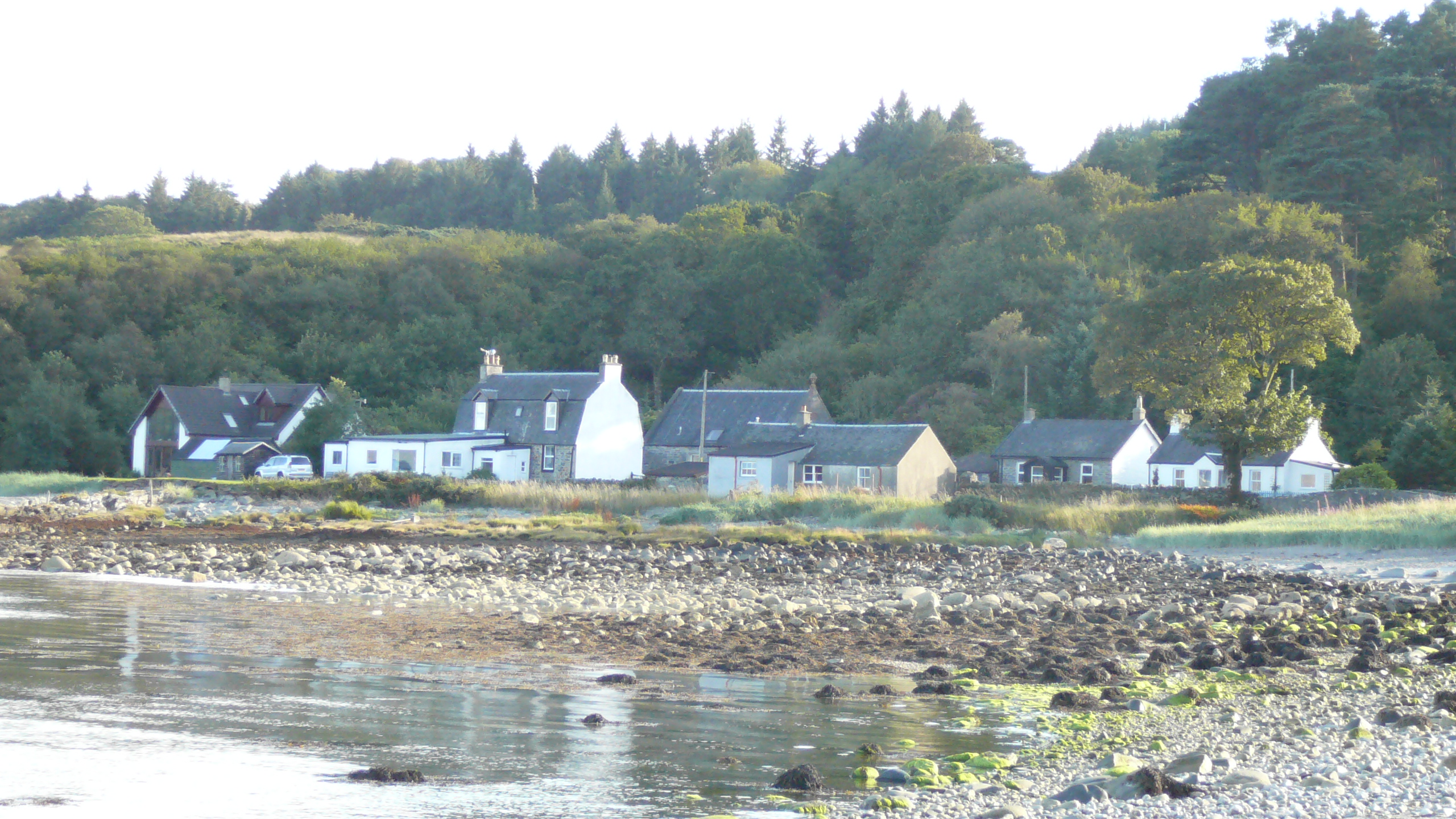
P1050513The idea for The Visitors fell into my head almost fully formed while on holiday in Grogport, a tiny hamlet on the east coast of the Kintyre peninsula. It’s connected to the mainland by a narrow isthmus, and it feels like an island. The beaches are sandy and studded with pebbles. Hills rise steeply from the shore and narrow roads wind around the coast, ducking inland to skirt the inlets. To the east, Arran lurks like a beached whale, and Gigha is smudge in the haze on the horizon to the west. Abandoned crofts explode with rowans, and in places the ferns fall into the road, wet and green.

P1050459My daughter was three months old, and the long drive from Cumbria had unsettled her. She started waking early – around five in the morning – and wouldn’t go back to sleep. My wife and I made coffee and watched the sun rise over Arran, casting blue light on the millpond Kilbrannan Sound. From the kitchen window, we saw herons stalk the surf, lashing down on crabs or minnows. Seals hunted in the bay every evening, and an otter dismembered fish on the shoreline. The garden thronged with little birds, and at one point I saw a kestrel sitting on the washing line, no more than five yards from the house. When we walked around the island, there were butterflies in the gorse, spiders on the sand, bees in the grass, gulls wheeling on the updrafts. I was shaken, at times, by how much life was around me, living as it always had, as though the land itself was alive and conscious. In so many places, it looked as though people, civilisation, had simply given up and moved elsewhere. It felt as though the land was waking after centuries of slumber, and just beginning to stretch.

On the third or fourth morning, watching a seal swim like quicksilver in the bay, the spark of a story flared brightly inside me. It caught fast, and began to smoulder. That story became The Visitors. Selkies, living in Grogport. A murder mystery. A young girl, desperate to leave an island. And it would be an island, I decided; the Kintyre peninsula was beautiful, but didn’t do everything I wanted for the story. I started drafting a sense of what the island looked like. I called it Bancree. As I began to write the story, the island evolved too, morphing into something real enough to touch.

P1050458Bancree is a scrapbook of my Scotland. I grew up in Inverness, where I could see Ben Wyvis from my bedroom window. We walked our dogs on the shingle beach at Ardersier and through the sodden plantations of Culloden. I’ve been canoeing and camping on Loch Maree in torrential rain, and climbed the boulder fields of Torridon and Glen Nevis. I’ve been to the top of Schiehallion, and walked on the clifftops of Dumfries, and fallen out of bars on Tobermory, and seen friends crash cars by the shore of Loch Ness. I’ve taken the train from Edinburgh to Inverness so many times that the journey is engrained in my memory. From the top of Glen Affric, with June snowmelt still feeding the burns, I’ve seen both coasts glitter in the sun. Scotland has a hundred landscapes that sing to me, and I collected something from each of them to build Bancree.

P1050526The island is my love letter to Islay, Jura, Gigha, Mull, Iona, Ullapool, the Highlands, the Black Isle, Moray and the Great Glen – to the landscapes I grew up in, the landscapes I love. I’ve never tried to sketch Bancree or make a map. I know what it looks like, and where to find Grogport, and Tighna, and Izzy’s hut, and the windfarm on the Ben. But more importantly, I can drive the road around Bancree simply by closing my eyes. I can feel the scrunch of shingle underfoot, and the batter and bluster of the Atlantic coast. There is dew sagging on spiderwebs, spun between the thorns of gorse, and rafts of flotsam hefted on the beaches. Dead, empty crabs still scuttle on the breeze. The twiggy scratch of heather, the rivulets of water in the bracken. Titanic clouds, dark and warm and scudding low enough to touch. The fluttering machair, alive with bees. Fog that swallows the tops of trees and telegraph poles. The water in the bog pools, dark with peat, staining all the world around, pouring brown from every tap. Sands that hiss and sing as the wind rolls across the beach in waves.

Bancree is as real as a dream to me. It is vivid and bursting with life. I can feel the rub of sand between my fingers, but there is no map to go there.

P1050540