Les Revenants

returned1_A2

I’ve finally caught up with The Returned, which has not just maintained the quality of the first episode, but consistently improved across the series, growing in confidence, becoming ever stranger, madder, sadder. It’s the most exciting thing I’ve watched on television for a very long time: it’s Lynch without the hysteria; it’s Lost without the sensationalist cliffhangers. When a show is this good, eight episodes is not enough, and I’m glad there’s a second series on the way.

That said…

There’s a habit in these long-running ensemble shows – and increasingly in big-budget films, too – of ‘concluding’ with threads left untied – or introducing tantalising new story strands. Sequels and follow-ups have therefore become implicit. The gradual switch from ‘series’ to ‘season’ is an ingenious use of weasel words; season implies annual regularity, and makes the show a fixture, part of an ongoing narrative, integrated into the cycle of the year. New instalments are seen as part of a continuum; rather than stand-alone, self-contained sequences. This has clear drawbacks: I loved Lost, but the final conclusion to the show was incredibly weak. It felt increasingly apparent, as the show expanded, that they had started without knowing how it would end, and that each successive series was created to generate the next, rather than conclude the previous. With such a weight of expectation piled onto the final episodes, it was always going to fall short. The conclusion of Lost was less than the sum of its many, flawed, dazzling parts.

With a little courage, I think The Returned could probably have finished at the end of the first series, even with so many questions still unanswered. It would have been bold, but the last sight of the flooded town would have made the metaphor of the draining dam all the more apparent… but we have expectations of closed narratives, and there’s too much still unsaid. And when it is so incredibly well-made, a second series will be very welcome. Now it’s just a matter of waiting until November next year – and what’s 18 months for the best thing on television?

In the meantime, I’ll console myself with the breathtaking Mogwai soundtrack. I reckon it’s their best work since Come On Die Young. You can listen to some of the songs here, but you’d better get the real thing, just to be on the safe side.

To Do: Part Two

Okay, back to work. College returns in three weeks, which feels frighteningly imminent. I’ve films to finish for Cumbria Wildlife Trust, Three Dimensional Tanx and Seven Seals, some short stories to write, the Riptide edits to complete for Quercus, Scrivener to learn, family and friends coming to stay, a log store to build, readings to practice, paperwork as deep as my hand, and Marrow to edit and complete.

Head down. Press on. Fail better.

miranda3a

A little light reading

We’ve just returned from a brilliant fortnight in France. We racked up 2,500 miles in a round trip that encompassed Ile de Noirmoutier, which is reached by a two-mile causeway at low tide; Rauzan, where we camped in the shadow of a ruined medieval castle; and Marais Poitevin. This last spot, nicknamed ‘Green Venice’, is one of the most amazing places I’ve ever seen. Centuries ago, it was a vast swamp, but Dutch settlers drained it with a labyrinth of canals and ditches, leaving hundreds of island pastures connected by causeways and bridges. The architecture is just as unique, with balconies and shutters adorning every house, and punts moored to jetties in gardens. Poplars and alders tower into the sky, the canals are thick with lurid green algae. Fat dragonflies zip and pop between shrubs and creepers, and the trees are alive with cicadas. Filtered through high branches and reflected from the water, the light itself is tinted green.

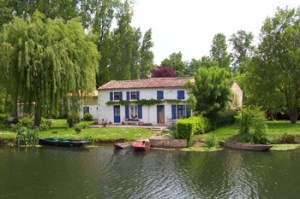
marais_poitevin bluehouse

It’s genuinely one of the most incredible landscapes I’ve experienced and, much like Grogport for Riptide, it’s been a real inspiration for my next novel. In the space of a few days, I filled an A4 pad with notes and dialogue, and I feel really excited about starting work. There’s still plenty to do before I can begin, but the foundations now feel firmly set.

The other great thing about the holiday was having time to read. I managed six books, which is no mean feat when juggling a toddler in a campsite. And I had a great run of books – not a single dud:

The Tiger’s Wife by Tea Obreht was bold and convincing, subtly switching a range of voices to make folk myths contemporary through personal memory. I enjoyed it a lot, but found it ever so slightly cold, and wasn’t as blown away as its reputation suggests.

Cumbrian Folk Tales by Taffy Thomas was a fascinating collection of the county’s legends and myths, made all the more immediate through its connections to a landscape I’m starting to know. It was amusing to recognise the names of not just local places, but also local people – people I’ve met, worked with, drunk with. The tales were strongest when connected to geography, giving meaning and history to a witch’s cauldron or a devil’s bridge.

I read The Blackhouse by Peter May – this was a present from Jane Wood, my publisher at Quercus. She thought I’d like a look because, like Riptide, it’s a crime story set in the Hebrides, though it doesn’t have the supernatural elements of my book. I enjoyed it a lot. The plot was dovetail-tight and engrossing, and the landscape was intoxicating.

Next up was I Love You When I’m Drunk by Empar Moliner, Spanish short stories in translation through the tremendous Comma Press. Despite some uncharacteristic typos from an excellent publisher, it’s a solid collection, each story exploring and exploding conceits of modern life. Some of the stories felt a bit like shooting fish in a barrel – taking aim at soft targets of liberal, middle-class pomp – but the writing was good throughout, and there were many outstanding moments.

Moliner’s collection was good, but the next book was astonishing – a class apart. The Dog Of The Marriage gathers Amy Hempel‘s four short story collections into a single volume, and they are consistently superb. There isn’t a single wrong note across dozens of stories. Hempel’s work is voiced through emotionally damaged or stunted narrators, trapped or somehow left behind in their lives, caught between stasis and decay. The stories are not without hope, though, and Hempel writes with unceasing, unfailing humanity. Her sentences and structure are scintillating. I cannot recommend this highly enough. This is the sort of book I buy two copies of, expecting to have one out on loan.

the_dog_of_the_marriage.large

Finally, I read Snake Ropes by Jess Richards. This was another corker. Alternate narrators explore life on a mysterious island, ‘just off the edge of the map’, eventually combining to bring the distinct halves of the story together around a single, long-forgotten trauma. This novel holds trade and barter at its heart, exploring themes of presence and absence, balance and weight; of exchange, and what it means to give and get. It’s a real triumph, made all the more masterful in how Richards weaves the fantastical through the fabric of base human instinct, conjuring talking keys, sentient trees, and a walking doll with a seashell for a heart:

Moppet2

The last fortnight has reminded me, as stupid as it sounds, of how much I love to read, and made it painfully apparent how little reading time my regular schedule affords me. I’m determined – on top of carving out more writing time – to read more. I miss it.

This holiday has been essential. I’ve worked stupidly hard over the last two years without much of a break, and I’ve badly wanted some time off. Looking ahead, the next two months are going to be frantic – but I feel better for a break. I have my next novel blocked out and the sights and scents of a swamp fresh in my mind. One more draft of Riptide to go, and then I’ll be starting my new story.


Wino time

‘Wino time’ is Beatnik slang for ‘Drunk & Disorderly’. I haven’t been arrested, but I am going on holiday for a couple of weeks, and I plan on drinking quite a lot of wine, so you never know. I’m taking books, notebooks and pens. See you in a couple of weeks, and thanks to everyone who’s stopped by in the first few months since I started this blog.

In the Spotlight

Last night I read two stories at the excellent Spotlight Club in Lancaster. Perhaps unsurprisingly, given the heat, it was a fairly sparse audience of only twenty people, but the wealth of talent was inspiring. I’d booked one of the open mic slots that open the show. The first two performers were Edward Fahey, reading from his novel The Mourning After, and poet Simon Hart a.k.a Big Charlie Poet. I was on third, and read two new short stories – one about home cooking gone wrong, and one about living in an umbrella. I’m pleased to say they went down fairly well. As ever, I felt wretched with nerves. When I’m reading live, I can feel my pulse pounding in my stomach, beating so violently that I’m certain people will notice – but then, when I’m settled, I start to enjoy the reading, to relax into the story and to remember why I wrote it in the first place. Reading aloud is engrained in my writing workflow. When I’m writing, I constantly read my work aloud, lips moving nonstop, speaking and repeating the phrases, looking for the way the words flow best, seeking out an organic rhythm to the story. It’s thrilling to take that back to a stage and a microphone. I’ll never be as good as performers like Alan Bissett, but I’m starting, at last, to really enjoy reading live.

Back to Spotlight: the open mic slots were followed by ‘ethnomusicologist of the imagination’ Deep Cabaret. He conjured incredible sounds from an apparently homemade instrument of wood and wire wrapped around a tin can (Steve Lewis, the man behind the music, has since been in touch to reveal that it’s not a DIY contraption, but a Delta Wedge, and manufactured right here – although it is based on the homemade instruments of early Bluesmen). With this extraordinary device, Deep Cabaret explored the music of a fictional world based on the fantastical fictions of Jorge Luis Borges. It was a truly original and engrossing performance.

Rosa Lucy Rogers followed with a series of haunting, abstract poems exploring emotional and physical space. Then came multi-slam-winning performance poet Trevor Meaney. He kicked off with a piece about Chris Huhne and Vicky Pryce entitled ‘Baby you can drive my car’, which gives you an idea about his work; excellent and very funny. Short story writer Scott Hammell gave us a dying man’s last moments, before veteran punk-poet Nick O’Neill delivered his tight, intense rhymes, taking on big themes with disarming simplicity.

The night was finished by acoustic guitarist and singer-songwriter David Kelly. There are some guitarists who seem in total mastery of their instrument, knowing exactly how it works, never out of control for even a moment – David was not one of those guitarists. He was the sort where the guitar seems to play him, using him as a fulcrum, his body all angles and awkwardness, legs twisted against one another, tapping out mad rhythms, shoulders hunched, head down. It was brilliant. His voice had a raw, urgent quality, and his songs were a little James Yorkston, a little Conor Oberst, all cracked and lo-fi, thrilling and real. I’ll definitely be keeping an ear out for more of his music. I can’t find a website for him, but he looks like this:

IMG_0474

As we made to leave, the organisers asked if I’d come back to read again in September. Spotlight has been going for 17 years, and September will be their 200th show. I’m honoured to have been asked, and I gratefully accepted the invitation. I’ll have a 10-minute slot, so I can try a slightly longer story – but I’ll definitely be reading a variety of pieces again, too. Hopefully my DIY flash fiction collection Marrow will be ready by then. I’m delighted to have been invited back, and it was a great way to finish the show.

On the streets outside, Lancaster felt like London, the streets buzzing with people. We walked back to the car through one of the glorious Mediterranean nights this heatwave has delivered: warm, soft breezes, and dim bands of blue to the west.

‘The software of our minds’

This is a fascinating article, examining the quasi-neurological process through which stories develop emotional punch. I’ve long believed that empathy is the quality a writer needs more than other; this article seems to give my belief a little foundation. Put simply, stories engage readers through exploiting our empathy with the character and their situation. Writers therefore need to assume the mantle of that empathy and project it onto their characters.

Read on:

Six Ways to Make Sure Your Reader’s Brain Syncs with Your Protagonist’s Brain.

WWII bog body

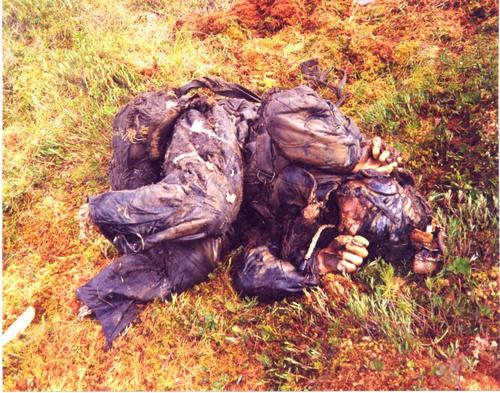
pilot

After the bog boats, here’s a bog body from WWII. This Soviet pilot was shot down at the age of 22. Boris Aleksandrovich Lazarev tried to escape from his Hurricane, but crash landed in a bog. The impact seems to have severed his feet, but the peat preserved him almost perfectly for over half a century. He has now been buried in a cemetry in the Karelian Republic in western Russia.

Limppelty lobelty

Image

My reading lately has brought me to the Tiddy Mun. He’s a grumpy but rather sad spirit of the fenlands. There’s something very ancient and disconnected about him, as though he’s been left behind, and doesn’t entirely know why. People were actually quite fond of him, by all accounts, in the same way they’re fond of elderly and slightly addled relatives they see only every other Christmas.

Anyway. Tiddy Mun can summon water, mist and fevers from the marshes. He’s very much at home in the bogs, and he was incandescent about the draining of the fens by the Dutch. In his rage, he conjured pestilential swamp airs onto all Fenmen, and didn’t stop until everyone said they were sorry.

He sounds anachronistic even in the 1890s:

“He dwelt deep down in the green water holes, and came out at evenings when the mists rose. Then he came creeping out in the darklings, limppelty lobelty, like a dearie wee old granter, all matted and tangled, a long grey gown so that they could hardly see him in the dusk, but they could hear him whistling like the wind and laughing like a peewit. He was not wicked like the rest, but he was eerie enough, though the times were when he helped them. For on wet seasons when the water rose to their doorsteps, the whole family would go out together and shivering in the darkness they would call:

‘Tiddy Mun wi’out a name,
Tha watter thruff!’

They would call it till they heard a cry like a peewit across the marsh, and they’d go home. And next morning the waters would be down.”

I feel quite sorry for the Tiddy Mun. He seems lonely and lost and utterly out of place, but I think he might have a role to play in the new novel. I especially like the idea that he isn’t “wicked like the rest”…