Wee update with my news – over recent months I’ve been telling stories wherever people will listen, from my story circle to Verbalise to Kendal Mountain Festival to a headline slot at Ink Deep (a new spoken word night in Kendal). I told 30 minutes of stories at that one – The Name, The Pear Drum and Facing The Giant, finishing with a short Eskimo story called The Spirits of the Northern Lights. I also recorded a 90-second version of that one for National Storytelling Week (now been and gone). My telling looked like this:
It’s strange how much goes into a single story, even one as small as this – I spent a week of dog walks and school runs practising Northern Lights – partly because I needed to get it under 90 seconds, but mostly to find the flow in the words and build some phrases into muscle memory.
It’s been a year since I started storytelling with incredible tutors Emily Hennessey and Nick Hennessey. In that time, as well as the stories above, I’ve learned The Talking Skull, Aioga, The Fox Woman, The Magic Bowls, The Hobyahs, Two Tigers & A Strawberry, Stone Soup, Raven & The Whale, Six Blind Men & an Elephant and Gobbleknoll. That’s a small repertoire, yes, but growing all the time, and most of all – I’d feel confident going back to any of these stories. I’ve told each of them to myself (and the dog) dozens and dozens of times. They’re part of me now… even if the dog is sick of me .
Learning and performing traditional tales has upended everything I thought I knew about stories, energised me personally, and also reinvented my writing practice. The simplicity and clarity of folk tales is so utterly grounding – I’m increasingly trying to incorporate that simplicity into my own prose. I’ve also started writing `longhand, rather than on a keyboard, and this too has been transformative. I’ve always plotted and planned and noodled in notebooks, but very seldom written extended prose by hand. Taking a novel to the notebooks has been an extraordinary thing. Everything becomes much more linear and causal – and if it isn’t connected, it’s easier to spot a fracture in the narrative. Slowing down to handwriting speed – probably less than half my typing speed – has also slowed my thoughts, giving space to notice and dwell and follow interesting threads. It’s steady and feels somehow more truthful. Most radical of all – I suddenly have countless more moments in the day in which to write. Whereas I once needed a minimum of half an hour, a cup of tea and a playlist to sit down and write – now I’m scribbling ideas and phrases in minutes here and there, from boiling the kettle to the moments before bed. It’s still early days as a process but I’ve been staggered at how staying in touch with my prose makes it all the easier to keep writing.
As to what I’m writing… ah. Enough to say that something I’ve daydreamed about for almost twenty years is quietly taking shape. I’m writing without agenda or plan, dwelling in spaces between ideas and images, forging some links, breaking others. I’ve given it a name but I’m not ready to share that yet.
Another tale, another telling; at my last story circle, I performed a Siberian folktale called The One-Eyed Man & The Fox Woman from a wonderful collection called The Sun Maiden And The Crescent Moon by James Riordan. It’s a story I first heard on a podcast told by Daniel Deardorff. By way of drums and dreams he seized me by the scruff and never let me go; when I started storytelling, The Fox Woman was right at the top of my list of pieces to learn. It’s longer than Gobbleknoll or The Talking Skull, about 20 minutes or so, and I’ve been working my way up to it by way of shorter tales.
There’s an otherworldiness to this one. The titular One-Eyed Man is a pretty small part of the story – the journey belongs entirely to the Fox Woman – her anger, her longing, her choices, her consequences. It holds at its heart a crystal truth about moving through life; about what a person should tolerate, and what they cannot. It’s about ageing, changing, desire, belonging and peace. It’s vast and it’s wild.
The Siberian stories are strong. I’m currently reading The Turnip Princess by Franz Xaver Von Schonwerth: 72 folktales and fairy stories collected roughly in parallel to the Grimms, then lost for over a century in a city archive. As with my recent reading of some Russian stories, I’ve been struck by how many of them are structurally quite weak; elements appear at random with successions of unconvincing ‘and thens’ disconnected from what’s already happened. What I admire in the Siberian stories (as with Inuit stories) is that most elements of the story happen because of something else – the magic remains wild and vital, but the threads of story are causal and connected, rather than consecutive – at times almost random. As a side note, it’s fascinating to see the movement of stories through time and place – there are quite obviously elements of Grimms throughout The Turnip Princess, then what crops up but half of Three Golden Heads Of The Well? (Another story high on my list to learn.)
I’m off topic. Back to Siberia. The stories are rich in blood and fat and sinew. Eating, not eating; animals that talk to people; the Moon sneaking down by night to steal a bride; clayman, raven, elk. Animals are completely and vitally integrated with people – survival depends on food, and food is meat, and meat is animals, and animals is hunting. This is the prism through which almost every story plays out; from the mythic to the domestic, tales of tooth and blade and fur and fire. Odd thing for a vegetarian to say, but count me in. I’m there.
Telling The Fox Woman went well, I think, I hope. Ten of us met in an old Quaker graveyard high on Fellside, looking out across the town, with a large ginger cat slinking through the long grass, and the last of the summer swifts high overhead, and a robin ferreting through wild blackberries. I brought in repeated motifs to bookend the story, and that seemed to go well; one of the jokes didn’t land at all, but the other landed superbly. I extended the scene with the baskets of skins, which felt to me to make sense to the story, and I removed the scene with the reflection in the pool. I managed not to rush – to slow down and relish the flow of words. I’m increasingly drawing on my well of prose and poetry when conjuring the images. I still have a very long way to go in using my body and voice and face, and this is something to work on.
A quick post in celebration of communities, no matter how small: having finished my storytelling course back in March, I recently met up with my classmates for the first of an irregular and very informal story circle. We met at Kendal Castle towards the end of the heatwave, with just the thinnest edge of cold creeping into the evening. It seems to be a wonderful year for swifts, and a score or more of them barrelled overhead. I told The Magic Bowls, which I first heard on Jay Leeming’s superlative Crane Bag podcast, then later found online.
I’m understanding more and more the looseness and freedom of storytelling; to let the story find its own shape in the space between the teller and the audience. I added quite a lot about the man and his wife at the beginning, because I wanted more love and empathy than the written version suggests – I wanted him to have a reason to come home, rather than keep on walking. I invented descriptions for the tree spirits, with moss for hair and snailshell eyes. Jay’s version turns the burly men into barbers and I kept hold of that, because it’s perfect. I added some participation in the banquet scenes, calling on the audience for their favourite meals: ‘Yes! They had pizza there too, covered in basil and oozing mozzarella!’ Stories evolve. A storyteller needs to give them space to change and grow and flow.
I don’t know how long it took to tell The Magic Bowls – only that it was my longest piece so far, and by some distance. Perhaps 20 minutes? I probably could have timed it or something, but also: much of my joy in storytelling is how ephemeral it is. In a world where so many things are digital and pinned into pixels forever, I like the fleeting moments. I talked too fast at times I think. I need to learn to dwell in some images for longer, not least to vary the pace throughout. I reckon this will come with experience.
Our circle will meet again in a month or two – no idea what I’ll tell, but I’ve a huge list of stories to learn, stories that really sing to me; stories of trees and bees, stories of loss and belonging, and stories which might not be stories at all, half-images summoned from the depths of murky memory. Leviathans inside us all – born with stories already in the cords of our beings.
I’ve recently finished a 10-week storytelling course run by Emily Hennessey and Nick Hennessey of Stealing Thunder storynights. It’s one of the best things I’ve ever done. It’s taken me a while to process to the point that I can write something about it, and in truth I am still digesting, still chewing it over.
Readers of this blog will know I have a longstanding fascination for myths, legends and folktales – that is after all the substance at the heart of The Visitors – but this was the first time I’d ever explored performance skills in any depth. I loved being challenged physically and emotionally and narratively. I loved having my barriers knocked down and becoming something of a child again – finding wonder. I loved learning how folk tales strip away the layers and layers of window dressing we pile onto our stories, opening up the bones of what a story truly says. I loved the simplicity of it; how the arrangement of those bones bring meaning and comfort and magic. Many tellers, many tellings… I learned how stories float like seeds, and different storytellers bring radically different interpretations. I learned some of how the body and voice capture the story, can make it even more simple – a gesture, an almost imperceptible tilt of the eyebrows or the shoulders.
In truth I’m still reeling with it, still counting the distance travelled in those 10 weeks. I finished by telling The Pear Drum, an old English folktale – a caution to naughty children. I loved that too. I loved watching my peers on the course tell their stories – Bridie with Toller’s Neighbours and a line of lanterns in the dark – Ginny and the Grimms, clutching a severed head and dripping three drops of blood on the stairs – Jules and a selkie story, a seal pup in an apron. Magic happened in that horseshoe of chairs.
Above all, I loved the immediacy and urgency of the dynamic between the story, the storyteller and the audience. It happens in a heartbeat and is gone. For all the work I’ve done in prose, screenplay and film, for all my work in screen editing and story editing, for all the books I’ve read and words I’ve written – I don’t think I’ve felt so connected to the pulse of story that beats in us all. Story is in our DNA, knotted in the fibres of our souls. Story is the thing that makes us human.
I don’t quite know what to do with all of this just yet – only that I want to do something, I need to do something. This course has really lit a fire in me. I want to stay alight.
After a couple of weeks away, and on the back of notes from some excellent readers, I’ve started redrafting the novel. It feels strange and strangely comforting to splash back into that watery world of flooded hearts and flooded houses. I’m weirdly thankful for the industry slowdown that’s given me the space to write, but things are starting to pick up again, and I’m back to work editing some really exciting documentary projects. That means redrafting comes whenever I can grab it – odd mornings and evenings, scrambled hours here and there – and all the while, quietly, quietly, starting to think about what follows…
This is a picture of the cork board above my desk. Each of these scraps is the ghost of an idea. I don’t know what will happen with my current novel, and I don’t know where I’ll land next. Some might be screenplays. Most will likely go no further than this. I’ve reached the conclusion that every project is so distinct that writing a novel essentially means starting from scratch, every time, and learning to write all over again. Maybe one day I’ll stumble across some sort of process that allows for better structure to my writing and my time. Until then – scraps and pins.
A year at least, I think, since I posted anything; it’s been a time of change. In Easter 2023 I made the monumental decision to leave Kendal College, where I taught the Film Production course for 12 years. While I always loved teaching the students, the job itself changed radically in that decade, and honestly I was becoming unwell. Leaving was an exceptionally difficult decision… but also the right one. I’m a different person for stepping away. I didn’t realise at the time how heavy a thing it was to carry.
So what next? I’ve left to pursue freelance editing and to carve out time to write. I haven’t exactly stopped writing, but I’ve written far more screenplays than prose, and when I sit down with my novel it’s increasingly hard to pull the right words together. That’s a part of myself I want back, and I understand it needs work. My novel has been stalled at 30,000 words for over a year while other projects called me away; last week I sat down and wrote 500 words on it. That felt good. I want more of that feeling. Writing is a muscle: use it or lose it.
What else? I’ve finally released The Potter’s Field. There’s a lot I’d do differently if I was starting again, and overall the process confirmed I’m more of a writer and editor than a director – but I’m also exceptionally proud of what we pulled together on a shoestring. Particular shouts for Jenny Ann McKay and Marie Rabe, my sensational lead actors. They had incredible chemistry from the very first rehearsal, and it was all I could do to get out of their way. I’m proud to share The Potter’s Field:
I’m also thrilled to announce the release of Maggie, a short horror I wrote for the talented James Kennedy. James has done a phenomenal job with my script, and the performances by Shaun Scott (he of Moon Knight, The Bill) and Lukwesa Mwamba (she of Carnival Row, Doctors) are so good. The film won awards all over the world and has now been picked up by horror channel Alter, where it was seen by 50,000 people in the first two weeks – very humbling. I’m now working on a feature film based around the same characters. I’m not naturally drawn to horror, and I don’t mind admitting that plunging back into this world has given me a few sleepless nights…
I also wrote, co-produced and edited this promotional piece for Impact International. It was a challenging brief and I’m really pleased with how it turned out:
My other work of note was cutting 1h30m of drama scenes for the Royal Conservatoire of Scotland. I put myself through a mangle to get the first cut delivered inside a week; a few months later, as I was teaching myself some new software, I went back to recut my favourite scene, Hand To God. Brilliant acting – mind the language though…
There have been some other commercial edits, and a little copyediting work – but the big news is that I’ve done some editing for the iconic BBC property show Homes Under The Hammer. It’s been an absolute blast cutting Homes – I’ve loved every moment. Back for another shift just before Christmas.
To tie all this together, I set up a website as a portfolio for my editing – if you’re interested in my other work, mosey over to SimonSylvesterEditor.com for loads more films.
Now what? I’ve just finished a short doc called Red Needle that I can’t share till the new year; that’s some of the best work I’ve done, I think. I’m redrafting my feature script for Maggie – after a couple of months away and some good feedback, I can see that I need to cut some characters and some locations, to condense and combine and simplify. The core of the story is good, but I’ve added too much around it. I sometimes think that screenwriting is as much about the things you don’t write as the things you do.
There’s more to say – I’ve rediscovered a childhood hobby, I’ve been to France, I’ve started swimming in the Lakes – but I’ll keep the powder dry on that lot. I’d like to get back to blogging more often – use it or lose it, right? …and so I’ll leave myself some things to talk about.
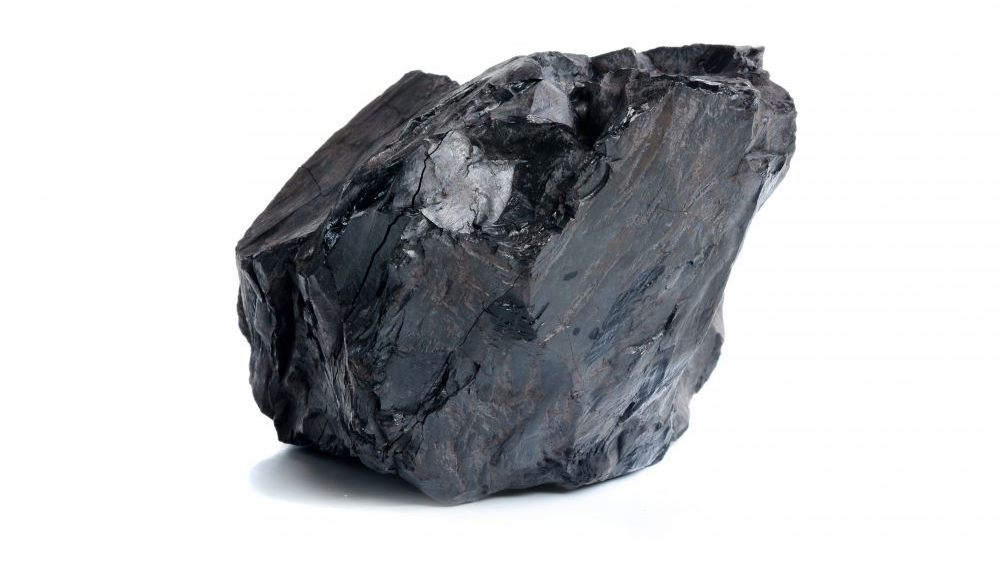
Coalface, yes: a face made of coal. A coal golem, animated and at work, joints grinding, black dust squeezing from each movement. The Word in his head tells him to dig, to dig, to dig, to haul the substance of his own body from the ground, to pry it from the great seams that thread the earth, to smash it into bricks, to bag it and banish it into the light. He digs, yes, and he dreams — incineration, immolation, white heat.
…
I didn’t mean to start like that. Sorry. Just a thought that ran away with itself. Reminds me of a David Hartley story.
I’m trying to write a little. This year has been exhausting. As well as the house renovations, things have been difficult in college, where we’ve struggled to find regular staff and I’ve done double the admin. My brain has turned to glue. I’ve spent my evenings editing student scripts and then having no energy for my own, though that’s no one’s fault but mine. Something else I need to work on.
But yes — writing again, just a little. I don’t have a name for it yet, and I’m reluctant to share too much of it publicly. I’m very conscious of the hope, emotion and effort I’ve invested in the novella, two novels and three half-novels I’ve written since The Visitors was published. The ideas are still there, battling for attention, but in truth my confidence is shot. I’ve lost some of my sense of what and how to write — the compass that helps me navigate through plot, characters, prose.
Reading and writing (and rest, probably) are the only things that will help me get the balance back, but I’m not good at giving myself that sort of a break. I have such little time to write, and I feel a huge pressure to fill it with perfect words — to feel like I’m making progress. When I don’t it brings me down. Writing 4,000 or 5,000 words a day feels a lifetime ago. A good day is 1,000 now, but I guess that’s the deal. If you want the diamonds, you need to be carving out the coal.
My reading time is pretty precious these days, and these three are monsters — but I’ve finally finished Brian Catling‘s epic Vorrh trilogy. It’s been quite the trip.
I could say I’ve never read anything like the first book, but that wouldn’t be true, because there are other stories that are as sublimely transporting and otherworldly as The Vorrh, and all of them are titans of their type: Gormenghast, Dune, Earthsea. I’m not exaggerating to place Catling in the company of Peake, Herbert and Le Guin. The Vorrh is a titanic work of imagination, simply sensational in its scope and reach. Essenwald and the forest make for a hypnotic kaleidoscope of the real, the surreal and the metaphysical, while the supporting characters simply sing, a chorus of humanity adrift in a world both wonderful and godless.
Sequels The Erstwhile and The Cloven round off the trilogy, and they are narratively compelling, but flawed. Modern publishing hasn’t done Catling any favours, as both books are littered with typos and read as an edit short of finished — rushed to market, I suspect, when they needed the craft and care of the first one. The big ideas are undercooked and confusing. The trilogy consistently considers questions of being and belonging, but where The Vorrh explored the boundaries of human consciousness in a sort of careful, measured ambiguity, The Erstwhile and The Cloven crash through them in bouts of confusing exposition.
As works of speculative fiction, they’re essential. As works of literature, they offer diminishing returns on a staggering beginning — the sequels still brilliant, but bound to fall short of the first. Frustrating, inspiring, bewildering, mesmerising, sincere — completely crucial to all writers and readers of speculative fiction. I’ll carry The Vorrh with me for a long time.
I’ve been tinkering on my new book since the summer. It’s coming together, slowly, slowly — I learn more about the world of it every time I sit down to work. My writing days have been overtaken lately with a succession of film jobs and Real Life things getting in the way, but I’m still onboard with my second 100 Days Of Writing, and I usually manage somewhere between 30 and 300 words a day. One step at a time, right? It’s all going in the right direction.
After this morning’s writing session, I’ve been reflecting on how stories change. Halfway through The Visitors, the lead characters took me completely by surprise with the way they wanted to go. By the time I’d finished redrafting and rewriting, it was a completely different book to the one that started out. It’s sometimes only on finishing that I realise what the story actually is. That’s true of every long story I’ve worked on, I think, and it’s almost certainly true of the current book. The core idea has stayed the same throughout, but the characters have swirled about it like satellites, each waiting for the gravity of the plot to draw them in. The ones I thought would lead the story have drifted away into space, mute, watching the world recede into a dot of light. And others, characters I assumed had only minor parts to play, have crashed into the story like meteors, hitting hard enough to shake the orbit — to tilt the axis into something new.
If you’re new to my blog, please note that I love an extended metaphor.
Back in November, I cut the story from 35,000 words down to 15,000, as the characters corkscrewed into my head and the story revealed itself as something new. Having steadily built my way back to 28,000 words, I’m about to cut the first two chapters — they’re only short, but I thought they were important for backstory and building the world. (And actually that’s true — but only for me and my understanding of the journey I’m embarking on.) No one else needs them, not really. Instead I’ve come up with a single sentence that literally does the job of 2,500 words. Knowing that I’m going to dispatch them to the great black hole of deleted chapters feels rather freeing — like dropping ballast. Ballast has an essential function until the exact moment it becomes dead weight.
The book calls louder, the further I run with it. The relationship between the lead character and a very minor character has become the hinge on which the whole story swings, and it’s quietly stunning for me to sit back and soak that in — to think that it’s been there all along, and only now do I know why. Back to it tomorrow. 100 words a day. Steady away, lad — casting ballast, rising up.
I forgot to do this last year for a bunch of reasons I can’t completely remember, but I’m back on track for a round-up of my favourite things that have happened in the last 12 months. In no order, these are:
1. The kids. This year has been another cracker with my wee family. It hasn’t always been easy, but seeing Dora and Indy getting on with the world has been a treat. In particular, Indy learning to talk has given us such joy — almost every day now we get a new word, and with every word our communication grows, our interactions develop, our bonds become stronger. He’s funny, he’s happy. Dora is still mostly feral, but she’s finding her way, all the time, a few steps back and then a few more forward. She’s developed an addiction to Lego, she loves reading Ottoline and Harry Potter and the Worst Witch, she argues about pretty much everything, she laughs all the time. They’re good kids, and I love getting to know them.
2. Mon’s art. Mon’s finally, slowly, getting to paint again with some regularity. Like me, she doesn’t get nearly enough time to make her work — and it’s therefore brilliant that she’s finished off these astonishing paintings and started on some really exciting new work. After she lost so much time in Indy’s first year, it’s been a real thrill to see these pieces coming together, and I’m so so excited by the work she’s sketching out and backpainting. She’s a bloody genius, my wife, and I count myself beyond lucky to watch her art unfolding in the studio.
Dora in The Window At Allen Bank
Sjo Harta
Tiger Stripes
3. Kefalonia. I used to write long posts about my holidays, but don’t blog as often as I used to, and so haven’t. But we went to Greece for two weeks in the summer, and it was brilliant. We went swimming every day and collected pretty pebbles. There was a titanic storm that rumbled all morning while Indy stood at the window and thumped the glass every time the lightning struck, and the day broke into vast grey Miyazaki clouds that washed away into the bluest of sweet blue skies. Waves had painted the beach in perfect smooth sand. The insects were incredible — a praying mantis, big black bees with pearlescent wings, swallowtail butterflies, a great emerald beetle that zipped about my head and lit on my hand. It then bit me, which wasn’t quite as cool, but for a wee moment I felt like Dr Doolittle. I read loads, wrote loads, and threw Dora in the swimming pool about a thousand times. It was brilliant. This is the actual moment Indy fell out of the sky. We decided to keep him.
4. Reading sea books. My original resolution was to read only sea books in all of 2017, and in this regard I’ve failed. I abandoned the task around August after finishing Moby-Dick, firstly because I stopped writing the sea book I’d been working on, secondly because very few of the sea books I tackled actually had much to say about the true nature of the sea, and finally because nothing else quite cut the mustard after the Melville. The stand-out was Rachel Carson’s The Sea Around Us, which is an extraordinary book and everyone should read it. Overall, though, I mostly felt relief when I decided to let it go and read some books that were not about the sea.
5. Wainwrights. As a family, we’ve started the long, slow process of sending Wainwrights. We’ve now walked about 16 of the 214 fells that Alfred Wainwright ascribed in his famous guidebooks, so there are clearly still loads of them to go, but we’ve loved every one we’ve done so far. The uphills are hard, the downhills are hard, but the tops are completely worth it — especially the plateaus and ridges, and earning a sense of having climbed up out of the world below. At some point Indy’s going to get too heavy for the sling, and then we’ll have to slow the numbers a wee bit, but for now — up we go.
6. Film and video work. This has been a fairly steady year for my freelance video work, but most of all I’m soaringly proud of my work for Kendal Mountain Festival. Along with my friend Dom Bush, I edited the trailer for this year’s festival, as well as copyediting the voiceover poem. The film edit was difficult and time-consuming, and I’m really proud of what we made:
7. Getting veganised. Come June 2018 I’ll have been vegetarian for 10 years, a decade in which I’ve eaten wider and healthier, become a much better cook, and made better decisions in spending my money. Taking that to the next step hasn’t been easy, but over the last two years, Mon and I have moved steadily towards a vegan diet. We’re pretty much dairy-free and I go weeks at a time without eggs — and again, it’s improved my cooking and my eating and my thinking about where my food comes from. I’m not quite ready to go fully vegan, but I am moving steadily in that direction (especially since working out how to make my own seitan, which is just tremendous).
8. British Sea Power. I saw my favourite band three times this year. First was in London, where I took my students on a college trip — on the Tuesday we watched Under The Skin with a live soundtrack by the London Sinfonietta, and the students all despised it — beautiful, discombobulating enigma that it is. But on the Wednesday, we watched BSP perform a live soundtrack to a collection of Communist-era existential Polish animations, and they were majestic. Their music was sublime and transporting and wonderful in every way. The second gig was on the tour of their new record, Let The Dancers Inherit The Party. It’s another cracking record — of course it is — that slots in perfectly with the rest of their catalogue. Fave tracks are Electrical Kittens, What You’re Doing, St Jerome and Bad Bohemian, but the whole album’s brilliant. Third and finally, Mon and I zipped down to Manchester to see them headline the People’s Festival in the Albert Hall, which was epic — Dutch Uncles and Field Music playing too — a heart-thumping whirl through their finest moments. Their music is consistently superb and in constant reinvention. They’re the best band in Britain. I hope I see them three times in 2018.
9. Moy’s 90th. My grandmother Moy turned 90 this year. She’s amazing. She’s travelled all over the place. Once, in her 80s, she sent me a postcard from a youth hostel on a glacier in New Zealand. For her birthday she wanted all of her grandchildren together, and so we went — Kate, Anna, Ali, Emma, Kirsty, Tim and me, plus partners Kees, Ian, Adam, Ina and Mon, plus great-grandchildren Tom, Jack, Dora and Indy. We descended on Aberfeldy in the rain and spent all day drinking tea or wine, and it was brilliant. I don’t get to see anyone in my family as often as I’d like to, and it’s always a treat to catch up. Anyway, Moy’s a badass. Here’s the squad:
10. Writing. A year of ups and downs for me and my writing. Then again, aren’t they all? In the last 12 months, I finished my third distinct draft of The Hollows, decided against rewriting it again, and moved on with surprisingly few regrets. No regrets, really. The more space I put between me and that third draft, the less I like it, and the more I want to get the story right. I’ve now sketched out the plot for the fourth draft, which already feels more cohesive and engaging, but that’s on a back-burner until I’ve finished something completely different. To that end, I’ve been working on another novel since June or so, tapping away with 100 Days Of Writing. It’s going okay, by which I mean that I’m enjoying it. I very seldom had fun while working on The Hollows #3, and on leaving it behind, I promised myself that I wouldn’t spend all these hundreds of hours wallowing in my own head unless it was making me happy. Novels aside, my short story output and publications have been very few and far between — only half-a-dozen pieces here and there, with barely as many written again. I’ve mostly finished a couple of short film scripts, another flash collection and a ‘novella-in-flash’, but there’s nothing wrapped up and ready to go. I only get one day a week to write, and that time needs to go on the new book. And that’s okay. I like the novels best of all.
So that’s that. Looking ahead to 2018, there are a few things I want to do. Most of all, I hope to finish the new novel and another flash collection. And if, by hook or crook, I somehow manage to get those finished, then I’ll start The Hollows #4. I’d like to go back to a Scottish island for a bit. I’d also like to direct a short drama film, which is something I’ve had in my mind for a while. It’s about 12 years since I directed people, and I’ve learned a lot about cinema since then — and about people. Finally, I want to read more, because books are the best of things.
2017 has been a strange one. For all of the terrific things I’ve been lucky enough to have in my life, Brexit is still the batshit stupidest thing in the world, and Trump is still a howling sphincter. Those twin sprawling catastrophes have haunted and defined my year, and they both push me into furious despair pretty much whenever I think about them. It hasn’t got easier. It’s worse. The longer they endure, the worse they become. Maybe 2018 is the year we can put them both to bed and step back into the light. Please, 2018. We’re ready.




 Simon Sylvester