Dreamfired with Kat Quatermass

Last night was my third Dreamfired storynight, and my second reading in support. It was a wild and windswept night in Brigsteer, but a decent crowd of thirty or so had battled through the rain and sleet. The open mic is always good fun, and I was absolutely delighted to see Trev Meaney again – he’s a dazzling slam poet who I’ve seen in action at Lancaster’s Spotlight. He combines breakneck delivery with great comic timing, and his quick-fire poems never fail to impress. Last night he performed several pieces, including the excellent confessional ‘Lancaster to London’, which looks like this:

I was the last of the support acts. For the first time, I was reading from Marrow (because yes! The books turned up on Thursday. I’ll write more about that in the next post). I read The Black And The White Of It, Hutch and After The Rains – sad, dark and joyful, by turns. It seemed to go quite well – I didn’t fully relax until the second story, but then I started to enjoy it, to really take my time with the words. If I can get to that place at the start of a reading, rather than halfway through, I’ll count that a success. I’d love to perform with Trev’s confidence and flair, but I’m still learning to walk. Running comes with time.

Kat Quatermass – who runs Dreamfired – was the headliner. She performed a startlingly original sequence of contemporary fairytales, couched in feminism and queer culture. It was an excellent show. First she painted a modern city, with an abandoned fairground, pebbledash tower blocks, supermarkets and a polluted river – then she populated it with modern kids, kids looking for ways to fit in, ways to escape – ways to survive. Kat then sent her cast of disaffected adolescents into the gritty, fantastical city, where their stories intermingled with talking foxes, golden birds, the months of the year and Hungarian hag Baba Yaga. The stories chop and change and intermingle, played out in a carnival of urban fairytales. The show was equal parts Neil Gaiman, Brothers Grimm and Arcade Fire’s LP ‘The Suburbs’. Kat’s city made me think of my short story Vanishings – that sense that anything can happen in cities when the lights go down and no one’s looking. She explained that this was a work in progress – she plans to refine and develop the show over the next six months. If last night was anything to go by, audiences are in for a real treat over the lifetime of the show.

All in all, another cracker from Dreamfired. Next up, my 20-minute guest slot at Verbalise

To finish, here’s a picture of Baba Yaga’s hut, which walks around on chicken legs, because Baba Yaga is awesome. This is by illustrator Bojana Dimitrovski:

Baba Yaga hut Bojana Dimitrovski freelance illustrator advocate art

Verbalising

This is just a quick post to invite you – yes, you – along to Verbalise at the Brewery on the 22nd February.

It’s going to be ace. The open mic is already packed with talent – I know that short story guru Brindley Hallam Dennis is coming, and so is my photo challenge sparring partner BigCharlie Poet, both of whom are exceptional performers. I feel absolutely honoured to have a guest slot, and I’m really looking forward to getting my teeth stuck into such a long session – I’ve never had 20 minutes to play with before. I’m already planning my stories. I’m definitely going to read Marrow, which is about dubious experiments in home cooking, and Hutch, which is about guinea pigs vanishing from a suburban garden. I’m probably going to read The Black And The White Of It, too. All three are in my flash fiction collection, Marrow, which should – assuming I’ve managed to print it right way up and right side out – be a real buzz to read from. I’m also going to read some new work. I’ve been working on a piece about the dark side of a village bakery competition, and I also want to try running a dozen of my Twitter stories together as a quickfire rattle through relationship disasters. I think I’m going to call that 10 Second Speed Dates, and might even try and read against the clock. If there’s time, I might read a very short flash piece called Real Life, too, which was published by Paragraph Planet last week. I’m going to relish the words – to invest my confidence in these stories I’ve written and endlessly rewritten. After all that time glued to a computer, reading live is where the stories draw breath.

If you can come, it would be great to see you. Compere Ann the Poet tells me that anyone who wants an open mic slot will get one, so roll on up and bring a story…

A quick aside with some good news, too – after a couple of story rejections in January, I’m delighted to have had two acceptances in as many days. I’ve landed flash fiction Circle Stone with the tenth issue of estimable magazine Gutter, and sci-fi short story Patience in an anthology called After The Fall. Go team!

Drowned villages

I’m a little ashamed to say that I nearly didn’t post this. It’s probably the most amazing writing competition I’ve ever seen, and I’m so hungry for it that a purely selfish part of me doesn’t want anyone else to know about it. But that’s not how a writing community functions, and I’d rather the prize-winner was the best possible piece of work. So take a look at this: a brand new poetry competition where the top prize is having your work soundtracked by Mogwai.

In case you missed that, I’ll say it again.

THE TOP PRIZE IS HAVING YOUR WORK SOUNDTRACKED BY MOGWAI.

I’ve written about Mogwai before (here and here). They recorded my favourite ever album, Come On Die Young, and they’ve been one of my favourite bands for well over a decade. It’s no exaggeration to say that they have soundtracked around half my writing output. Although I don’t really count myself a poet, this is too good an opportunity to miss. What’s more, the theme is tight and thrilling: the judges are seeking poems about drowned villages, and this is where the competition gets really interesting. There’s a submerged village in Lanarkshire in Scotland; another in Cumbria in England; and a third in Gwynedd in Wales. The competition is only open to library members of those specific regions. By happy coincidence, I’ve been a member of Cumbria Libraries for years.

The judges are Scottish Makar Liz Lochhead, top poet Ian McMillan and Manic Street Preachers bassist Nicky Wire. I’ve never known a catchment so small for such an intriguing competition, such big judges and such an amazing prize. The theme really sings to me; I’ve written before about my love of French mystery drama The Returned (also soundtracked by Mogwai) which features a drowned village, and I’ve often been haunted by the thought of steeples emerging from Haweswater.

By weird coincidence, I also have the makings of a poem that fits the theme. A year or so ago, I started work on a piece about the landscapes of the Lakes. While I was pleased with the language and form, I couldn’t find a hook to hang it on, and abandoned it unfinished. This competition gives me the hook.

I’ve spent most of today working on the poem, writing and redrafting and always reading – reading it to myself, reading it to the cats – trying new forms, new phrases. I’m pleased with it, as far as it goes, but I’m really unsure about my poetry, and I don’t know how it will fare against stiff competition. I’m going to revisit several more times over the rest of the month, and submit only when it’s as tight as possible.

Soundtracked by Mogwai. A man can dream…

UPDATE – If you want to see my thoughts on the winning poems, mosey over here.

haweswater-2

Kicking monsters down the hall

Improving my spoken word performance is an ongoing mission. There’s no substitute for actually reading live, and I have my first two events of the year booked in for February. First up is a support slot at Dreamfired on Valentine’s Day, and then I’m top of the bill (eek!) for Verbalise at the end of the month.

As well as actual readings, I’ve started looking for workshops. I attended a great Spotlight session in Lancaster with Brindley Hallam Dennis last year. He set the class the truly startling task of having other people read our work. My workshop partner went through my flash piece Marrow at a third of the pace I usually do, really savouring the words, and she made it three times better. That was an important lesson. I’ve also taken a huge amount from veteran performer David Hartley’s tips for spoken word.

I watch a lot of readings, both live and online, to see how other writers project and present their words. I’ve seen some great stuff, and some terrible stuff. This performance by Shane Koyczan is absolutely, completely, one of the very best. I’ve listened to it a dozen times, and it grows ever more wonderful.

The Blog Tour – answers

I was delighted when Elizabeth Stott invited me to follow her on the blog tour. I’m a fan of Elizabeth’s writing – I bought her short story Touch Me With Your Cold, Hard Fingers from Nightjar Press last year, and was engrossed in the tense, almost existential body horror she conjured in a few short pages. A lot of Elizabeth’s work generates that sense of claustrophobia – another of her stories, Mrs Wetherby, delivers simmering sexual tension amongst uptight ex-pats in the setting of a baking Gulf. Have a read – highly recommended.

Many thanks to Elizabeth for the invitation – here are her answers to the blog tour questions – and here are mine:

What am I working on?

More than I can handle! Foremost is new novel Grisleymires. Whenever possible, I’m trying to guide my rare writing days towards this; it’s the story of a man who loses his memories, and the woman who goes to find them. It’s set in a huge swamp, which is great fun to write, and I’m really excited by the characters and how they’re evolving. The issue is finding time to write around my other projects. I’ve been working on a novella called The Year Of The Whale for about five years (though I haven’t touched it for the last two). That’s about a whale beached in Morecambe Bay. It’s about 20,000 words finished, with only another 5 or 10k to go, but novels are taking precedence. I’d love to finish it soon, though – my partner Monica wants to make a series of linocut prints to illustrate it, and I think that could look fantastic – something like Alex Garland’s novella The Coma.

I’m also putting the finishing touches to my first flash fiction collection, Marrow, and starting to draft the second, which might be called Real Life. Around all this, I’m periodically developing my future novels – I already have plans for another four or five after Grisleymires. I’d love to write more often, but I struggle for time around my teaching and film jobs.

The final thing I’m working on is the copy edit of my first novel, The Visitors. The editor’s notes are due back next week, and I’ll need to go through those slowly and carefully (and with flagons of cider, according to Ali Shaw).

How does my work differ from others in its genre?

This is a difficult question to answer, as I believe all writers differ from others – that’s part of the wonderful polyphony of writing. As soon as a writer begins to speak in the first words of their own voice, they’re different. Genres are useful for sifting and gathering – I use genre far more as a reader than a writer.

That said, I guess I’m moving increasingly towards low fantasy. That’s where I can best tell the stories I want to tell. If my stories are in any way unique, it’s because of the themes I work in and the juxtapositions I explore. When I walk through woodlands, I worry about velociraptors. When I visit London, I imagine minotaurs haunt the Underground, dodging Tube trains as they roam beneath the city. There are doppelgängers watching from rooftops, waiting to make the switch. There are secret societies of pigeon fanciers that keep the internet alive, and kelpies working for the local council. I try to infuse my work with the same sense of magic I find in the world. I think every writer tries to do that. I’m interested in memories, and walking, and the idea of threshold spaces. I’m interested in myths and especially in folk tales. I’m interested in the breakdown in gender and what it is to be alive. Ultimately, though, lots of writers are interested in those things. What makes my work different is that it’s mine.

Why do I write what I do?

Writing brings me comfort through escapism, I suppose. I’m an army brat – we didn’t settle in one place until I started secondary school in Inverness, and I’ve often struggled to feel at home. Books and stories have been havens for as long as I can remember, and it was probably only a matter of time before I tried to create my own. As for the actual topics I write about – that’s evolved wildly over the six or seven years that I’ve been writing fiction. I started with experimental, deliberately obscure literary pieces, aping the styles of challenging writers like Hubert Selby Jnr and William S. Burroughs. After finishing my first attempt at a novel, which took me to some personally unpleasant places, I started to rediscover my love of stories that took me on adventures, rather than stories that were flayed to the bone. I reread David Mitchell and Sarah Waters and Jasper Fforde and Neil Gaiman – and I realised that those were the worlds that sang loudest to me. And so I started again, near enough, finding new ways to tell my stories. The more I’ve worked in this vein, the more I’ve enjoyed my writing.

How does my writing process work?

My ideas tend to arrive as acorns – I stumble upon them everywhere, buried in mud or blown into gutters. Some of those ideas never escape my notebook – and others explode, branching and sprouting into completely new directions. I can’t explain how an idea arrives already fully formed, but my best stories are already bristling with life. They evolve as I write. I know I’m working with strong characters when they start doing things I don’t expect; when it becomes inevitable, no matter what I’ve planned, that they’re going to do something else.

Landscape and place are important to the way I work – I like those strong characters to be in landscapes that I care about, so the air fills my lungs and I can feel the ground beneath my feet. In good locations, the story is a drop of water, taking the most organic route to ground. Place is as important to me as character, plot and emotion – when I write, I try to keep all those strands of story entwined together. Writing is a holistic process, following disparate elements all at once. That’s one of the things that makes extensive redrafting so hard. It’s easy for the fabric of the story to become tangled. When my stories are in a muddle, so am I.

Because I have so little time to work, I tend to write in fierce bursts. If I’m on a roll, I can manage more than 10,000 words a day, but that’s rare. A good writing day is 2,000-3,000 words I’m really pleased with. When I’m not writing, I think about my work constantly. I’m often awake at night, staring into darkness, tracing my way through story strands, trying to work out where they run to, where they meet. More often than not, I fall asleep without working it out – but sometimes I have to turn the light back on and write them down.

I’m also an helpless tinkerer. I can’t let go of my stories, and I return to them obsessively – even years after they’ve been published – to develop the story and tweak the prose. My flash fiction collection Marrow is typical of this – of the 28 pieces, around half have been published elsewhere – but in preparing the collected manuscript, I’ve spent months compulsively redrafting them. Some no longer bear any relation to the original. I can’t help myself. That tweaking and revising comes into first drafts, too. My stories are probably one third writing, two-thirds editing.

Another of the keys to my workflow is reading aloud – as I write, I constantly read, lips moving, shaping the phrases to find the most organic flow, and then reworking it on the page. On the rare occasions I’ve been asked for writing advice, that’s my first suggestion. Nothing has done as much for developing my work as reading aloud. My second suggestion is to carry a notebook. You never know when those acorns will tumble from the sky.

***

So there we have it. If anyone’s still reading, these are some of the things that go into my work. I’m now passing the baton on to David Hartley and Iain Maloney, who’ll publish their blog tour answers on Monday 3rd February. In their own words, they’re a bit like this:

David Hartley is a story botherer and blog tickler based in Manchester whose debut collection of flash fiction ‘Threshold’ was published by Gumbo Press precisely a year ago. He is one fifth of the writing collective Flashtag and can be regularly seen haunting the open mic stages of the North West. He blogs at http://davidhartleywriter.blogspot.co.uk/ and tweets at @DHartleyWriter

Iain Maloney was born in Aberdeen, Scotland and now lives in Komaki, Japan. A widely published writer of fiction, non-fiction and poetry, his debut novel, First Time Solo, a story of World War 2 RAF pilots and jazz, will be published be Freight Books in June 2014. He blogs at http://iainmaloney.wordpress.com
Thanks for reading.

Fenland wyrdly

I’ve lived in England for thirteen years, on and off, with stints in Edinburgh, Inverness and Australia. Aside from Cumbria, which is the closest thing to home I’ve felt in my adult life, and London, which is a bubble, I often feel a stranger here. Despite moving around so often, there are big chunks of the country I’ve never seen. East Anglia is one of them. We spent this weekend exploring the area as research for my next novel, which is called Grisleymires. On Friday we drove down a smart diagonal sweep across the country from Burneside in Cumbria to Kirby Cross, almost on the Naze, and stayed the night with friends. On Saturday morning we jagged back up to Wisbech, stopping at Wicken and Ely. For the first time, I’ve been to the Fens.

Grisleymires has been in the back of my head for a while. From the beginning, I knew that it was set in a swamp – the earliest incarnation of the story was essentially Time Bandits with bog bodies. It’s evolved massively since then, but the marsh has been a constant: I want to write about mud and water. I’m now quite secure in the plot, but the location has been troubling me. Location is crucial to the way I write, and I didn’t feel confident in my knowledge of any British bogs. I picked the Fens on instinct, and decided to find out more from there.

The first person I spoke to about Fenland felt so negatively about it that he could only laugh hysterically. He’s one of the most articulate people I’ve ever met, and he simply couldn’t formulate words to describe how powerfully it repelled him. That was exactly the sort of start I was hoping for. Since then, people have told me that the Fens are creepy, strange, powerful and weird. Everyone talks about ‘big skies’. Now that I’ve driven through them, I can understand why. It’s the flattest landscape I’ve ever seen. The horizon is broader, the perspective unnerving, the sky an impossible bowl. There are miles at a time without undulation – miles without trees. Ditches run in straight lines to vanishing points. In places, roads run lower than canals, with dykes and bridges guiding the contours. It’s especially strange near the coast, where the horizon is curtailed by the shore.

We stopped at Wicken Fen, where I stood in the blustering wind and stared into the winter sun. Tall grass became an ocean and hissed at me in waves. I never expected so much noise from emptiness. The sun turned orange, and the dusk turned blue, and pylons hung like giants against the scraps of cirrus. At one point, we drove along beneath a dyke for a mile or more. The road turned sharply up the bank and at the top, blinded by sunset, the world opened up like Noah’s flood – the entire horizon drowned in water, withered trees and battered shrubs emerging in silhouette against the sun. That was the road to Wisbech, submerged in wetlands.

sunset1

We drove the alternative route to Wisbech on undulating single track roads lined with Nissen huts and broken hedgerows, tumbledown houses and gigantic piles of sugar beet, surrounded all the while by thousands upon thousands of acres of thick, turned loam.

Wisbech was a strange town. The B&B was huge and empty. When we went to look for food, we found ourselves in what seemed to be a red light district. Drunken Polish men yelled at each other across the street, while girls on corners danced to techno on CD stereos. On Friday night, above the Naze, the stars were clearer than I’d seen in years; on Saturday, the sky was full of murk. On Sunday morning, we drove on Droves – lumpy roads, arrow straight for five miles or more, then zigzagging madly to meet the next. They separate broad strips of industrial agriculture, riven with canals, ditches and soakaways. All the trees wear killing coats of ivy. For the most part, we drove in silence, occasionally pointing things out to each other. The landscape was relentless without becoming monotonous.

The Fens is witchcraft and weak bridges; rotten thatch and revolution; gallows and windmills. At one point, we passed a narrowboat moored beneath a sickly weeping willow. It looked like it was about to break in half and sink. It was small, and covered with lichen, but I could still make out the name: it was called Icarus.

I don’t know if the Fens are creepy, but they are profoundly strange. We felt edgy all the time. We’re used to the cradle of the mountains, a constant presence in our peripheral vision. It’s incredibly strange to be without that subconscious company. Mon pointed out that the sheer amount of space makes you feel exposed – vulnerable. We didn’t find it creepy, so much as missing. It’s an absence, a nothing, a void. It felt like a sort of purgatory; fields unfolding endlessly, stretching on forever.

I went on this trip hoping for a sort of Green Venice, but that’s not what the Fens are about. They aren’t what I expected, or what I wanted, but maybe this trip has been exactly what I need, and here’s why:

I invented Bancree for The Visitors. It’s an amalgam of Islay, Jura, Gigha, Kintyre and the Black Isle, plus a host of other Scottish spots; and I’m already planning a novel set in a fictional city, based around my short story Vanishings. The point is this: I thought nothing of creating an island, and I can’t wait to write a city. I don’t know why it’s taken me this long to consider inventing a Fenland of my own. Writing a new region into an existing geography feels more daunting than something as self-contained as an island, but that would give me the perfect environment for Grisleymires.

I’ve only started considering this today, but it’s already gathering weight. It would let me combine the heat and life of Green Venice with the sodden bogs of Islay and the upland Cumbrian basin mires with the Fens and Norfolk Broads. I could do as I pleased with accents and geography and culture, and that’s a real magnet for me. I’d be sad to leave or even dilute the Fenland folklore, though – I’ve grown attached to Tiddy Mun and Old Shuck.

As a research trip, it’s thrown up more questions than it’s answered. But that, in itself, is part of the journey.

pylons1

2013 and all that

Obviously, the end of every year gives pause for reflection. For me, this used to manifest itself in a range of Top Tens – films, albums, books, gigs – but these days I don’t really do enough of any of those things to justify it. So here’s my combined Top Ten of 2013 instead. They’re not in order.

1. Getting a book deal with Quercus

Securing a publishing deal with the wonderful Quercus Books has been one of the most amazing things to ever happen to me. I’m still waiting for someone to pull the rug out from under my feet, but until they do, I’ll keep enjoying every moment of this exhilarating, terrifying, extraordinary rollercoaster. I feel bowled over by the support for my writing, even as I feel a massive weight of pressure to deliver. I started the year with a manuscript called Riptide Heart; I finished with a rigorous redraft, now called The Visitors. Working with Quercus editor Jane Wood has made my writing tighter and my story much stronger. It has also given me a real hunger to push on with my work – I now have half-a-dozen novel ideas clamouring for my time.

This wouldn’t have happened without the hard work of my awesome agent, Sue Armstrong at Conville & Walsh, and the support of my amazing partner Monica. That brings me to the second thing on the list:

2. New work from Monica Metsers

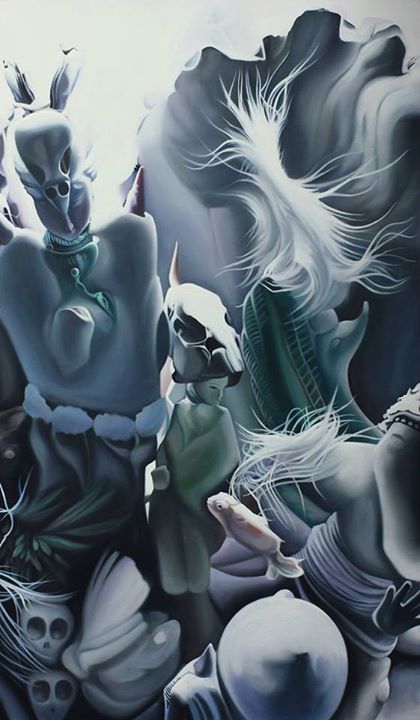
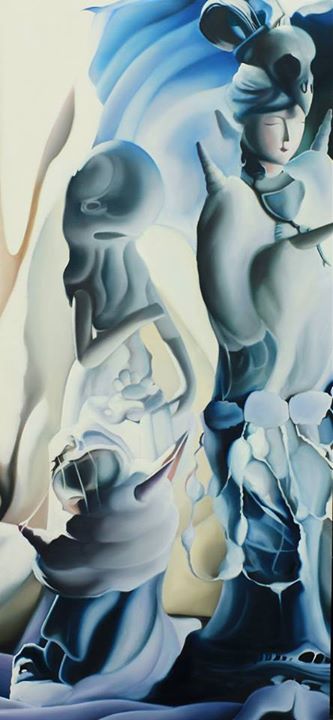
While she was pregnant, and in the first year of Dora’s life, Mon took time away from her painting. 2013 was the year she really started again, and the results have been amazing. She has a solo show in London next year, and as well as a few smaller paintings and a range of drawings, she’s made these two stunning large-scale paintings, which I think are amongst the best work she’s ever done:

BATALLA DE LOS GIGANTES                                                          BALLENA Y GEISHA

BATALLA DE LOS GIGANTES   ballena y geisha

2013 also marked our five-year anniversary – it’s been a blast.

3. Performing live

I’ve never been good at public reading, and this year I set myself the challenge of improving. I went on to read my work twice at Spotlight in Lancaster, once at Kendal’s Spoken Word, once (performing from memory) at Dreamfired in Brigsteer, and once at the Flashtag 2013 writing competition in Manchester, where I won second place. My confidence grew with each reading, though I still feel I’ve a way to go.

I also attended a spoken word workshop run by the excellent Brindley Hallam Dennis. One of the activities he set has changed everything: he had other members of the workshop read our stories. The lady who read my flash piece ‘Marrow’ performed it at a third of the pace I do. She relished every word, and it was three times better as a result. I haven’t performed since then, but I’m going to practice reading with that sort of gusto at the next opportunity. I’m booked in for a 20-minute slot at Spoken Word in February, and I’d like another couple of events under my belt by then. My goal has evolved a little, too: what I’m aiming for now is something closer to outright performance than simply reading. That will come with confidence, and confidence will come from practice.

4. Seven Seals – Plan of Salvation

After a whopping 18 months, I finally finished making this music video for amazing psychedelic synth punks Seven Seals. They’re an extraordinary band, and it was an honour to be involved. They’re working on new material, which will hopefully be available in 2014 for their ten-year anniversary gigs.


5. Amy Hempel – The Dog of the Marriage

Quite simply, the finest collection of short stories I’ve ever read. Hempel’s writing is so sensitive, so honest, that it infuses her stories with devastating grace. Unmissable.

6. Les Revenants

This French drama is the best thing I’ve seen on television in years, remarkable for its intrigue, restraint and power. It delivers on every level, exploring an extraordinary narrative without needless exposition to unravel the mysteries of the Returned, all of whom are troubled in different but connected ways. The locations and cinematography are stunning, while the soundtrack by Mogwai is my album of the year. There’s a startlingly surreal lucidity to the conclusion, and I think they could have left it there; but I’m delighted to see a second series in the works. Here’s the trailer for season one:

In TV terms, an honorable mention also goes to Game Of Thrones. Tyrion Lannister might be the finest character ever committed to screen, and the Red Wedding haunts me even now.

7. Success for friends

It’s been a good year for many of my friends and peers, too. Iain Maloney landed an agent and a book deal with Freight, Kirstin Innes found an agent, Anneliese Mackintosh got a book deal, Kirsty Logan landed a book deal and won everything in the world. Friends Andy and Gemma had a baby boy called Miles, and Ali and Iona had a little girl called Inka. There have been a lot of richly deserved congratulations this year. Good work, team.

8. Cats

Yup. Two of them. I wasn’t sure, at first, but then we met these two cats in the Wainwright Animal Rescue Centre, and it was an easy decision. They came to us with the names Remus and Teddy, which we’ve kept. They’re brothers, about three years old, and half-Persian. They’ve been an amazing addition to our house. They are incredibly relaxed and friendly, and they actively seek our company. That’s especially welcome when I’m having a writing day alone at home.

1174754_10153244876455551_211086219_n

9. Holiday in France

We were overdue a break, and this fortnight in France was exactly what we needed. We camped in half-a-dozen places, the best of which was Green Venice, a vast network of canals, ditches and overgrown waterways, crawling with vines and willows, alive with dragonflies and katydids. It was an extraordinary landscape. I read more in that fortnight than I’d managed in four months. Best of all, the holiday gave me enough mental space to plan my next novel, which will be called Grisleymires. That’s now blocked out on Scrivener, waiting for my next writing day.

10. Another year with Dora.

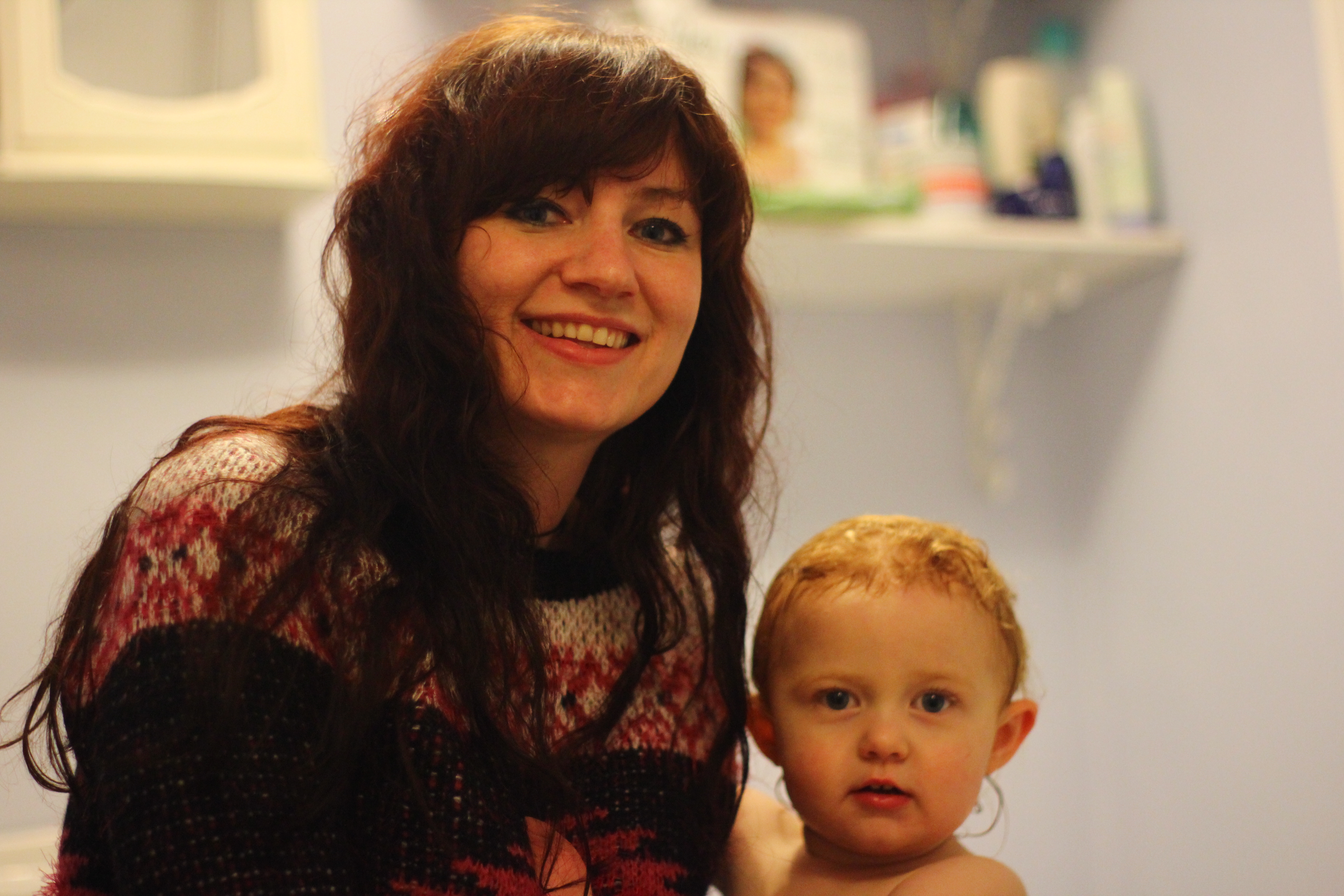
In their first year, babies are basically little puddings. Awesome little puddings, but puddings nonetheless. In their second year, they gather the basic tools to discover the world. And in year three, that toolkit expands exponentially; physically, vocally, intellectually and emotionally. Going through that with Dora has been nothing short of a joy. Seeing the world through her eyes has made me reevaluate so many things for myself. Her conversations leave me in stitches, and everything about her makes me smile. And she hasn’t been to A&E this year, which I consider something of a triumph. Though there’s still a week of 2013 left.

IMG_4758

So that’s my Top Ten. It’s been a good year, and 2014 is alive with possibilities. I might even pop some resolutions up in a few days.

A century of…

I realised, after posting this video about a ballerina dancing on butcher knives, that I’d hit a hundred posts on the blog. A century is still pretty arbitrary, really, but it’s as good a place as any to stop and think about why I keep a blog.

I started writing the blog six months ago to track the progress of my novel. The book was called Riptide Heart, back then. It’s now called The Visitors, and it will be published by Quercus Books in 2014. All that has happened in the lifetime of this blog. I’ve tracked my highs and lows and uncertainties throughout the publication process, from finding an agent (a year ago) to signing the contract (last week).

As well as the novel, I’ve written a lot about reading my work live, and the struggles I’ve had with my nerves. Each of my various readings has been painfully revisited, but that return has helped me filter and understand the experience. I’ve also explored my decision to gather my flash fiction into a collection, which is called Marrow, and will almost certainly be self-published, and teaching myself InDesign to lay it out professionally. (More on this soon! As I approach the end of my redraft and clear my backlog of film jobs, I should have the time and space to push ahead and get this wrapped up and printed.) I’ve posted published and unpublished flash fictions, and talked about my writing processes. I’ve written about my film work, and catalogued some of the things that I find inspiring or magical. I’ve posted galleries of the threshold spaces I’m so obsessed with.

All in all, then, my blog has ranged far wider than I ever thought it would. More than anything else, I’ve been surprised at how personally I’ve addressed some of these subjects. When I started, I expected the blog to be fairly analytical, for want of a better word; dry, professional. But in struggling with my live performance readings, and in wrangling my novel redraft, I’ve found myself at times alarmingly open about how I feel about my work. I like that the process of writing has taken me in that direction quite organically.

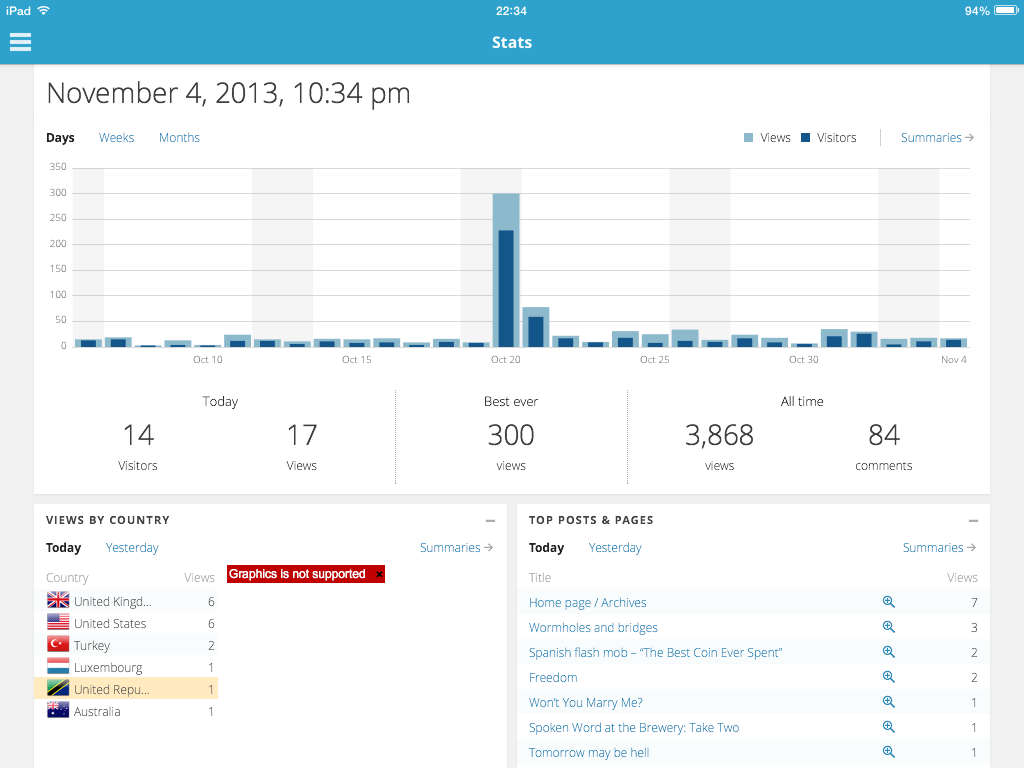
One of the joys of using WordPress is browsing through the stats, which tell me what brings people to the blog, what they look at, and often where they come from. I’ve had visitors from as far afield as Mozambique and Mongolia, searching for everything from devil dogs to gay porn. (Hopefully not everyone will be as disappointed as those two internauts.) I’ve had a week without any views, then hundreds of visitors the day Neil Gaiman retweeted this post about libraries. Have a look at this screen grab and see if you can guess which day that was:

photo

The two things that bring people to the blog most often are on the periphery of my interests; this post about a nursery rhyme and this post about a WW2 fighter pilot preserved in a peatbog. People have searched for Bancree, which is the fictional Scottish island I created for The Visitors, and for novelist friends like Iain Maloney and Ali Shaw. Lots of people come to the blog looking for information about my agent, Sue Armstrong at Conville & Walsh, and my publisher, Jane Wood at Quercus.

More than anything else, though, the blog is for me. It’s how I filter my ideas and monitor what I’m doing. Writing about my life is what I need to live my life.

Grimm’s Sheesha

peter-full

Last night, storyteller Peter Chand performed his show Grimm’s Sheesha at Dreamfired in Cumbria, and it was bloody brilliant.

A sheesha is a mirror, and you probably all know about the Brothers Grimm; throughout the 19th Century, brothers Wilhelm and Jacob Grimm collected and published folk stories from across Germany and beyond. Their books preserved many – if not most – of our classic fairytales. When they feel so intrinsically European, hard-wired into grey stone and rain and winter, it’s crazy to discover that threads of those same tales have existed in India for centuries. In retrieving and retelling the original stories, Peter’s show gives the Grimms an Indian incarnation – or, more accurately, reflection – and hence the titular sheesha.

Just like people, stories evolve as they travel, building on a core, becoming something new, fitting themselves around each new place. The same elements are plain to see in the fairytales of both cultures – family discord, revenge, blood, luck, magic – but Peter’s stories explode with language and laughter. His characters flit between between Punjabi and English – sometimes with translations, sometimes without – and the seamless interplay of both languages is dizzying, dazzling, mesmerising. The stories balance violence with humour, using voice and movement and body language and expression to conjure holy men and jealous sisters, gods and donkeys, poison and pakora, loom shuttles, bloody shawls and magic mango stones.

It was an electrifying show and an inspiring night. By the end of the performance, my face ached with so much smiling and laughing. I can’t do it justice; hunt down Peter Chand and hurl yourself headfirst into his stories.

I’m fascinated by the evolution of stories, and it was a delight to chat to Peter after the show and hear more about how he’d found and developed the show – and how the show had then evolved again, changing around him with each new performance. His medium is more dynamic than mine, but that idea of evolution is something I can understand; it’s there in my inability to let go of written work, returning to it time and time again, even years after publication, tweaking and cutting and expanding, improving, building towards something ever new. We also spoke about his performance style, which is both relaxed and spontaneous – at one point he said “Bless you” to an audience sneeze without breaking the suspense – and he was kind enough to give me some advice on how to improve. I’ll never be a storyteller of his calibre, and that’s not really where I want to take my work – but I absolutely strive to read and perform my stories with greater confidence, and it was useful to talk to a master! Peter also put me onto Festival At The Edge – the country’s oldest storytelling festival – which I think we’ll try and attend next year.

As a tangent to all this, my friend (and real-life Lovejoy) Ben Piggott claims there are actually only two stories: 

  1. Boy/girl leaves to find fortune
  2. Trouble comes to town

I’ve tried, but I can’t think of a story worth its salt where one or both of these sound hollow. And yes, they’re vast catch-alls, but that’s okay, because they’re also entirely true.

For a number of reasons, I’ve stalled on the novel redraft since discussing Freedom. As of today, I think I’ve found a way back into the light – but I need to brew on it for a couple of days, so that’s for another post. For now, here’s an illustration from The Old Woman In The Wood.

the_old_woman_in_the_wood

Seven Seals – Plan of Salvation

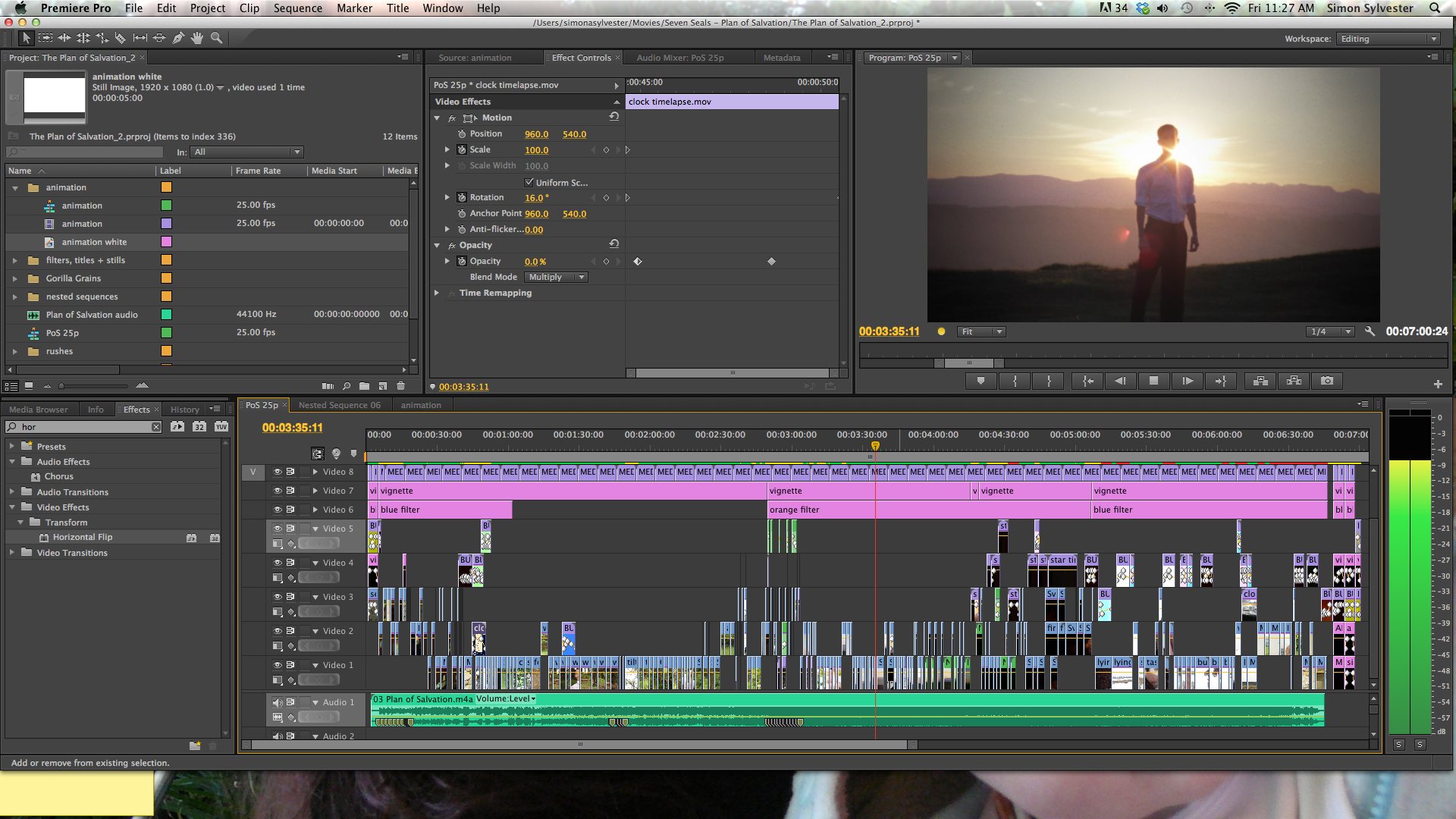
As well as teaching film, I make the occasional video, too. This is a music promo for local legends (and one of my favourite bands) Seven Seals. I’m slightly ashamed to say it’s taken me 18 months to finish, but then again, I have a child to take care of. And a redraft. The picture below is a screenshot of my final edit. You don’t know need to know how it works to recognise that it’s been tricky. But for all the work, I’ve enjoyed it. The song is taken from an amazing E.P. called As Above So Below, which you can (and should) buy on iTunes or Amazon. The first Seven Seals album, Owl Cage, is free to download here.

PoS

Filmmaking has had a massive impact on my writing. Where I used to strive for an internalised immersion, revealing narrative through stream-of-consciousness, my experiences in making and teaching film have helped me understand the simplicity – and power – of visual storytelling. Thinking of a novel like a movie helps a lot; in structure, in geography, in character, in description, in delivery.

Speaking of which – back to the writing. This novel won’t redraft itself. Unfortunately.