Edinburgh International Book Festival

I haven’t really had a chance to share this yet, but I’m thrilled to report that I’ll be at Edinburgh International Book Festival this year, appearing alongside the intimidatingly talented Chigozie Obioma to discuss his debut novel, The Fishermen, and mine, The Visitors. This is really exciting, and very humbling. I’m delighted to be contributing to such an amazing event.

I have also just discovered that all debut novelists are entered into the First Book Award. I’m up against some outstanding competition, so if you’ve read and enjoyed The Visitors, I’d be hugely grateful for your vote: mosey over here for the full longlist.

Crumbs chief!

Baby steps

In the end, I decided to start again. I didn’t feel I could salvage enough of The Hollows (take one) to make it worth the while. I was certain I’d be left with a scrappy patchwork of pieces, and that joining the dots between them would give me more trouble than reward – as well as colouring whatever came next with so many prior wrong turns. So I started again.

As I mentioned in my last post, I probably shared too much about The Hollows (take one) last year, and I’m not going to to do that again. I feel like I got ahead of myself, and jinxed it. This post is more of a reflection on how freeing the Kate Mosse incident has been for me. Having decided to bin all 30,000 words of the first draft, I was a little intimidated about starting again. But the huge amount of time I spent with pen and paper in Thailand – dozens of hours – gave me the space I needed to settle myself. Having transcribed thousands of words of notes into Scrivener, I found I had a chapter structure. And having fleshed out each of those chapters, joined a few dots and bridged a few gaps, I realised that, with as much luck as design, the narrative was essentially complete.

I found myself almost arbitrarily drawn to a chapter somewhere in the middle of the story, and tentatively started work. I’ve now had five full writing days on the second draft, as well as five or six mornings before work, and somehow I’ve written 23,000 words. Here’s the thing. I’ve written damn near the same inside two weeks as I managed in all of last year put together, except it’s better. That’s left me feeling slightly staggered. What the hell was I doing last year? Did I really wallow so much in the first draft? For a whole year? What made it so hard? I can’t remember. I suspect, in essence, it’s because I was writing fundamentally the wrong story, and I therefore owe Kate Mosse a debt of thanks.

Nothing guarantees the quality of what I’ve written so far, other than I’m feeling curiously relaxed and cautiously happy in what I’m doing, and excited about what comes next. That’s a far better measure than word counts. (Although, if I’m being honest, word counts help – as long as I’m content with the words.) I don’t even yet feel that I’m immersed, that I’m drowning, and that’s what I’m pitching for, that’s what I want. These first sessions are building my sense of the world. It’s knitting together geographically, culturally, socially. It’s growing. It’s almost ready to get lost in.

2014 and all that

This year has been both breathtakingly excellent and occasionally extraordinarily hard. I’m focusing on the good stuff though, because we’re all spinning through the mind-boggling vastness of space on a giant oxygen machine and really, when you think about it, where’s the sense in dwelling on the rough?

So here we go; in no particular order:

1. The Visitors being published

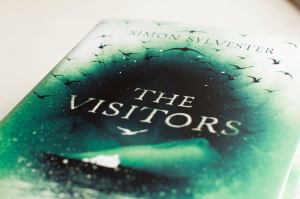
The culmination of two years’ work and the start of an awful lot more to come; in June, the wonderful folks at Quercus Books were kind enough to publish The Visitors. I wrote about the publication here, and it kept on running. Somehow, people keep enjoying it. I’ve summed up the reviews here, and there are reviews from actual real life readers on Goodreads and You-Know-Where. Writing was hard, editing was very hard, and now it’s out there in the wild – it doesn’t need me any more, if it ever did. I haven’t really come to terms with the book being published, other than it makes me scared, humble and really, really happy. Writing is all I want to do, but sometimes every step feels like the first step.
visitors

2. The Hollows

In the twelve months – to the day, madly – since I started, I’ve probably written about half The Hollows. Unfortunately, for reasons like this and especially this, I’ve had to cut gigantic chunks of it; so much, in fact, that I’ll basically have to start again next year, and crib the pieces I can still use from the manuscript. This would be a very bad thing, were it not for how excited I am about those pieces that are left. It’s been bruising, definitely, but the process is now beginning to tip me in positive directions I probably wouldn’t have gone by myself, and that’s terrific.

3. Flashtag short short story slam

Over the last two years, I’ve been trying to read more of my work aloud; I pushed myself further this year by entering a story slam in Manchester. I memorised my three stories so I could concentrate on performing them, rather than reading them, and I was lucky enough to win. That was great, and I was delighted, but what really blew my mind was the culture of live literature I witnessed in Manchester. It’s raw, it’s funny, it’s friendly, it’s immediate. It’s everything short stories and poetry and flash fiction should be about, and it completely affirmed the value of storytelling as an act of community. Stories are a thousand things, and one of those things is churches.

4. Clowning

Way back in February, I attended a clowning workshop run by Belgian storytelling maestro Fred Versonnen. This is the best £25 I’ve ever spent, and it’s true to say that my life hasn’t been quite the same ever since. I see things differently now – I write differently now.

fred

5. The Year Of The Whale

I started this novella more than five years ago. Getting it finished was a thrill – I surged through the final chapters, and I’m pleased with it. It still needs redrafting, but I’m not quite ready to get back into it. It’s waited five years – it can wait a little longer.

6. Marrow/Cerys Matthews reading Circle Stone

Finishing Marrow was another big deal in my writing year. I haven’t written as much flash fiction this year, because I’ve been mentally wasted from work, and that kinda gets in the way, but I did, finally, finish and self-publish a flash fiction collection called Marrow. Of the hundred I printed, I have about twenty copies left, and people seem to like it, which is a source of constant wonder. I wrote about my decision to self publish here. I sent a copy to the excellent Cerys Matthews, and because she’s absolutely awesome, she read out one of the stories on her BBC6 Music show. This is, and will always be, the coolest thing that ever happened to me.

7. Gruff Rhys at Kendal Library

Gig of the year, hands-down. I wrote about it here, but in summary, Gruff was majestic, wise and funny.

8. Greece

One of my favourite ever holidays. A week of sunshine, warm evenings, seashores, swimming and the boundless comedy available on tap from my daughter Dora. We had a fantastic time: ruins, eagles, Mythos and pizza. I love holidays because I’m with my favourite people, I get to read a lot, and I get to think a lot. It went like this.

9. Friends

It’s been another good year for my friends. Iain Maloney published First Time Solo, his excellent debut novel, with Freight Books; also with Freight, Anneliese Mackintosh’s debut novel/story collection/autobiography Any Other Mouth was released to stupendous acclaim, going on to win the Green Carnation Prize; Salt published one of my books of the year, The Rental Heart by Kirsty Logan; Kirstin Innes landed an agent and then a publishing deal for her debut novel Fishnet; and I was lucky enough to read a draft of Ali Shaw’s new novel, The Trees, which is simply scintillating. I’m delighted that Bloomsbury are going to publish it, because Ali is a wonderful human being, an outstanding writer and a great friend.

10. Getting married

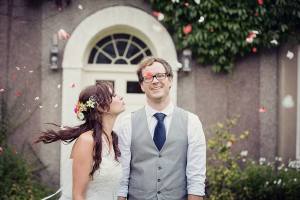
Just amazing. We did damn near all of it ourselves, and when I say ‘us’, I mean that I did 10% after I’d finished work, and my tireless, hilarious, wonderful, perfect new wife Mon did the rest. It was a lot of work to pull it all together, but we basically hosted a mini-festival in a back garden with a marquee, a stage, a band, a PA, scores of hay bales, lighting and decoration. We then partied till the following morning with our wonderful friends. My brother gave what was widely considered to be the best best man’s speech anyone had heard, and local legends Seven Seals played their very finest. It was phenomenal. What a day – a thousand thanks to everyone who brought it all together.

Mon is my everything, and I’m beyond proud to call her my wife.
si mon

So there we go. It’s been a good one, despite the harder stuff. Some of the things that have knocked me hard – like the Hollows, like the Scottish independence referendum – will come around again, and next time we will get them right. And other things – like working too hard – will change, because they have to.

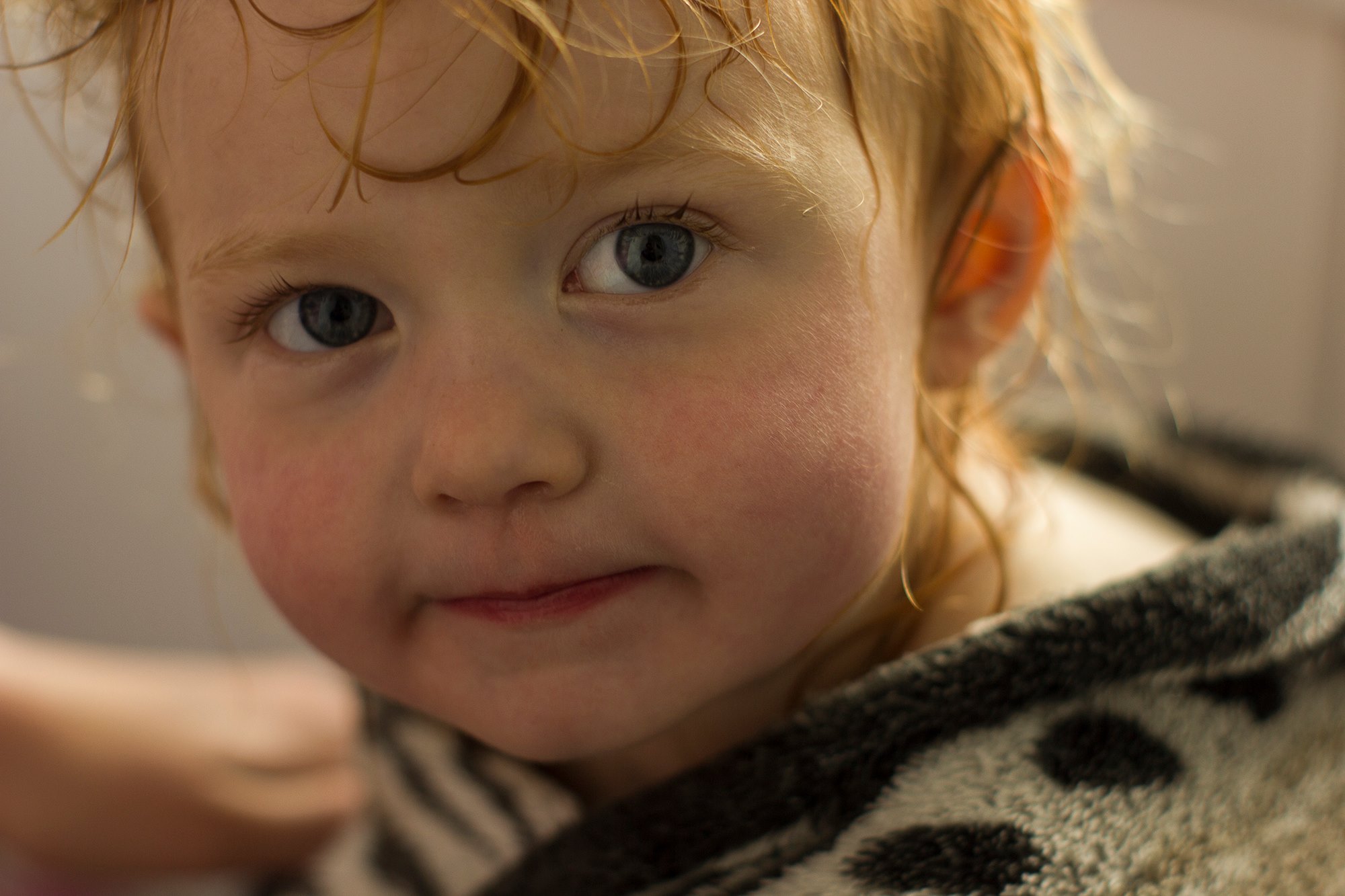
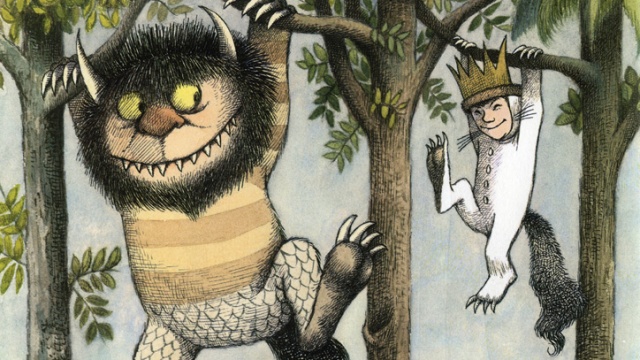
Dora’s gone to bed. This is the first year she’s been old enough to really understand what’s going on. We helped her write a letter to Santa, which she signed herself, then made sure to leave a whiskey for Santa. (Jura, in case you’re asking. Santa’s quite particular about that.) I read her Where The Wild Things Are, and we roared our terrible roars, and gnashed our terrible teeth, and she asked me what the words mean: “…and …it …was …still …hot.”

These are the moments we’re working for.

Happy Christmas, folks.

dora

A tangled ball of things

I’m absolutely delighted to say that The Visitors has taken first place in the Not The Booker prize 2014. Run by The Guardian, the competition is presented as a slightly tongue-in-cheek parallel with the Man Booker Prize. The actual prize, for example, is a mug:

The Guardian cup prize for website.  Photo by Linda Nylind. 18/8/2011.

It’s taken an astoundingly long time to get this far – the first nominations were something like three months ago – and the way it accelerated into the final week was unnerving. The prize is awarded through a combination of public votes and a judging panel. After an agonising week of voting, The Visitors was neck and neck with Tony Black and his novel The Last Tiger (which sounds amazing). With the vote tied, we were awarded a point apiece, which left the three judges to reach a decision during a live video discussion about the shortlist.

I left work early and cycled home to watch the online stream of the discussion. By the time chairman Sam Jordison asked the judges for their final votes, I found myself pacing the room, wanting to know, not wanting to know. The anticipation was driving my heart out through my chest.

This is how it went:

*

So there we have it. It’s still sinking in, even four days later. After the decision was announced, Mon came home and took me out for lunch. That was the right thing to do. There’s no way I would have managed any work that afternoon.

It’s a truly humbling thing to happen, and I feel both proud and grateful that my book has had so much support. Please consider this a massive thank you to anyone and everyone who has bought, read, enjoyed, voted or commented on The Visitors. You’re amazing!

Releasing a book into the wild is a terrifying thing to do. I spent so long wrapped up in Bancree by myself that it still feels raw to share the island with other people. Knowing that folk might like my story conjures a huge, tangled ball of things: relief and disbelief, elation, a lurch of adrenaline.

I’m absolutely thrilled, but I’m also looking ahead. I have more books to write. Not The Booker coming to an end coincides with my backlog of film jobs beginning to ease. In a week or so, I think I can get back to writing regularly. It’s been months since I had concerted time to work, and I can barely remember big chunks of The Hollows. My first few sessions will be stripping things away, I’m sure, and clearing the ground to start again. I can’t wait, and I’m glad to be returning on the right side of Not The Booker.

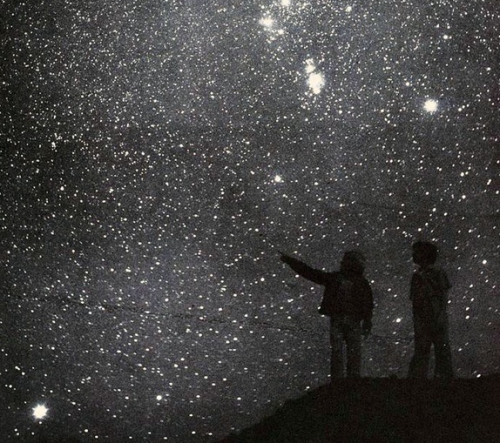
Thank you, people. You are a galaxy of stars.

stars-500x443


Self-publishing

Natalie Bowers, editor of the excellent picture/fiction mash up site 1000 Words, has written a wonderful review of Marrow. It’s always fantastic to have a reader completely get my stories, so I’m really pleased to share her thoughts on the collection.

After reading the book, Natalie asked me to write a little about why I decided to self-publish Marrow. If you’re interested in traditional vs. self-publishing, then lay on, Macduffs, and discover why I chose to take that path.

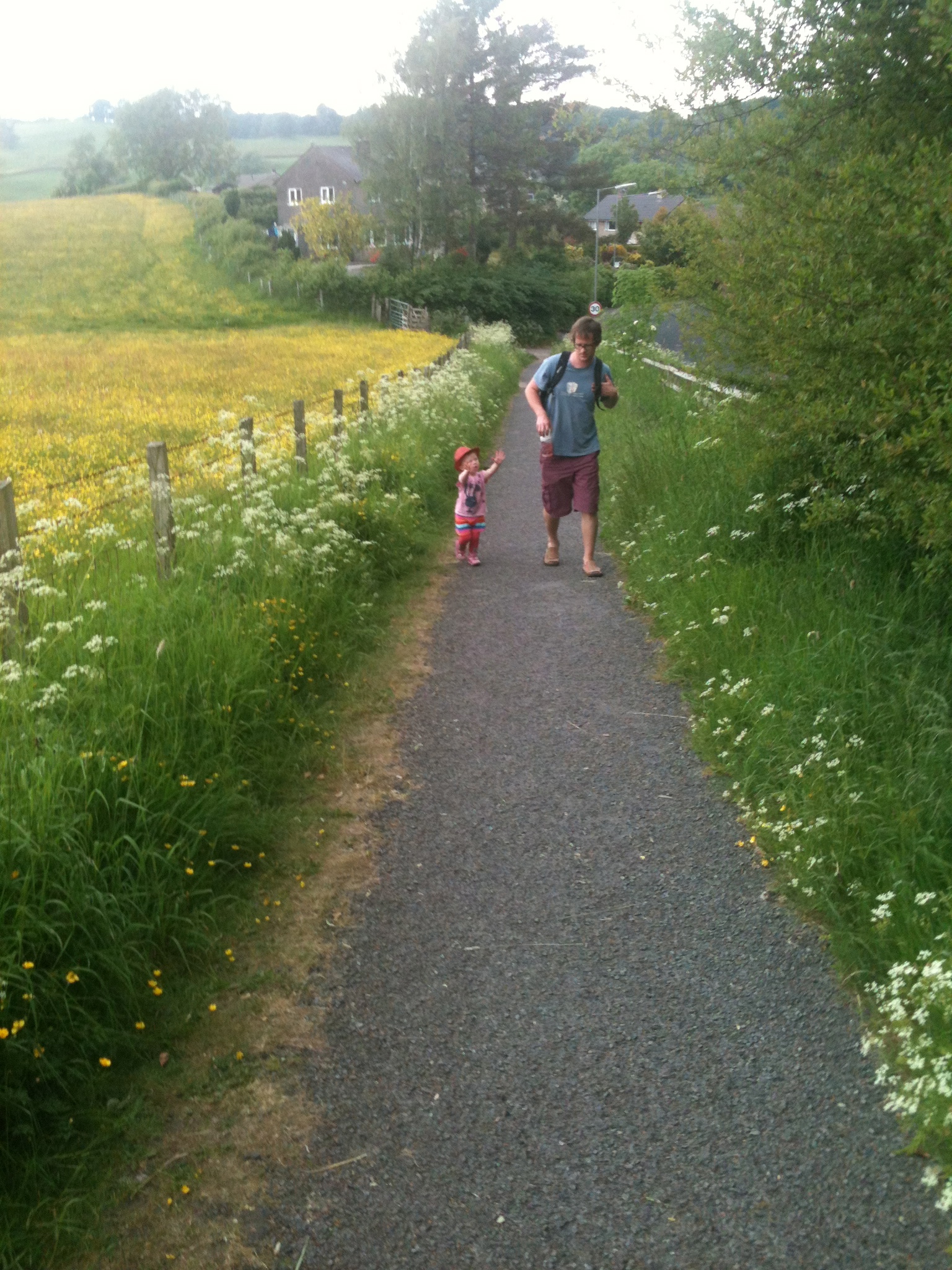
This is a picture of my daughter and I arguing on a path.

IMG_2330


Not The Booker

I’m cautiously delighted to say that The Visitors has been shortlisted for the Guardian’s Not The Booker prize. It’s been a rather bruising process to get this far. The longlist was very long, featuring a hundred novels. Not The Booker is infamously decided by public vote, which leads to all kinds of hijinks from authors, publishers and agents drumming up support. That’s a hundred clusters of psychic tension detonating online simultaneously. No wonder things get heated.

I was in Greece for the first two days of the week-long voting window, by which point there were already clear leaders. With five days to go, I started doing what most of the others had done, and announced my part in the longlist as loud and far as I could. I was fortunate that a lot of people who’d read and liked The Visitors voted for me, and I managed to reach the shortlist. I’m extremely thankful and humbled by the support for my book.

The shortlist holds some intimidating competition – genuine literary titan Donna Tartt, no less, as well as Louis Armand, Mahesh Rao, Tony Black and Iain Maloney. I’m a little concerned that The Visitors seems to be the only work of genre fiction on the list; I’m worried it won’t be deemed worthy enough. And now I’m actually up for review, there’s the prospect of this sort of evisceration at the hands of Sam Jordison, too. Ouch. All in all, I’m expecting dark things from the Guardian readers – which begs the question: why bother entering?

I’ve been thinking a lot about this lately. The first time my agent and I went to meet my editor at Quercus, we discussed the importance of promotion and self-promotion. It’s simply a mandatory part of an author’s life, now – especially a debut author. Publishers are spread thin. They can’t afford to spend time plugging new writers, and that means new writers have to plug themselves.

It’s unfortunate, then, that I’m not great at selling myself or my work. I feel embarrassed at intruding on other people’s time, and I despise arrogance so much in other people that I cringe at anything that could make me seem arrogant. It took months of goading by my wife before I summoned courage to introduce myself to my local library and local Waterstones. On both occasions, I fumbled through a minute of apologies before finding a way to explain who I was, that I had a book out, and that I wanted to say hello. They were perfectly nice, and keen to discuss running some future events, but the process leaves me feeling weird, and even a little cheap.

If I’m ever going to find a way to write full-time – or, being more realistic, to better balance my life and jobs around writing – then this is the sort of thing I need to do. As my Dad says – you’ve created a product, and now you need to sell it.

Books are products, for sure. I think stories are far more than that. Books are the vessels that carry stories, though, so maybe I’m splitting hairs. I know that I want to write stories, but also that I don’t really want to sell my own books, because it makes me feel so uncomfortable; I know that I want as many people as possible to read my work, and that selling my own books, and selling myself, is one of the only ways I can find to keep writing my stories. For most writers, that’s the binary pair of modern publishing.

When I try to reconcile these two distinct strands of my industry, I have to accept that all I want to do – what I wish for every day – is to write full-time and get these stories onto paper, into people’s heads, into people’s hearts. Whether I like it or not, that means playing the game.

I don’t know how it’s going to go, but my money’s on Tartt or Black.

Weird days. Remember Remember have been helping:


Tipping

I had two brilliant days on The Hollows last week, and it’s entirely thanks to my friend Ali. I’d just finished reading a draft of his new novel – which is absolutely scintillating and is going to be massive – and called to talk to him about it. We spoke for a long time about lots of things, and he ended up clearing my head of cobwebs I didn’t know I was carrying.

This is how it is: I’ve been enjoying my first forays The Hollows, but it’s been tough going in places, because I’ve been trying to build the story chronologically, making each current chapter as clean and tight as possible before developing the next. It was only through talking to Ali that I remembered that I don’t write like that. I’d forgotten that I’m writing for me. Or, as Ali put it: “Writing’s a big fuck you to the world.”

This is an abstract thing to explain to myself. It’s not like I was writing someone else’s story, or writing with someone else in mind. But I think I’d spent so long redrafting The Visitors that I’d forgotten that it was rough, too, at the beginning; and, in starting to write The Hollows, I essentially picked up the same point of bug-eyed perfectionism that I left The Visitors. I was working back-to-front. I’d forgotten that some of whatever strength I might have as a writer comes from rewriting – from redrafting and reworking. I’d forgotten the unfolding joy of a first draft – of cutting loose, of jumping feet-first into all that glorious blank white empty space. Talking to Ali reminded me that this is my story, and I need to tell it my way.

When I had my next writing day, I sat down, disabled the internet, and raced through 3,500 words. The next day, I wrote the same again, as well as tearing apart swathes of what I’d already written, rebuilding the plot of the first third. It was exhilarating. I ignored the chronology and jumped ahead to work on scenes and chapters I’ve been dreaming of for months. In writing them, brand new scenes unfolded as though they’d been there all along. I worked late, and it hurt to blink by the end of day two, but I’d turned 18,000 words of clunky plot into 25,000 of viable draft. There’s a forever still to go, but the story is starting to move.

It’s funny how time and memory contrive to fool us. The Visitors didn’t write itself until I was well over halfway through. The first 50,000 words were hard, and the second didn’t need me there at all. That’s the bit I remember. Since then, I’ve been so immersed in my redrafts that I’d forgotten it took six months of slog to hit that tipping point.

First drafts are where the fun is. I’m going to dive in and get messy, and rejoice, and despair, and laugh, and burn myself out, and despair some more, because that’s how I live, and that’s how I write. It’ll take months from now, or years, but I finally feel like I’m getting The Hollows on course for where I want to go.

timthumb.php

Flow

On a good writing day, I write 2,000 words. When I’m working well, that’s fairly consistent. Whether it’s 1,800 or 2,500, I always seem to end up in the ballpark of 2,000. In terms of quantity alone, a month of 2,000 word days is a 60,000 word manuscript (which is the philosophy of NaNoWriMo, of course).

Obviously there’s an awful lot more to it than that – 2,000 a day doesn’t include all the back-peddling, redrafting, tea, editing, notes, research, cursing, blogging (!), procrastination and rewriting – and it doesn’t include the bad days, when it’s a struggle to carve out 400 words. I have plenty of bad days as well, especially at the start of a new project, when I’m still feeling out my way, finding the right path. For context, I don’t believe that the key to good writing is simply writing and writing and writing until something mystic clicks and the good stuff comes pouring out – check out J. Robert Lennon’s ‘ass-in-the-chair canard’.

When I started writing The Visitors, it was completely plotted out. There were about thirty chapters, and each chapter had a paragraph, or maybe just a line, detailing what would happen. That plan became redundant within weeks, if not days. By the time I was even a quarter of the way through, my chief antagonist had switched to someone completely new, and the plot expanded hugely – the final draft has around sixty chapters. But the biggest changes lay in how the characters escaped me. As I wrote them – as I spent more time with them, and came to know them better – I realised they were evolving. They were doing things I hadn’t expected, but those things became inevitable and essential as their personalities developed. Their autonomy dictated their story. Once that happened, and they were set upon a path of their own making, the manuscript generated a momentum that I could not control. In the final two or three months, I’d regularly write 4,000 or 5,000 words in a session. On the last day of writing, I wrote 11,000 words in 14 hours. That surge, that flow, was intoxicating. I drowned in my characters, drowned in the island I’d created. The story became a gyre, and I was tumbled in the centre.

I’m now about 16,000 words into The Hollows. On each of my last four writing sessions, I’ve cut around 1,000 words, and written around new 1,000 words. The overall count isn’t changing much, but I think I’m making progress. I’ve learned a number of things along the way, about writing, and about myself. Because I had to go through such an excruciating redraft with The Visitors, I originally tried to plot out The Hollows as tightly as I could. Each chapter had multiple paragraphs and notes, with detailed ideas about the how the story would unfold. It was comprehensive. I was decided: this time round, the novel was going to write itself.

I should have known better. I raced off to a strong start, writing the first 10,000 words in three days. Then I applied to the Northern Writers’ Awards for funding towards a research trip. As part of the application, I had to include a synopsis of The Hollows. Seeing the plot condensed into a single page, I realised at once that the story was too tight. It had no room to breathe – I’d strangled it with structure. It was far too dense. I ditched all my planning and rewrote the synopsis for the purest story I wanted to tell – about a man who loses his memories, and the woman who goes to find them – and sent it off. I haven’t heard back yet, but regardless of how my application turns out, the process of writing a new synopsis was revelatory, and for that alone I’m grateful.

I want to start The Hollows right. Unravelling some of my first draft has been heavy going, but it’s important to me to know I’m on a better path. I’m getting there. I’m starting to meet my characters. I’d forgotten that I didn’t always know Flora, and Izzy, and Ailsa, and John – it took time to find out who they were. I’d forgotten, in the dizzying exhilaration of finishing The Visitors, that it wasn’t always so easy to write. The flow comes only after all the hard graft has been done.

On Friday, I finished my novella The Year of the Whale. That’s been five years in the making, including sessions when I’d struggle to chip away at 200 rotten words. But on Thursday, the day before my deadline, I soared through 5,000 words with joy in my heart. That was the flow, and I’d forgotten how it felt. I’d forgotten that I could feel so engrossed in my stories – that I could drown. That’s where I want to get to with The Hollows. That’s how I want to finish, whether it’s in six months or one year or two years’ time. But I know, now, that all the graft comes first.

My friend Ali Shaw believes you can’t know if a novel will go all the way until you hit 20,000 words. Author Matt Haig feels the same, but his mark is 40,000. Word counts only matter for the person counting. Like climbing grades, they measure nothing but an individual’s own sense of progress. They are a poor measure, perhaps, but they are all I have to mark my way: yan, tan, tethera.

The Hollows has been stuck on 16,000 words for weeks, despite long, hard days of work. I haven’t enjoyed that. I crave that sense of flow, when everything makes perfect sense. When I had that moment in The Visitors, I described it as a ‘glittering open highway’. I suspect I’m still a long way off reaching that highway in The Hollows, but it has truly settled me, on completing The Year of the Whale, to remember that the flow comes from the writing – not from the writer. From the story, and not the storyteller. For all the times I beat myself up about not working hard enough, not writing fast enough, not doing more – finishing that novella has been a gift. It has helped me remember why I write. I write to drown. To drown, I need the gyre. To make the gyre, first I have to fill an ocean.


A year in the life

I’ve just realised that my blog is one year old. I had no idea when I wrote my first post, about Quitting Writing, that I’d be blogging so often. It’s become the space in which I organise my thoughts, and rationalise this topsy-turvy journey to publication. A year ago, I had an agent and the first draft of a manuscript called Riptide Heart. A year later, the novel is called The Visitors. I’ve completed multiple marathon redrafts, worked myself into exhaustion on insane strings of 11pm finishes, and spent hundreds of hours thinking about the book. Looking back, finishing the first draft feels like one of the smallest steps on a road that doesn’t truly finish – once the book is out there, it will continue the journey without me.

The proof copies should be going out any day, which is terrifying and exhilarating all at once. Because my day job remains so frantic, my experience of publishing tends to occur to milestones. I’ve been incredibly lucky, but I sometimes wish I had more space to enjoy it. It feels like I lurch from one deadline to the next, and seldom savour the completion of a job. The blog has therefore become essential to me personally: in sharing and formalising the milestones, I’ve created my own map of the voyage. Thanks to everyone who’s visited.

I’ve really enjoyed sharing some of the sights along the way. Of all the things I’ve posted to the blog, I think this is the one that’s stuck with me the most. Enjoy: