My life in… Fiction

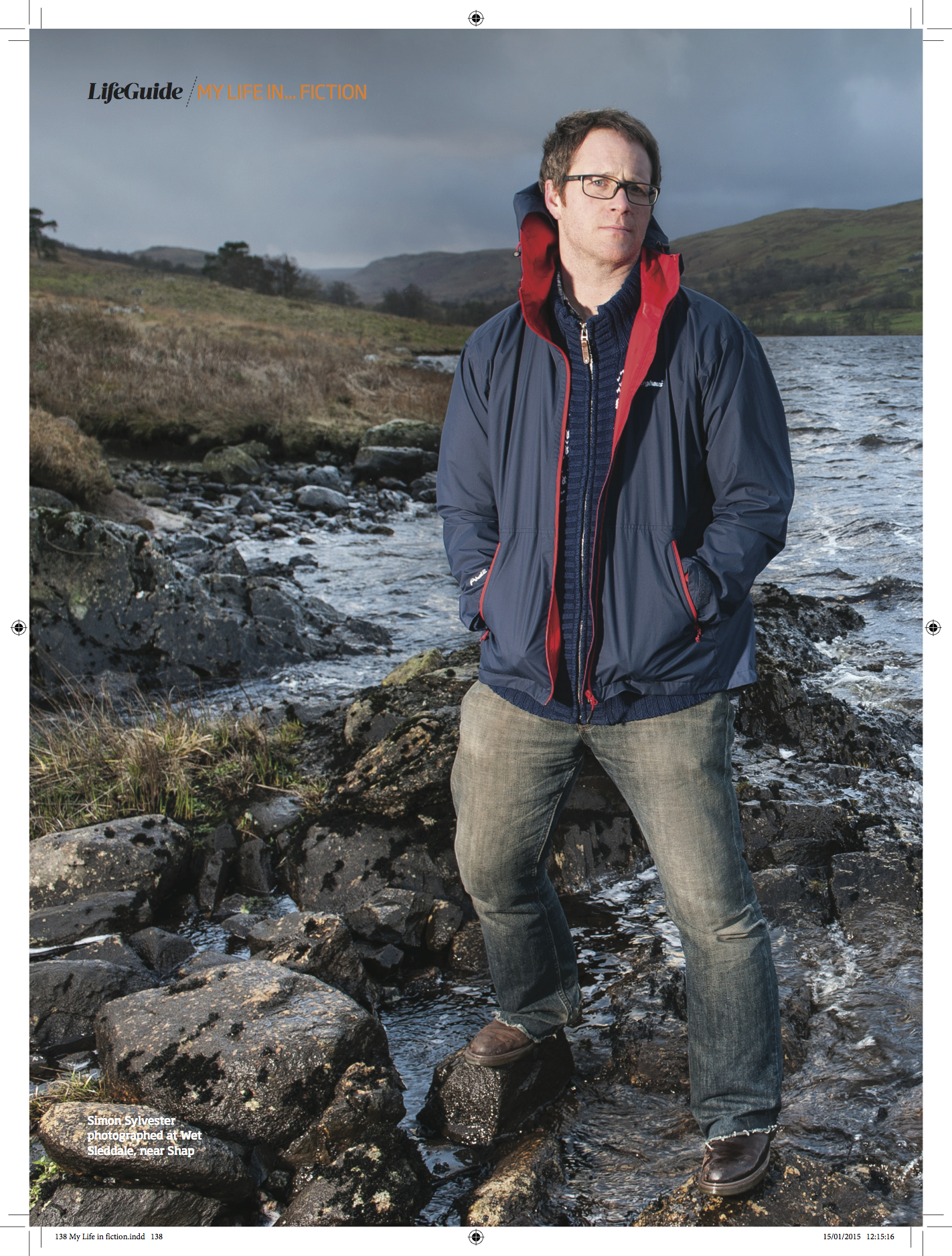
Here’s a nice interview I did with Sue Allan of Cumbria Life last year. It was very weird going out for my first proper photo shoot, standing on the shores of Wet Sleddale, in sight of the farm where Withnail & I was shot, clouds luminous with light, icy winds sweeping across Shap Fell. I even shaved and everything.

138 my life in...138 my life in... p2

Verbalise at the Brewery

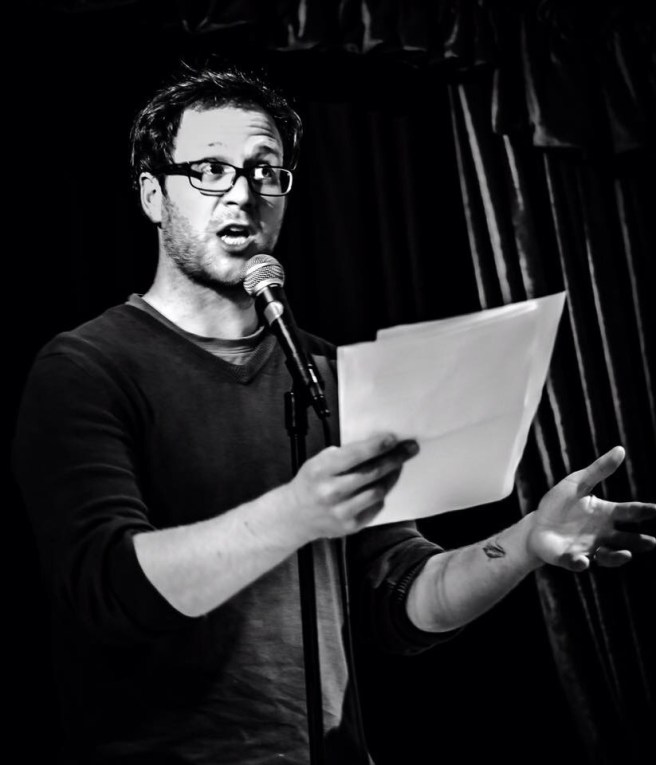
Last night was my third reading in a week, returning to Verbalise in the Brewery Arts Centre in Kendal. It was a quieter night, after a couple of busy ones, but I enjoyed it. I read from The Hollows for the first time – a draft piece about exploring something like a haunted house, which was a lot of fun to read. I also brought out a couple of older pieces for the first time. Books Like Grains Of Sand and Tank Trap are both flash stories in Marrow. I’ve never read them before, as I’ve always thought they were too weird, too abstract for performance. But after what happened with Dora and The Sea Tiger this week, I also wanted to draw a line in the sand for myself – to remember that magic and wonder is why I write. I’m not going to be scared of reading those pieces anymore. And in the end, I think they went better than I’d dared to hope. I’ve felt just slightly off the boil with my last few readings, but I enjoyed last night a lot. Dora’s given me courage. 

I also sold three copies of Marrow, which was lovely – I now have fewer than ten copies for sale, so if you want one, get amongst it while you can.

Next gig is at the end of the month in Lancaster – Working Title in The Three Mariners – be great to see some of you hobbitses there.


The Sea Tiger

Dora has a lot of favourite books. We try to keep them on her own wee bookshelf in her room, but as the days and weeks roll on after a big tidy-up, they inevitably gather in a strata by her bed. That teetering stack becomes an archaeology of her favourites. There are all sorts in there, but some books are never far from the top. Where The Wild Things Are. The Gruffalo, Zog, Room On The Broom. We’re Going On a Bear Hunt. The absolutely terrifying Tailypo. Mrs Gaddy & The Ghost. I Want My Hat Back.

Dora’s current favourite is called The Sea Tiger. We spotted it in Waterstones while we were in Scotland last month, and we couldn’t resist. It’s a extraordinarily beautiful book:

The dance

The Sea Tiger is Oscar’s best friend – his only friend. They do everything together. Where the Sea Tiger leads, Oscar follows. They explore, they have adventures, until a point comes where Oscar needs the strength to go alone. It’s a book about being brave.

To celebrate World Book Week, all the children at nursery were asked to bring in their favourite story. Dora chose The Sea Tiger without hesitation. We packed her off for the day, lunchbox and wellies, slippers and book. I didn’t think another thing of it until I came home that night.

‘Did everyone at nursery like The Sea Tiger?’

Dora thought about it, then remembered. Her face clouded over. ‘No. It’s a silly book.’

I was astonished. ‘What? Did someone not like it?’

‘They thought it was silly,’ she said, face scrunched into a frown.

I was dumbstruck. She was repulsed by her favourite book. Why would other kids have disliked it? Too weird? Too odd? Too magical? Compared to what? All the books she loves are weird and odd and magical. Children are weird and odd and magical. All that anarchy, that chaos, exploring and categorising this insane planet for the first time.

I’m not sure what I’m trying to say. I’ve been absolutely shaken by my daughter’s first true experience of shame. She was ashamed, ashamed of something that she loved. That’s heartbreaking. Three years old, and another step on the long path to adulthood checked off the list.

I read The Sea Tiger again, to myself. It is everything a children’s book should be. Surreal, wild, enchanting, transporting. It’s a book about imagination and courage. It’s a book about finding your own way. I thought of Robin Williams and that little spark of madness we mustn’t lose. I thought about what I write, why I write, seeking out those kernels of magic and madness and paying them whatever meagre tribute I can muster.

Dora wouldn’t even look at the book last night, but this morning I read it to myself until she came to join me. She was as entranced as ever, thrilled and enchanted by Oscar and the tiger and their undersea adventures. That helped, but I feel very much like it was a finger in the dyke, plugging up an overwhelming inundation of the ordinary, the acceptable, the normal. I hope Dora clings to her spark of madness. I hope she never lets it go. For her next years of play, of princesses and pirates, of dinosaurs and monsters and treasure and kittens, it’s up to Mon and I to nourish it, to feed it, to fuel the fires of her imagination. That is our role as parents: curators, not makers. But then will come the homework, the tests, the clothes, the friends and the not-friends anymore, Dad, the cycles of approval and rejection. When she leaves us, she’ll have to feed her own fires.

I know all this is melodramatic. I have always tended towards extremes, especially in my words, but that’s who I am. I hope we can give Dora both the space and the guidance to be whoever she is. And I hope, with every fibre of my soul, that she stays more a tiger than a princess.

Thailand two

Bangkok is smoke, Samui is steam. Flying into the airport was like flying into Jurassic Park. Even as we arrived, a cloudburst yammered on the tarmac, and the airport sprouted with gigantic, alien plants I’d never seen before, spines folded back on themselves like Escher prints. Samui has mountains in its interior, all pasted in dense jungle, crisscrossed with broken roads and coconut plantations. The coast is a ring road of shacks, tourist bars and holiday resorts. We stayed on the north-eastern tip of the island in an apartment overlooking the sea. On our first day, we saw Brahminy kites cruising above directly above us, hanging on the breezes, terrifying the coast. Tiny tailor birds perched on palm fronds beside the balcony, and myna birds hung upside-down from the rafters while we drank our beers and watched the sea.

I’m not very good at relaxing. Even the things I do for fun – writing, climbing, drinking with my friend Banks – are bruising, high-impact activities. So it was strange to have so much enforced time away from home, away from work, away from my computer. I even felt a little edgy during the first few days, but soon drifted into a gentle routine of swimming, reading, telling stories, and writing. The writing in particular was vital time for me. I sat with my pen and notebook and spent a few hours every day battering out what The Hollows is about.

Each night, we went to eat in local restaurants or hooked up with with friends. We’d gone to Samui in particular because our pals Helen and Michael were getting married on the beach. We spent a few days either side of the celebration with their excellent Australian mates – really good people. On the way back from their wonderful wedding, we were driven by the craziest taxi driver I’ve ever met. He laughed without pause for the entire twenty minute ride. He had a photo of his son on the dashboard.

‘What’s your boy called?’ I said.

‘His name is Mr. iPhone,’ said the driver, wiping tears of mirth from his eyes. ‘England is cold, cold, cold, cold, cold, cold, cold!’

Ang Thong marine park is an extraordinary place. After a stomach-churning ninety minute boat ride to the first of the two islands we were allowed to visit, we climbed lethally steep stairs to a viewpoint, overlooking a hidden lagoon on one side and the marine park archipelago on the other. With a little help, Dora counted off every one of the hundred and fifty steps, chanting all the way. Having climbed down to the lagoon, we told her about pirates and mermaids and the giant fish that eats little girls who don’t listen to their mummies and daddies about not swimming in the water because that’s what the sign says, poppet.

On the second island we visited, we stood no more than two metres away from wild monkeys. They sat at head height in scrubby trees above the flat white sand, eating figs. They weren’t even slightly interested in us. We watched them for a long time before they disappeared into the jungle. In the trees behind them, set back from the beach, was a shrine. Dolphin skulls, monkey skulls. Shrines everywhere.

The sea had blown up by the time we had to leave. We’d taken seasickness tablets, and Dora promptly passed out on me, but there were people screaming as this horrible damned tub of a boat skidded and crashed and shuddered in the waves. There were three Irish women on the boat – a mother and two daughters, I think – and they started singing in Gaelic, sweet and soft as nursery rhymes. I don’t know if it helped the shrieking Finnish lady, but it helped me. I believed them to be songs of sailors’ wives, praying for the safe return of their men from stormy seas. They might have been pop songs, I guess, but hopefully I’ll never know.

On our third-to-last day, we had the truly bittersweet experience of taking a Samui tour. Every island tour offers elephant and monkey shows. You can’t do it without. So we went, agreeing that we simply weren’t going to take part in the animal shows.

The first part of the trip was a visit to some extraordinary floating temples. We’d driven past them in tuk-tuks a dozen times without knowing they were even there, these gigantic statues of Buddha. That was special. I have no religious faith, but I respect and enjoy the measured spectacle of religious achievement – of cathedrals, of temples, of such conviction. Wandering amongst the statues in the fire of early morning – the first of the day’s tourists, joined only by the temple dogs – was awe-inspiring in the true sense of the word.

The elephant show was next on the itinerary. We were swept along with the crowd, and ended up watching it. There were two elephants. They were brought from different parts of the compound. As soon as they met, they touched trunks, then their handlers finagled them into jigs, into standing on their hind legs, their fore legs. One kicked footballs. One of them was bleeding from the skull. A string of cheery, gormless volunteers came down from the crowd, and the elephants placed a foot on their backs. One elephant pretended to give a honeymoon massage, rubbing a man’s penis with her trunk. We felt humiliated for her. What was worse was realising that at least the show was something to do. Immediately afterwards, the elephants were chained up again – far apart – and each began a heartbreaking, relentless, moronic swaying. One elephant waved her head for a minute or so, then lifted her trunk, as though she’d heard something – and resumed her swaying. I watched her repeat this for twenty minutes. The other did an imbecile dance, lifting her left foreleg, waggling it in the air, replacing it, lifting it, replacing it, lifting it. It was depressing beyond measure.

We explained to Dora that the elephants were unhappy. She was at first puzzled, then very upset. When we came to the monkey show, the first thing anyone heard was Dora, asking why the sad monkey had a chain around his neck.

‘Jesus Christ,’ said the Australian lady beside us, ‘if a three-year-old can see it, what’s wrong with the rest of them?’

There’s nothing to say to that.

After these miseries, we powered up and down gut-squeezing mountain roads in ferocious 4x4s. A Latvian girl we’d collected from a yoga retreat (‘I no eat, I no eat, I on detox, of course!’) had a shrieking meltdown when we went off-road, and demanded to be let out and abandoned in the middle of the jungle. ‘Faster, faster!’ yelled Dora. The Thai drivers adored her for that.

Orchids overgrowing in the road. Bamboo exploding skywards in thickets too dense for light. Coffee growing wild in the hills. Palm trees fifteen metres high, clustered with coconuts. The mummified monk. He claimed he knew he was about to die, so had the others build a glass case around him, and spent his last months meditating inside. That was forty years ago. The case was only opened to give him sunglasses after his eyes had desiccated. The heat, the haze. I dropped our camera in the river. We swam in a waterfall, against the current, with the setting sun glittering in the top few metres of the water and the rest of it falling into jungle gloom.

The hours before evening, when the heat had gone from the sun, and the wet fragrance of the jungle filled our lungs. Arguing with drivers, taking the tuk-tuk into town, decoding every menu for vegetarian options. The warmth of night envelops and cradles and doesn’t want to let you go.

We found a thousand shells on the beach, all their perfect whorls and spirals broken open by the sea. I found ten metres of rope, as thick as my wrist, and dragged it along the beach in an anaconda trail. I left it in a spiral. The plastic bottles that wash up in the foam, each encrusted with a hundred tiny mussels. I found a shark’s tooth and a sunhat.

Mosquitoes. The microcosm of expats. A wasp, longer than my finger, black as jet, trapped beneath a glass and rattling a fury.

‘Of course, I emigrated when they started letting just anyone into Britain,’ he said without irony. ‘I couldn’t handle it now.’

A butterfly, purple and white, the size of both palms together, shadow shapes on candlelit walls. The beaming Thai waitress, eight months’ pregnant, pointing a lost Westerner towards his friends. He didn’t give her so much as a look in acknowledgment.

‘The slitty-eyed gits,’ said another. ‘They’ve stitched me up again.’

Everywhere we went, the Thais continued to be the friendliest, most welcoming people we’d ever met. In one local restaurant, where they spoke no English and we communicated in gestures and smiles, they took Dora off to play. In another, they brought her nine peeled tangerines. She ate them in a state of grateful awe, watching the ceiling fan spin beneath the palm frond ceiling. Pat and Enjoy, the girls who ran the cafe where we ate our breakfast, took endless pictures of her running around the garden, leaping between stepping stones, a bundle of sweat and freckles. One morning, she spontaneously told us her first ever story.

We couldn’t escape the end. It gathered into the last days, mountains on a long-distance drive. Normally I sleep like a bag of bricks, but for some weird reason, on our last night on Samui, and then again at our stopover in Bangkok, I managed only two hours a night; and none at all on the 14-hour flight home. I was in something of a delirium by the time we actually made it back. In Heathrow, a drunk man had been stopped at Arrivals, and was howling at a security guard.

‘I’m a citizen of the UK! This never happened before we let people like you come in here!’

Welcome home. I can’t even use the word Great anymore. It was great meeting my dad in Manchester airport, though, and catching up with our families over the next days; then floating back to ground, restocking the fridge, washing our clothes, putting the suitcases away, putting the books back on the shelf.

I usually read relentlessly on holiday, but this time was different. The only book I really enjoyed was the incomparable Wolf Hall. I spent far more time with pen and paper, working on The Hollows. I’m not going to talk much about it, this time. I feel very much like I overextended myself in discussing the book prior to the Kate Mosse incident, and I’m not going to do that again, other than to say that I talked it through at great length with Mon, who is the most amazing reader I could ever ask for. I’m excited by what I have planned, and I’ve written the first 12,000 words in three days. In this respect, jet lag has been a friend to me; I’ve been waking at 5.30 in the morning, ready for my day, and writing before I go to work. I’ve always been envious of writers who wake early to write – it’s never worked for me before – but it’s working this time. I’m not going to set an alarm for it, but if my body keeps waking, I’ll keep writing. No matter how rough my day at college, there’s a little kernel in my heart that knows I’ve written something, anything – a hundred words, five hundred words. That burns inside me even if I’m too wasted to write at night.

So that was Thailand. Every travel, every trip, is an inherent contradiction, both coming and going. The xenophobic ex-pats were outnumbered a thousand times over by the honest, open smiles of friends and strangers; for every caged bird and poor demented elephant, there were Brahminy kites, indigo butterflies and geckos inside paper lanterns.

When I first left Britain, I was wired with stress, working too much, making myself ill. Thailand gave me the space to recover, to triangulate the things I want to do, and to spend time with the people who matter most to me. That’s what this life is about, if it’s about anything at all. Ultimately, I don’t feel like I’ve travelled very far, because distance is measured from home, and I took mine with me.

Resolve (again)

It’s that time again. Last year, I cribbed together some resolutions. Looking back at them now, I’m quite pleased. The Hollows didn’t go according to plan, sure, but I’ve already talked about that, made my peace and moved on. I finished both Marrow and The Year Of the Whale, and I performed at Verbalise, Sprint Mill, Dreamfired, Bad Language and the Flashtag Short Short Story Slam. The only thing I didn’t tackle at all was writing and submitting more short stories. There simply wasn’t enough time on top of the chaos of everything else. Indeed, 2014 actually marked the first year since I started that I didn’t write a single short story, but that’s OK. I’ve been kinda busy.

People can be pretty disparaging about resolutions, but I’m coming to quite enjoy the process of making and sharing the things I’d like to do. Writing them out makes them more tangible, and leaving a record of what I’d like to do makes it more achievable. So here are some resolutions for 2015.

Climbing

I kept last year’s resolution, and started climbing again. Not all that often, I suppose, but more often than never. I’d like to do more of the same this year. I’ve started going for a few hours on Monday afternoons, after I’ve finished work, and that’s been a perfect fit with my week. My fingers are slowly beginning to toughen up, week on week, and those little successes feed into each other. I’ll take my climbing shoes to Thailand to do a little bouldering on the beaches, and I hope to get out on some Lakeland rock this summer – the Langdale boulders won’t exactly be quaking with fear, but they give me plenty to aim for.

Writing

Yup. Again. It doesn’t stop, does it? This year, my writing ambitions are twofold. Even then, the first part is for fun: I want to release another flash fiction collection, which will possibly be called Real Life. I’ve been doing a night class in graphic design, and that’s really helped with the various processes involved. Making books is fun, and it’s addictive. A lot of the stories are ready, but my flash fiction took a back seat in the second half of 2014, and I want to tighten up the whole collection. Even then, though, I mostly want to direct my flash fiction for reading aloud, which is where it works the best – there are dates in my diary for 2015, and I’m already looking forward to stomping my way through some stories.

The second thing is bigger. I’d like to finish a first draft of The Hollows. I had the same ambition last year, and it didn’t happen for a bunch of reasons I’ve moaned about already. But this year is different. I’ve cleared most of my film jobs, I’m not going to work on other big writing projects (unless someone pays me a lot of money, which seems unlikely) and that gives me the space to be a bit more structured with my writing time. In the unlikely event that everything goes to plan, then I’ll get a solid two days a week from February to start finding my way again.

The Hollows is proving exactly as tricky to navigate as the swamp I initially wanted to write about. My head is a zoetrope of ideas, all glass pots and ghosts, ashes and blackened timbers, lost keys and tarot. Mon and I are going on honeymoon this year – we’re going to Thailand with Dora – and I’ll be taking my notebook and my fountain pen. Spending some time away from the internet, away from screens, away from everything except the people I love best, will give me space to work it out with pen and paper. At the moment, I’m not even sure if I’m dealing with one book or two. I’m orbiting the right story, peering down between the clouds, catching glimpses of what it’s going to be… but I still don’t know what it is.

I use a lot of metaphors for talking about writing. The weaving of a tapestry, the nurturing of some unknown seed, the orbiting of a strange moon, the navigation of a swamp. It consistently amuses and baffles me how I find it easier to clarify my thoughts on writing using almost anything other than writing itself. The act of making marks, in ink or pixels, is excruciatingly simple. But getting them in the right order? Damn. That bit is hard.

Dora is learning to write. She knows her letters, and she’s trying to form them all the time, trying to construct a sense of meaning. She can write her name, and if I help, she’ll try her hand at anything. The other day, she wanted to write ‘moose’ against her picture of a moose. I spelled it out for her – M – O – O – S – E – but she ran out of room, so went back to the beginning for the last letter, so the final word looked like ’emoos’. I tried to show her the correct way to spell it, but she wasn’t interested.

There’s probably a metaphor for writing in there, too, but I can’t make that out either.

Resolutions, like word counts and climbing grades, only matter to the person who makes them. And – like word counts, like climbing grades – they only matter if you push yourself within them. That means weaving a tapestry – nursing a seed – orbiting a moon – navigating a swamp – or, sometimes – making a mark that matters to you, even if you get it wrong.

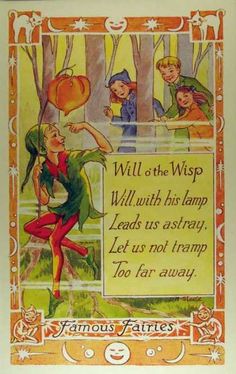
wisp

Happy New Year, folks.


2014 and all that

This year has been both breathtakingly excellent and occasionally extraordinarily hard. I’m focusing on the good stuff though, because we’re all spinning through the mind-boggling vastness of space on a giant oxygen machine and really, when you think about it, where’s the sense in dwelling on the rough?

So here we go; in no particular order:

1. The Visitors being published

The culmination of two years’ work and the start of an awful lot more to come; in June, the wonderful folks at Quercus Books were kind enough to publish The Visitors. I wrote about the publication here, and it kept on running. Somehow, people keep enjoying it. I’ve summed up the reviews here, and there are reviews from actual real life readers on Goodreads and You-Know-Where. Writing was hard, editing was very hard, and now it’s out there in the wild – it doesn’t need me any more, if it ever did. I haven’t really come to terms with the book being published, other than it makes me scared, humble and really, really happy. Writing is all I want to do, but sometimes every step feels like the first step.

visitors

2. The Hollows

In the twelve months – to the day, madly – since I started, I’ve probably written about half The Hollows. Unfortunately, for reasons like this and especially this, I’ve had to cut gigantic chunks of it; so much, in fact, that I’ll basically have to start again next year, and crib the pieces I can still use from the manuscript. This would be a very bad thing, were it not for how excited I am about those pieces that are left. It’s been bruising, definitely, but the process is now beginning to tip me in positive directions I probably wouldn’t have gone by myself, and that’s terrific.

3. Flashtag short short story slam

Over the last two years, I’ve been trying to read more of my work aloud; I pushed myself further this year by entering a story slam in Manchester. I memorised my three stories so I could concentrate on performing them, rather than reading them, and I was lucky enough to win. That was great, and I was delighted, but what really blew my mind was the culture of live literature I witnessed in Manchester. It’s raw, it’s funny, it’s friendly, it’s immediate. It’s everything short stories and poetry and flash fiction should be about, and it completely affirmed the value of storytelling as an act of community. Stories are a thousand things, and one of those things is churches.

4. Clowning

Way back in February, I attended a clowning workshop run by Belgian storytelling maestro Fred Versonnen. This is the best £25 I’ve ever spent, and it’s true to say that my life hasn’t been quite the same ever since. I see things differently now – I write differently now.

fred

5. The Year Of The Whale

I started this novella more than five years ago. Getting it finished was a thrill – I surged through the final chapters, and I’m pleased with it. It still needs redrafting, but I’m not quite ready to get back into it. It’s waited five years – it can wait a little longer.

6. Marrow/Cerys Matthews reading Circle Stone

Finishing Marrow was another big deal in my writing year. I haven’t written as much flash fiction this year, because I’ve been mentally wasted from work, and that kinda gets in the way, but I did, finally, finish and self-publish a flash fiction collection called Marrow. Of the hundred I printed, I have about twenty copies left, and people seem to like it, which is a source of constant wonder. I wrote about my decision to self publish here. I sent a copy to the excellent Cerys Matthews, and because she’s absolutely awesome, she read out one of the stories on her BBC6 Music show. This is, and will always be, the coolest thing that ever happened to me.

7. Gruff Rhys at Kendal Library

Gig of the year, hands-down. I wrote about it here, but in summary, Gruff was majestic, wise and funny.

8. Greece

One of my favourite ever holidays. A week of sunshine, warm evenings, seashores, swimming and the boundless comedy available on tap from my daughter Dora. We had a fantastic time: ruins, eagles, Mythos and pizza. I love holidays because I’m with my favourite people, I get to read a lot, and I get to think a lot. It went like this.

9. Friends

It’s been another good year for my friends. Iain Maloney published First Time Solo, his excellent debut novel, with Freight Books; also with Freight, Anneliese Mackintosh’s debut novel/story collection/autobiography Any Other Mouth was released to stupendous acclaim, going on to win the Green Carnation Prize; Salt published one of my books of the year, The Rental Heart by Kirsty Logan; Kirstin Innes landed an agent and then a publishing deal for her debut novel Fishnet; and I was lucky enough to read a draft of Ali Shaw’s new novel, The Trees, which is simply scintillating. I’m delighted that Bloomsbury are going to publish it, because Ali is a wonderful human being, an outstanding writer and a great friend.

10. Getting married

Just amazing. We did damn near all of it ourselves, and when I say ‘us’, I mean that I did 10% after I’d finished work, and my tireless, hilarious, wonderful, perfect new wife Mon did the rest. It was a lot of work to pull it all together, but we basically hosted a mini-festival in a back garden with a marquee, a stage, a band, a PA, scores of hay bales, lighting and decoration. We then partied till the following morning with our wonderful friends. My brother gave what was widely considered to be the best best man’s speech anyone had heard, and local legends Seven Seals played their very finest. It was phenomenal. What a day – a thousand thanks to everyone who brought it all together.

Mon is my everything, and I’m beyond proud to call her my wife.

si mon

So there we go. It’s been a good one, despite the harder stuff. Some of the things that have knocked me hard – like the Hollows, like the Scottish independence referendum – will come around again, and next time we will get them right. And other things – like working too hard – will change, because they have to.

Dora’s gone to bed. This is the first year she’s been old enough to really understand what’s going on. We helped her write a letter to Santa, which she signed herself, then made sure to leave a whiskey for Santa. (Jura, in case you’re asking. Santa’s quite particular about that.) I read her Where The Wild Things Are, and we roared our terrible roars, and gnashed our terrible teeth, and she asked me what the words mean: “…and …it …was …still …hot.”

These are the moments we’re working for.

Happy Christmas, folks.

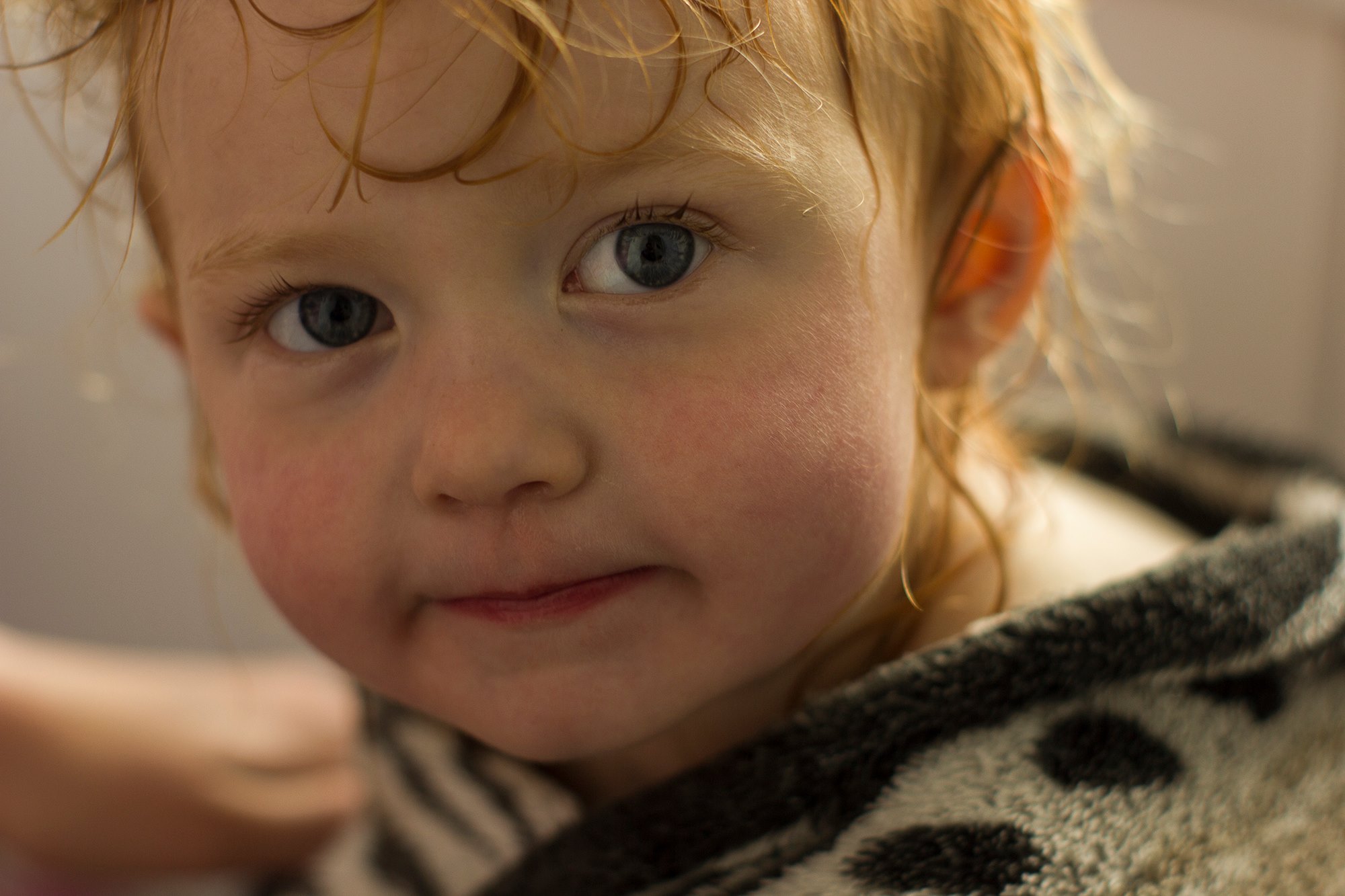
dora

Mirror mirror

Earlier today, my heart broke. I’ve been working on my second novel, The Hollows, for almost exactly a year – I started it on Christmas Eve 2013, though I couldn’t write for half the year. I’m now 30,000 words into my first draft. It’s excruciatingly hard to write this, but I’m about to change it all. The reason is the best-selling author Kate Mosse, who appears to have written my book already. I haven’t read it, but her latest novel, The Taxidermist’s Daughter, explores the same themes of memory – suppressed, regressed and rediscovered – as The Hollows. Her novel revolves around a father-daughter dynamic, like The Hollows. Her novel is set in a huge marsh, like The Hollows. I could handle all of that. I’d guess that was true of lots of novels. But today, I also discovered that the lead character of The Taxidermist’s Daughter has no early memories after a traumatic childhood experience; that a modern crime begins to unlock those hidden memories; and that the unlocking of those memories reopens the wounds of an old injustice. That was basically the plot of The Hollows. I’m heartbroken, because I was finally beginning to gain some traction. It was finally starting to move, but I can’t stomach those similarities. It’s too close. It’s no good.

I’m not going to start again, because I’ve written some good stuff. But I am going to change it radically. That means significant cuts – again – and it means the whole enterprise will take longer than I’d hoped, and that’s devastating. I was almost halfway through, and now I’m back to the beginning. I can’t just get hold of The Taxidermist’s Daughter, read it, and rewrite around it; no story is built from omission, and the thought of it makes me sick. But it does mean revisiting the crossroads I discussed last week, and taking another path. It hurts, and I’ll set out with heavy heart, but I know, with every fibre of my being, that I’m nourishing the kernel of a good story, and I’m not going to let it go.

Whales, mandolins and singing bottles… and once again, I find myself staggered at how my stories hurt me.

Crossroads

I haven’t blogged for ages – sorry. The reasons are almost too mundane to mention, but the short version is that my workspace has been out of action for two months. This has cut my video editing and writing time down considerably, and in what time I’ve had, the video jobs have to take priority. I wrapped up my second promo for Born Survivor, and I’m a whisker away from finishing my long-running hay meadows project. I’ll write some more about that when it’s finally complete; unlike any other job I’ve taken on, the meadows film has changed the way I think about the world. This is tied up in Scottish independence, vegetarianism/veganism, and plastic. To be discussed.

I’m writing this post as something of a confession. After months away, the last fortnight has actually given me three solid days to write. In that time I’ve added 11,000 words, and surged from despondency to exhilaration. I’ve now levelled out somewhere in between. (I’m a lot more neurotic than I probably appear.) This is a confession because, in these last few days in particular, my imagination and awareness have been completely invested in The Hollows. I haven’t had much space for anything else. I’ve been ratty and irritable – not because I’m actually feeling ratty, but because this story is a sore tooth – constantly nagging, constantly distracting, always there – and I’m struggling to live in two realities at once. I’ve now written about 26,000 words, which I estimate is about a third of the finished manuscript, and I find myself in the extraordinary position of not knowing where to go from here.

That sounds bad, but it isn’t. I very much believe in giving stories space to breathe, in letting them evolve, and this one has evolved radically around the busiest year of my entire life. I’m positive about all of the routes I could take, though each of them entails some changes. I’m now brewing on which way to go. Bluntly speaking, my choices could be defined by genre, but it’s not that simple. It’s about my sense of self-worth, and the value I take from the act of writing. This story feels entirely right to me, but I don’t know what it is. It’s like reading a map in another alphabet: the world is removed from me yet fleetingly familiar, and I haven’t yet worked out where I am. At a crossroads, perhaps. Each route has pitfalls and detours and summits to climb. (My friend James Hannah says to turn left. If it all goes wrong, I’m blaming him.)

I’m spending hours at a time with my notebook. I’m listening to Rachel’s and Balmorhea. I’m floating in a sea of puzzle pieces. If I can pin down one or two, I’ll build the rest from there, but they are quick as fish.

Writing is easy, and writing is hard.

The slow life

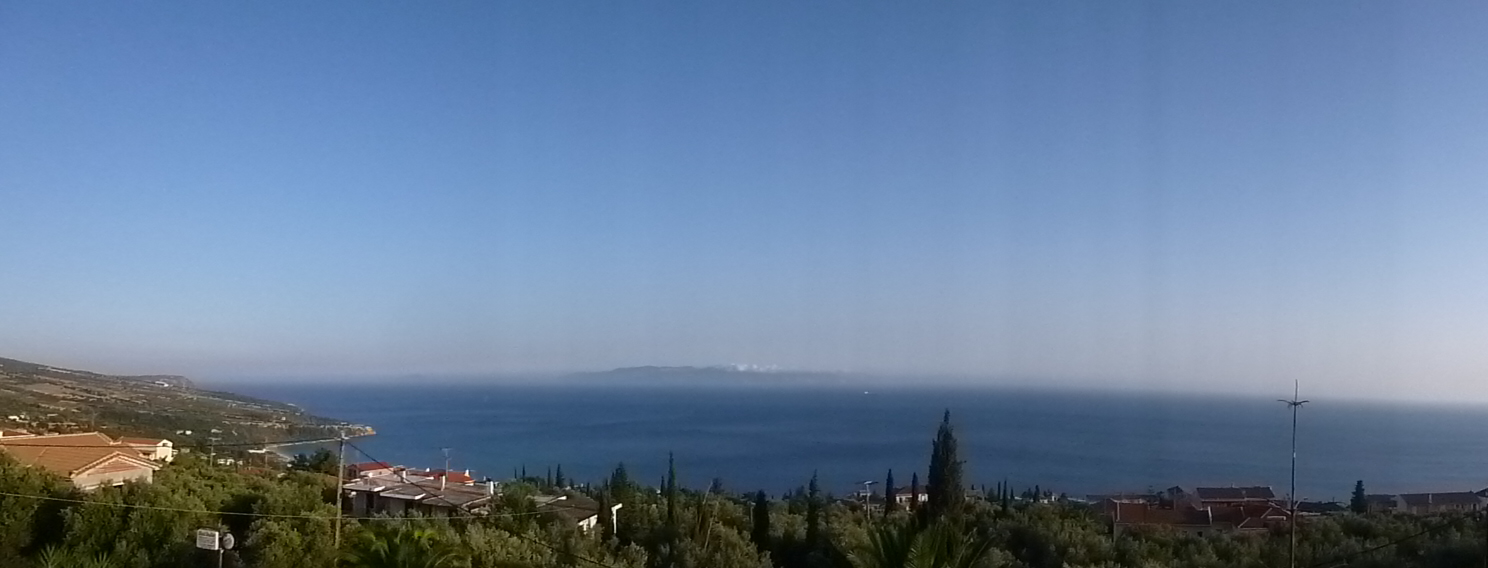
Another year, another holiday. A fortnight before our wedding, and with a thousand things to organise, Mon and I have taken Dora for a week on Kefalonia in the Greek Ionian islands. Some people thought we were crazy, leaving so soon before the big day, and others thought we’d done exactly the right thing. It’s been wonderful. Our studio was cheap and cheerful, but had stunning views of the sea. The beach at Lourdas was only a few minutes away. We’ve done as much sunbathing as Dora would allow, and spent the rest of the time building bad sandcastles or splashing in the shallows. We visited Melissina cave, where they filmed The Goonies, and drove round onto the Lixouri peninsula to the secluded beach cove of Petanoi, ringed with sheer white cliffs.

panorama 2View from our balcony

Kefalonia is intoxicating. Olive trees spill into the verges, and fig trees grow in long-abandoned lots. The cliff-top hairpins are graffitied with faded communist slogans. Goats dawdle as they cross the road in scraggy herds. Each of their bells is tuned slightly differently, so the goatherd knows where each animal is foraging. When they’re hidden by the pines, the bells sound like secret orchestras, playing just for you. Skinny feral kittens bat at grass stalks and dry leaves. Cacti grow on roadsides. Beehives, painted rainbow bright, cling to precipitous hillsides. After lunch, old men sit in the meagre shade of trees and smoke. All the while, the island is alive with cicadas. They chatter all day in a raucous chorus that never stops, resounding all around in a cacophony of tones and clashing rhythms. After a day or two, I learned to tune it out, but occasionally I’d become suddenly, urgently conscious of the racket, and the world would explode again with sound. In the hour either side of sunset, when the heat was exquisite, the evening air grew heady with jasmine and lemon. The jumble of architecture felt strange and at times a little sad. The global crash hit Greece harder than most, and there are abandoned building sites everywhere. The skeletons of these half-formed houses cling to the hills and wrap themselves in vines. It’s an extraordinary place.

One of my favourite things about going on holiday is having the time to read. I’ve been reading a little more often in the last few months – trying not to work so late, and going to bed with a book instead – but on holiday, I can gorge myself. This time round, I went through The End Of Mr Y by Scarlett Thomas, Thursbitch by Alan Garner, Hey Hey Hey Hey Hey Hey Hey Hey by Fat Roland, The Coma by Alex Garland, It’s Lovely To Be Here by James Yorkston, Bring Up The Bodies by Hilary Mantel and The Evil Seed by Joanne Harris.

I love Joanne Harris, but struggled to get into The Evil Seed. As Harris explains in her introduction, it was her first novel, and she doesn’t feel she was firing on all cylinders. I found the regular switch of narrators a little jarring, for all that her writing was as wonderful as ever. Harris is a master, but The Evil Seed simply wasn’t for me. I also struggled with The End Of Mr Y. It started well, with a great premise – in a second-hand bookshop, a research student discovers a novel no one has seen in a hundred years. The book is supposed to be cursed – anyone who reads it will die. What a brilliant idea for a novel! Scarlett Thomas is extremely good at explaining the complex scientific theories that underpin the book, but as the plot unfolds, The End Of Mr Y felt increasingly like a collection of philosophical discussions tacked together with incidental actions. It was too disjointed for me – no flow.

I bought The Coma by Alex Garland years ago, and have been saving it until I finished writing The Year Of The Whale – because Garland’s book is also an illustrated novella, which is how I’d like The Whale to appear, if it ever does. It’s another good premise – a man exploring his own coma for meaning about his life – but one that is better managed in Marabou Stork Nightmares by Irvine Welsh or The Bridge by Iain Banks. Using minimal text, Garland brilliantly navigates his way around the dreamworld of the coma, wonderfully abetted by stark, startling woodcuts, but the final sequences became convoluted and disjointed with exposition, breaking an otherwise immersive experience. It was a shame, on finishing the novella, to realise that it came to a little less than the sum of its excellent parts.

Now we come to Hey Hey Hey Hey Hey Hey Hey Hey, the second collection of flash fiction by Fat Roland. Disclaimer: I know and like Fats. I hope that won’t detract from my review of an excellent collection of shorter stories. Fats tends towards the weird in his work – or the really weird, in fact – often working with the mundane to expose the inherent strangeness of this grand and rolling shambles we call life. And he’s extremely good at it, too. Hey Hey Hey is a generally very strong collection, but some of the stories are exceptional: stand-outs for me were The Listener, and Michael Is A Horse, A Beautiful Horse, which rank amongst the best flash pieces I’ve ever read. I preferred Hey Hey Hey to his first collection; although Andropiean Galactic Lego Set Blues is also good, this second collection feels more assured in its use and abuse of the surreal, more convincing. It’s funny, chilling and thrilling, all at once.

Fat Roland HeySeveral of the stories are about swimming pools, and then I noticed this. Curious, no?

It’s Lovely To Be Here is a collection of James Yorkston’s touring diaries. For those lucky individuals who have still to discover James Yorkston, he sounds like this:


…and he’s one of my favourite musicians. I’ve seen him play three times – by accident at The Raigmore Motel in Inverness back in 2001, I think, supported by Malcolm Middleton, though it may have been the other way round; then with his full band at The Brewery a couple of years ago, which is one my all-time top gigs; and then solo at The Dukes in Lancaster last year. He’s brilliant live, and these diaries – witty, honest, funny, poignant and a little sly – give a compelling insight into the flip side of life as a touring musician. I guess it gave me pause to think of the times I’ve approached him (or other musicians) after a gig, gushing praise and wishing well. Especially now I’ve started performing my stories live (nowhere near the same experience, but in the same universe, I suppose), I better appreciate that sometimes that’s the last thing a performer wants – to be inundated with people, and all the psychic tension and expectations they bring with them, when they’d rather go to bed. These diaries are funny and wickedly honest.

I never planned on reading Bring Up The Bodies by Hilary Mantel. I absolutely hated Beyond Black, the only other Mantel novel I’d tried, and I was therefore cynical about the praise heaped on this book and its precedent, Wolf Hall. But when I’d finished all the books I’d brought with me, I had to turn to the graveyard of dog-eared abandoned holiday reads in the hotel. Bring Up The Bodies was the only one I even halfway fancied, though I started reading with reluctance. And do you know what? It’s magnificent. Set in the court of Henry VIII, it plays out the last few months of the life of Anne Boleyn from the perspective of Thomas Cromwell, the king’s fixer. Bizarrely, Bring Up The Bodies actually gave me what I was expecting, but failed to find, in George R R Martin’s Song Of Ice And Fire – thrilling, page-turning intrigue on the price of power and the rise and fall of dynasties. It reads like The Godfather. Mantel’s Cromwell is an absolutely astounding narrator. I’m definitely going to seek out Wolf Hall, now, and I was delighted to see in the author’s note that she has more plans for Cromwell.

Finally, there’s Thursbitch by Alan Garner. I’m relatively new to Garner, off the back of his wonderful collection of British Fairy Tales and his short novel Strandloper, though I probably read The Owl Service when I was a kid. I’m still digesting Thursbitch. It’s profound and important, but it isn’t much fun. Garner creates worlds real enough to touch. His prose is so sparse, his stories so lean, that it often feels like there’s nothing there at all – as though his work is invisible, and his books are slices in time, windows into centuries when the world was young and hungry, and land still mattered. Thursbitch is about an old magic, a northern magic of white hares and white bulls and bees, of toadstools and snakes. It’s almost voodoo. A magic of the stones and the seasons and the night sky and the bog. It’s a magic of balance – of keeping the land and the people in check, pragmatic, without mysticism or spirituality. It’s heady stuff, and I’m still reeling. Like Strandloper, it’s dense, often using language so archaic it feels alien, and Garner gives nothing for free. I’ll read it again in a few years, I think, and see how it’s changed – how I’ve changed.

Back into pre-wedding mania. The garden has bloomed without us. The Black-eyed Susan has climbed to the top of the trellis, and the Russian vine is turning into a triffid. They remind me of the plants that explode everywhere in Kefalonia, wild and reckless in the dust and dirt. It’s strange to come home. Mon and I talk a lot about living abroad. I get depressed by the daily horrors this government continues to inflict on anyone who isn’t already rich, and I harbour visions of growing my own peppers and onions and garlic and chillies. We talk of Spain and France. Of a simpler life, I suppose, where we’re not drowning in screens and SATs. One where I can write and Mon can paint and Dora can chase katydids in the pear trees. There are times it feels like a boy’s dream, to run away, and times it feels like the brightest, broadest road we could take.

Halfway through the holiday, there was an insect drowning in the pool. It was my turn to rescue it, so I slipped into the water, swam across and scooped it out on the end of one of Dora’s toys. It was a honeybee. It dried in an instant and flew away, and I swam back to the edge of the pool. Just before I clambered out, I spotted something and stopped. It was a speck, no more than three millimetres long, but it was unmistakably a mantis, intricate and perfect as clockwork. I’d never seen one in the wild. I called Mon across to have a look. Even as we watched, it flexed its killer forelegs, snap snap, and marched across the baking tiles, three millimetres tall and a king of the world. The day before, driving back from the cove at Petanoi, Mon saw a golden eagle.

I love Cumbria, but there’s a splinter in my head that says we could be living cleaner, should be living simpler. Living slow.

baby insects (18)