2014 and all that

This year has been both breathtakingly excellent and occasionally extraordinarily hard. I’m focusing on the good stuff though, because we’re all spinning through the mind-boggling vastness of space on a giant oxygen machine and really, when you think about it, where’s the sense in dwelling on the rough?

So here we go; in no particular order:

1. The Visitors being published

The culmination of two years’ work and the start of an awful lot more to come; in June, the wonderful folks at Quercus Books were kind enough to publish The Visitors. I wrote about the publication here, and it kept on running. Somehow, people keep enjoying it. I’ve summed up the reviews here, and there are reviews from actual real life readers on Goodreads and You-Know-Where. Writing was hard, editing was very hard, and now it’s out there in the wild – it doesn’t need me any more, if it ever did. I haven’t really come to terms with the book being published, other than it makes me scared, humble and really, really happy. Writing is all I want to do, but sometimes every step feels like the first step.

visitors

2. The Hollows

In the twelve months – to the day, madly – since I started, I’ve probably written about half The Hollows. Unfortunately, for reasons like this and especially this, I’ve had to cut gigantic chunks of it; so much, in fact, that I’ll basically have to start again next year, and crib the pieces I can still use from the manuscript. This would be a very bad thing, were it not for how excited I am about those pieces that are left. It’s been bruising, definitely, but the process is now beginning to tip me in positive directions I probably wouldn’t have gone by myself, and that’s terrific.

3. Flashtag short short story slam

Over the last two years, I’ve been trying to read more of my work aloud; I pushed myself further this year by entering a story slam in Manchester. I memorised my three stories so I could concentrate on performing them, rather than reading them, and I was lucky enough to win. That was great, and I was delighted, but what really blew my mind was the culture of live literature I witnessed in Manchester. It’s raw, it’s funny, it’s friendly, it’s immediate. It’s everything short stories and poetry and flash fiction should be about, and it completely affirmed the value of storytelling as an act of community. Stories are a thousand things, and one of those things is churches.

4. Clowning

Way back in February, I attended a clowning workshop run by Belgian storytelling maestro Fred Versonnen. This is the best £25 I’ve ever spent, and it’s true to say that my life hasn’t been quite the same ever since. I see things differently now – I write differently now.

fred

5. The Year Of The Whale

I started this novella more than five years ago. Getting it finished was a thrill – I surged through the final chapters, and I’m pleased with it. It still needs redrafting, but I’m not quite ready to get back into it. It’s waited five years – it can wait a little longer.

6. Marrow/Cerys Matthews reading Circle Stone

Finishing Marrow was another big deal in my writing year. I haven’t written as much flash fiction this year, because I’ve been mentally wasted from work, and that kinda gets in the way, but I did, finally, finish and self-publish a flash fiction collection called Marrow. Of the hundred I printed, I have about twenty copies left, and people seem to like it, which is a source of constant wonder. I wrote about my decision to self publish here. I sent a copy to the excellent Cerys Matthews, and because she’s absolutely awesome, she read out one of the stories on her BBC6 Music show. This is, and will always be, the coolest thing that ever happened to me.

7. Gruff Rhys at Kendal Library

Gig of the year, hands-down. I wrote about it here, but in summary, Gruff was majestic, wise and funny.

8. Greece

One of my favourite ever holidays. A week of sunshine, warm evenings, seashores, swimming and the boundless comedy available on tap from my daughter Dora. We had a fantastic time: ruins, eagles, Mythos and pizza. I love holidays because I’m with my favourite people, I get to read a lot, and I get to think a lot. It went like this.

9. Friends

It’s been another good year for my friends. Iain Maloney published First Time Solo, his excellent debut novel, with Freight Books; also with Freight, Anneliese Mackintosh’s debut novel/story collection/autobiography Any Other Mouth was released to stupendous acclaim, going on to win the Green Carnation Prize; Salt published one of my books of the year, The Rental Heart by Kirsty Logan; Kirstin Innes landed an agent and then a publishing deal for her debut novel Fishnet; and I was lucky enough to read a draft of Ali Shaw’s new novel, The Trees, which is simply scintillating. I’m delighted that Bloomsbury are going to publish it, because Ali is a wonderful human being, an outstanding writer and a great friend.

10. Getting married

Just amazing. We did damn near all of it ourselves, and when I say ‘us’, I mean that I did 10% after I’d finished work, and my tireless, hilarious, wonderful, perfect new wife Mon did the rest. It was a lot of work to pull it all together, but we basically hosted a mini-festival in a back garden with a marquee, a stage, a band, a PA, scores of hay bales, lighting and decoration. We then partied till the following morning with our wonderful friends. My brother gave what was widely considered to be the best best man’s speech anyone had heard, and local legends Seven Seals played their very finest. It was phenomenal. What a day – a thousand thanks to everyone who brought it all together.

Mon is my everything, and I’m beyond proud to call her my wife.

si mon

So there we go. It’s been a good one, despite the harder stuff. Some of the things that have knocked me hard – like the Hollows, like the Scottish independence referendum – will come around again, and next time we will get them right. And other things – like working too hard – will change, because they have to.

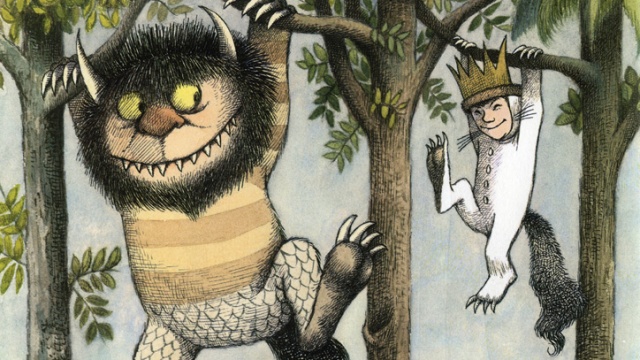
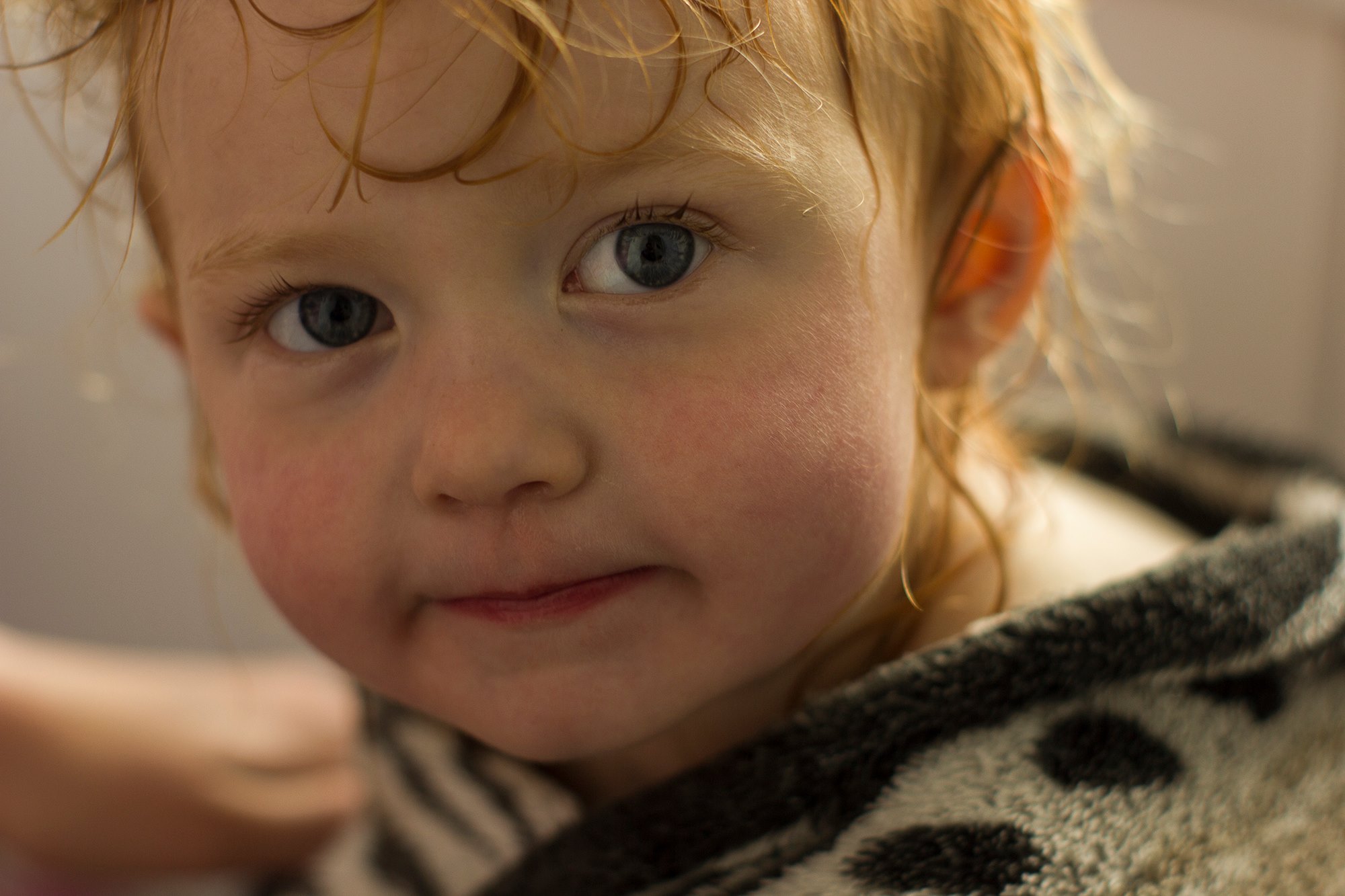
Dora’s gone to bed. This is the first year she’s been old enough to really understand what’s going on. We helped her write a letter to Santa, which she signed herself, then made sure to leave a whiskey for Santa. (Jura, in case you’re asking. Santa’s quite particular about that.) I read her Where The Wild Things Are, and we roared our terrible roars, and gnashed our terrible teeth, and she asked me what the words mean: “…and …it …was …still …hot.”

These are the moments we’re working for.

Happy Christmas, folks.
dora

Mirror mirror

Earlier today, my heart broke. I’ve been working on my second novel, The Hollows, for almost exactly a year – I started it on Christmas Eve 2013, though I couldn’t write for half the year. I’m now 30,000 words into my first draft. It’s excruciatingly hard to write this, but I’m about to change it all. The reason is the best-selling author Kate Mosse, who appears to have written my book already. I haven’t read it, but her latest novel, The Taxidermist’s Daughter, explores the same themes of memory – suppressed, regressed and rediscovered – as The Hollows. Her novel revolves around a father-daughter dynamic, like The Hollows. Her novel is set in a huge marsh, like The Hollows. I could handle all of that. I’d guess that was true of lots of novels. But today, I also discovered that the lead character of The Taxidermist’s Daughter has no early memories after a traumatic childhood experience; that a modern crime begins to unlock those hidden memories; and that the unlocking of those memories reopens the wounds of an old injustice. That was basically the plot of The Hollows. I’m heartbroken, because I was finally beginning to gain some traction. It was finally starting to move, but I can’t stomach those similarities. It’s too close. It’s no good.

I’m not going to start again, because I’ve written some good stuff. But I am going to change it radically. That means significant cuts – again – and it means the whole enterprise will take longer than I’d hoped, and that’s devastating. I was almost halfway through, and now I’m back to the beginning. I can’t just get hold of The Taxidermist’s Daughter, read it, and rewrite around it; no story is built from omission, and the thought of it makes me sick. But it does mean revisiting the crossroads I discussed last week, and taking another path. It hurts, and I’ll set out with heavy heart, but I know, with every fibre of my being, that I’m nourishing the kernel of a good story, and I’m not going to let it go.

Whales, mandolins and singing bottles… and once again, I find myself staggered at how my stories hurt me.

Notebook

On the rare occasions I’ve been asked for writing advice, one of the things I always suggest is to carry a notebook and a pen. I’ve lost count of the thoughts, ideas, plots, characters and dialogue I’ve let slip through the gaps in my atrocious memory. It’s heartbreaking. I took to carrying a pocket notebook years ago. Sometimes I fill one in a month, and sometimes in six months, until it disintegrates to dust and fibres and I need to tape the spine. I keep them all on a shelf above my desk. Once, while backpacking in Australia, I spilled a hipflask of Maker’s Mark all over my notebook, and the whiskey erased the ink. I lost my bourbon, and I lost weeks of passing thoughts. As my friend Ali said, it was the very definition of two wrongs not making a right.

Notebooks aren’t just for the utility of capturing ideas. It’s important to remember how to write the hard way. I’m a thug of a typist, but I’m pretty fast, and I spend a huge amount of time glued to my computer, whether that’s writing or editing. My default setting is electric, and when I have an idea, I tend to go to the computer first.

This is all relevant because I’m finally dipping my toes back into The Hollows. I started on Christmas Eve 2013, wrote sporadically through the new year, and hit 25,000 words around June. I haven’t worked on it at all since then, but last week I finally had the space to look at it again. On reading it through, I was a little unhappy with some of my work. Parts of it read well, but simply weren’t right for the story any more. No matter how much I shuffled chapters or copied and pasted paragraphs to try and make it fit, the story wouldn’t gel. Instead, I put on some music and sat back with a fountain pen and an old office diary I nabbed years ago to use as a notebook.

The diary was a red hardback day-to-a-page thing, brand new and unused from 2006, a ribbon bookmark folded flat between the crisp blank pages. It was perfect. I started scribbling down my worries and woes. I made lists of characters I liked and characters I didn’t need. I wrote down what worked, and what never could. I drew lots of dots and stars and arrows connecting things that wouldn’t make sense to anyone else. I wrote questions and answers. I wrote until my hand hurt and I had a dent in my forefinger. A few hours later, the mist was beginning to clear, and some new ideas were beginning to show themselves.

That night, I talked it through with Mon. She’s so good at giving me space to shape my ideas. Often the act of explaining a story to Mon explains the story to me, too. Vocalising something gives it clarity. After chatting it through, I spent another hour or two jotting down new ideas, new people, new places to explore.

This is all the planning I do when I’m writing. Rough notes and loose association. It works better with ink than on a screen. It makes the process tangible. I couldn’t do what Ali did with his last novel, and write the whole thing longhand – that wouldn’t work for me – but I’d forgotten how healthy it is to make a mark, to scribe into the fibres of the page. The act of writing with a pen has conjured new ideas, too – things that couldn’t have occurred in pixels.

The hardest part is making the decision. I went back to the manuscript, and cut 11,000 words. It hurt, but it was important. There were good scenes in there – good chapters – but they’d sent me off course, and they had to go. Now they’re gone. My draft is 11,000 words lighter, but I’m more confident in what is left. The shape of the story has changed. The characters are starting to stir, beginning to show themselves.

It’s insane to think I’ve achieved so little since starting it almost a year ago. I feel like I should have a finished draft by now. I know, looking back, that we’ve been extraordinarily busy this year, and that I’ve completed a multitude of other things, but The Hollows is back in my life and shouting louder than ever. I’ve spent some time on the wrong path, but now I think I’ve found my way. A pen, a compass.

A tangled ball of things

I’m absolutely delighted to say that The Visitors has taken first place in the Not The Booker prize 2014. Run by The Guardian, the competition is presented as a slightly tongue-in-cheek parallel with the Man Booker Prize. The actual prize, for example, is a mug:

The Guardian cup prize for website.  Photo by Linda Nylind. 18/8/2011.

It’s taken an astoundingly long time to get this far – the first nominations were something like three months ago – and the way it accelerated into the final week was unnerving. The prize is awarded through a combination of public votes and a judging panel. After an agonising week of voting, The Visitors was neck and neck with Tony Black and his novel The Last Tiger (which sounds amazing). With the vote tied, we were awarded a point apiece, which left the three judges to reach a decision during a live video discussion about the shortlist.

I left work early and cycled home to watch the online stream of the discussion. By the time chairman Sam Jordison asked the judges for their final votes, I found myself pacing the room, wanting to know, not wanting to know. The anticipation was driving my heart out through my chest.

This is how it went:

*

So there we have it. It’s still sinking in, even four days later. After the decision was announced, Mon came home and took me out for lunch. That was the right thing to do. There’s no way I would have managed any work that afternoon.

It’s a truly humbling thing to happen, and I feel both proud and grateful that my book has had so much support. Please consider this a massive thank you to anyone and everyone who has bought, read, enjoyed, voted or commented on The Visitors. You’re amazing!

Releasing a book into the wild is a terrifying thing to do. I spent so long wrapped up in Bancree by myself that it still feels raw to share the island with other people. Knowing that folk might like my story conjures a huge, tangled ball of things: relief and disbelief, elation, a lurch of adrenaline.

I’m absolutely thrilled, but I’m also looking ahead. I have more books to write. Not The Booker coming to an end coincides with my backlog of film jobs beginning to ease. In a week or so, I think I can get back to writing regularly. It’s been months since I had concerted time to work, and I can barely remember big chunks of The Hollows. My first few sessions will be stripping things away, I’m sure, and clearing the ground to start again. I can’t wait, and I’m glad to be returning on the right side of Not The Booker.

Thank you, people. You are a galaxy of stars.

stars-500x443


Self-publishing

Natalie Bowers, editor of the excellent picture/fiction mash up site 1000 Words, has written a wonderful review of Marrow. It’s always fantastic to have a reader completely get my stories, so I’m really pleased to share her thoughts on the collection.

After reading the book, Natalie asked me to write a little about why I decided to self-publish Marrow. If you’re interested in traditional vs. self-publishing, then lay on, Macduffs, and discover why I chose to take that path.

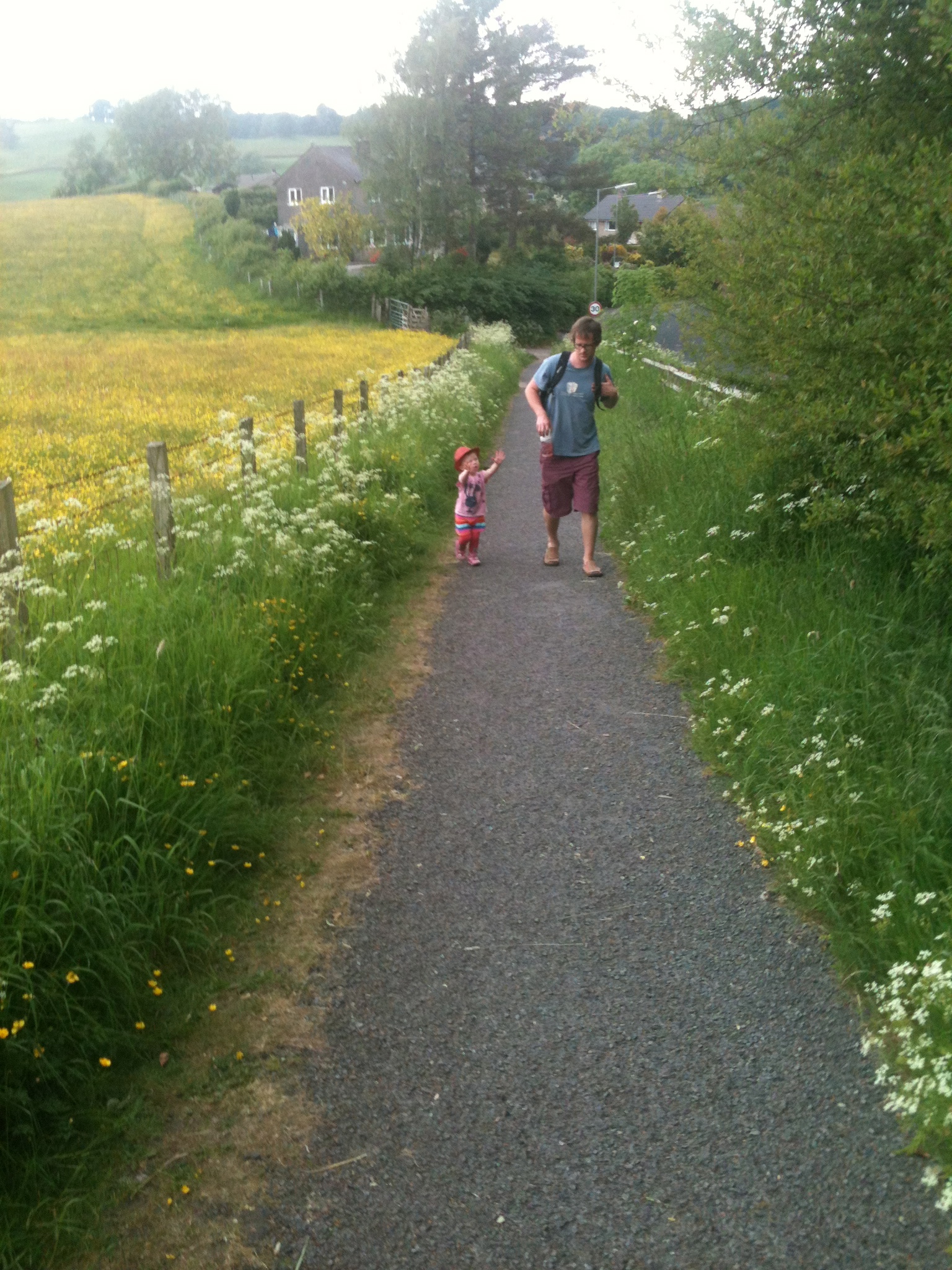
This is a picture of my daughter and I arguing on a path.

IMG_2330


The Visitors – a soundtrack

Over time, music becomes integrated entirely with memory. I can’t hear Woodface by Crowded House or Crossroads by Bon Jovi without becoming eight or nine or ten years old, and playing Heroquest with my brother. The songs from those records flood my head with the stink of enamel paint and the sound of rain on windows.

My friend Iain has long believed that just as movies have soundtracks, so novels should have soundtracks. It’s an intriguing idea; for writers like Iain and I, who work best with very particular music playing in the background, the soundscape becomes an integral part of our experience of the book. I wrote The Visitors with the same few artists playing over and over again. That monotony helped me establish and maintain consistency. It helped to balance me in the same emotional place, session after session. The records took me out of myself.

It’s interesting to note that with my new novel, The Hollows, I’ve needed completely different tunes – if I listen to anything from my Visitors ‘soundtrack’, I’m taken back to Bancree. I’m almost sure that will change with time.

I’ve put together a wee soundtrack for The Visitors on Spotify. There’s some Mogwai, Arab Strap, Sparklehorse, James Yorkston, Arcade Fire, British Sea Power, Bat For Lashes, Meursault and a few others. I’ve jumbled them as seems best, but I guess my aim is to give a sense of the overall soundscape I worked with. It sounds like this:

*

For some reason, the Spotify player here won’t play all the songs in the playlist – if you’d like to see the rest, mosey over here. And if anyone has recommendations based on these songs, please do pop them in the comments. I’m always looking for new music to fit my very selective criteria for working!

Not The Booker

I’m cautiously delighted to say that The Visitors has been shortlisted for the Guardian’s Not The Booker prize. It’s been a rather bruising process to get this far. The longlist was very long, featuring a hundred novels. Not The Booker is infamously decided by public vote, which leads to all kinds of hijinks from authors, publishers and agents drumming up support. That’s a hundred clusters of psychic tension detonating online simultaneously. No wonder things get heated.

I was in Greece for the first two days of the week-long voting window, by which point there were already clear leaders. With five days to go, I started doing what most of the others had done, and announced my part in the longlist as loud and far as I could. I was fortunate that a lot of people who’d read and liked The Visitors voted for me, and I managed to reach the shortlist. I’m extremely thankful and humbled by the support for my book.

The shortlist holds some intimidating competition – genuine literary titan Donna Tartt, no less, as well as Louis Armand, Mahesh Rao, Tony Black and Iain Maloney. I’m a little concerned that The Visitors seems to be the only work of genre fiction on the list; I’m worried it won’t be deemed worthy enough. And now I’m actually up for review, there’s the prospect of this sort of evisceration at the hands of Sam Jordison, too. Ouch. All in all, I’m expecting dark things from the Guardian readers – which begs the question: why bother entering?

I’ve been thinking a lot about this lately. The first time my agent and I went to meet my editor at Quercus, we discussed the importance of promotion and self-promotion. It’s simply a mandatory part of an author’s life, now – especially a debut author. Publishers are spread thin. They can’t afford to spend time plugging new writers, and that means new writers have to plug themselves.

It’s unfortunate, then, that I’m not great at selling myself or my work. I feel embarrassed at intruding on other people’s time, and I despise arrogance so much in other people that I cringe at anything that could make me seem arrogant. It took months of goading by my wife before I summoned courage to introduce myself to my local library and local Waterstones. On both occasions, I fumbled through a minute of apologies before finding a way to explain who I was, that I had a book out, and that I wanted to say hello. They were perfectly nice, and keen to discuss running some future events, but the process leaves me feeling weird, and even a little cheap.

If I’m ever going to find a way to write full-time – or, being more realistic, to better balance my life and jobs around writing – then this is the sort of thing I need to do. As my Dad says – you’ve created a product, and now you need to sell it.

Books are products, for sure. I think stories are far more than that. Books are the vessels that carry stories, though, so maybe I’m splitting hairs. I know that I want to write stories, but also that I don’t really want to sell my own books, because it makes me feel so uncomfortable; I know that I want as many people as possible to read my work, and that selling my own books, and selling myself, is one of the only ways I can find to keep writing my stories. For most writers, that’s the binary pair of modern publishing.

When I try to reconcile these two distinct strands of my industry, I have to accept that all I want to do – what I wish for every day – is to write full-time and get these stories onto paper, into people’s heads, into people’s hearts. Whether I like it or not, that means playing the game.

I don’t know how it’s going to go, but my money’s on Tartt or Black.

Weird days. Remember Remember have been helping:


Mountains

02bddc06a4b77584df98ab3c5d32bfb9-d4y3t5d

I’ve been climbing a mountain of college work, which is why I haven’t blogged for a while. There are a few things to report, though: my first ever panel event, for Waterstones Argyle Street in Glasgow; another open mic for Verbalise in Kendal; and some lovely reviews for The Visitors.

In the weeks beforehand, I made myself quietly terrified of the panel event, though I loved the theme. It was called ‘Islands Are The New Cities’, and brought me together with two other crime writers and a chair to discuss the attraction of islands as story locations. This is something I’ve already explored a little right here, and I was looking forward to discussing it. The terror came from the unknown: I can prepare for a reading, but had no sense of what the panel would involve.

I needn’t have worried. The Argyle Street Waterstones is a glorious bookstore, chair Douglas Skelton was funny and relaxed, and the other writers, Craig Robertson and Alex Gordon, were really engaging and easy to talk to. I was surprised at how far the discussion ranged. From a springboard of introducing our own books, we ending up debating alcohol, Faroese Hell’s Angels, caravan parks, the place of fantasy in crime novels, being a teenager in a small town, our daily working routines, tax deductible research and grandmothers. Douglas kept us on track whenever we wandered too far.

For the record, I think islands are perfect locations. They are miniature worlds, with all their own rules and laws contained within the boundaries of the coast. My friend Ben maintains there are two stories: either ‘boy/girl leaves to seek fortune’, or ‘trouble comes to town’. Islands make that sense of arrival or departure far more tangible, more immediate. The physical space of an island is an entire universe. Anything can happen on an island, and the rest of the world will never know.

There was a great moment before the event kicked off. I’d just met Alex, who is a veteran sports writer turned novelist. Breaking the ice, I pointed out that he, I, Craig and Douglas were all wearing shirts in shades of white or blue. I suggested that we should sit in a row from lightest to darkest, ha ha ha. He fixed me with a piercing eye.

‘What kind of a mind even thinks like that, man?’ he said.

george%20wallace

On to Verbalise. It was packed out for headlining act George Wallace, pictured above. George is an award-winning beat poet on a busman’s holiday from his residency in the Walt Whitman Centre. I was delighted to find my friends Joy France, BigCharlie Poet and Harriet Fraser at the open mic – I don’t see them as often as I’d like, and it was grand to catch up.

Almost until the moment I walked onstage, I was umming and aahing over which story to do. I’d settled on either The Matador, which is an old piece about a Spitfire pilot, or new story Cuts Like A. I’d already decided that if I did the second piece, I was going to read without notes. My dilemma was that the story was brand new – only a few weeks old – and I didn’t feel I’d quite yet come to know it. During the first interval, I raced off to scribble it from memory in my notebook, writing from start to finish without breaks. I hit everything important, as well as adding a few things in, and that gave me confidence to gamble on the new piece rather than the safety of the old.

It went well. I loved performing the story, using my hands and face and eyes to invest in my characters. I’m coming to feel more and more that this is how to read a story live. (David Hartley is right.) Writers read best when they’re committed. Cuts Like A is about a drunken knife thrower, and I enjoyed being able to mime the knives, and mime the rotating disc to which his wife is cuffed – to make those actions part of the story. I simply couldn’t have done that with paper in my hand. It felt even better than the Flashtag Short Short Story Slam, and it’s good to think I’m still making some progress on my reading. I’ll never be a professional performance storyteller, but that’s the sort of place I’d like to move towards.

Cuts Like A is here, if you’d like to read it.

The other open mic acts were very good. I’ve always found Verbalise to be consistently strong. Harriet, Joy and BigCharlie were brilliant as ever, and I enjoyed the work of those writers I haven’t yet met. After the second interval, George Wallace took the stage by storm. The next half hour was like being inside a Tom Waits album. I especially loved his first poem, I Want To Go Where The Garbage Men Go, a beat epic about pre-dawn New York. You can (and should) read it here.

Finally, the reviews are still coming in for The Visitors. Everyone so far has been really kind. It’s humbling to think that people are enjoying the book. I’m keeping a round-up of press articles on The Visitors page, and there are more reviews on Amazon and Goodreads.

If you’ve read the book, please do leave a review. After spending so long inside my own head while writing the novel, it’s simultaneously petrifying, compelling and rewarding to discover what people think of Flora, Ailsa, Izzy and the island of Bancree.

I’m going to sign off with Joy France and her mesmerising poem Home Truths. This is important:


Tipping

I had two brilliant days on The Hollows last week, and it’s entirely thanks to my friend Ali. I’d just finished reading a draft of his new novel – which is absolutely scintillating and is going to be massive – and called to talk to him about it. We spoke for a long time about lots of things, and he ended up clearing my head of cobwebs I didn’t know I was carrying.

This is how it is: I’ve been enjoying my first forays The Hollows, but it’s been tough going in places, because I’ve been trying to build the story chronologically, making each current chapter as clean and tight as possible before developing the next. It was only through talking to Ali that I remembered that I don’t write like that. I’d forgotten that I’m writing for me. Or, as Ali put it: “Writing’s a big fuck you to the world.”

This is an abstract thing to explain to myself. It’s not like I was writing someone else’s story, or writing with someone else in mind. But I think I’d spent so long redrafting The Visitors that I’d forgotten that it was rough, too, at the beginning; and, in starting to write The Hollows, I essentially picked up the same point of bug-eyed perfectionism that I left The Visitors. I was working back-to-front. I’d forgotten that some of whatever strength I might have as a writer comes from rewriting – from redrafting and reworking. I’d forgotten the unfolding joy of a first draft – of cutting loose, of jumping feet-first into all that glorious blank white empty space. Talking to Ali reminded me that this is my story, and I need to tell it my way.

When I had my next writing day, I sat down, disabled the internet, and raced through 3,500 words. The next day, I wrote the same again, as well as tearing apart swathes of what I’d already written, rebuilding the plot of the first third. It was exhilarating. I ignored the chronology and jumped ahead to work on scenes and chapters I’ve been dreaming of for months. In writing them, brand new scenes unfolded as though they’d been there all along. I worked late, and it hurt to blink by the end of day two, but I’d turned 18,000 words of clunky plot into 25,000 of viable draft. There’s a forever still to go, but the story is starting to move.

It’s funny how time and memory contrive to fool us. The Visitors didn’t write itself until I was well over halfway through. The first 50,000 words were hard, and the second didn’t need me there at all. That’s the bit I remember. Since then, I’ve been so immersed in my redrafts that I’d forgotten it took six months of slog to hit that tipping point.

First drafts are where the fun is. I’m going to dive in and get messy, and rejoice, and despair, and laugh, and burn myself out, and despair some more, because that’s how I live, and that’s how I write. It’ll take months from now, or years, but I finally feel like I’m getting The Hollows on course for where I want to go.

timthumb.php