Birds called from the web of girders inside the airport. The taxi ride into the city gave us billboards as long as sports fields, shanty towns on roadsides, golden Buddhas measuring every hundred metres of motorway. Bangkok itself was a sprawling, smoky, humid assault on the senses. Our hotel, crisp and air-conditioned, perched beside a lurid grey canal. The surface rippled constantly with the motions of a million tiny fish, while white and orange carp lazed at the surface, ghosts in the murk. A minute’s walk in either direction led to shanties of plastic sheets and corrugated iron. We wandered the neighbourhood. There was a temple on the other side of the block. There were temples everywhere. A minute away, a shop sold pictures of the king, four or five metres high, in ornate gilt frames. Thais are the friendliest people I’ve ever met, though Dora definitely helped us through the city. Her hair is such an unusual colour that people stopped us in the street to say hello, sawatdee ka, sawatdee ka. Mopeds use pavements like roads. Pedestrians take their chances in every crossing. We ate in open kitchens off the street, the smells of onions and ginger and drains all mingling into one rich fug. We met a man selling pad thai from a street cart. It was the best pad thai we’d ever eaten. He was the fourth generation of his family to sell pad thai on the streets of Bangkok, and he’d been doing it for forty years. Beside him, his mother, the third generation, a walnut of a woman, grinned and bowed as we devoured the noodles, sawatdee ka, sawatdee ka.
A young man with grey hair followed us from the hotel to the boat pier, stopping when we stopped. When we reached the river, we watched a metre-long monitor lizard slip into the water. We took the express boat from Banglumpo to Ko Wat, crowded in with tourists and Thais. The helmsman and the skipper communicated over the engine roar with a code of shrieking whistles. Egrets bobbed on rafts of vegetation and polystyrene. We spent the day marvelling at the cloisters of golden Buddhas, ate our first ever guava, and made friends with a Cambodian couple who crossed a park to take pictures of Dora. We dropped 108 coins in the 108 bowls that run alongside the reclining Buddha.
We walked back through Banglumpo markets. A man sold insects on skewers from a food cart – locusts, spiders, shiny black scorpions. The sign on his cart said photos cost 10 baht. I bet he makes more from photos than from food. A few stalls down from him, a beggar called out, baht, baht, baht, baht. He had long legs, though very thin, and long arms, but his torso was little bigger than his head. I watched a thickset American study him for minutes, then cross the road to give him several folded notes. The beggar said nothing, zipped the money into a small purse, and rattled his cup again. Baht, baht, baht, baht. The American scowled and walked away. The beggar’s face was at the height of the car exhausts. When they passed, he studied himself in the fleeting, warped reflection. Then he rattled his cup.
We picked up a flyer for a vegetarian cafe called Mango. It was some of the finest food I’ve ever eaten, fierce with ginger and sopped up with crispy dumplings. It was so good I wanted to hug the owner, Doo. He told us about his farm in the mountains, where they grow all their own food – everything they use comes from the farm. Four hip backpackers, wrapped up in finding themselves, complained that there wasn’t enough potato in their curry. Doo apologised, and they didn’t even acknowledge him. When we left, he was off to one side. He was sculpting, with his studio open onto the restaurant. He was making a beautiful goddamn elephant, and it was as perfect as his food.
Entire neighbourhoods built on stilts, thriving in the shadow of the underpass. Herons fishing from the bamboo rafts that trap sewage on the river. Duk-duk drivers hawking on the ground when we turned them down. Monks taking selfies. A tree surgeon, five metres up, without a harness, one foot on a stump and the other on a telegraph cable, leaning up to cut the branch above his head. Skinny cats, their tails lost to traffic. School kids chasing us to say hello to Dora. Families of five on mopeds. The rangy man who followed us, always ten paces behind, stopping when we stopped.
Jet lag kills me. When I first went to Australia, I didn’t sleep at all for two days, then slept almost continually for a week. In Bangkok, I kept waking in the night, and lying awake while cats yowled in alleyways and the roads hummed with mopeds. I thought I had a handle on Charlie Hebdo, until I saw some French language news on the television. They ran through some of the cartoons drawn in response. They showed one of Asterix and Obelix, simply bowing, and I burst into tears.
Bangkok is a riot of sight and sound and colour and taste and especially smell. Acrid exhaust fumes, the sharp twist of boiling oil, honey frangipani, frying garlic. The people who watched us, morose, from their open front rooms, then burst into smiles when they saw my daughter. It has been a truly extraordinary experience. I’ve never known anything like it. We wish we were staying longer.
It’s that time again. Last year, I cribbed together some resolutions. Looking back at them now, I’m quite pleased. The Hollows didn’t go according to plan, sure, but I’ve already talked about that, made my peace and moved on. I finished both Marrow and The Year Of the Whale, and I performed at Verbalise, Sprint Mill, Dreamfired, Bad Language and the Flashtag Short Short Story Slam. The only thing I didn’t tackle at all was writing and submitting more short stories. There simply wasn’t enough time on top of the chaos of everything else. Indeed, 2014 actually marked the first year since I started that I didn’t write a single short story, but that’s OK. I’ve been kinda busy.
People can be pretty disparaging about resolutions, but I’m coming to quite enjoy the process of making and sharing the things I’d like to do. Writing them out makes them more tangible, and leaving a record of what I’d like to do makes it more achievable. So here are some resolutions for 2015.
Climbing
I kept last year’s resolution, and started climbing again. Not all that often, I suppose, but more often than never. I’d like to do more of the same this year. I’ve started going for a few hours on Monday afternoons, after I’ve finished work, and that’s been a perfect fit with my week. My fingers are slowly beginning to toughen up, week on week, and those little successes feed into each other. I’ll take my climbing shoes to Thailand to do a little bouldering on the beaches, and I hope to get out on some Lakeland rock this summer – the Langdale boulders won’t exactly be quaking with fear, but they give me plenty to aim for.
Writing
Yup. Again. It doesn’t stop, does it? This year, my writing ambitions are twofold. Even then, the first part is for fun: I want to release another flash fiction collection, which will possibly be called Real Life. I’ve been doing a night class in graphic design, and that’s really helped with the various processes involved. Making books is fun, and it’s addictive. A lot of the stories are ready, but my flash fiction took a back seat in the second half of 2014, and I want to tighten up the whole collection. Even then, though, I mostly want to direct my flash fiction for reading aloud, which is where it works the best – there are dates in my diary for 2015, and I’m already looking forward to stomping my way through some stories.
The second thing is bigger. I’d like to finish a first draft of The Hollows. I had the same ambition last year, and it didn’t happen for a bunch of reasons I’ve moaned about already. But this year is different. I’ve cleared most of my film jobs, I’m not going to work on other big writing projects (unless someone pays me a lot of money, which seems unlikely) and that gives me the space to be a bit more structured with my writing time. In the unlikely event that everything goes to plan, then I’ll get a solid two days a week from February to start finding my way again.
The Hollows is proving exactly as tricky to navigate as the swamp I initially wanted to write about. My head is a zoetrope of ideas, all glass pots and ghosts, ashes and blackened timbers, lost keys and tarot. Mon and I are going on honeymoon this year – we’re going to Thailand with Dora – and I’ll be taking my notebook and my fountain pen. Spending some time away from the internet, away from screens, away from everything except the people I love best, will give me space to work it out with pen and paper. At the moment, I’m not even sure if I’m dealing with one book or two. I’m orbiting the right story, peering down between the clouds, catching glimpses of what it’s going to be… but I still don’t know what it is.
I use a lot of metaphors for talking about writing. The weaving of a tapestry, the nurturing of some unknown seed, the orbiting of a strange moon, the navigation of a swamp. It consistently amuses and baffles me how I find it easier to clarify my thoughts on writing using almost anything other than writing itself. The act of making marks, in ink or pixels, is excruciatingly simple. But getting them in the right order? Damn. That bit is hard.
Dora is learning to write. She knows her letters, and she’s trying to form them all the time, trying to construct a sense of meaning. She can write her name, and if I help, she’ll try her hand at anything. The other day, she wanted to write ‘moose’ against her picture of a moose. I spelled it out for her – M – O – O – S – E – but she ran out of room, so went back to the beginning for the last letter, so the final word looked like ’emoos’. I tried to show her the correct way to spell it, but she wasn’t interested.
There’s probably a metaphor for writing in there, too, but I can’t make that out either.
Resolutions, like word counts and climbing grades, only matter to the person who makes them. And – like word counts, like climbing grades – they only matter if you push yourself within them. That means weaving a tapestry – nursing a seed – orbiting a moon – navigating a swamp – or, sometimes – making a mark that matters to you, even if you get it wrong.
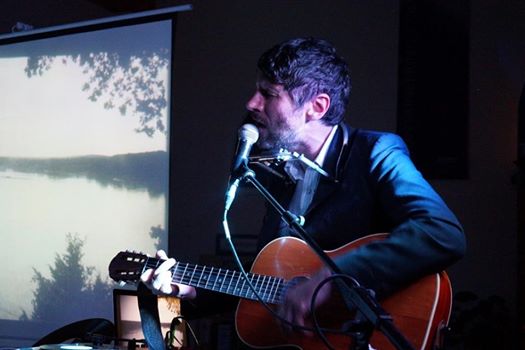
Gruff Rhys played Kendal Library last night, and it was the best gig I’ve been to for a very long time: a madcap historical tour of 1790s America told in equal parts music, PowerPoint presentation, audience participation and something like stand-up. Gruff’s new album is a eulogy for John Evans, a penniless 20-year-old farm labourer who set off for the New World in search of legendary lost tribes of white Welsh Indians. Along the way, he faced the perils of disease, incarceration, war, assassination, hunting parties, alligators, and living in London. After every few slides in the presentation came a song, played on a combination of guitar, harmonica, some box full of electronic bleeps, a wired-up metronome and a turntable, as well as Gruff’s astonishing voice, crooning and whooping and soothing and floating through it all: pop, dub, techno, folk.
John Evans’ irresistible story was told with respect and gentle humour. One of the songs took its lyrics from his letters home; another focused on the unlikely friendship between Evans and a renegade Scottish general called McKay, finishing with a gorgeous refrain: “If we were words, we would rhyme.”
Of course, with Gruff being a Super Furry Animal, every part of the show walked a tightrope of the weird; unicorns, email, breadsticks and Easy Rider all played a part. It was a truly extraordinary gig, and I’m still reeling that we were amongst such a tiny audience – only 100 people – and in such a great venue as Kendal Library. Get It Loud In Libraries is a brilliant initiative, and I love how they bring new wonders to already vital places. I hope they’ll be doing more concerts soon. (I quietly suggested James Yorkston…)
We hung around after the show to ask Gruff to sign a poster. I’ve worked with some relatively famous people in my various careers, and never been starstruck, but last night I found myself completely tongue tied. I’ve been crazy about Super Furry Animals since I first heard Fuzzy Logic – I must have been 16 – and I was suddenly overawed by how much I love Gruff’s work, from SFA through Separado and his solo albums. Weirdly, he and I share a birthday (along with Hunter S. Thompson and Nelson Mandela). Mon and I garbled at him for a while, got our signature, and fled for the pub.
I think my residing memory will be the library sign on the wall above the stage. As Gruff sung his way so beautifully through the life and times of John Evans, the clipped font above his head announced:
I’m delighted to share this article in the Inverness Courier about Not The Booker. It’s very weird to have read the Courier twice a week throughout my teenage years, and now to read this.
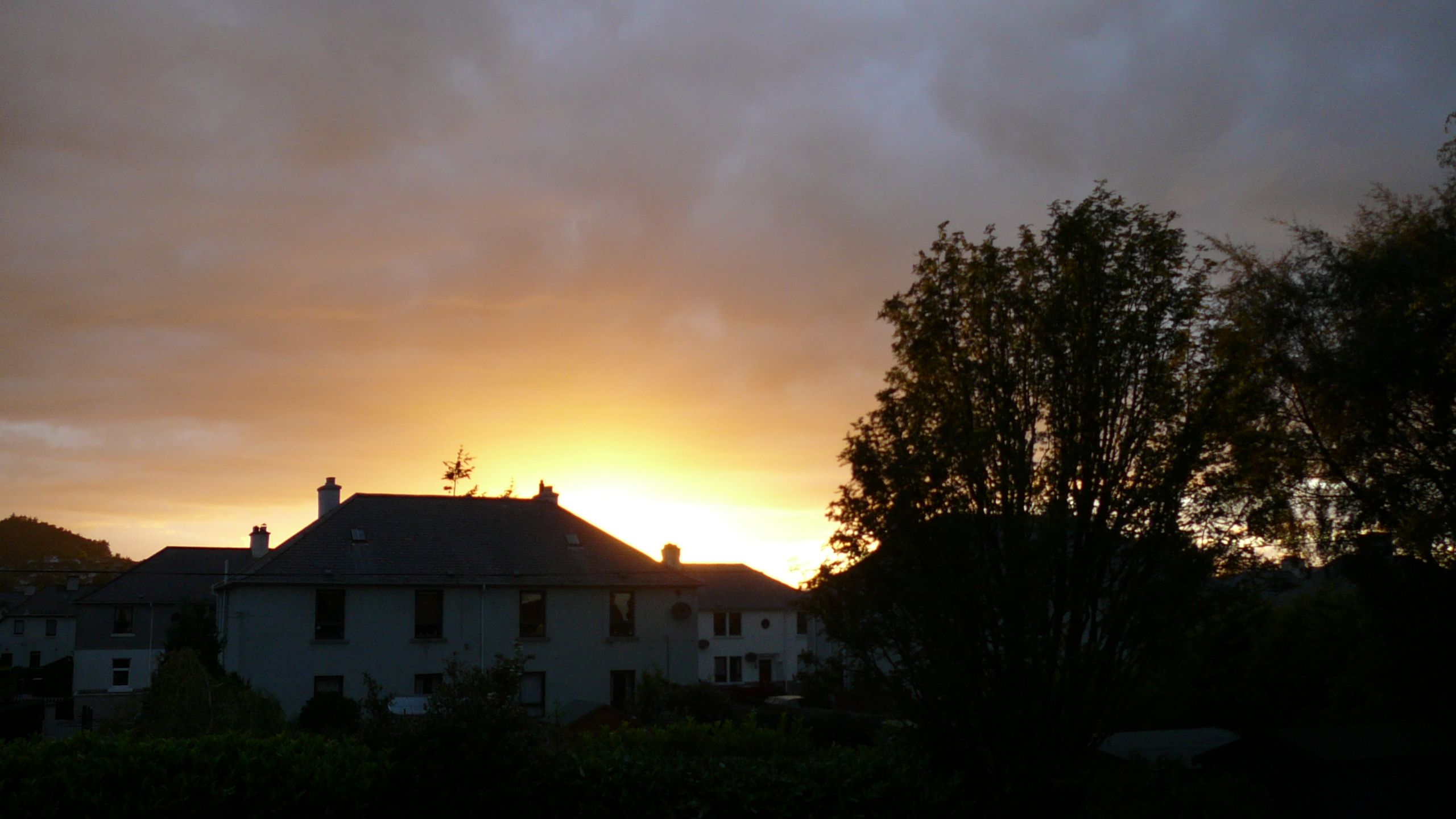
I took this picture in 2005, from the back garden of our house in Inverness, some time around midsummer, slightly after midnight.
I’m a fairly fast reader. I used to comfortably manage three or four books a week, but then I had a kid, and now I read one or two a month – ten pages here, a chapter there – in the few exhausted minutes before I fall asleep. Before Dora was born, I would have probably devoured Islands by Peter Conrad in a day or so. As it is, it’s taken me the best part of six months to finish. To be fair, that’s been mixed in with a host of other books, including the first vast volumes of China Mieville’s Bas-lag trilogy, which I devoured a hundred pages at a time, regardless of how tired I was.
I needed swathes of swaggering, pageturning steampunk as a counter to Conrad. Here’s the thing: Peter Conrad is clearly a writer of huge ability. His sentences are as perfectly formed and intricate as crystal. He writes with enormous grace and intelligence, drawing on a frankly astonishing range of culture, high and low, to construct his arguments. His book explores islands as psychological landscapes, a topic that fascinates me. It’s a weighty, worthy, fascinating work. But it also had a curious affect on me: Conrad’s writing sent me to sleep.
Now, I don’t mean to say that it’s boring, because it really isn’t. But somehow, Peter Conrad’s writing has a truly soporific affect on me. The flow of words is hypnotic, soothing – a lullaby of thought. I typically found my eyes closing after mere pages, or sometimes only paragraphs. It’s taken me months to finish the book, and towards the end, I realised that enough time had passed for me to forget big chunks of what had gone before.
I’m discussing this mostly because I haven’t experienced it before, and I’m slightly baffled by it as a phenomenon. If a book is boring, I stop reading it. But I was truly intrigued by the ideas Conrad was exploring, and never thought Islands was dull. I wanted to read it faster, but night after night, it sent me to sleep. Eventually, I found myself reading it because I wanted to sleep, rather than reading it despite sleep. I reached for it like a comfort blanket or a Valium. Now that it’s gone, I actually feel a little bereft.
A few months ago, I was asked by my friends in the Sprintmilling art collective to run a spoken word evening as part of their exhibition for the excellent C-Art open studio trail. My first instinct was to say no, because I’m so constantly swamped with work that I’m barely writing anything of my own. But on reflection, I decided to go ahead and give it everything I had. I’ve never organised or hosted a spoken word event, and Sprint Mill is a very special place to me. What swung it for me was a request of mill owner Edward Acland, who wondered if the performers might be interested in writing a piece or two inspired by the mill. I was so intrigued by this idea that I decided to take it on. I called the night In The Flow, and set about inviting writers I knew would do it justice.
In the end, we had a stellar line-up, including the slam-winning poetry dynamo that is Joy France; Guardian weekly pick BigCharlie Poet; Poet Laureate of the Tripe Marketing Board, Jonathan Humble; journalist, poet and painter Helen Perkins; poet of internal, external and emotional landscapes, Harriet Fraser; the frighteningly talented young Turk of the macabre, Luke Brown; Edward Acland himself; and me.
All the writers rose to Edward’s challenge, and all attended the mill at various points for inspiration and ideas. The place is soaked in stories. Sprint Mill is a wonder. It is both serene and madcap, combining perfect sense with complete bamboozlement. Over three floors, scores of chests, cabinets and workbenches line the walls, all laden with jars, boxes and objects. It’s no less than a portal into another time. The ceiling is lined with skis and 1950s shop signs. The windows gather dust, discarded toys, wood swarf and cobwebs in rafts. Military buttons sit beside bradawls and buckets of rusty nails. Washing machine parts are pinned in loops to a heavy magnet – an apothecary cabinet groans with esoteric contents, all neatly labelled: barbershop equipment, bird eggs, lightbulbs. The mill is a bipolar rabbithole of wonder and nonsense. Every time I visit, I find myself caught between poles of melancholy and childish joy. It’s a tangible place, and it’s a dream.
I didn’t hear or read any of the writers’ responses to the mill until the night. Somehow, between introducing the acts and reading a piece from The Hollows for the first ever time, I managed to film them at work. Here are the performances in order of appearance. Enjoy…
Edward Acland distills his decades of collecting into The Jars:
*
Jonathan Humble reads bombastic ballads of tripe, Daleks, and reckless rhubarb:
*
Helen Perkins performs three pieces, finishing with the utterly enthralling Edward’s Gunshop, which is one of the best poems I’ve heard for a long time:
*
Luke Brown reads a brilliant (untitled) short story of chaos, catastrophe and common sense. Fans of Roald Dahl and Jeremy Dyson in particular will devour this:
*
Harriet Fraser charts the life of a seedling, considers cagmagery and takes us into the nether regions of a sheep:
*
BigCharlie Poet delivers mouses, houses, foxes, and his Guardian pick-of-the-week, It’s The Grit That Makes The Pearl:
*
Joy France finishes the night with a wonderful sequence of poems touching on memory, loss, joy, patchouli oil and fracking:
*
There were more than thirty of us crammed into a smaller section of the mill, ruddy with stovelight and beer. We sat on hand-carved chairs and recovered benches, and dust crawled in columns from the ceiling. We laughed, we talked, we drank and we told each other stories. I’ve said it before, and I’ll say it again, but words mean nothing without the folk to hear them.
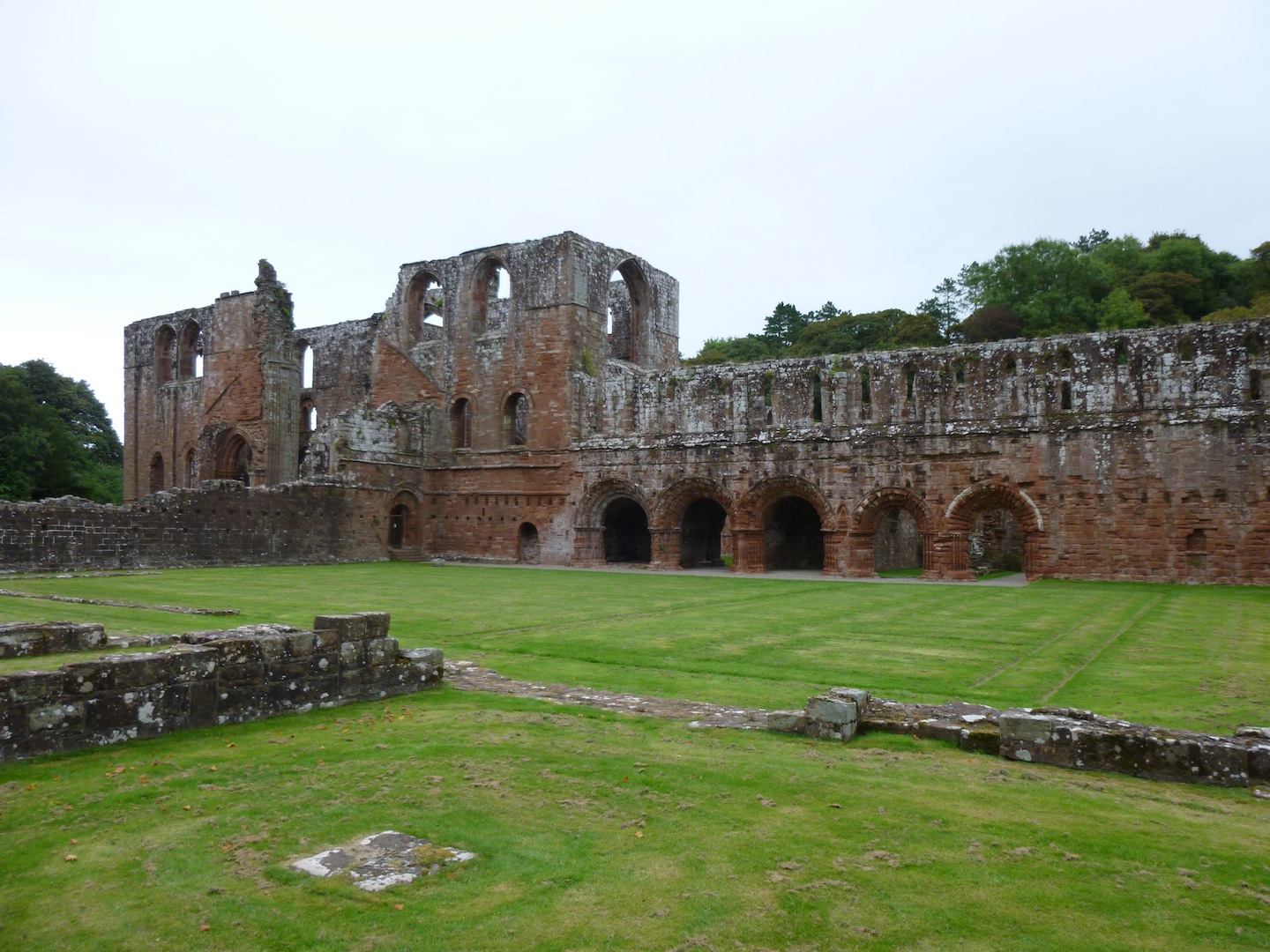
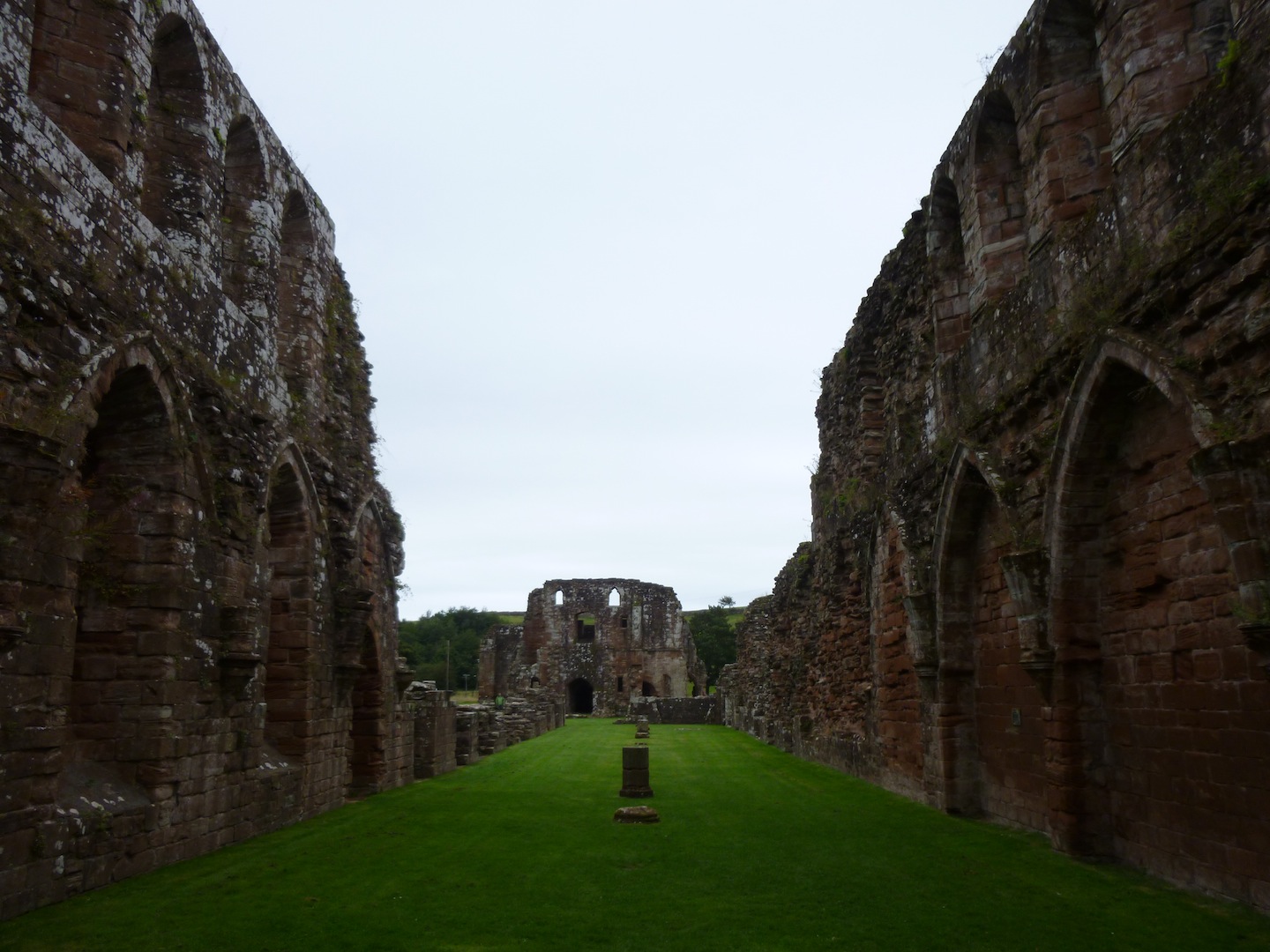
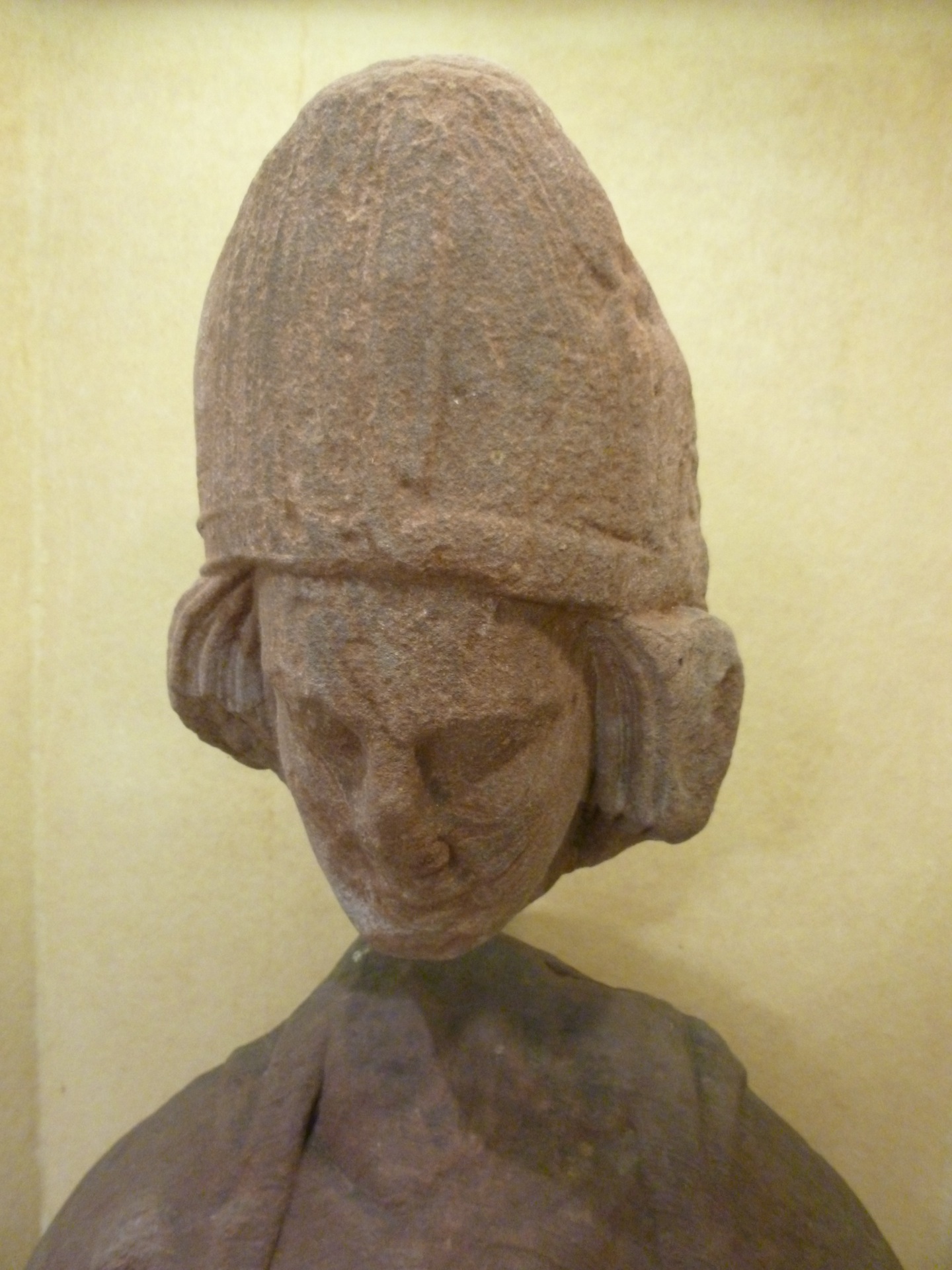
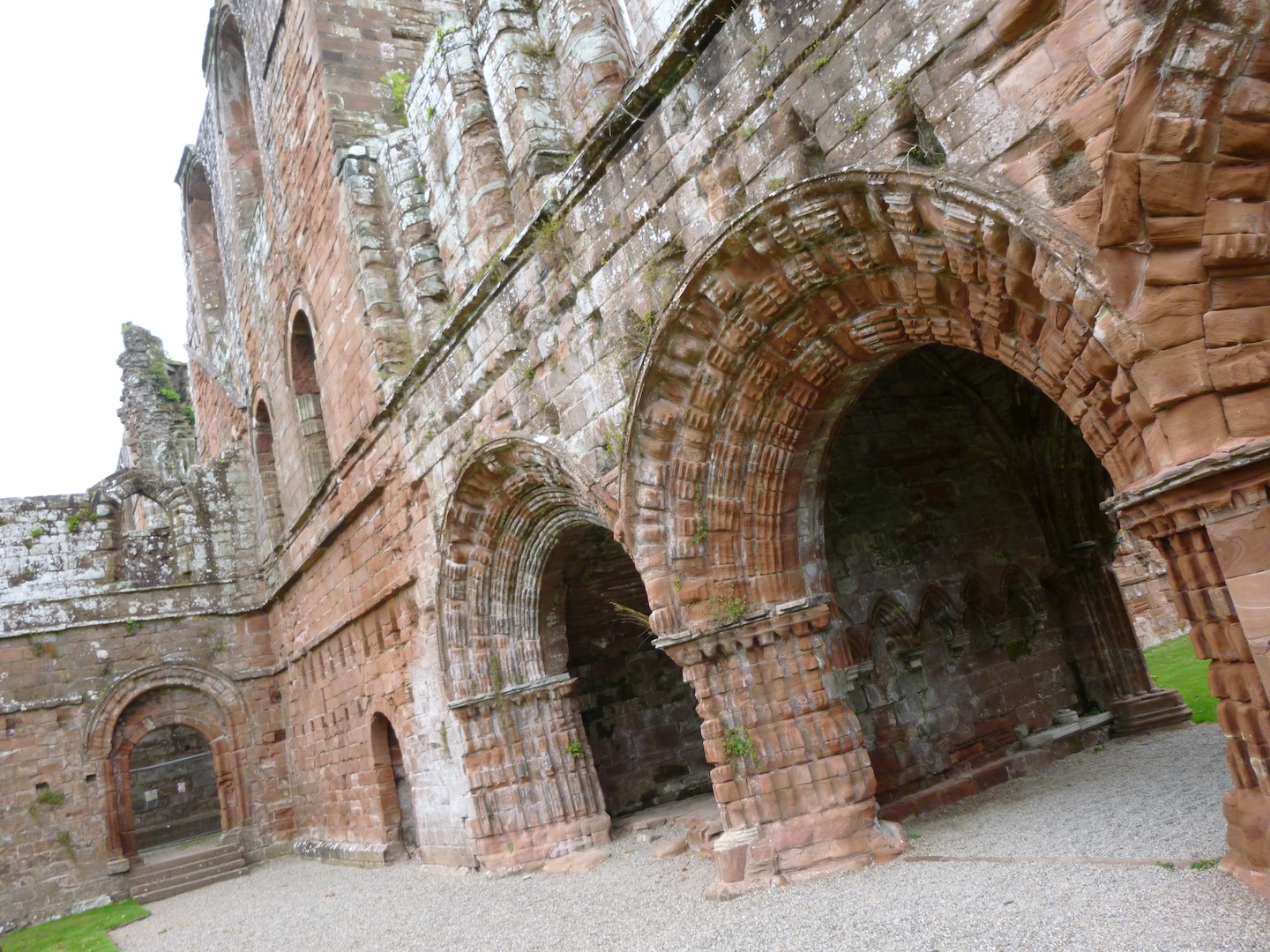
I visited the awe-inspiring Furness Abbey last week. It’s one of those places that I find very hard to describe, and although I’m going to try, I don’t feel I’ll come close, so I’ll probably keep this fairly short.
The abbey lies in ruins, but the utter majesty of the place remains. Sandstone soars into the sky in towers, even as the wind and rain carve it back down into organic shapes. It’s humbling beyond measure to walk the grounds, to sit in the buttery, to peer up tiny spiral staircases, to measure spans and arches – to walk the same paths the monks would have walked, centuries ago. A watercourse trickles through the ruins, tight with brick and riddled with tunnels and drains, but also dense with willowherb. It makes the abbey seem both antique and feral. There are plants trickling from upper ledges, and swallows nesting in the cells. There are tunnels and alcoves and windows and doors. What survives of the former halls still feels enclosed. Parts of the abbey are completely removed from the main walkways, and it’s unnerving to stand in silence and stillness and reflect on the hundreds of lives to pass through the same space. It’s crawling with ghosts. They’re in every stone, in every blade of grass. The site is surrounded by trees that hush in the wind, and the place is full of whispers. It embodies that sense of threshold I feel so drawn to. There are blind corners, where the space is shut abruptly out and your skin crawls with presence. Gravity weighs more in the abbey. The stones have grown gaunt on life and death and time.
Time. That’s the abbey means. The whole place aches and creaks with a ferocious sense of time. It’s massive. It echoes, it rebounds from the rock, from the moss. Walking the walls brings our few moments in this world into ferocious, ridiculous focus. It’s magnificent. It’s extraordinary. Go and explore it for yourself.
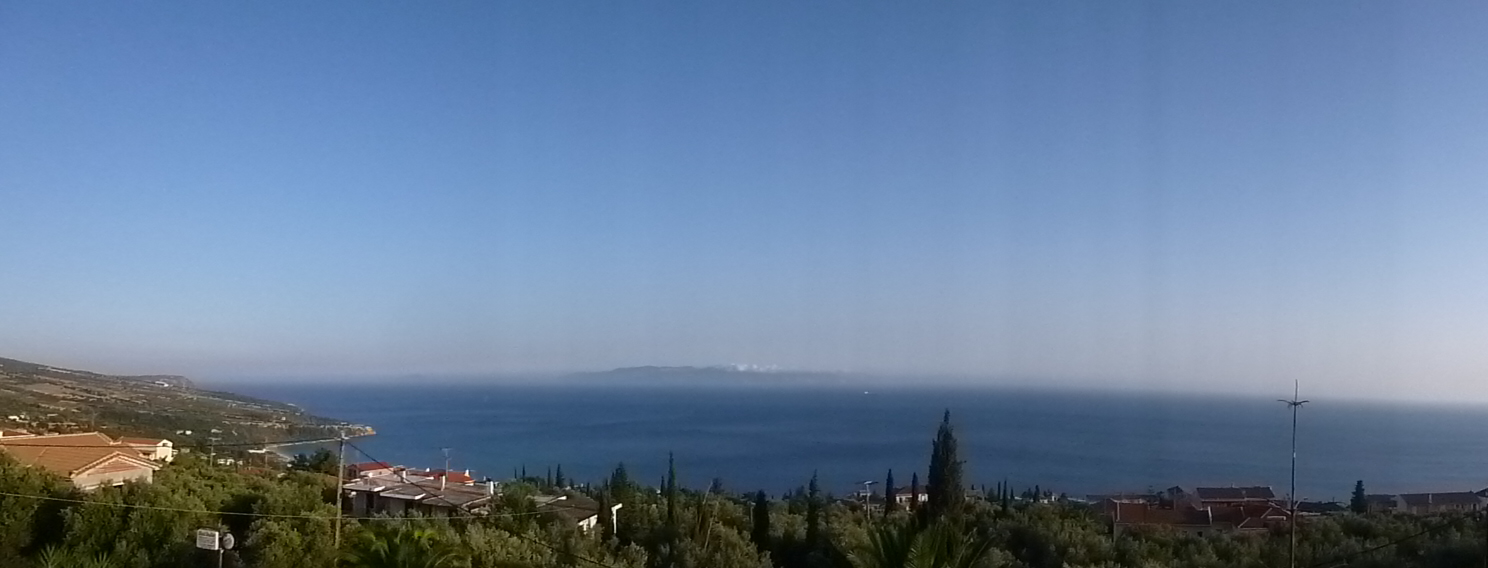
Another year, another holiday. A fortnight before our wedding, and with a thousand things to organise, Mon and I have taken Dora for a week on Kefalonia in the Greek Ionian islands. Some people thought we were crazy, leaving so soon before the big day, and others thought we’d done exactly the right thing. It’s been wonderful. Our studio was cheap and cheerful, but had stunning views of the sea. The beach at Lourdas was only a few minutes away. We’ve done as much sunbathing as Dora would allow, and spent the rest of the time building bad sandcastles or splashing in the shallows. We visited Melissina cave, where they filmed The Goonies, and drove round onto the Lixouri peninsula to the secluded beach cove of Petanoi, ringed with sheer white cliffs.
View from our balcony
Kefalonia is intoxicating. Olive trees spill into the verges, and fig trees grow in long-abandoned lots. The cliff-top hairpins are graffitied with faded communist slogans. Goats dawdle as they cross the road in scraggy herds. Each of their bells is tuned slightly differently, so the goatherd knows where each animal is foraging. When they’re hidden by the pines, the bells sound like secret orchestras, playing just for you. Skinny feral kittens bat at grass stalks and dry leaves. Cacti grow on roadsides. Beehives, painted rainbow bright, cling to precipitous hillsides. After lunch, old men sit in the meagre shade of trees and smoke. All the while, the island is alive with cicadas. They chatter all day in a raucous chorus that never stops, resounding all around in a cacophony of tones and clashing rhythms. After a day or two, I learned to tune it out, but occasionally I’d become suddenly, urgently conscious of the racket, and the world would explode again with sound. In the hour either side of sunset, when the heat was exquisite, the evening air grew heady with jasmine and lemon. The jumble of architecture felt strange and at times a little sad. The global crash hit Greece harder than most, and there are abandoned building sites everywhere. The skeletons of these half-formed houses cling to the hills and wrap themselves in vines. It’s an extraordinary place.
One of my favourite things about going on holiday is having the time to read. I’ve been reading a little more often in the last few months – trying not to work so late, and going to bed with a book instead – but on holiday, I can gorge myself. This time round, I went through The End Of Mr Y by Scarlett Thomas, Thursbitch by Alan Garner, Hey Hey Hey Hey Hey Hey Hey Hey by Fat Roland, The Coma by Alex Garland, It’s Lovely To Be Here by James Yorkston, Bring Up The Bodies by Hilary Mantel and The Evil Seed by Joanne Harris.
I love Joanne Harris, but struggled to get into The Evil Seed. As Harris explains in her introduction, it was her first novel, and she doesn’t feel she was firing on all cylinders. I found the regular switch of narrators a little jarring, for all that her writing was as wonderful as ever. Harris is a master, but The Evil Seed simply wasn’t for me. I also struggled with The End Of Mr Y. It started well, with a great premise – in a second-hand bookshop, a research student discovers a novel no one has seen in a hundred years. The book is supposed to be cursed – anyone who reads it will die. What a brilliant idea for a novel! Scarlett Thomas is extremely good at explaining the complex scientific theories that underpin the book, but as the plot unfolds, The End Of Mr Y felt increasingly like a collection of philosophical discussions tacked together with incidental actions. It was too disjointed for me – no flow.
I bought The Coma by Alex Garland years ago, and have been saving it until I finished writing The Year Of The Whale – because Garland’s book is also an illustrated novella, which is how I’d like The Whale to appear, if it ever does. It’s another good premise – a man exploring his own coma for meaning about his life – but one that is better managed in Marabou Stork Nightmares by Irvine Welsh or The Bridge by Iain Banks. Using minimal text, Garland brilliantly navigates his way around the dreamworld of the coma, wonderfully abetted by stark, startling woodcuts, but the final sequences became convoluted and disjointed with exposition, breaking an otherwise immersive experience. It was a shame, on finishing the novella, to realise that it came to a little less than the sum of its excellent parts.
Now we come to Hey Hey Hey Hey Hey Hey Hey Hey, the second collection of flash fiction by Fat Roland. Disclaimer: I know and like Fats. I hope that won’t detract from my review of an excellent collection of shorter stories. Fats tends towards the weird in his work – or the really weird, in fact – often working with the mundane to expose the inherent strangeness of this grand and rolling shambles we call life. And he’s extremely good at it, too. Hey Hey Hey is a generally very strong collection, but some of the stories are exceptional: stand-outs for me were The Listener, and Michael Is A Horse, A Beautiful Horse, which rank amongst the best flash pieces I’ve ever read. I preferred Hey Hey Hey to his first collection; although Andropiean Galactic Lego Set Blues is also good, this second collection feels more assured in its use and abuse of the surreal, more convincing. It’s funny, chilling and thrilling, all at once.
Several of the stories are about swimming pools, and then I noticed this. Curious, no?
It’s Lovely To Be Here is a collection of James Yorkston’s touring diaries. For those lucky individuals who have still to discover James Yorkston, he sounds like this:
…and he’s one of my favourite musicians. I’ve seen him play three times – by accident at The Raigmore Motel in Inverness back in 2001, I think, supported by Malcolm Middleton, though it may have been the other way round; then with his full band at The Brewery a couple of years ago, which is one my all-time top gigs; and then solo at The Dukes in Lancaster last year. He’s brilliant live, and these diaries – witty, honest, funny, poignant and a little sly – give a compelling insight into the flip side of life as a touring musician. I guess it gave me pause to think of the times I’ve approached him (or other musicians) after a gig, gushing praise and wishing well. Especially now I’ve started performing my stories live (nowhere near the same experience, but in the same universe, I suppose), I better appreciate that sometimes that’s the last thing a performer wants – to be inundated with people, and all the psychic tension and expectations they bring with them, when they’d rather go to bed. These diaries are funny and wickedly honest.
I never planned on reading Bring Up The Bodies by Hilary Mantel. I absolutely hated Beyond Black, the only other Mantel novel I’d tried, and I was therefore cynical about the praise heaped on this book and its precedent, Wolf Hall. But when I’d finished all the books I’d brought with me, I had to turn to the graveyard of dog-eared abandoned holiday reads in the hotel. Bring Up The Bodies was the only one I even halfway fancied, though I started reading with reluctance. And do you know what? It’s magnificent. Set in the court of Henry VIII, it plays out the last few months of the life of Anne Boleyn from the perspective of Thomas Cromwell, the king’s fixer. Bizarrely, Bring Up The Bodies actually gave me what I was expecting, but failed to find, in George R R Martin’s Song Of Ice And Fire – thrilling, page-turning intrigue on the price of power and the rise and fall of dynasties. It reads like The Godfather. Mantel’s Cromwell is an absolutely astounding narrator. I’m definitely going to seek out Wolf Hall, now, and I was delighted to see in the author’s note that she has more plans for Cromwell.
Finally, there’s Thursbitch by Alan Garner. I’m relatively new to Garner, off the back of his wonderful collection of British Fairy Tales and his short novel Strandloper, though I probably read The Owl Service when I was a kid. I’m still digesting Thursbitch. It’s profound and important, but it isn’t much fun. Garner creates worlds real enough to touch. His prose is so sparse, his stories so lean, that it often feels like there’s nothing there at all – as though his work is invisible, and his books are slices in time, windows into centuries when the world was young and hungry, and land still mattered. Thursbitch is about an old magic, a northern magic of white hares and white bulls and bees, of toadstools and snakes. It’s almost voodoo. A magic of the stones and the seasons and the night sky and the bog. It’s a magic of balance – of keeping the land and the people in check, pragmatic, without mysticism or spirituality. It’s heady stuff, and I’m still reeling. Like Strandloper, it’s dense, often using language so archaic it feels alien, and Garner gives nothing for free. I’ll read it again in a few years, I think, and see how it’s changed – how I’ve changed.
Back into pre-wedding mania. The garden has bloomed without us. The Black-eyed Susan has climbed to the top of the trellis, and the Russian vine is turning into a triffid. They remind me of the plants that explode everywhere in Kefalonia, wild and reckless in the dust and dirt. It’s strange to come home. Mon and I talk a lot about living abroad. I get depressed by the daily horrors this government continues to inflict on anyone who isn’t already rich, and I harbour visions of growing my own peppers and onions and garlic and chillies. We talk of Spain and France. Of a simpler life, I suppose, where we’re not drowning in screens and SATs. One where I can write and Mon can paint and Dora can chase katydids in the pear trees. There are times it feels like a boy’s dream, to run away, and times it feels like the brightest, broadest road we could take.
Halfway through the holiday, there was an insect drowning in the pool. It was my turn to rescue it, so I slipped into the water, swam across and scooped it out on the end of one of Dora’s toys. It was a honeybee. It dried in an instant and flew away, and I swam back to the edge of the pool. Just before I clambered out, I spotted something and stopped. It was a speck, no more than three millimetres long, but it was unmistakably a mantis, intricate and perfect as clockwork. I’d never seen one in the wild. I called Mon across to have a look. Even as we watched, it flexed its killer forelegs, snap snap, and marched across the baking tiles, three millimetres tall and a king of the world. The day before, driving back from the cove at Petanoi, Mon saw a golden eagle.
I love Cumbria, but there’s a splinter in my head that says we could be living cleaner, should be living simpler. Living slow.
I’ve been climbing a mountain of college work, which is why I haven’t blogged for a while. There are a few things to report, though: my first ever panel event, for Waterstones Argyle Street in Glasgow; another open mic for Verbalise in Kendal; and some lovely reviews for The Visitors.
In the weeks beforehand, I made myself quietly terrified of the panel event, though I loved the theme. It was called ‘Islands Are The New Cities’, and brought me together with two other crime writers and a chair to discuss the attraction of islands as story locations. This is something I’ve already explored a little right here, and I was looking forward to discussing it. The terror came from the unknown: I can prepare for a reading, but had no sense of what the panel would involve.
I needn’t have worried. The Argyle Street Waterstones is a glorious bookstore, chair Douglas Skelton was funny and relaxed, and the other writers, Craig Robertson and Alex Gordon, were really engaging and easy to talk to. I was surprised at how far the discussion ranged. From a springboard of introducing our own books, we ending up debating alcohol, Faroese Hell’s Angels, caravan parks, the place of fantasy in crime novels, being a teenager in a small town, our daily working routines, tax deductible research and grandmothers. Douglas kept us on track whenever we wandered too far.
For the record, I think islands are perfect locations. They are miniature worlds, with all their own rules and laws contained within the boundaries of the coast. My friend Ben maintains there are two stories: either ‘boy/girl leaves to seek fortune’, or ‘trouble comes to town’. Islands make that sense of arrival or departure far more tangible, more immediate. The physical space of an island is an entire universe. Anything can happen on an island, and the rest of the world will never know.
There was a great moment before the event kicked off. I’d just met Alex, who is a veteran sports writer turned novelist. Breaking the ice, I pointed out that he, I, Craig and Douglas were all wearing shirts in shades of white or blue. I suggested that we should sit in a row from lightest to darkest, ha ha ha. He fixed me with a piercing eye.
‘What kind of a mind even thinks like that, man?’ he said.
On to Verbalise. It was packed out for headlining act George Wallace, pictured above. George is an award-winning beat poet on a busman’s holiday from his residency in the Walt Whitman Centre. I was delighted to find my friends Joy France, BigCharlie Poet and Harriet Fraser at the open mic – I don’t see them as often as I’d like, and it was grand to catch up.
Almost until the moment I walked onstage, I was umming and aahing over which story to do. I’d settled on either The Matador, which is an old piece about a Spitfire pilot, or new story Cuts Like A. I’d already decided that if I did the second piece, I was going to read without notes. My dilemma was that the story was brand new – only a few weeks old – and I didn’t feel I’d quite yet come to know it. During the first interval, I raced off to scribble it from memory in my notebook, writing from start to finish without breaks. I hit everything important, as well as adding a few things in, and that gave me confidence to gamble on the new piece rather than the safety of the old.
It went well. I loved performing the story, using my hands and face and eyes to invest in my characters. I’m coming to feel more and more that this is how to read a story live. (David Hartley is right.) Writers read best when they’re committed. Cuts Like A is about a drunken knife thrower, and I enjoyed being able to mime the knives, and mime the rotating disc to which his wife is cuffed – to make those actions part of the story. I simply couldn’t have done that with paper in my hand. It felt even better than the Flashtag Short Short Story Slam, and it’s good to think I’m still making some progress on my reading. I’ll never be a professional performance storyteller, but that’s the sort of place I’d like to move towards.
The other open mic acts were very good. I’ve always found Verbalise to be consistently strong. Harriet, Joy and BigCharlie were brilliant as ever, and I enjoyed the work of those writers I haven’t yet met. After the second interval, George Wallace took the stage by storm. The next half hour was like being inside a Tom Waits album. I especially loved his first poem, I Want To Go Where The Garbage Men Go, a beat epic about pre-dawn New York. You can (and should) read it here.
Finally, the reviews are still coming in for The Visitors. Everyone so far has been really kind. It’s humbling to think that people are enjoying the book. I’m keeping a round-up of press articles on The Visitors page, and there are more reviews on Amazon and Goodreads.
If you’ve read the book, please do leave a review. After spending so long inside my own head while writing the novel, it’s simultaneously petrifying, compelling and rewarding to discover what people think of Flora, Ailsa, Izzy and the island of Bancree.
I’m going to sign off with Joy France and her mesmerising poem Home Truths. This is important:
A couple of weeks ago, Daniel Carpenter came up with the idea to blog about a book that changed everything he knew about reading and writing, then pass the baton onto others. He wrote, brilliantly, about The Wasp Factory, then nominated David Hartley and myself to continue the chain. David wrote, promptly and also brilliantly, about Frankenstein, then picked Benjamin Judge and Nija Dalal to follow. Benjamin Judge (seriously: who is Benjamin Judge? I’ve read in Manchester three times, and never met him. He’s either a front, Lawnmower Man, or a ghost) then wrote with intimidating speed and grace about Tom Clancy’s Red Storm Rising, which means I’m late and under pressure.
The brief is to write about a book that changed the way I understood literature – that made me realise “what writing could do”. That’s a tough call. My first instinct was also for The Wasp Factory, which had a massive impact on me. But I think, on reflection, that others that hit me deeper, if not harder, and I can’t come close to Dan’s thoughts on what remains an astonishing book. I’ve spent a lot of time weighing up what to write about instead. Fingersmith by Sarah Waters is my biggest recent influence, but that was more like rebalancing my compass. Bruce Chatwin’s Songlines shook me to my core, and Jasper Fforde’s Bookworld series changed the way I thought about stories. Before that, the Harry Potter books got me reading again after a long period of not reading at all.
In the first draft of this post, I wrote 500 words about The Proud Highway by Hunter S. Thompson. The first scintillating volume of his letters was the inspiration that started me blogging while I was backpacking in Australia; that blog taught me to write (albeit like him), which led to a job in magazine journalism, which led to me writing fiction in my words of my own…
I love Hunter S. Thompson. He remains an inspiration for his sheer, indomitable rage against the greed, corruption, insanity and monstrous terror of corporate government. His prose is flawless, and The Proud Highway was the book that definitively led me to becoming a writer.
But – having written 500 words about Thompson and his letters – I stopped short. A book I hadn’t thought about for years swum into my head, and I knew it mattered more. It’s The Wonderful Story of Henry Sugar (and Six More) by Roald Dahl. I don’t know when I first read Henry Sugar, but I think it was during the single year I spent in an Edinburgh boarding school while my parents lived in Germany.
I remember almost nothing before the age of 10 or 11, and my time at the boarding school sneaks up on me like spidersilk – fleeting, single strands, flickering with light, then gone. And although I don’t remember exactly, I know that I spent a lot of time in the school library. I know I read King Solomon’s Mines, and all The Hardy Boys books, and a bunch of Stephen Kings. I would have read Dahl’s children’s fiction when I was younger, but I’m pretty sure that was when I stumbled upon his more adult stories.
I rediscovered Dahl when I was in my early twenties. I found all his works in a charity shop in London, and bought the lot. I gorged on them. His stories are consistently excellent, but Henry Sugar is the strongest of many extraordinary collections. The tale of the boy and the turtle, or the mysterious hitchhiker, or the greedy landowner and the treasure hoard, or the title story, all explore the no-man’s-land, the thin threshold between the real and the impossible. They are all perfect stories, delivering just desserts to protagonists and antagonists alike. Another of the pieces, The Swan, haunts me still; Dahl’s tale of bullies brutalising a class loner is gut-wrenching, brilliant, beautiful, devastatingly sad and entirely magical.
Henry Sugar is ferocious. But how does it redefine my idea of what books can do? It didn’t have that impact on me as a child, certainly, because I had no concept of books doing anything other than taking me away – I simply read and read. But in my twenties, on rereading Henry Sugar, the ghost of it flooded back – the sad magic of The Swan sluiced through me, and it was utterly transporting. Where Sarah Waters holds back from explicit fantasy, and Neil Gaiman commits to it completely, The Wonderful Story Of Henry Sugar perfectly inhabits that edgeland between reality and fantasy. This is important because I see, now, how I’m drawn to that same space in my own work. I don’t want to write like Roald Dahl – I couldn’t – but I’m trying to walk that same tightrope between two places. And in that sense, no other book has so changed the way I think about books – about writing – about reading – about living.
So that’s me. I’m going to nominate Iain Maloney and Ali Shaw to continue the series, though I haven’t asked them yet.







 Simon Sylvester