A century of…

I realised, after posting this video about a ballerina dancing on butcher knives, that I’d hit a hundred posts on the blog. A century is still pretty arbitrary, really, but it’s as good a place as any to stop and think about why I keep a blog.

I started writing the blog six months ago to track the progress of my novel. The book was called Riptide Heart, back then. It’s now called The Visitors, and it will be published by Quercus Books in 2014. All that has happened in the lifetime of this blog. I’ve tracked my highs and lows and uncertainties throughout the publication process, from finding an agent (a year ago) to signing the contract (last week).

As well as the novel, I’ve written a lot about reading my work live, and the struggles I’ve had with my nerves. Each of my various readings has been painfully revisited, but that return has helped me filter and understand the experience. I’ve also explored my decision to gather my flash fiction into a collection, which is called Marrow, and will almost certainly be self-published, and teaching myself InDesign to lay it out professionally. (More on this soon! As I approach the end of my redraft and clear my backlog of film jobs, I should have the time and space to push ahead and get this wrapped up and printed.) I’ve posted published and unpublished flash fictions, and talked about my writing processes. I’ve written about my film work, and catalogued some of the things that I find inspiring or magical. I’ve posted galleries of the threshold spaces I’m so obsessed with.

All in all, then, my blog has ranged far wider than I ever thought it would. More than anything else, I’ve been surprised at how personally I’ve addressed some of these subjects. When I started, I expected the blog to be fairly analytical, for want of a better word; dry, professional. But in struggling with my live performance readings, and in wrangling my novel redraft, I’ve found myself at times alarmingly open about how I feel about my work. I like that the process of writing has taken me in that direction quite organically.

One of the joys of using WordPress is browsing through the stats, which tell me what brings people to the blog, what they look at, and often where they come from. I’ve had visitors from as far afield as Mozambique and Mongolia, searching for everything from devil dogs to gay porn. (Hopefully not everyone will be as disappointed as those two internauts.) I’ve had a week without any views, then hundreds of visitors the day Neil Gaiman retweeted this post about libraries. Have a look at this screen grab and see if you can guess which day that was:

photo

The two things that bring people to the blog most often are on the periphery of my interests; this post about a nursery rhyme and this post about a WW2 fighter pilot preserved in a peatbog. People have searched for Bancree, which is the fictional Scottish island I created for The Visitors, and for novelist friends like Iain Maloney and Ali Shaw. Lots of people come to the blog looking for information about my agent, Sue Armstrong at Conville & Walsh, and my publisher, Jane Wood at Quercus.

More than anything else, though, the blog is for me. It’s how I filter my ideas and monitor what I’m doing. Writing about my life is what I need to live my life.

Wormholes and bridges

Here’s an exhilarating lecture by Neil Gaiman, exploring what it means to read. This essay has all the passion, humanity and humour of his fiction.

When my dad was stationed in Germany, I had to attend a boarding school in Edinburgh for a year. I remember virtually nothing of those few terms – only scattered memories of finding a flat iron in a tree root, and of crawling down a tunnel that older students used for shooting practice. But I do remember the library, and I remember reading. Reading a lot. I can’t recall all the titles, but I know I read King Solomon’s Mines, the Biggles books – which probably explains my unforgivable weakness for adverbs (he thought, wistfully) – and all the Hardy Boys books over and over again. I’m pretty sure I started on Steven King around then, too. I was eight or nine at the time, which might explain a few things.

Anyway – the library is my only memory of that time that’s even halfway to concrete. It was a refuge for me, and I’ve loved libraries ever since. When we lived outside Inverness, the mobile library van was a highlight of my fortnight: visits from Desmond Bagley, Terry Pratchett, Ernest Hemingway. The librarian was a Brummie expat with gigantic muttonchops. It was like swapping books with Noddy Holder. When I was seventeen, I applied for a job driving the mobile library on the Black Isle. I didn’t get it.

I’ve been a member of libraries in Inverness, Bristol, Lancaster, London, Manchester and now Kendal. Libraries have given me a place to read, a place to study, a place to work, a place to think and, when I was at my poorest, a place to be warm. Libraries are portals to parallel universes. They are circuses, space stations and sunken ships. They are deserts and cities and jungles. They are wormholes and bridges. They record the past, and they tell the future, and they record every scrap of human experience.

Libraries are important, and we’re losing them. Government cuts have brutalised already very modest library budgets. As Michael Rosen has pointed out, coalition rhetoric expounds the need for reading, while quietly removing the places to read.

Neil Gaiman’s essay voices all this far more eloquently than me. It’s beautifully written, of course, but a real thrill, too: immediate, passionate and compelling. Please read it – worth every word. And then go and get something from your library.

20131020-094950.jpg

A little light reading

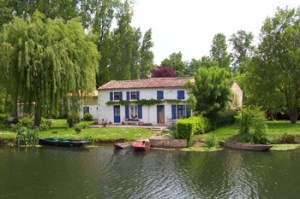
We’ve just returned from a brilliant fortnight in France. We racked up 2,500 miles in a round trip that encompassed Ile de Noirmoutier, which is reached by a two-mile causeway at low tide; Rauzan, where we camped in the shadow of a ruined medieval castle; and Marais Poitevin. This last spot, nicknamed ‘Green Venice’, is one of the most amazing places I’ve ever seen. Centuries ago, it was a vast swamp, but Dutch settlers drained it with a labyrinth of canals and ditches, leaving hundreds of island pastures connected by causeways and bridges. The architecture is just as unique, with balconies and shutters adorning every house, and punts moored to jetties in gardens. Poplars and alders tower into the sky, the canals are thick with lurid green algae. Fat dragonflies zip and pop between shrubs and creepers, and the trees are alive with cicadas. Filtered through high branches and reflected from the water, the light itself is tinted green.

marais_poitevin bluehouse

It’s genuinely one of the most incredible landscapes I’ve experienced and, much like Grogport for Riptide, it’s been a real inspiration for my next novel. In the space of a few days, I filled an A4 pad with notes and dialogue, and I feel really excited about starting work. There’s still plenty to do before I can begin, but the foundations now feel firmly set.

The other great thing about the holiday was having time to read. I managed six books, which is no mean feat when juggling a toddler in a campsite. And I had a great run of books – not a single dud:

The Tiger’s Wife by Tea Obreht was bold and convincing, subtly switching a range of voices to make folk myths contemporary through personal memory. I enjoyed it a lot, but found it ever so slightly cold, and wasn’t as blown away as its reputation suggests.

Cumbrian Folk Tales by Taffy Thomas was a fascinating collection of the county’s legends and myths, made all the more immediate through its connections to a landscape I’m starting to know. It was amusing to recognise the names of not just local places, but also local people – people I’ve met, worked with, drunk with. The tales were strongest when connected to geography, giving meaning and history to a witch’s cauldron or a devil’s bridge.

I read The Blackhouse by Peter May – this was a present from Jane Wood, my publisher at Quercus. She thought I’d like a look because, like Riptide, it’s a crime story set in the Hebrides, though it doesn’t have the supernatural elements of my book. I enjoyed it a lot. The plot was dovetail-tight and engrossing, and the landscape was intoxicating.

Next up was I Love You When I’m Drunk by Empar Moliner, Spanish short stories in translation through the tremendous Comma Press. Despite some uncharacteristic typos from an excellent publisher, it’s a solid collection, each story exploring and exploding conceits of modern life. Some of the stories felt a bit like shooting fish in a barrel – taking aim at soft targets of liberal, middle-class pomp – but the writing was good throughout, and there were many outstanding moments.

Moliner’s collection was good, but the next book was astonishing – a class apart. The Dog Of The Marriage gathers Amy Hempel‘s four short story collections into a single volume, and they are consistently superb. There isn’t a single wrong note across dozens of stories. Hempel’s work is voiced through emotionally damaged or stunted narrators, trapped or somehow left behind in their lives, caught between stasis and decay. The stories are not without hope, though, and Hempel writes with unceasing, unfailing humanity. Her sentences and structure are scintillating. I cannot recommend this highly enough. This is the sort of book I buy two copies of, expecting to have one out on loan.

the_dog_of_the_marriage.large

Finally, I read Snake Ropes by Jess Richards. This was another corker. Alternate narrators explore life on a mysterious island, ‘just off the edge of the map’, eventually combining to bring the distinct halves of the story together around a single, long-forgotten trauma. This novel holds trade and barter at its heart, exploring themes of presence and absence, balance and weight; of exchange, and what it means to give and get. It’s a real triumph, made all the more masterful in how Richards weaves the fantastical through the fabric of base human instinct, conjuring talking keys, sentient trees, and a walking doll with a seashell for a heart:

Moppet2

The last fortnight has reminded me, as stupid as it sounds, of how much I love to read, and made it painfully apparent how little reading time my regular schedule affords me. I’m determined – on top of carving out more writing time – to read more. I miss it.

This holiday has been essential. I’ve worked stupidly hard over the last two years without much of a break, and I’ve badly wanted some time off. Looking ahead, the next two months are going to be frantic – but I feel better for a break. I have my next novel blocked out and the sights and scents of a swamp fresh in my mind. One more draft of Riptide to go, and then I’ll be starting my new story.

‘The software of our minds’

This is a fascinating article, examining the quasi-neurological process through which stories develop emotional punch. I’ve long believed that empathy is the quality a writer needs more than other; this article seems to give my belief a little foundation. Put simply, stories engage readers through exploiting our empathy with the character and their situation. Writers therefore need to assume the mantle of that empathy and project it onto their characters.

Read on:

Six Ways to Make Sure Your Reader’s Brain Syncs with Your Protagonist’s Brain.

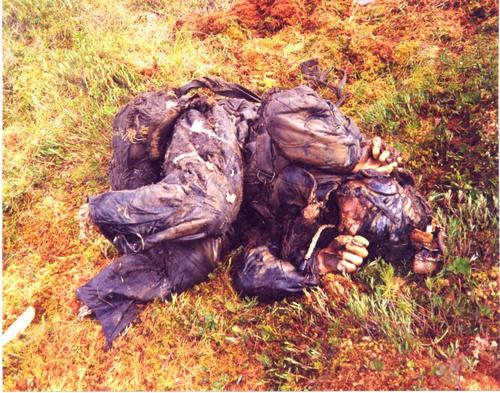
WWII bog body

pilot

After the bog boats, here’s a bog body from WWII. This Soviet pilot was shot down at the age of 22. Boris Aleksandrovich Lazarev tried to escape from his Hurricane, but crash landed in a bog. The impact seems to have severed his feet, but the peat preserved him almost perfectly for over half a century. He has now been buried in a cemetry in the Karelian Republic in western Russia.

Limppelty lobelty

Image

My reading lately has brought me to the Tiddy Mun. He’s a grumpy but rather sad spirit of the fenlands. There’s something very ancient and disconnected about him, as though he’s been left behind, and doesn’t entirely know why. People were actually quite fond of him, by all accounts, in the same way they’re fond of elderly and slightly addled relatives they see only every other Christmas.

Anyway. Tiddy Mun can summon water, mist and fevers from the marshes. He’s very much at home in the bogs, and he was incandescent about the draining of the fens by the Dutch. In his rage, he conjured pestilential swamp airs onto all Fenmen, and didn’t stop until everyone said they were sorry.

He sounds anachronistic even in the 1890s:

“He dwelt deep down in the green water holes, and came out at evenings when the mists rose. Then he came creeping out in the darklings, limppelty lobelty, like a dearie wee old granter, all matted and tangled, a long grey gown so that they could hardly see him in the dusk, but they could hear him whistling like the wind and laughing like a peewit. He was not wicked like the rest, but he was eerie enough, though the times were when he helped them. For on wet seasons when the water rose to their doorsteps, the whole family would go out together and shivering in the darkness they would call:

‘Tiddy Mun wi’out a name,
Tha watter thruff!’

They would call it till they heard a cry like a peewit across the marsh, and they’d go home. And next morning the waters would be down.”

I feel quite sorry for the Tiddy Mun. He seems lonely and lost and utterly out of place, but I think he might have a role to play in the new novel. I especially like the idea that he isn’t “wicked like the rest”…

Labour

Physical work is a counterpart to writing. I wrote my first novel while working in a furniture workshop; I wrote dozens of short stories, and started Riptide, while making yurts for a carpenter.

As a teacher, my life is at once more manic and more sedentary, but my ongoing house restoration has provided frequent and occasionally brutal reminders of what it is to work with my hands. This weekend, it was the turn of the garden. Along with my dad and my father-in-law, I put up a fence, laid a patio, cut down two trees and cleared a ton of rubble. It’s been an exhausting, sweltering few days, and my hands and arms are riddled with scratches and grazes and splinters, but that seems a fair price to pay for the achievement.

Physical labour is good for my brain. It allows me to switch off, for a while, through either the concentration or monotony of the task, and the blank space it leaves allows the formation of thoughts. Climbing does the same trick. About halfway through the fencing, I had a mini-brainwave about my new novel. Two sequences quietly switched places, and the narrative opened up a little more. I’m coming closer to blocking out the plot all the time, just making notes and letting it simmer in the background. Even if my hands are cut to shreds, it’s healthy to remember how to use them for more than typing.

To Do

I haven’t been writing very much lately. I’ve been too busy with real life, scrapping my way through end-of-year marking for my film students and working on videos for Kendal College and Cumbria Wildlife Trust. I’ve still some way to go, and there’s plenty more to do – my Dad’s popping up to help me build a fence, and I need to build a log store. But hopefully the end is in sight. Most important, I should be getting Jane‘s notes for Riptide in the next few weeks, and then I need to work my way through that final draft.

For a bit of a change, I’ve been using the odd evening to (slowly) teach myself the basics of InDesign, trying to put together a booklet of my flash fiction. It’s no big deal – twenty-five stories between 50 and 500 words, provisionally entitled ‘Marrow’. I’ve also booked in my next two readings – first for the Spotlight open mic in Lancaster in July, and then as a support slot for Dreamfired in Brigsteer in October. And in the background, I’m reading and researching towards my next novel; quietly brewing on the story, blocking out the plot. I still have some narrative strands to tidy up, though I know where the book will finish emotionally.

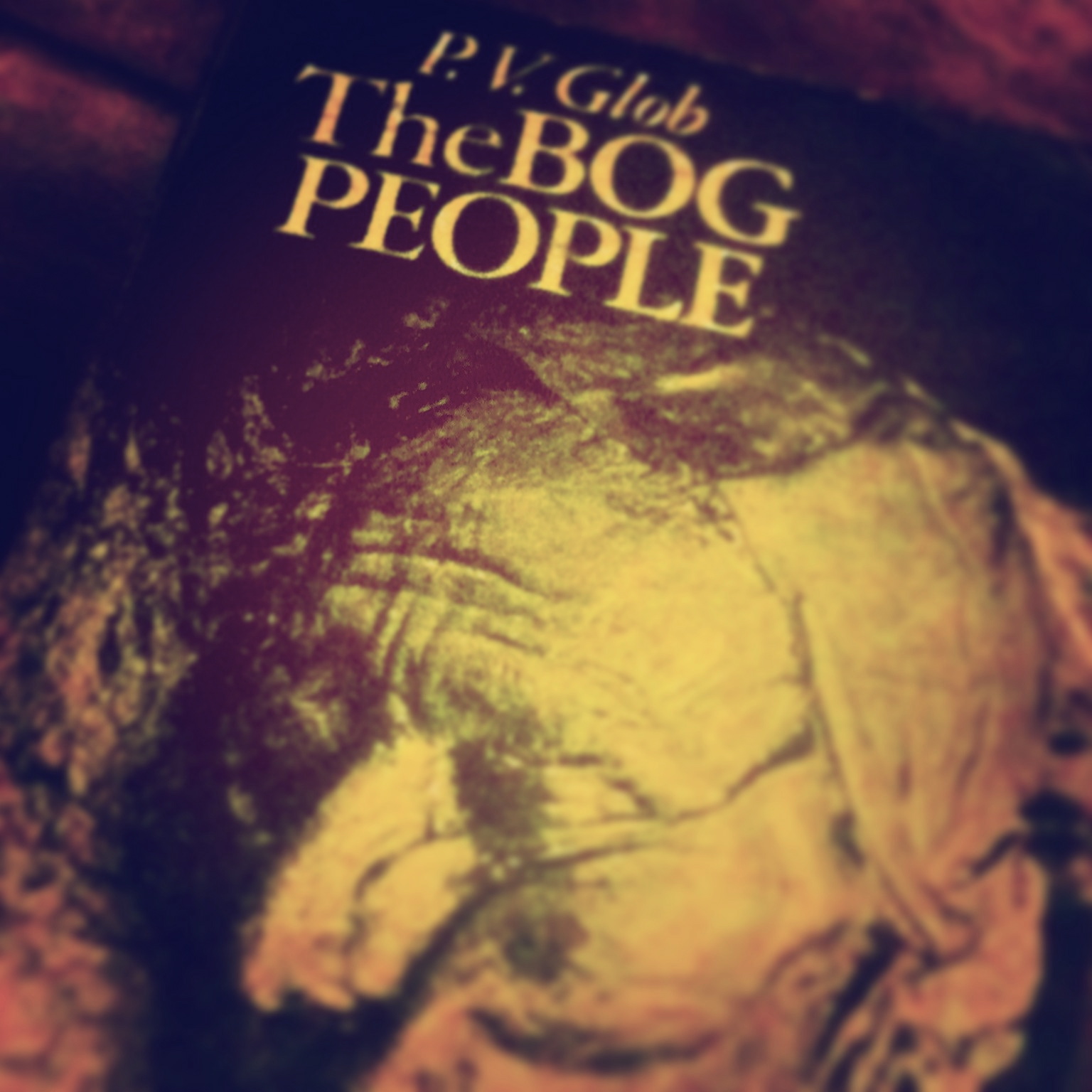
IMG_0091

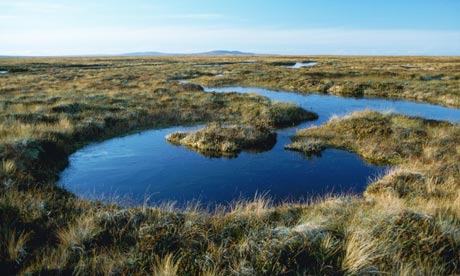
For the moment: research. I wrote about rediscovering P.V. Glob’s The Bog People a few months ago, and I’ve finally had a chance to actually read the thing. For a 1970s archaeological review – even one designed for jumblies – it’s surprisingly well-written. Some of the bog bodies have held astonishing secrets in their graves. One poor woman was staked down with crooks and buried alive. A man was stabbed through the heart, smashed on the head and strangled. It’s all great stuff for the novel, generating context and building ideas. By happy coincidence, one of the jobs I’m doing for Cumbria Wildlife Trust is on wetland restoration, so I’ve been spending some time ankle deep in peatland. I need some more books, and I’d like to take trips to fen country at some point.

Image

It’s a thrilling stage, all the researching and blocking and plotting, preparing the ground before the hard work starts. I learned a lot from writing Riptide, and I’m excited to start work on a new book. Just need to clear away the hundred other things on my To Do list, first.

It hasn’t been all work. Friends Steve and Clare took us to Chester Zoo yesterday. We went straight to the orangutans, and spent a gloriously peaceful 20 minutes with them before a dozen school trips caught us up. Dora especially loved the bat enclosure, a vast warehouse where the bats swoop and skitter in artificial night. This morning we’re off to Dentdale Music & Beer festival, too. I’m going to take my story dice and drink ale.

Bog boats

This is brilliant – no fewer than eight Bronze Age boats have been discovered in a creek in Cambridgeshire. The boats have been preserved by dense layers of silt, to the point that the archaeologists have recorded games of noughts and crosses carved into the wood.

Bogs and marshes….

The full article is here.