
Thirty things every writer should know
These tips come from writer Matt Haig, wrapping the romance and pain of writing into thirty pragmatic little bundles.
Thirty things every writer should know
These tips come from writer Matt Haig, wrapping the romance and pain of writing into thirty pragmatic little bundles.
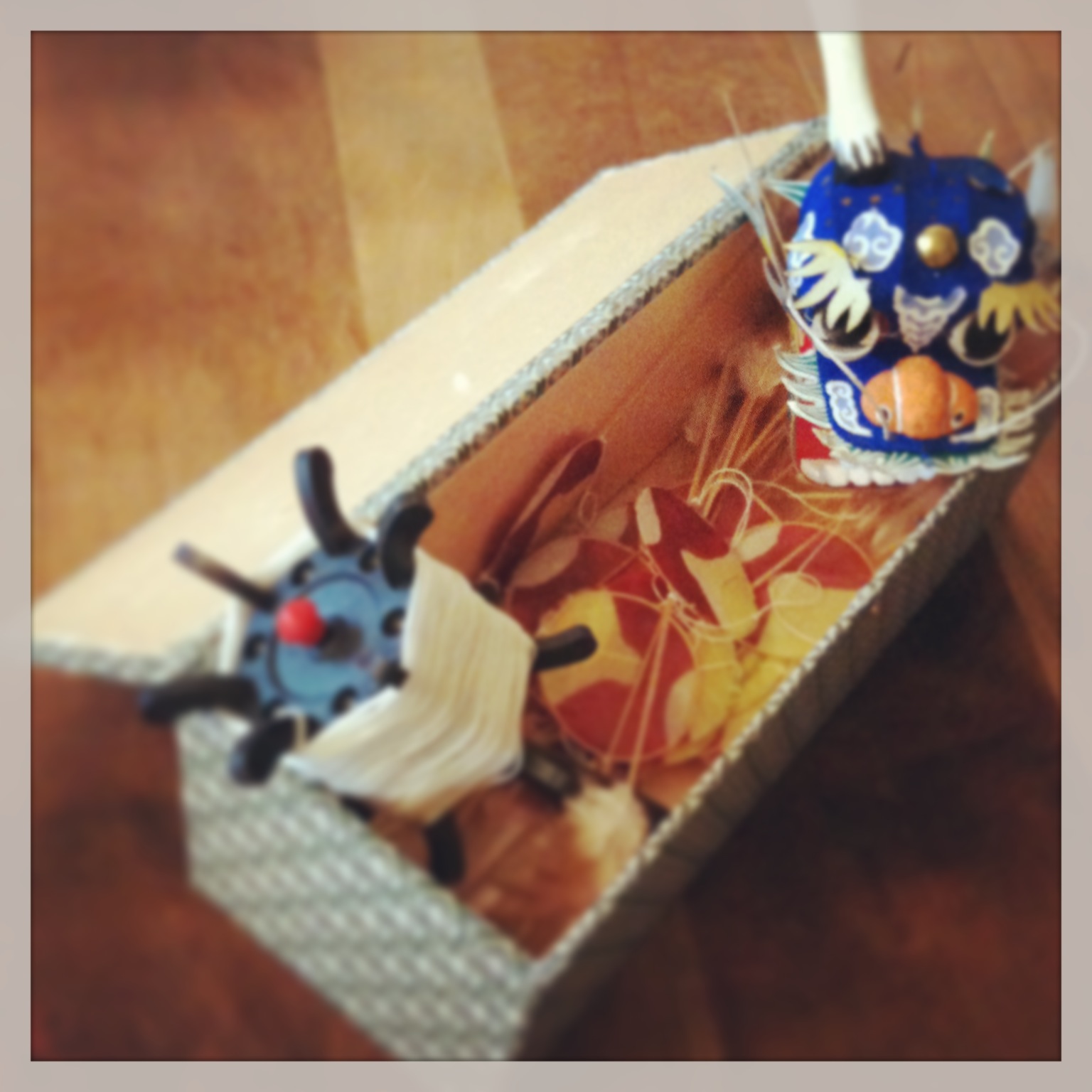
Kites are a big part of my second novel, and I’ve been doing lots of research into their history, construction and art. This morning I was browsing my favourite charity shop, the incredible Age UK South Lakeland warehouse (which is here, if you’re ever in Kendal). Monica called me over to look at a Chinese dragon head she’d found in a decorated box. I was absolutely blown away to discover that the head had a body, and that the whole assemblage was in fact a two-metre centipede kite.

Centipede kites are one of the scores of primary kite types. Each of the circular discs – usually made of painted silk, stretched over rattan, with feather stabilisers – is essentially a miniature kite. By the time dozens of discs are combined, there’s enough lift to support a lightweight dragon head, decorated with deer horns for longevity and luck, tiger eyes for strength, catfish whiskers for wealth, and a human beard, signifying wisdom.
This dragon is in a rather sorry state. He’s missing one of his polystyrene horns and some teeth, his paint work is chipped, and one of his whiskers has broken. His ribs are tangled and some of the feathers are missing. He looks quite angry about it, doesn’t he? Well, he cost me 50p. He’s now sitting in his box on my bookshelves, waiting for me to try and revive him. I’d planned on building a kite for myself as part of my research, and this will be a nice warm-up.
I found this excellent quote (which I’ve paraphrased) while reading up on centipede kites:
“It’s a painting on the wall; it’s a kite in the sky.”

In odd hours and half-hours, I’ve been chipping away at Heaven. I’m writing and rewriting the first chapter, combing through it over and over again, settling on a style and language that feels right. It’s starting to work, and the first draft of that first chapter is pretty much finished. My main character’s voice rings true, I can envisage the geography exactly, and I’m happy with the plot.
The biggest stumbling point so far has been the need to invent a religion. When I was blocking out the story, this wasn’t an obvious problem – I drifted past the religion that pervades the culture of my story. Now I’ve reached a point where it matters, and I’ve had to take a step back and consider details. I’ve always imagined this religion blending Buddhist and Hindu iconography with a militarised Catholic Inquisition attitude – almost like a junta, woven into the fabric of the culture. So far, so good… but now I need specific rituals, and the actual wording of prayers. That’s going to take a little time to make concrete, though it will develop as I go. Like most successful religions, I’ll be a magpie, stealing, adapting and borrowing from others on the way. So far I’m thinking shrines, tributes, sacrifices, tithes, prayer wheels, prayer flags, wind chimes, omniscience, monks, robes, bindis and torture.
Not much to report on the manuscript submissions so far. It’s hard to focus while that’s bubbling away in the background, but I’m making myself sit down with the new novel whenever I can. It’s a strange feeling, at once intimidating and exciting, to look ahead and see the rest of the story stretched out like an endless ladder, ready to be climbed.

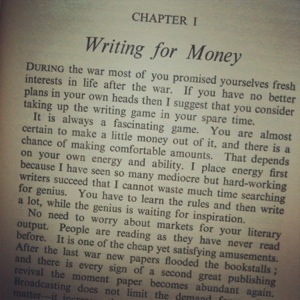
Here’s another of the books I’ve unearthed from charity shops. The ‘Authors’ Post-War Guide’ – published in 1947 – is packed full of handy hints for modern authors. Every page has a new gem. Refreshingly for a writing guide, Lawrence G. Green feels the first thing new authors must learn is “to become extremely suspicious and critical.”
Other nuggets include the useful facts that “Women like reading about jewellery”, and “Sharks have always treated me kindly”. I also like this passage, designed to help focus the mind when writing:
“Put the cat out. For this serious purpose the cat is merely a symbol. The cat may be your wife or child.”
…though it pales when compared to this advice:
“No liquor, no Benzedrine, no coffee. You can have a glass of water if you like. If you smoke, have lots of cigarettes.”
…which almost makes me want to start smoking. The “writing game” seems a lot simpler in 1947.
 Simon Sylvester