Soundscape

Image

When I’m writing, I listen to music. I can barely type a word without it. Music helps me focus. Occasionally, I’ll use music to steer my emotional response towards a certain tone in my writing, but more usually, I simply need a soundscape filling the space in my head. I tend to avoid music with vocals – or rather, if there is someone singing, I prefer the vocal to blend tonally with the track.

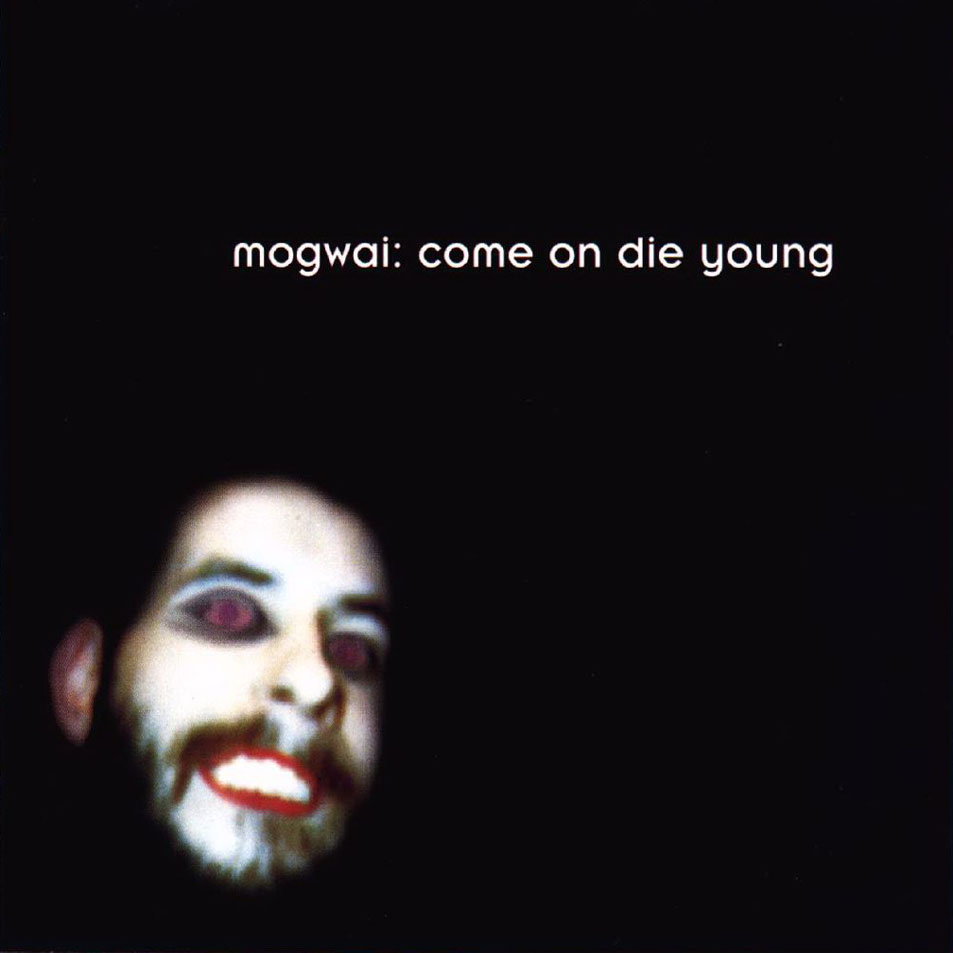
I’ve returned to some records endlessly over the years. I’ve listened to Mogwai‘s Come On Die Young literally thousands of times. I’ve spent entire weeks working to the British Sea Power back catalogue on repeat – or Arcade FireArab Strap, Throwing Muses, The Antlers or Godspeed You Black Emperor.

All these bands have similar musical themes: they drone and fuzz, they soar and soothe – but ultimately, the music they create is cohesive, regular or continuous. Their albums tend to run without breaks or interruptions, creating sonic soundscapes. Call it post-rock – call it what you like – it works for me. It helps me tune out and focus on the story.

I develop different soundtracks for different projects. My 2008-2009 novel-length prose-poem Meat was soundtracked almost exclusively by Godspeed You Black Emperor’s 2-disc, 4-track epic album Lift Yr. Skinny Fists Like Antennas To Heaven!, while first novel The Visitors was heavy on Mogwai and British Sea Power (two of Flora’s favourite bands). As I moved from writing to editing and redrafting, the soundtrack changed, and I built a playlist that was energetic and snappy; exactly what I needed to fuel my 12-hour redrafting sessions.

Now I’ve started work on my second novel, the music has changed again. At the moment, if I listen to Mogwai or BSP – as much as I love them both – it takes me back into The Visitors. So I need something new, at least while I’m making the transition from one novel to another. Even as I’m feeling out a fresh vocabulary, I’m developing a different soundtrack. While working on Grisleymires, I’ve been listening to a lot of Beirut, Bat For Lashes, The Antlers and Super Furry Animals. Thanks to Last FM, I’ve discovered Portico Quartet, Hidden Orchestra and Bersarin Quartett, all whom play organic, slightly sinister trip-hoppy movie-type soundtracks. At the other end of the spectrum, childhood favourites Crowded House are also back on the stereo, though I’m not totally certain why, as they go against all the conditions I suggested above; but they just fit, and that’s fine. Most startling (to me) is that I found myself wanting the sound of wind chimes to work to, and downloaded an hour-long track of chimes and trees designed for meditation. I can’t see it lasting, but for now, it helps me into the world of my story.

Does anyone else need music to work? Who and what soundtracks your writing?

Bogs and marshes

Will-o'-the-wisp_of_Russia

Okay; this is extremely premature, given I’ve just started writing the second novel, but there have been developments on another story I’ve had brewing in the background. I’ve known for ages that I wanted to write about bogs and marshes, and I had a very vague narrative in mind. That idea has been simmering away for a while, and last night, just before I went to sleep, an entirely new aspect bubbled to the surface. As simply as that, the full story swam into focus. I had the sense to tell Mon, thankfully, because otherwise I would have forgotten. My memory is appalling, so I carry a notebook everywhere – but not in my pajamas.

This new dimension transformed a vague story into a concrete story, and I can now envisage so much of how it will play out. While I’m working on second novel Heaven, all I’ll do is write up some notes and salt them away in the depths of my hard drive. Premature, but it’s good to have that skeleton structure in place for when I’m ready (in 2013? 2014? 2015?) to start writing.

In the meantime, new novel has crept up to 2,500 words. Small steps, but I’m pleased with how it’s going. I’m deliberately taking it slow while I develop a new vocabulary – I’m trying to be quite careful about making the language distinct from Riptide Heart.

Decline

On Tuesday, Sue started submitting Riptide Heart to editors. I’m excited, but the thought fills me with fear. It’s incredibly scary to think of publishers reading my work. With all the nerves, I have to keep reminding myself how far I’ve come since cooking up the idea in 2011.

It’s inevitable that there will be rejections. Rejection is inherent to writing. I reckon I’ve had no more than one acceptance for every four short story submissions. There’s a certain fatalism that comes with sending off a story. After all the graft and anguish, it’s a moment of horrible exposure to submit it for the consideration of editors. Rejections are raw, even when they feel inevitable, and that’s just for short stories. The stakes will be much higher with a novel.

Sue has asked whether I want to know who has declined Riptide Heart, and why – or whether I’d prefer not to know. I ummed and aahed about this for a wee while, before deciding that I’ll take all the feedback I can get. I think most writers would give eyeteeth for criticism from professional editors, and I’ll cherish anything constructive, no matter how raw the rejection.

Some editors have already been in touch with Sue to say they’re enjoying Riptide, which is a great start – but doesn’t translate into anything definitive. My nerves are frayed beyond measure, and I feel about two seconds behind the rest of reality, but it’s exciting stuff.

Beginnings

When Monica was pregnant, we didn’t tell anyone the baby’s name. We had a funny idea that telling someone else might jinx it, so Dora’s name remained a secret until the moment she was born.

It sounds daft, but I feel the same way about the title of my new novel. I know what it’s going to be called, but I’m not ready to talk about it just yet. I have this strange sense that I don’t want people to know. So, for the moment, I’ll use another name. This was actually the first title I thought of, but decided was a bit of a mouthful; it’ll do for now. When I talk about the new novel, I’ll call it ‘We Are Always Reaching Out For Heaven’.

I mention this because I started writing today. I didn’t think it would happen so quickly, because I’ve been stewing on the idea for months, but this morning I divided the story into chapters and blocked out the scenes, then copied the whole plan into a new document. Each of the chapters has a summary of the action, ready to go, so I can work on whichever part of the story shouts the loudest without losing sight of the whole. This method worked nicely for me with Riptide Heart, as I seldom write in chronological order (I like to write my ending early on – it gives me a destination to work towards).

Then I simply started writing. The first line was quick, and the rest of the paragraph took me an hour, trying sentences, rephrasing them, deleting them, rewriting them…. and it evolved, slowly, feeling out the words, building a story. It’ll take a while to settle on a voice and a vocabulary that works for this story – and to keep it distinct from Riptide Heart, which is still fresh in my mind after such intense redrafts.

So there it is – the first 500 words of my new novel, down on paper. It’s an odd sensation to be in a triple figure word count after dealing with a redraft of 105,000 words, but I’m quietly excited about it. And I need something to keep my mind off Riptide Heart while agent Sue starts the nerve-shredding process of submitting the manuscript to publishers.

Kingfisher

Image  Image

I used to go climbing several nights a week, but I haven’t the time any more. And when we lived in the old house, I cycled to work; now my wife drops me off at the college before she goes to paint. In short, I don’t do any exercise. I’m constantly zipping about at a thousand miles an hour, juggling my different jobs, but that’s hardly a substitute.

Walking is the only activity I can really make time for. Mon and I both love walking. We’re lucky enough to live in an amazing part of the planet, and our little corner of it has some excellent trails. We can walk from our wee cottage in Burneside to see friends in town – or strike out in any other direction to find open countryside.

I’m not a purist about the countryside. I like edgelands and places of threshold where the natural and the man-made have grown old together. Yesterday, we walked to Staveley in Kentmere and back. It’s a great walk for rusted farm machinery, gnarly stiles, fallen trees and tumbledown barns. There’s a troll bridge with missing slats, and a beech tree strangled by a noose of barbed wire. The tree’s bark has enveloped the wire completely, lapping over it like the slowest wooden wave. In one spot, a fence has been mended with an old iron bedhead. It’s lambing season – we passed new lambs, minutes old. I saw my first ever kingfisher.

Walking gives me more than physical exercise. It’s a source of constant, ever-changing inspiration. Walking around London fuelled my first short stories. My walks on Islay, Gigha and Kintyre fed into Riptide Heart and the fictional island of Bancree. My longstanding work-in-progress, Year of the Whale, is about walking – and the need to walk. Location is crucial to the way I write, and walking in real places fires my imagination. I try to create a geography – physical, atmospheric and emotional – that I believe in. When I get it right, my characters play out the story in that environment like a drop of water on a slope, finding the simplest route to ground.

Walking is good for the soul.

I’m calling a character in my next novel Kingfisher.

14-hour Third Draft Self-doubt Blues

At 11.45 last night, after 14 hours of damn-near nonstop work, I finally sent off the third draft of Riptide Heart. It’s taken me so long because I hit a horrible stumbling block. For the first time with this novel, I didn’t know how to develop the story, and for the last week I’ve thought of little else. The stumbling block was as follows:

  1. Character A discovers a piece of information.
  2. Character A tells Character B the piece of information.
  3. Not enough time has elapsed between point 1 and point 2 to be convincing.
  4. Point 1 can’t be moved any earlier in the narrative without gigantic structural changes.
  5. Point 2 can’t be moved any later in the narrative without gigantic structural changes.
  6. Points 1 and 2 are too integrated to be separated without gigantic structural changes.
  7. I was unwilling to make any gigantic structural changes.

I turned it inside out looking for a solution. I tried rewrites, alterations, moving entire chapters – everything. But no matter which way I turned it, I couldn’t make it gel. Nothing felt right, and nothing was working. It made me miserable.

On Monday morning, lovely agent Sue dropped me an email, asking if the manuscript was ready. It wasn’t, but even as I replied, the block dropped away completely. Out of nowhere, I knew exactly what to do.

Yesterday morning, when I started work at 9am, I went straight to point 1, and deleted it. Then I went to point 2, and deleted it. Points 3 through 7 promptly became redundant. After a miserable week of stress spent questioning the novel, questioning myself and questioning the universe, this took me about 20 minutes. I simply hadn’t considered that as an option, and I’d wracked myself hollow trying to find alternatives. With joy in my heart, I set about tidying up the loose ends. My old flow came back in a heartbeat; rather than excising point 1 altogether, a brilliant alternative started shouting from the back of my brain. I made the switch. It worked.

With the last of my structural changes complete, I started, once again, the painstaking process of passing through the novel from start to finish. There’s no short cut to this, but I do it two or three times on every draft. It’s the fine-tuning and the rephrasing – the last check for chronology, for sense, for pace.

I could barely focus by the time I sent the manuscript away. My brain now feels like toffee and I have RSI in my right little finger (which, curiously, is the only finger I don’t use at all in typing, and consequently hovers under tension over the keyboard at all times), but after a week of anxiety, self-doubt and stress over such a small issue, I’m pretty happy with it.

Next up: Sue’s response. We’re getting closer to London Book Fair all the time. If I need to do another draft, it may not be ready for the fair, and I’m so keen for Riptide Heart to be a part. That said, I’d prefer it to be right, rather than merely on time. It’s fantastic to have such a strong editorial input from Conville & Walsh – their constructive, critical feedback is what energises my redrafts. Writing feeds on community, discussion and development.

Once more onto the beach

One of the hardest parts of redrafting is becoming immersed in the draft – again. When writing a long piece, I drown myself in the world of the story. The deeper into that world I sink, the further there is to come back. When I’m working intensely on a draft, spending days or weeks in the writing, I become moody and distracted, and I need to achieve a sense of holistic closure on that portion of the work to be able to push on with other stories or films or projects. 

This is now my third draft of Riptide Heart. It’s increasingly surreal to revisit words I wrote more than a year ago. I find it easy enough to jump back into the island of Bancree, to pick up the voices and the story and return to characters I’d said my farewells to – but emotionally, it’s difficult to step in and out of writing at those same levels of intensity, and that makes redrafting something of a rollercoaster. 

I think another few sessions should finish this third draft – hopefully by the start of next week. We’re getting closer to submitting the manuscript. I want to make Riptide as strong as possible, but the next novel is starting to sing to me, louder by the day.

Kill yr. darlings

I set about the third draft of Riptide Heart last night, and cut out massive swathes of work. When I worked on the second draft, back in January, the greatest challenge was to actually start making changes to scenes I’d spent days or even weeks creating. I found myself pussyfooting around them, tentatively reshaping phrases and changing single words, rather than digging in to make structural changes. It was weeks before I stopped being so precious about redrafting. The third draft has therefore been strangely empowering – to simply blitz through the manuscript in one go, cutting paragraphs, pages and even entire chapters.

The third draft is now riddled with holes and littered with notes and reminders, but it was cathartic to do all the destruction in one swoop. Everything from here is rebuilding.

Redraft: take two

Redraft: take two

Today’s post brought the manuscript of my second draft, including Sue’s notes. Much like the ramshackle clutter of the Conville & Walsh office, this is exactly how I imagined it should look. 307 pages of rumpled, tea-stained paper is much cooler than revisions in Word.