The destination

The Visitors was officially published on Thursday, and I was away all day on a college trip – for the second year in a row, four of my students had made it to the semi-finals of the World Skills competition. We’d driven down to Hinckley on Wednesday, stayed up till 1am practicing their pitch, then risen at 6am to practice and get to the venue. They had a 5-minute presentation to deliver, and we stayed all day, waiting for feedback. Throughout that time, I was quietly flooded with emails, texts and messages – so many that I felt helpless – I could barely respond. Friends sent me photos of the delivered book – out of my hands, now, and into theirs – and all the while I sat with my students, and talked with other tutors, and wandered round Hinckley College. It felt incredibly weird to be so far removed from the book on its publication day. The students succeeded with their presentation, and won a place at the finals in November. We left at 4pm. It was supposed to be a three-hour drive back to Kendal, but took more than five. The motorway was a purgatory of second gear. It flattened me. I sat in traffic jams and wished I could walk along the central reservation, alone in a sea of stationary cars, the hubcaps and ring pulls and single shoes scattered all around.

Back in Cumbria at last, I dropped off the college car and walked an hour through the gloom to get home to my amazing wife. By the time I turned the computer back on, I’d had scores of congratulations from friends and family. I felt humbled and very lucky. Then, in a mark of the rollercoaster this trip has become, I received an email saying I hadn’t been awarded a Northern Writers’ Award. That’s disappointing, though I’m still very glad I applied.

Thursday was a topsyturvy day, but then I woke on Friday to the news that my short story What I’ll Do To Be In Love With You had been accepted by the National Flash Fiction Day anthology – and then, a few hours later, the amazing Tania Hershman alerted me to the presence of my story Art Is Long, Life Is Short on the BBC Opening Lines longlist. I’d long-since written that off as a rejection. Talk about frazzled. On Friday night, Mon and I drank a bottle of posh fizz and sat and talked it over. That felt good.

I don’t entirely know what to say about The Visitors being published. I’m proud of what I’ve made, and I’m delighted to share it with other people, but my good friend Ali Shaw warned me that it might feel something of an anticlimax, and he was right. I don’t feel any different in myself. I’m still planning lessons, ploughing through my mountain of marking, and stressing about whether my four-month hay meadow time lapse is going to work out. Publication hasn’t changed any of that. But it is an affirmation of all I want to do – to coax the stories in my head out into the light. It has also reminded me how blessed I am in my friends – I feel almost ashamed to have had such support from such incredible people. These few days have made my heart beat bigger, and I’m thankful.

All this has whetted my hunger to push on with the next novel. In that respect, I guess The Visitors is the culmination of the first stage of a long road. More than anything else, I know, with every cord of my being, that this is the right path for me. Writing is a journey, but publication is not a destination. I don’t want it to ever end. I want to walk till my heart gives out.
Thievery

I’m honoured and delighted to have contributed a post to Kirsty Logan‘s long-running series of story inspirations, Thievery. It’s entirely possible to drown yourself in the wealth of stories Kirsty has curated, and I thoroughly recommend you do.

For my post, I confessed about a novel I abandoned at 50,000 words, because I no longer knew what it was about. One day, it will be reborn as The Year Of The Whale.

Here’s the story so far: Northern Lights / The Year Of The Whale.

Slamming

After a wild and wonderful night in Manchester, I’m bowled over to report that I somehow managed to win the Flashtag Short Short Story Slam. It’s still sinking in, but I’m delighted.

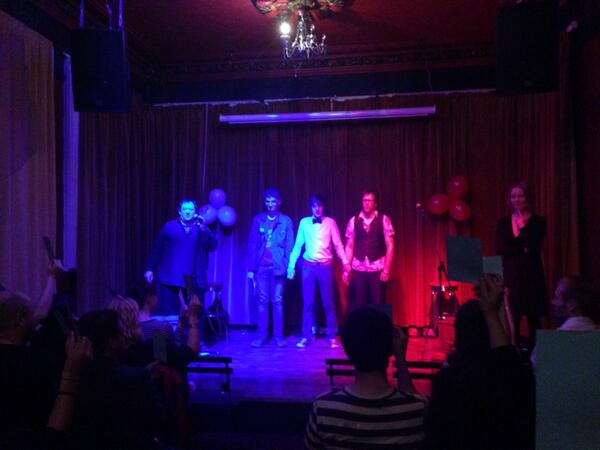
It was something of a journey – we left Dora with her grandparents, and drove down from Cumbria in the afternoon. Mon and I met friends Steve and Clare in the Northern Quarter, ate in the revelation that is V Revolution, then headed across the road to Gullivers to scope the venue: a brilliant space of worn floorboards and ornate plaster ceilings. The stage was bathed in blue and red light, creating corners from which the writers would prowl to read their stories. For the first round, competitors were paired off at random, with names plucked from a bowl and a coin toss to decide who read first. Once each writer had performed their story, the audience voted blue or red to decide a victor, and that writer continued to the next round.

Bl2YKBRIEAA4qch

It started ferociously, with the amazing Joy France reading an intimidatingly strong story about cleanliness (and willies). Her opponent was good, but that story would have annihilated all comers. I was very, very glad I hadn’t been drawn against her. She was duly voted through, and set the bar for the rest of the night. The stories were consistently excellent. Hand on heart, there wasn’t a bum note. Mark Mace Smith and Mark Powell, Joe Daly, Abi Hynes, Sarah Stuart, Geraint Thomas, Trisha Starbrook, Thomas Jennings and Ailish Breen all read absolute belters.

My name was drawn in the fourth bout. I read a piece called What I’ll Do To Be In Love With You, about a boy who turns into a harmonica. I was anxious, as always, but I’d been practicing, and I made myself take the time to enjoy it. My opponent was Thomas Jennings, who read a brilliant piece about the end of the world as experienced through last orders in a MacDonalds. It was a funny and affecting story, and I would have been happy to lose to it; but I scraped through into round two, where I was paired off with Mark Mace Smith. Mark is a vivacious slam poet who often performs under the name Citizen Mace – check out his stuff here – and he made for another tough competitor. I was up first, with a story called Charlie Loved The Circus. This is a 200-word nasty about why you shouldn’t be mean to clowns. Mark’s piece was a sweet wee story about a man falling – literally – for a girl. Another close vote, but I made it to the third round.

In the final, I read against Mark Powell and Joe Daly. Both are stalwarts of the Manchester literary scene – Mark runs Tales Of Whatever, and Joe is one half of Bad Language – and their stories were excellent. I was last to read, and went with a story called The Jubilee Best Bake Competition. I always planned to read this with an accent, but bottled it at Verbalise. So I bought a frumpy hat onstage. It’s made of green wicker, has a broad brim and is covered with flowers. Once I’d donned the hat, I couldn’t back down from the accent; and so I launched into my idea of what happens when the village baking competition takes a turn for the worse. The audience (joined, at this late point, by three exceedingly stocious men who thought they’d come to a boxing match) kindly gave me some laughs, and that helped me relax into the story. The hat helped, too.

The vote was tight again, but I sneaked it. I’m still thrilled, delighted and surprised – as well as humbled and happy to have shared my stories with such an amazing crowd. We stayed for a couple of hours after the slam, happily chatting away with the Flashtaggers, audience and contestants. It made me wish, once again, that I’d made more of the astoundingly vibrant Manchester literary scene when I actually lived there; then again, I’d barely started writing when we lived in Withington.

It was after 11 when we left Manchester, and we drove a deserted motorway in the dark. The journey gave me time to think. I’m over the moon to have won, but there are two things that burn brighter. Firstly, I won’t forget the sense of community I experienced at the slam; it’s a real thrill to share my love of stories with friends and strangers, and events like the slam are a howl of affirmation that stories are alive and people are hungry to share them.

Secondly, and quite honestly, I would have been proud to have been knocked out at any point, from round one onwards. This is because, for the first time, I read my stories the way I want them read. I used to gabble or murmur my way through a reading. A year or so ago, I set out to be better. I haven’t shaken the nerves, but I’m learning to manage them, and I’m coming to trust my stories. I’m not a confident person, but running a gauntlet of open mics has given me some confidence in my work.

Back at home in Cumbria, I tiptoed in to see my daughter. She snuffled in her sleep, and buried herself in the blanket. All journeys, no matter how big, are measured in stages and steps. For all the things I would change about myself – to write more often, to be more focused, to perform better – I wouldn’t change a step of the path I’ve taken to where I stand now.

Here’s a picture of me with a cheesy grin and my cheque for £1,000,000,000,000,000,000,000,000,000,000,000,000,000,000,000,000,000,000. I’ll be cashing this tomorrow, Flashtag – if there’s any trouble at the Post Office, I’ll be back with my bat.

Bl2qVwgIQAAIIiN.jpg-large


Dare!

I’m delighted to share the news that my 100-word story Dare has been Highly Commended in the National Flash Fiction Day writing competition. You can read it, along with the rest of the winners and commended stories, right here.

To reach the top 10 against such strong competition has really made my day. I’m also delighted to see Cathy Lennon take top spot with her story Never Let Me Go, because Cathy is lovely and her story is fantastic.

Someone landed on my blog a few days ago with the search term ‘is flash fiction a proper noun’. I’ve been giving that some thought, and the answer is no. But I love that flash fiction is becoming more established. It’s the perfect counterpart to my novel writing, and it keeps me keen. More thoughts on flash fiction to come soon, I think. I’ve written a host of shorter stories lately, and I want to take the time to explore what the format means to me.

In celebration, I’m off to see international storytelling superstar Fred Versonnen perform at Dreamfired tonight; and even more exciting, tomorrow I’m off to Arnside to attend his clowning workshop. I’m hugely excited about what clowning could do for my performance, and seeing Fred tell his stories is a perfect start.

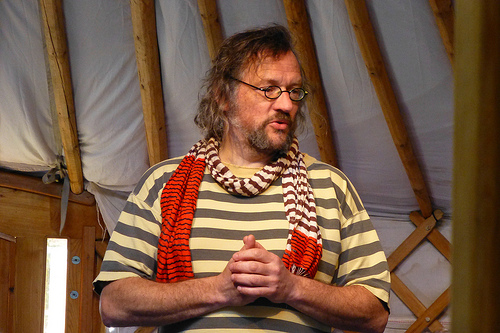
Fred looks like this:

9114900985_7e540c66d8


Know Your Enemy

I’ve just been emailed the list of all the contestants for the Flashtag Short Short Story Slam. If I wasn’t nervous before – which I was, actually – I certainly am now. Here’s the dirty dozen:

Ros Ballinger
Ailish Breen
Joe Daly
Joy France
Abi Hynes
Thomas Jennings
Mark Powell
Mark Mace Smith
Trisha Starbrook
Sarah Stuart
Simon Sylvester

Geriant Thomas

Joy France read at the open mic before my Verbalise guest spot, and she was amazing. I saw Ros Ballinger read some blinding poems at Lancaster Spotlight last year, and she was also very good. I know Mark Mace Smith and Trisha Starbrook by reputation – Trisha won last year’s slam, having never read in public before, and Mark is a noted slammer and favourite of my friend Ann The Poet. Some online stalking reveals the others to be an intimidatingly talented bunch of comedians, poets, theatre performers and practiced improvisers. Oof. We’ll be paired at random in the first round, reading a 150-word story head to head. The audience votes for their favourite to proceed into the second round. Round two cuts six readers with 200-word stories down to three, and the final trio read a 250-word story for top spot.

In the last week, I’ve written five or six new flash pieces, though none of them are quite right for the slam; they’ve either been too short or too long. I’m struggling especially with the first story and that 150 limit; I have a multitude of pieces of that length, but most are either abstract or downers, and I want something both bawdier and more focused for the slam. While I’m really happy with the story I’d read if I made it to the final three, getting through rounds one and two is becoming a real worry; it’s pretty much all I’m thinking about. I’m sure the right ideas will come, but I wish they would hurry up.

If you want to see me drop like a domino – and who wouldn’t? – the slam costs a measly £1 and should be a blast, so no excuses. Here’s the skinny:

slamdango

Not right not writing

I’m a bit behind on my blogging, so here’s a quick round-up while I have the time to do some rounding.

I’ve barely written a word for two months. A combination of college, gardening and film jobs has demanded every scrap of time, and my writing has taken a unfortunate but unavoidable back seat. That makes me ache. I’m not right when I’m not writing. I’ve only recently become aware of how writing relaxes me; and that not writing is one of the things that stresses me out. I’ve also noticed that ideas are more of a struggle when I’m not writing with any regularity. When I’m working often, I’m flooded with plots and characters and lines of dialogue. Not having that internal chatter makes me anxious, and I haven’t been feeling quite myself; this has been exacerbated by pushing myself to come up with new work for the Flashtag Short Short Story Slam, which is only a fortnight away. I think I have the three pieces now, but they’ve been hard work, and I’m not yet convinced they are the right stories.

I travelled to London last week to meet my agent Sue, editor Jane and publicist Margot. The amazing Quercus building feels like something from a James Bond film; everything is glass and aluminium, with automated barriers and security cards. It’s a far cry from my little house, where starlings and sparrows have started nesting in the slate walls. We popped down from the Quercus office to a quiet bar called Hardy’s, and we drank wine and talked about publicity for The Visitors. There’s an idea to offer short stories or flashes as bonus material with the book – and I might make a couple of short films about how it came to life, too. We also talked about some of my future ideas, including current work-in-progress The Hollows. It was a great meeting, and I left it feeling really enthused. With all the chaos of my day jobs, it’s easy to lose sight of the novel. It’s everything I’ve dreamed of for five years, and it’s actually happening. Sometimes I forget.

What else? I’ve written a post for Thievery, Kirsty Logan’s fascinating series of story inspirations. I decided to confess about a novel I started in 2009, but abandoned at 50,000 words (though I recovered the central strand for my novella Year Of The Whale – I really, really need to finish that). My Thievery post will be up in May – I’ll post links when it’s live.

Although I’ve not been writing as much as I’d like, I have been thinking a lot. The Hollows is never far from me, and though I haven’t even opened the document for three weeks, in my head, I’m streamlining it all the time. I’ve learned so much from writing and especially redrafting The Visitors, and I’m determined to make The Hollows a better first draft. In the background to my day jobs, characters have been changing everything from hair colour to their reasons to be alive. The plot is essentially unchanged, but how the characters arrive there is evolving all the time. I found this with The Visitors, too; even as I developed the threads of the manuscript, I returned constantly to the early chapters, forming and reforming them. This is like the twist of a rope; the threads need to be right at the start, or the rope tangles and disintegrates. I’m filming throughout this coming weekend, but next week I should be able to sit down and start making the changes.

Two nights ago, after a long and stressful day at work, I turned out the lights and tried to sleep. From nowhere, my head was thronged with ideas. I had to get up and write them down; first of all, three flash fiction ideas at once, about taxidermy, trains and cheating, and then, a few minutes later, the setting, start and main character of another novel – which looks like being number five in my current queue of books to write, after The Hollows, We Are Always Reaching Out For Heaven, Vanishings and Black Horse. I’m already really excited about it. Which is just as well, really; if I wasn’t excited about the story, I couldn’t expect anyone else to be. You need to be excited about a story to spend so long with it – both the hundreds of hours staring at a computer screen, writing and writing and thinking that I should get up and make a tea, just another minute, one more minute until I make a cup of tea, as soon as I finish the sentence, the paragraph, the chapter – and the time in the world of the book, observing and conversing with the characters, exploring the map of their world, listening to the crunch of dry grass beneath their feet – and back to the computer to sculpt it all together, working until you realise it’s cold and you forgot to find that other jumper two hours ago, and is there any wine left?

The other piece of big news is that in May, Iain Maloney and I will be co-headliners for legendary Manchester spoken word night Bad Language. I’ve known Iain since 1998. We’ve been bouncing work off each other for the last five or six years, and his excellent debut novel First Time Solo is out through Freight at the same time as The Visitors. Iain lives in Japan, but he’s in the UK for a whistle-stop book tour. I’m delighted to be sharing a stage with him for the first time.

Finally, another writer friend, the outrageously imaginative Ali Shaw, has sent me a draft of his next novel. I devoured the first chapter. It’s going to be really, really, really good. I’m currently taking a sabbatical from A Song Of Ice And Fire, and almost at the end of Third Reich by Roberto Bolano (which is also extremely good), and I can’t wait to read the rest of Ali’s book.

Here’s a picture of a scarecrow stick man:

scare crow

Slamadangadingdong

Like some crazy storytelling masochist, I’ve signed myself up for the Flashtag short short story slam. This is another level in terms of live performance – take a look at the highlights reel from last year to see a far more explosive, intimate and vociferous gig that I’m used to:

I think I’m going to write some new stories for this – I have something involving a hat in mind for the third round, if I’m lucky enough to make it that far, but I’m not really happy with any of my other shorter pieces. I have work that is elegiac or lyrical, but none of them feel quite right for the slam. That gives me five weeks to write two new pieces with teeth. When I get knocked out, I want to go down swinging.

rocky-balboa

Borderlines & The Writers Quarter

I’m delighted to share the news that Brindley Hallam Dennis has decided to organise a festival of writing in locations throughout Carlisle this September. Rather than traditional book festivals, which sustain the celebrity of authorship, Borderlines will celebrate writing itself, using workshops, readings and guerrilla flash fiction to connect reading and writing.

Given the location, this is especially exciting for Cumbrian, Scottish, Northumberland and Lancashire writers. I’d love to take part – I like the idea of celebrating writing for writing’s sake.

OLYMPUS DIGITAL CAMERA

Verbalised

On Saturday, I had the guest headline spot at Verbalise at the Brewery. It was an amazing night, for all the squirming terror I went through in the days before the show. It’s strange to get so nervous before a reading. As a teacher, I address large groups all the time, but everything changes when it’s my writing under the microscope. Usually, it goes like this: in the hours before a reading, I feel a pain low in my stomach, and then my throat grows tighter as those hours dissolve into minutes. When I walk onstage and begin to read, my heart pounds in my larynx. At last, around halfway through the reading, or halfway through my second piece – whichever comes first – something changes. In a matter of heartbeats, the nerves are gone, I calm down and enjoy the stories, enjoy the sound of my own words. My grail is to achieve that sense of enjoyment at the start of the reading, rather than the mid-point, and Verbalise was a big step in the right direction.

Before I talk about my reading, I want to sing the praises of the open mic. It was an absolute cracker, kicked off by flash fiction guru Brindley Hallam Dennis. I’m a huge fan of Brindley’s stories, and it was a thrill to see him performing again. He started with another of Kowalski’s Assertions, then read a gem of flash fiction called The Right Words, which looks like this:

After Brindley, I was doubly delighted that my photo challenge sparring partner BigCharlie Poet came north for his first Verbalise open mic. He read two of the poems from our challenge series – Cathedrals and Graffiti – which were even better in person than on the page. He was so good that compere Ann asked him back to headline later in the year. Another future headliner was at the open mic, too, in the glorious form of Joy France, and it was a wonder to witness her at work – she performed a wicked little flash piece and this scintillating poem:


The open mic also featured ace local poet, journalist and painter Helen Perkins, who read her poem for the Drowned Villages competition. South Lakes poet laureate Kate Davies performed a sinister piece about a caul-shrouded something that nipped at children and crunched their bones, and Luke Brown read a twisted tale of flooding and infanticide. Friend Harriet Fraser read three poems, including the exceptional ‘Michael’ from her project Landkeepers. This brooding piece sees the departure of an experienced farmhand from a remote Cumbrian valley, much to the regret of the farmer who worked with him – set against the Sisyphean job of plugging holes in drystone walls. It’s a beautifully bittersweet metaphor.

Finally and brilliantly, one of my best and oldest friends, Steven Malcolm, had come up for the weekend as well. Steve is a wonderful writer, but had never performed his work before. Verbalise marked his first ever open mic. He read two short stories – the first about a bystander struggling to process the accident they’d witnessed, and the second about a man who married a Volvo. They were dreamy, dark and very good.

After the interval – oh, lawks – it was my turn. I gabbled my way through a hapless introduction, and then I started reading stories from Marrow. For all the fear I’d endured throughout the day, I found my groove fairly quickly. I started with The Black And The White Of It, then read Hutch, then new piece The Jubilee Best Cake Competition. I’d originally planned on performing this last piece with an accent, in the style of a well-to-do Yorkshire dear (more like Alan Bennett, probably) but I bottled it at the last moment. I’ll try and summon courage at my next open mic. Maybe. After those three stories, I made a rare switch to poetry. I read Was I Scottish, which is about the dissonance I feel at being Scottish/English/British/whitever, and then my own entry for the Drowned Villages competition, which is called Coffin Routes. Both seemed to go over quite well. (Curiously, I found the poems much easier to perform than the stories. I’m still not sure why, given how fundamentally unsure I feel about my poetry. I’ll brew on this a wee while longer.)

After the poems, I went back to Marrow. I performed the title story, which I’m pleased to say elicited palpable disgust in the audience, followed it with Circle Stone, then finished with the elegiac After The Rain. I garbled something about my book and my blog, and then I fled the stage. I sat in my chair and stared at the floor for many minutes. I struggled to swallow. 

Here’s the thing. I think it was a good set. But I have no idea of the passage of time for the duration of the performance. I have no idea if I was up there for three minutes or thirty. Quite sincerely, I cannot comprehend how much time went by. My brain eliminated the tick of the clock, sacrificed to a balance of performance, finding the microphone, reading the book, reading the audience, judging myself, monitoring my breath and not falling over. I needed to recover.

Afterwards, still calming down, I nattered with friends old and new. I discovered that the event had sold out, which is most excellent – the Warehouse was over capacity even before a few more folk snuck in to stand. I also sold eight more books. A quarter of my hundred copies have gone in the first week. (If you’d like one, wander this way.) Even better, compere Ann The Poet has asked me back to headline again in 2015.

Despite the terrors of anticipation, I had a good time. The expansive open mic and the positive response to my own work left me feeling great about stories and writing. I still wish there were more events and open mics in South Lakes – I look to the scenes in Glasgow and Manchester with envious eyes – but what we have in Dreamfired and Verbalise is pretty special.

Here’s a picture of me juggling a pint, a poem and my copy of Marrow.

1621930_10152278926827433_788882446_n

The marrow

Here it is, folks. After all those late nights of InDesign tutorials, Photoshop forums, calculations, colour swatches, dimensions, budgets, cursing, blurry vision, uploads, downloads and even a little bit of writing, Marrow has arrived. I’m delighted with the print quality – thanks to Inky Little Fingers for a really good little book. Recycled paper, yo.

Marrow is a collection of 28 flash stories ranging from 13 to 1,000 words. Around half have been appeared elsewhere – in Gutter, Fractured West, Valve, Flashtag, Paragraph Planet, Causeway, Smoke, Dark Mountain and others. The stories feature fighter pilots and guinea pigs, wishing trees and wet weekends, untuned pianos, tattoos, voodoo, daydreams, ink and avocados. There are private eyes and talking poppets – lions and lemons – selkies and tsunamis.

I’ve done this so I have something to share at readings – something to hold in the hand. It feels slightly surreal, but good. If you’d like a copy, get in touch. It costs £5, plus another £1 for UK posting. If you’d like to buy one, mosey over here.

Thanks to everyone who helped me out with advice, proofing and redrafting. Couldn’t have done without you.

marrow stack