Dreamfired with Kat Quatermass

Last night was my third Dreamfired storynight, and my second reading in support. It was a wild and windswept night in Brigsteer, but a decent crowd of thirty or so had battled through the rain and sleet. The open mic is always good fun, and I was absolutely delighted to see Trev Meaney again – he’s a dazzling slam poet who I’ve seen in action at Lancaster’s Spotlight. He combines breakneck delivery with great comic timing, and his quick-fire poems never fail to impress. Last night he performed several pieces, including the excellent confessional ‘Lancaster to London’, which looks like this:

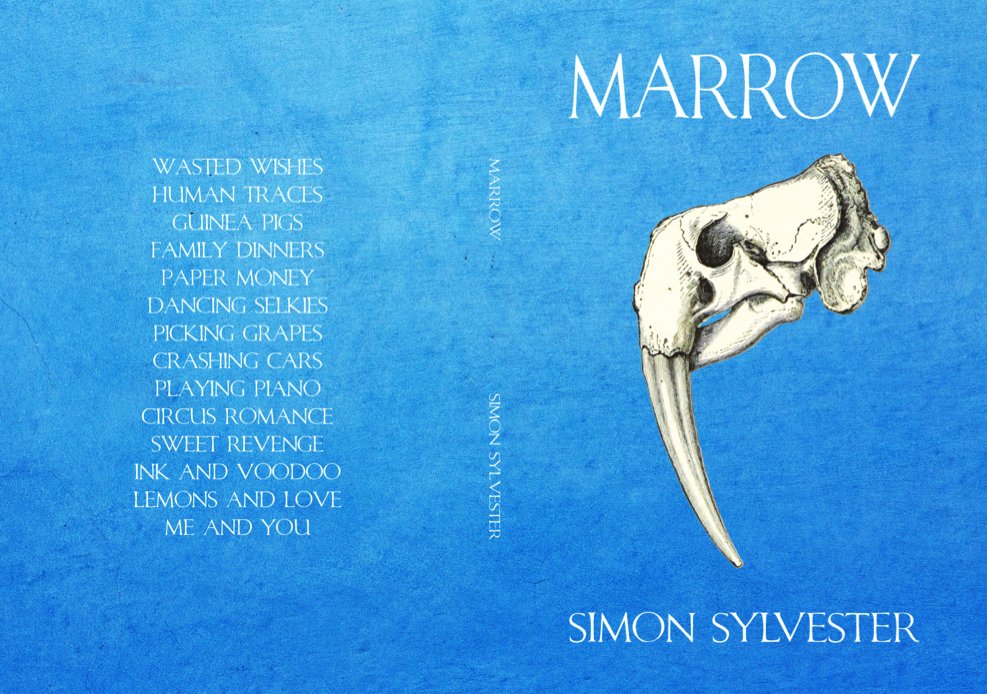
I was the last of the support acts. For the first time, I was reading from Marrow (because yes! The books turned up on Thursday. I’ll write more about that in the next post). I read The Black And The White Of It, Hutch and After The Rains – sad, dark and joyful, by turns. It seemed to go quite well – I didn’t fully relax until the second story, but then I started to enjoy it, to really take my time with the words. If I can get to that place at the start of a reading, rather than halfway through, I’ll count that a success. I’d love to perform with Trev’s confidence and flair, but I’m still learning to walk. Running comes with time.

Kat Quatermass – who runs Dreamfired – was the headliner. She performed a startlingly original sequence of contemporary fairytales, couched in feminism and queer culture. It was an excellent show. First she painted a modern city, with an abandoned fairground, pebbledash tower blocks, supermarkets and a polluted river – then she populated it with modern kids, kids looking for ways to fit in, ways to escape – ways to survive. Kat then sent her cast of disaffected adolescents into the gritty, fantastical city, where their stories intermingled with talking foxes, golden birds, the months of the year and Hungarian hag Baba Yaga. The stories chop and change and intermingle, played out in a carnival of urban fairytales. The show was equal parts Neil Gaiman, Brothers Grimm and Arcade Fire’s LP ‘The Suburbs’. Kat’s city made me think of my short story Vanishings – that sense that anything can happen in cities when the lights go down and no one’s looking. She explained that this was a work in progress – she plans to refine and develop the show over the next six months. If last night was anything to go by, audiences are in for a real treat over the lifetime of the show.

All in all, another cracker from Dreamfired. Next up, my 20-minute guest slot at Verbalise

To finish, here’s a picture of Baba Yaga’s hut, which walks around on chicken legs, because Baba Yaga is awesome. This is by illustrator Bojana Dimitrovski:

Baba Yaga hut Bojana Dimitrovski freelance illustrator advocate art

Verbalising

This is just a quick post to invite you – yes, you – along to Verbalise at the Brewery on the 22nd February.

It’s going to be ace. The open mic is already packed with talent – I know that short story guru Brindley Hallam Dennis is coming, and so is my photo challenge sparring partner BigCharlie Poet, both of whom are exceptional performers. I feel absolutely honoured to have a guest slot, and I’m really looking forward to getting my teeth stuck into such a long session – I’ve never had 20 minutes to play with before. I’m already planning my stories. I’m definitely going to read Marrow, which is about dubious experiments in home cooking, and Hutch, which is about guinea pigs vanishing from a suburban garden. I’m probably going to read The Black And The White Of It, too. All three are in my flash fiction collection, Marrow, which should – assuming I’ve managed to print it right way up and right side out – be a real buzz to read from. I’m also going to read some new work. I’ve been working on a piece about the dark side of a village bakery competition, and I also want to try running a dozen of my Twitter stories together as a quickfire rattle through relationship disasters. I think I’m going to call that 10 Second Speed Dates, and might even try and read against the clock. If there’s time, I might read a very short flash piece called Real Life, too, which was published by Paragraph Planet last week. I’m going to relish the words – to invest my confidence in these stories I’ve written and endlessly rewritten. After all that time glued to a computer, reading live is where the stories draw breath.

If you can come, it would be great to see you. Compere Ann the Poet tells me that anyone who wants an open mic slot will get one, so roll on up and bring a story…

A quick aside with some good news, too – after a couple of story rejections in January, I’m delighted to have had two acceptances in as many days. I’ve landed flash fiction Circle Stone with the tenth issue of estimable magazine Gutter, and sci-fi short story Patience in an anthology called After The Fall. Go team!

Kicking monsters down the hall

Improving my spoken word performance is an ongoing mission. There’s no substitute for actually reading live, and I have my first two events of the year booked in for February. First up is a support slot at Dreamfired on Valentine’s Day, and then I’m top of the bill (eek!) for Verbalise at the end of the month.

As well as actual readings, I’ve started looking for workshops. I attended a great Spotlight session in Lancaster with Brindley Hallam Dennis last year. He set the class the truly startling task of having other people read our work. My workshop partner went through my flash piece Marrow at a third of the pace I usually do, really savouring the words, and she made it three times better. That was an important lesson. I’ve also taken a huge amount from veteran performer David Hartley’s tips for spoken word.

I watch a lot of readings, both live and online, to see how other writers project and present their words. I’ve seen some great stuff, and some terrible stuff. This performance by Shane Koyczan is absolutely, completely, one of the very best. I’ve listened to it a dozen times, and it grows ever more wonderful.

Inky Little Fingers

Okay. Steady breathing. I’ve finally sent Marrow off to the printers. It’s a nerve-wracking process, especially for a first time. I’ve gone with Inky Little Fingers on the recommendation of Flashtagger Fat Roland. If it goes wrong, I’m blaming him. 

Early in the process, Inky Little Fingers estimate the thickness of the spine from the number of pages involved. That measurement (in this case, 5.6mm) needs to be factored into the dimensions of the custom document created for the cover. Then, when you upload the cover art and contents, they generate an online proof for a final check. I was extremely relieved to see that my measurements were right, as I was certain I’d get everything horribly wrong and have to start again. Then I paid for 100 copies (which didn’t hurt too much, because I’ve been saving for this for a year) and submitted the final order. So there it is. Out of my hands, and into the production queue. The next step is a box of books turning up in a week or so, just in time for my spoken word support slot at February’s DreamfiredI’m looking forward to reading from the book, rather than from the tatty shreds of paper I keep in my back pockets, all crisscrossed with notes and late amendments. I’m also terrified that I’ve missed something really obvious and the cover will be printed upside-down. Something abominable is bound to happen. 

A couple of people have asked if I’m going to have a launch for Marrow, but I don’t think so. It was never supposed to be a big deal – just something to sell at readings, and something to teach me new skills. I’ve learned big chunks of Photoshop and InDesign over the last few weeks. And it’s been fun to oversee the entire process, too. I’m already drafting the next collection, which I think I’m going to call Real Life, after a story about checkers.

Here’s the final version of the Marrow artwork, with front and back covers.

Marrow full cover low-res


The Blog Tour – answers

I was delighted when Elizabeth Stott invited me to follow her on the blog tour. I’m a fan of Elizabeth’s writing – I bought her short story Touch Me With Your Cold, Hard Fingers from Nightjar Press last year, and was engrossed in the tense, almost existential body horror she conjured in a few short pages. A lot of Elizabeth’s work generates that sense of claustrophobia – another of her stories, Mrs Wetherby, delivers simmering sexual tension amongst uptight ex-pats in the setting of a baking Gulf. Have a read – highly recommended.

Many thanks to Elizabeth for the invitation – here are her answers to the blog tour questions – and here are mine:

What am I working on?

More than I can handle! Foremost is new novel Grisleymires. Whenever possible, I’m trying to guide my rare writing days towards this; it’s the story of a man who loses his memories, and the woman who goes to find them. It’s set in a huge swamp, which is great fun to write, and I’m really excited by the characters and how they’re evolving. The issue is finding time to write around my other projects. I’ve been working on a novella called The Year Of The Whale for about five years (though I haven’t touched it for the last two). That’s about a whale beached in Morecambe Bay. It’s about 20,000 words finished, with only another 5 or 10k to go, but novels are taking precedence. I’d love to finish it soon, though – my partner Monica wants to make a series of linocut prints to illustrate it, and I think that could look fantastic – something like Alex Garland’s novella The Coma.

I’m also putting the finishing touches to my first flash fiction collection, Marrow, and starting to draft the second, which might be called Real Life. Around all this, I’m periodically developing my future novels – I already have plans for another four or five after Grisleymires. I’d love to write more often, but I struggle for time around my teaching and film jobs.

The final thing I’m working on is the copy edit of my first novel, The Visitors. The editor’s notes are due back next week, and I’ll need to go through those slowly and carefully (and with flagons of cider, according to Ali Shaw).

How does my work differ from others in its genre?

This is a difficult question to answer, as I believe all writers differ from others – that’s part of the wonderful polyphony of writing. As soon as a writer begins to speak in the first words of their own voice, they’re different. Genres are useful for sifting and gathering – I use genre far more as a reader than a writer.

That said, I guess I’m moving increasingly towards low fantasy. That’s where I can best tell the stories I want to tell. If my stories are in any way unique, it’s because of the themes I work in and the juxtapositions I explore. When I walk through woodlands, I worry about velociraptors. When I visit London, I imagine minotaurs haunt the Underground, dodging Tube trains as they roam beneath the city. There are doppelgängers watching from rooftops, waiting to make the switch. There are secret societies of pigeon fanciers that keep the internet alive, and kelpies working for the local council. I try to infuse my work with the same sense of magic I find in the world. I think every writer tries to do that. I’m interested in memories, and walking, and the idea of threshold spaces. I’m interested in myths and especially in folk tales. I’m interested in the breakdown in gender and what it is to be alive. Ultimately, though, lots of writers are interested in those things. What makes my work different is that it’s mine.

Why do I write what I do?

Writing brings me comfort through escapism, I suppose. I’m an army brat – we didn’t settle in one place until I started secondary school in Inverness, and I’ve often struggled to feel at home. Books and stories have been havens for as long as I can remember, and it was probably only a matter of time before I tried to create my own. As for the actual topics I write about – that’s evolved wildly over the six or seven years that I’ve been writing fiction. I started with experimental, deliberately obscure literary pieces, aping the styles of challenging writers like Hubert Selby Jnr and William S. Burroughs. After finishing my first attempt at a novel, which took me to some personally unpleasant places, I started to rediscover my love of stories that took me on adventures, rather than stories that were flayed to the bone. I reread David Mitchell and Sarah Waters and Jasper Fforde and Neil Gaiman – and I realised that those were the worlds that sang loudest to me. And so I started again, near enough, finding new ways to tell my stories. The more I’ve worked in this vein, the more I’ve enjoyed my writing.

How does my writing process work?

My ideas tend to arrive as acorns – I stumble upon them everywhere, buried in mud or blown into gutters. Some of those ideas never escape my notebook – and others explode, branching and sprouting into completely new directions. I can’t explain how an idea arrives already fully formed, but my best stories are already bristling with life. They evolve as I write. I know I’m working with strong characters when they start doing things I don’t expect; when it becomes inevitable, no matter what I’ve planned, that they’re going to do something else.

Landscape and place are important to the way I work – I like those strong characters to be in landscapes that I care about, so the air fills my lungs and I can feel the ground beneath my feet. In good locations, the story is a drop of water, taking the most organic route to ground. Place is as important to me as character, plot and emotion – when I write, I try to keep all those strands of story entwined together. Writing is a holistic process, following disparate elements all at once. That’s one of the things that makes extensive redrafting so hard. It’s easy for the fabric of the story to become tangled. When my stories are in a muddle, so am I.

Because I have so little time to work, I tend to write in fierce bursts. If I’m on a roll, I can manage more than 10,000 words a day, but that’s rare. A good writing day is 2,000-3,000 words I’m really pleased with. When I’m not writing, I think about my work constantly. I’m often awake at night, staring into darkness, tracing my way through story strands, trying to work out where they run to, where they meet. More often than not, I fall asleep without working it out – but sometimes I have to turn the light back on and write them down.

I’m also an helpless tinkerer. I can’t let go of my stories, and I return to them obsessively – even years after they’ve been published – to develop the story and tweak the prose. My flash fiction collection Marrow is typical of this – of the 28 pieces, around half have been published elsewhere – but in preparing the collected manuscript, I’ve spent months compulsively redrafting them. Some no longer bear any relation to the original. I can’t help myself. That tweaking and revising comes into first drafts, too. My stories are probably one third writing, two-thirds editing.

Another of the keys to my workflow is reading aloud – as I write, I constantly read, lips moving, shaping the phrases to find the most organic flow, and then reworking it on the page. On the rare occasions I’ve been asked for writing advice, that’s my first suggestion. Nothing has done as much for developing my work as reading aloud. My second suggestion is to carry a notebook. You never know when those acorns will tumble from the sky.

***

So there we have it. If anyone’s still reading, these are some of the things that go into my work. I’m now passing the baton on to David Hartley and Iain Maloney, who’ll publish their blog tour answers on Monday 3rd February. In their own words, they’re a bit like this:

David Hartley is a story botherer and blog tickler based in Manchester whose debut collection of flash fiction ‘Threshold’ was published by Gumbo Press precisely a year ago. He is one fifth of the writing collective Flashtag and can be regularly seen haunting the open mic stages of the North West. He blogs at http://davidhartleywriter.blogspot.co.uk/ and tweets at @DHartleyWriter

Iain Maloney was born in Aberdeen, Scotland and now lives in Komaki, Japan. A widely published writer of fiction, non-fiction and poetry, his debut novel, First Time Solo, a story of World War 2 RAF pilots and jazz, will be published be Freight Books in June 2014. He blogs at http://iainmaloney.wordpress.com
Thanks for reading.

Blog tour

Just a quick post to say that I’ve been invited to join the blog tour by the excellent writer Elizabeth Stott. The idea is that writers post answers to the same four questions, then pass the baton to another writer. If you trace it back, there are dozens of fascinating responses around the idea of what it is to write. Here are Elizabeth’s answers, which are a tough act to follow.

I’m due to post my responses on Monday 27th January. These are the questions in question:

  1. What am I working on?
  2. How does my work differ from others in its genre?
  3. Why do I write what I do?
  4. How does my writing process work?

There’s quite a bit to get through in there, but I’ll try extremely hard not to be boring.

I’d also like to introduce David Hartley and Iain Maloney, the writers who’ll follow me on the blog tour. David is an intimidatingly prolific writer of scintillating flash fiction and short stories, and he’s working on his first novel, which is pretty cool. Already looking forward to what he has to say about writing.

David Hartley is a story botherer and blog tickler based in Manchester whose debut collection of flash fiction ‘Threshold’ was published by Gumbo Press precisely a year ago. He is one fifth of the writing collective Flashtag and can be regularly seen haunting the open mic stages of the North West. He blogs at http://davidhartleywriter.blogspot.co.uk/ and tweets at @DHartleyWriter

Iain is an old friend of mine. We’ve been reading each other’s work for seven or eight years, and I’ve learned a lot about writing from him. He has broad interests, from haiku to historical fiction, and I’m especially eager to see his thoughts on genre.

Iain Maloney was born in Aberdeen, Scotland and now lives in Komaki, Japan. A widely published writer of fiction, non-fiction and poetry, his debut novel, First Time Solo, a story of World War 2 RAF pilots and jazz, will be published be Freight Books in June 2014. He blogs at http://iainmaloney.wordpress.com


2013 and all that

Obviously, the end of every year gives pause for reflection. For me, this used to manifest itself in a range of Top Tens – films, albums, books, gigs – but these days I don’t really do enough of any of those things to justify it. So here’s my combined Top Ten of 2013 instead. They’re not in order.

1. Getting a book deal with Quercus

Securing a publishing deal with the wonderful Quercus Books has been one of the most amazing things to ever happen to me. I’m still waiting for someone to pull the rug out from under my feet, but until they do, I’ll keep enjoying every moment of this exhilarating, terrifying, extraordinary rollercoaster. I feel bowled over by the support for my writing, even as I feel a massive weight of pressure to deliver. I started the year with a manuscript called Riptide Heart; I finished with a rigorous redraft, now called The Visitors. Working with Quercus editor Jane Wood has made my writing tighter and my story much stronger. It has also given me a real hunger to push on with my work – I now have half-a-dozen novel ideas clamouring for my time.

This wouldn’t have happened without the hard work of my awesome agent, Sue Armstrong at Conville & Walsh, and the support of my amazing partner Monica. That brings me to the second thing on the list:

2. New work from Monica Metsers

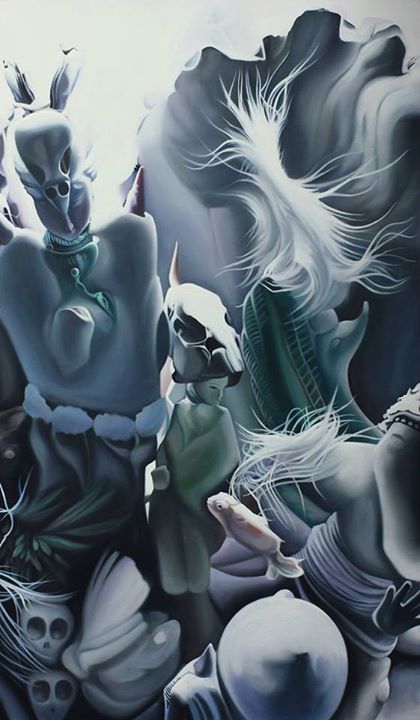
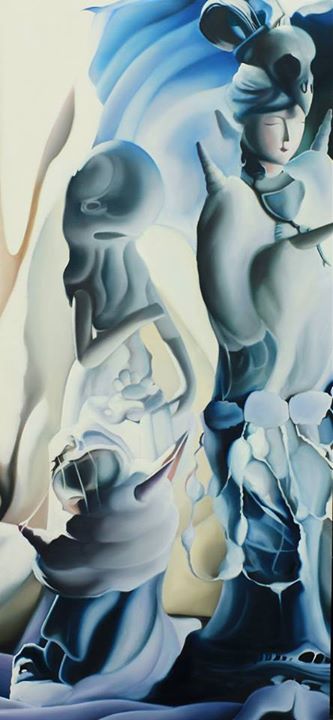
While she was pregnant, and in the first year of Dora’s life, Mon took time away from her painting. 2013 was the year she really started again, and the results have been amazing. She has a solo show in London next year, and as well as a few smaller paintings and a range of drawings, she’s made these two stunning large-scale paintings, which I think are amongst the best work she’s ever done:

BATALLA DE LOS GIGANTES                                                          BALLENA Y GEISHA

BATALLA DE LOS GIGANTES   ballena y geisha

2013 also marked our five-year anniversary – it’s been a blast.

3. Performing live

I’ve never been good at public reading, and this year I set myself the challenge of improving. I went on to read my work twice at Spotlight in Lancaster, once at Kendal’s Spoken Word, once (performing from memory) at Dreamfired in Brigsteer, and once at the Flashtag 2013 writing competition in Manchester, where I won second place. My confidence grew with each reading, though I still feel I’ve a way to go.

I also attended a spoken word workshop run by the excellent Brindley Hallam Dennis. One of the activities he set has changed everything: he had other members of the workshop read our stories. The lady who read my flash piece ‘Marrow’ performed it at a third of the pace I do. She relished every word, and it was three times better as a result. I haven’t performed since then, but I’m going to practice reading with that sort of gusto at the next opportunity. I’m booked in for a 20-minute slot at Spoken Word in February, and I’d like another couple of events under my belt by then. My goal has evolved a little, too: what I’m aiming for now is something closer to outright performance than simply reading. That will come with confidence, and confidence will come from practice.

4. Seven Seals – Plan of Salvation

After a whopping 18 months, I finally finished making this music video for amazing psychedelic synth punks Seven Seals. They’re an extraordinary band, and it was an honour to be involved. They’re working on new material, which will hopefully be available in 2014 for their ten-year anniversary gigs.


5. Amy Hempel – The Dog of the Marriage

Quite simply, the finest collection of short stories I’ve ever read. Hempel’s writing is so sensitive, so honest, that it infuses her stories with devastating grace. Unmissable.

6. Les Revenants

This French drama is the best thing I’ve seen on television in years, remarkable for its intrigue, restraint and power. It delivers on every level, exploring an extraordinary narrative without needless exposition to unravel the mysteries of the Returned, all of whom are troubled in different but connected ways. The locations and cinematography are stunning, while the soundtrack by Mogwai is my album of the year. There’s a startlingly surreal lucidity to the conclusion, and I think they could have left it there; but I’m delighted to see a second series in the works. Here’s the trailer for season one:

In TV terms, an honorable mention also goes to Game Of Thrones. Tyrion Lannister might be the finest character ever committed to screen, and the Red Wedding haunts me even now.

7. Success for friends

It’s been a good year for many of my friends and peers, too. Iain Maloney landed an agent and a book deal with Freight, Kirstin Innes found an agent, Anneliese Mackintosh got a book deal, Kirsty Logan landed a book deal and won everything in the world. Friends Andy and Gemma had a baby boy called Miles, and Ali and Iona had a little girl called Inka. There have been a lot of richly deserved congratulations this year. Good work, team.

8. Cats

Yup. Two of them. I wasn’t sure, at first, but then we met these two cats in the Wainwright Animal Rescue Centre, and it was an easy decision. They came to us with the names Remus and Teddy, which we’ve kept. They’re brothers, about three years old, and half-Persian. They’ve been an amazing addition to our house. They are incredibly relaxed and friendly, and they actively seek our company. That’s especially welcome when I’m having a writing day alone at home.

1174754_10153244876455551_211086219_n

9. Holiday in France

We were overdue a break, and this fortnight in France was exactly what we needed. We camped in half-a-dozen places, the best of which was Green Venice, a vast network of canals, ditches and overgrown waterways, crawling with vines and willows, alive with dragonflies and katydids. It was an extraordinary landscape. I read more in that fortnight than I’d managed in four months. Best of all, the holiday gave me enough mental space to plan my next novel, which will be called Grisleymires. That’s now blocked out on Scrivener, waiting for my next writing day.

10. Another year with Dora.

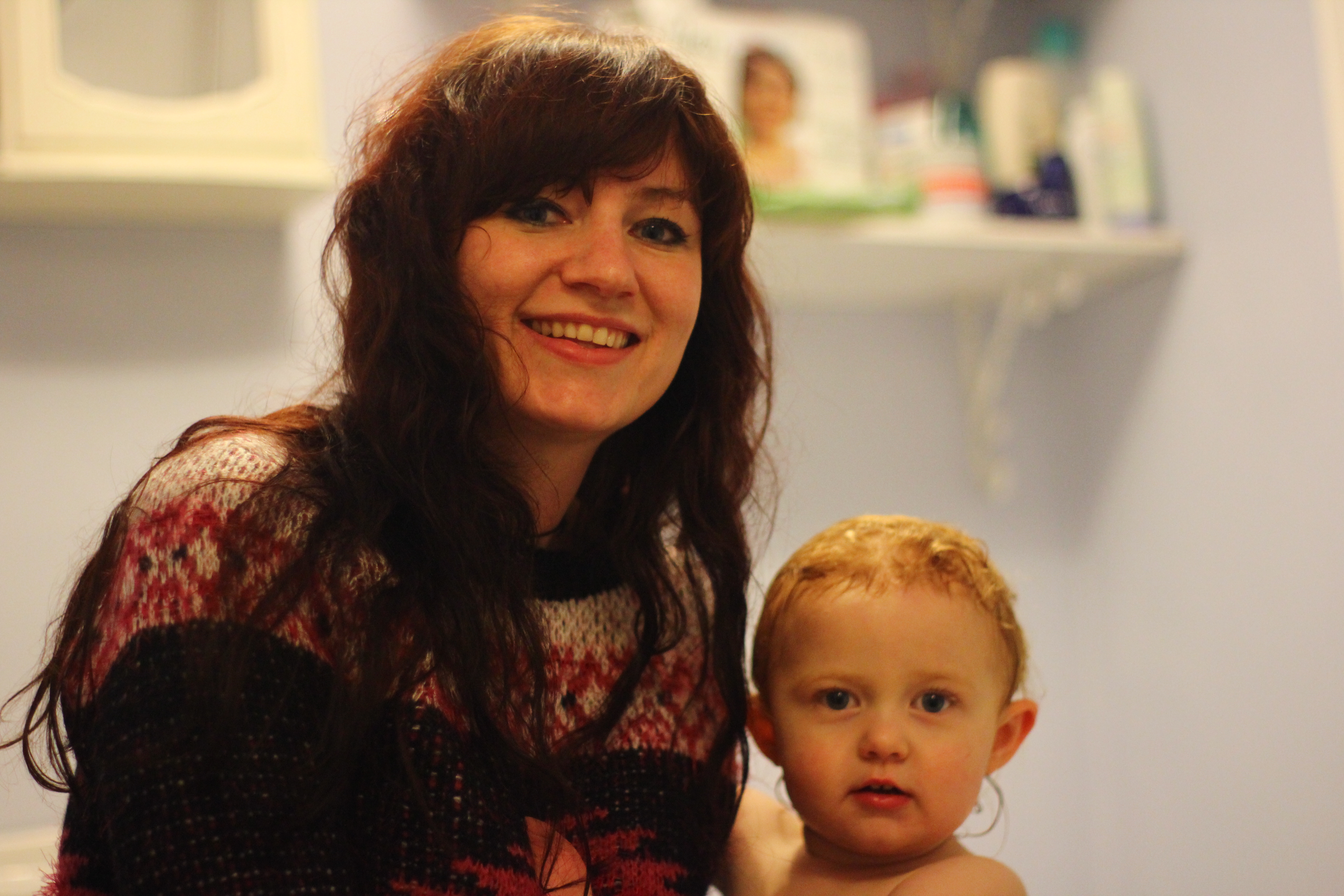
In their first year, babies are basically little puddings. Awesome little puddings, but puddings nonetheless. In their second year, they gather the basic tools to discover the world. And in year three, that toolkit expands exponentially; physically, vocally, intellectually and emotionally. Going through that with Dora has been nothing short of a joy. Seeing the world through her eyes has made me reevaluate so many things for myself. Her conversations leave me in stitches, and everything about her makes me smile. And she hasn’t been to A&E this year, which I consider something of a triumph. Though there’s still a week of 2013 left.

IMG_4758

So that’s my Top Ten. It’s been a good year, and 2014 is alive with possibilities. I might even pop some resolutions up in a few days.

Flash fiction challenge: Libraries

BigCharlie Poet (the nom de guerre of Simon Hart) and I have been trying out a picture-based flash fiction vs. poetry writing challenge. In case you missed it, here’s round one: Cathedrals.

It was Simon’s turn to choose a picture, this time, and this is what he chose:

libraries

I found this one very difficult. With Cathedrals, I had the story in an instant, and writing was a cruise, but this has taken some working around. I guess that’s the way with writing. I can’t turn it on like a tap. Sometimes the stories shimmer into view as though they’d been there all along, and sometimes they come word by word, kicking and fighting, refusing to stay on the page. This one’s been a toughie, and I’ve tried it three times. My first attempt was an illiterate dystopia where an old man found a book he couldn’t read. It spiralled very quickly, and I abandoned it at 600 words. My second attempt was about a haunted library, and that was a little better – I think I can rescue it for a short story – but it wasn’t good enough for this, and I hadn’t the heart to stick at it.

I have written a previous piece that fits this picture exactly, which doesn’t help. The abandoned library is a perfect representation of one of my Twitter shorts. Struggling to get that story out of my head, I posted it again in the hope of exorcising the blasted thing. It looks like this:

Screen Shot 2013-11-03 at 11.49.06

Having sent that back out into the big wide world, I did feel a little freer, but it wasn’t until I discussed the picture with Mon that I came up with my final idea. She imagined the books dropping away into nothingness, and that was the spark I needed. Time and time again, Mon reminds me of the stories I like to tell the most. She keeps me on track when I’m getting lost. With that image in my head, I sat down and wrote the final piece fairly quickly. It’s the middle of something much bigger, I think. I can see this growing into a novella or even a novel, given time. I’m not done with the characters.

Simon Hart found this one tricky, too, which is a relief. It’s taken both of us longer than the fortnight we’d agreed, but then, hell; we’re busy people. This is what Simon has to say about it:

“Well, it’s finally been written and this has been difficult! I saw the picture and thought it was interesting, suggested it and went ahead with it as the challenge piece… ignoring the fact I have written creatively about libraries before. What it has meant is that those pieces of work have been clamouring at my brain to be let out again. I have refused them, and eventually created this new poem, but not without help. The title and line relating to it come from my Dad pitching me a line far greater than anything my feable mind was coming up with, and I finished only because I cheated and read Simon’s excellent entry on the same photo. Cheers gents.”

Here’s Simon’s response to that troublesome picture:

Engines of Thought

by BigCharlie Poet

There were books strewn everywhere
Left without much apparent care
Though some were in bundles, others in stacks
Most were just left to cover the cracks
In the old dead library’s floor

The words on the pages, scattered like dust
Engines of thought now turned to rust
Childhood stories being lost by the hour
The Tempest losing so much of its power
From the old dead library’s floor

The shelves have been looted for perceived greater worth
And the paper that’s left returns to the earth
The knowledge inside no longer at hand
The words pour away like loose grains of sand
Through the old dead library’s floor

They once taught us magic, and fanciful tales
Told us stories of mad Captains hunting white whales
Taught that being obsessed was a kind of disease
That carried you away on angry dark seas
Not the old dead library’s floor

But now they do nothing, we won’t let them teach us
And where they sit they will struggle to reach us
Abandoned and now out of our sight
They are doomed to their own perpetual night
On the old dead library’s floor

And here’s my response:

Books Like Grains Of Sand

The creature stepped out of the darkness and into the candlelight. It was smaller and far slighter than Morag, and carried itself daintily, as though it was frightened of breaking a limb. Its tiny eyes were black pinheads in the cloth. It had a ragged hole for a mouth. It smelled like coal sheds.

It led her to a door.

“In here, my pet,” it lisped. When it talked, stuffing spilled from the corners of its mouth.

In jerky, spastic movements, it opened the door to the library, and daylight spilled into the gloom. Squinting in the light, Morag peered beyond the creature and saw a vast room. The floor was entirely carpeted in books. Books, books and more books, gathered in loose stacks, strewn by the dozen, piled up in the corners.

“All of them?” she whispered.

The creature’s smile wrapped around its head. Morag heard stitches popping as it grinned.

“All of them,” it said.

It turned the hourglass again, and the sand began to flow.

Morag slung her knapsack, took a deep breath and brushed past the creature into the library. She stumbled to the top of a nearby stack and surveyed the room. The door creaked shut behind her, and the creature’s smile receded to a single line as it melted into darkness.

She was alone in the library. Before her, books lay scattered in their thousands.

“But where to start?” she murmured.

She took a single step, and then she heard the slithering. It was so faint at first, ghostly whispers, but gathered to a rush. Morag scanned the room. The books in the middle were moving. They revolved, and more volumes fell inwards as they shifted, gathering momentum. They spiralled, forming a circle and starting to drop into the floor. It was spreading outwards, increasing speed. It was a whirlpool. With a jolt, the stack beneath her shifted, throwing her to the ground. Morag fell headlong into the torrent.

The daylight closed overhead, grey and fluttering with loose pages. Books battered and struck her as they ground and jumbled in the gyre. The movement was inexorable, dragging her down, dragging her into the centre. Her feet lost contact with the floor and then it all dropped away and Morag was falling, flying, plunging into nothing as the books tumbled all around her. She panicked, flailing and groping for contact, anything to arrest her fall. There was nothing to hold on to. The space beneath her and around her was empty entirely, a sea of nothingness stretching on forever. Books fell around her like rain, covers flapping and pages rippling. As they fell, Morag realised they looked exactly like the sand in the timer.

In a heartbeat, she remembered what Badger told her: about time. About the creature. About this place.

She took a deep breath, shut her eyes, and reached out. Her hand closed around a book. Still falling, she opened her eyes, and turned to the first page. Morag began to read.