Fenland wyrdly

I’ve lived in England for thirteen years, on and off, with stints in Edinburgh, Inverness and Australia. Aside from Cumbria, which is the closest thing to home I’ve felt in my adult life, and London, which is a bubble, I often feel a stranger here. Despite moving around so often, there are big chunks of the country I’ve never seen. East Anglia is one of them. We spent this weekend exploring the area as research for my next novel, which is called Grisleymires. On Friday we drove down a smart diagonal sweep across the country from Burneside in Cumbria to Kirby Cross, almost on the Naze, and stayed the night with friends. On Saturday morning we jagged back up to Wisbech, stopping at Wicken and Ely. For the first time, I’ve been to the Fens.

Grisleymires has been in the back of my head for a while. From the beginning, I knew that it was set in a swamp – the earliest incarnation of the story was essentially Time Bandits with bog bodies. It’s evolved massively since then, but the marsh has been a constant: I want to write about mud and water. I’m now quite secure in the plot, but the location has been troubling me. Location is crucial to the way I write, and I didn’t feel confident in my knowledge of any British bogs. I picked the Fens on instinct, and decided to find out more from there.

The first person I spoke to about Fenland felt so negatively about it that he could only laugh hysterically. He’s one of the most articulate people I’ve ever met, and he simply couldn’t formulate words to describe how powerfully it repelled him. That was exactly the sort of start I was hoping for. Since then, people have told me that the Fens are creepy, strange, powerful and weird. Everyone talks about ‘big skies’. Now that I’ve driven through them, I can understand why. It’s the flattest landscape I’ve ever seen. The horizon is broader, the perspective unnerving, the sky an impossible bowl. There are miles at a time without undulation – miles without trees. Ditches run in straight lines to vanishing points. In places, roads run lower than canals, with dykes and bridges guiding the contours. It’s especially strange near the coast, where the horizon is curtailed by the shore.

We stopped at Wicken Fen, where I stood in the blustering wind and stared into the winter sun. Tall grass became an ocean and hissed at me in waves. I never expected so much noise from emptiness. The sun turned orange, and the dusk turned blue, and pylons hung like giants against the scraps of cirrus. At one point, we drove along beneath a dyke for a mile or more. The road turned sharply up the bank and at the top, blinded by sunset, the world opened up like Noah’s flood – the entire horizon drowned in water, withered trees and battered shrubs emerging in silhouette against the sun. That was the road to Wisbech, submerged in wetlands.

sunset1

We drove the alternative route to Wisbech on undulating single track roads lined with Nissen huts and broken hedgerows, tumbledown houses and gigantic piles of sugar beet, surrounded all the while by thousands upon thousands of acres of thick, turned loam.

Wisbech was a strange town. The B&B was huge and empty. When we went to look for food, we found ourselves in what seemed to be a red light district. Drunken Polish men yelled at each other across the street, while girls on corners danced to techno on CD stereos. On Friday night, above the Naze, the stars were clearer than I’d seen in years; on Saturday, the sky was full of murk. On Sunday morning, we drove on Droves – lumpy roads, arrow straight for five miles or more, then zigzagging madly to meet the next. They separate broad strips of industrial agriculture, riven with canals, ditches and soakaways. All the trees wear killing coats of ivy. For the most part, we drove in silence, occasionally pointing things out to each other. The landscape was relentless without becoming monotonous.

The Fens is witchcraft and weak bridges; rotten thatch and revolution; gallows and windmills. At one point, we passed a narrowboat moored beneath a sickly weeping willow. It looked like it was about to break in half and sink. It was small, and covered with lichen, but I could still make out the name: it was called Icarus.

I don’t know if the Fens are creepy, but they are profoundly strange. We felt edgy all the time. We’re used to the cradle of the mountains, a constant presence in our peripheral vision. It’s incredibly strange to be without that subconscious company. Mon pointed out that the sheer amount of space makes you feel exposed – vulnerable. We didn’t find it creepy, so much as missing. It’s an absence, a nothing, a void. It felt like a sort of purgatory; fields unfolding endlessly, stretching on forever.

I went on this trip hoping for a sort of Green Venice, but that’s not what the Fens are about. They aren’t what I expected, or what I wanted, but maybe this trip has been exactly what I need, and here’s why:

I invented Bancree for The Visitors. It’s an amalgam of Islay, Jura, Gigha, Kintyre and the Black Isle, plus a host of other Scottish spots; and I’m already planning a novel set in a fictional city, based around my short story Vanishings. The point is this: I thought nothing of creating an island, and I can’t wait to write a city. I don’t know why it’s taken me this long to consider inventing a Fenland of my own. Writing a new region into an existing geography feels more daunting than something as self-contained as an island, but that would give me the perfect environment for Grisleymires.

I’ve only started considering this today, but it’s already gathering weight. It would let me combine the heat and life of Green Venice with the sodden bogs of Islay and the upland Cumbrian basin mires with the Fens and Norfolk Broads. I could do as I pleased with accents and geography and culture, and that’s a real magnet for me. I’d be sad to leave or even dilute the Fenland folklore, though – I’ve grown attached to Tiddy Mun and Old Shuck.

As a research trip, it’s thrown up more questions than it’s answered. But that, in itself, is part of the journey.

pylons1

Wormholes and bridges

Here’s an exhilarating lecture by Neil Gaiman, exploring what it means to read. This essay has all the passion, humanity and humour of his fiction.

When my dad was stationed in Germany, I had to attend a boarding school in Edinburgh for a year. I remember virtually nothing of those few terms – only scattered memories of finding a flat iron in a tree root, and of crawling down a tunnel that older students used for shooting practice. But I do remember the library, and I remember reading. Reading a lot. I can’t recall all the titles, but I know I read King Solomon’s Mines, the Biggles books – which probably explains my unforgivable weakness for adverbs (he thought, wistfully) – and all the Hardy Boys books over and over again. I’m pretty sure I started on Steven King around then, too. I was eight or nine at the time, which might explain a few things.

Anyway – the library is my only memory of that time that’s even halfway to concrete. It was a refuge for me, and I’ve loved libraries ever since. When we lived outside Inverness, the mobile library van was a highlight of my fortnight: visits from Desmond Bagley, Terry Pratchett, Ernest Hemingway. The librarian was a Brummie expat with gigantic muttonchops. It was like swapping books with Noddy Holder. When I was seventeen, I applied for a job driving the mobile library on the Black Isle. I didn’t get it.

I’ve been a member of libraries in Inverness, Bristol, Lancaster, London, Manchester and now Kendal. Libraries have given me a place to read, a place to study, a place to work, a place to think and, when I was at my poorest, a place to be warm. Libraries are portals to parallel universes. They are circuses, space stations and sunken ships. They are deserts and cities and jungles. They are wormholes and bridges. They record the past, and they tell the future, and they record every scrap of human experience.

Libraries are important, and we’re losing them. Government cuts have brutalised already very modest library budgets. As Michael Rosen has pointed out, coalition rhetoric expounds the need for reading, while quietly removing the places to read.

Neil Gaiman’s essay voices all this far more eloquently than me. It’s beautifully written, of course, but a real thrill, too: immediate, passionate and compelling. Please read it – worth every word. And then go and get something from your library.

20131020-094950.jpg

Atlantis

ku-xlarge

This is pure gold: a gallery of real-life sunken cities.

For me, Atlantis has always been a gigantic city, sitting in a natural amphitheater, the houses and temples still essentially the same – only drowned and crusted in shells and weed. Ghosts still haunt the city, sharing terracotta pots with octopi and crabs. They watch the transatlantic liners and factory trawlers comb the seas above them.

Have a browse right here, and lose yourself underwater…

Who likes short shorts?

I’m between novels – making notes for the second while working on edits for the first – and as a result of this fairly disjointed workflow, I’ve also been writing a lot of flash fiction. I write flash fiction for three reasons. In order of importance, these are:

1. To keep my writing and imagination ticking over.
2. As a depository for the ideas I haven’t time to develop.
3. To create short sharp stories for readings.

However you feel about flash fiction – and there are a lot of people who deem it totally irrelevant – these reasons are good enough for me. Number one, in particular, is very important to me when I’m so busy. I can’t work on a novel if I have a spare hour – I need more space in my head – but I can write flash. For me, flash fiction is a fun and constructive way to write more often (notwithstanding J. Robert Lennon’s excellent ‘ass-in-the-chair canard’, of course).

Like most writers, I suppose, I started learning my craft with short stories. In the first two years, almost all of them fell between 1,500 and 2,500 words. This wasn’t deliberate – I was simply writing stories that told themselves in that sort of space. As my writing developed, the scope of my ambition widened; I wrote Meat (mentioned briefly here), abandoned a subsequent novel at 50,000 words, and started work on my extremely long-running novella The Year of The Whale, which I had almost finished when Riptide exploded in my life. Over the following year, Riptide was pretty much the only thing I worked on. By this point, my longer pieces had absorbed any time for short story writing, with flash fiction increasingly fitting into the small hours between proper writing sessions.

In essence, then, I’d stopped writing short stories. But I’ve had an idea nagging me for a while, and it clearly wanted to be a short story. I decided to make it a little more considered than my older shorts, and spend more time letting the character paint the world around her. I finally settled down to work on it last week, and I finished a first draft last night. In my head, I expected it to be about 5,000 words, which is easily double the length of my next-longest short story. It has been a very strange space to work in, especially after so long away from the form.

Some flash fiction packs a conventional narrative into a smaller space, and some flash fiction snatches at a single moment, a single voice – a heartbeat – and gives the reader just enough to fill in the blanks themselves. The short story expands on those themes (obviously), giving them greater room to grow, but for the form to have an inherent function, it needs to achieve more than simply stretching out those moments – more than filling in some of those blanks.

I seem to recall a quote – possibly by Chekhov, though I can’t find a source – declaring that all short stories are the end of longer stories. I think there’s something in that, and I like the abstraction inherent to the form. My best short stories – the ones I personally consider most successful – are the ones where I’ve managed to hardwire some sense of trajectory. I want my writing to have momentum. I aspire to a ferocity, a certainty of narrative. I don’t know how well I achieve that, but it’s what I’m working towards.

I have now finished this new piece, and I think it’s come the closest yet to what I’m trying to create. It’s abstract and a little dangerous, but I think I’ve generated the emotional whirlpool I strive for, with discontiguous strands of story focused to a single point. After so much time away from the medium, I found it quite difficult to write. Although I knew my character’s voice right away, and I knew what I wanted to achieve in the story, it took me a long time to untangle the threads and find my way. I’ve been plodding through it, whisky in hand, on odd nights for a couple of weeks. Last night I finally had the breakthrough, which involved redrafting the whole thing from present into past tense, cutting a couple of sections and writing a new scene. I’m now going to take a day or two away from it, and see if a little distance helps with the redraft. Happily, the first draft came to 5,220 words.

I’m now waiting for feedback from a couple of readers, but I wanted to write this post before talking to anyone about the story; I needed to get my own thoughts in order. At some point I’m going to write more about my ultra-flash fiction on Twitter, but I wanted to use my first short story in a year to have a think about why I don’t write them any more.

Goussainville ghost town

Goussainville-6

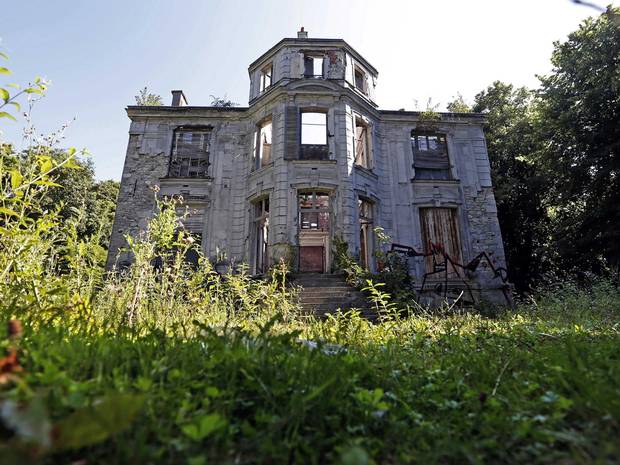
I’m such a sucker for ghost towns and abandoned places. This gallery explores the village of Goussainville-Vieux Pays, abandoned after first a plane crash, and then the opening of Charles De Gaulle airport, drove the residents into Paris or the quieter villages nearby.

I think, for me, that silence – or at least natural sound – is an important part of defining a true edgeland, and the incessant roar of aeroplanes would discount Goussainville. But there’s something so sad about the sight of deserted buildings. The energy that comes from their construction – and the energy needed to sustain the life, and love, and relationships inside them – doesn’t dissipate when the people leave.

This comes hot on the heels of Les Revenants, too…

A little light reading

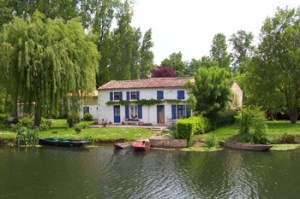
We’ve just returned from a brilliant fortnight in France. We racked up 2,500 miles in a round trip that encompassed Ile de Noirmoutier, which is reached by a two-mile causeway at low tide; Rauzan, where we camped in the shadow of a ruined medieval castle; and Marais Poitevin. This last spot, nicknamed ‘Green Venice’, is one of the most amazing places I’ve ever seen. Centuries ago, it was a vast swamp, but Dutch settlers drained it with a labyrinth of canals and ditches, leaving hundreds of island pastures connected by causeways and bridges. The architecture is just as unique, with balconies and shutters adorning every house, and punts moored to jetties in gardens. Poplars and alders tower into the sky, the canals are thick with lurid green algae. Fat dragonflies zip and pop between shrubs and creepers, and the trees are alive with cicadas. Filtered through high branches and reflected from the water, the light itself is tinted green.

marais_poitevin bluehouse

It’s genuinely one of the most incredible landscapes I’ve experienced and, much like Grogport for Riptide, it’s been a real inspiration for my next novel. In the space of a few days, I filled an A4 pad with notes and dialogue, and I feel really excited about starting work. There’s still plenty to do before I can begin, but the foundations now feel firmly set.

The other great thing about the holiday was having time to read. I managed six books, which is no mean feat when juggling a toddler in a campsite. And I had a great run of books – not a single dud:

The Tiger’s Wife by Tea Obreht was bold and convincing, subtly switching a range of voices to make folk myths contemporary through personal memory. I enjoyed it a lot, but found it ever so slightly cold, and wasn’t as blown away as its reputation suggests.

Cumbrian Folk Tales by Taffy Thomas was a fascinating collection of the county’s legends and myths, made all the more immediate through its connections to a landscape I’m starting to know. It was amusing to recognise the names of not just local places, but also local people – people I’ve met, worked with, drunk with. The tales were strongest when connected to geography, giving meaning and history to a witch’s cauldron or a devil’s bridge.

I read The Blackhouse by Peter May – this was a present from Jane Wood, my publisher at Quercus. She thought I’d like a look because, like Riptide, it’s a crime story set in the Hebrides, though it doesn’t have the supernatural elements of my book. I enjoyed it a lot. The plot was dovetail-tight and engrossing, and the landscape was intoxicating.

Next up was I Love You When I’m Drunk by Empar Moliner, Spanish short stories in translation through the tremendous Comma Press. Despite some uncharacteristic typos from an excellent publisher, it’s a solid collection, each story exploring and exploding conceits of modern life. Some of the stories felt a bit like shooting fish in a barrel – taking aim at soft targets of liberal, middle-class pomp – but the writing was good throughout, and there were many outstanding moments.

Moliner’s collection was good, but the next book was astonishing – a class apart. The Dog Of The Marriage gathers Amy Hempel‘s four short story collections into a single volume, and they are consistently superb. There isn’t a single wrong note across dozens of stories. Hempel’s work is voiced through emotionally damaged or stunted narrators, trapped or somehow left behind in their lives, caught between stasis and decay. The stories are not without hope, though, and Hempel writes with unceasing, unfailing humanity. Her sentences and structure are scintillating. I cannot recommend this highly enough. This is the sort of book I buy two copies of, expecting to have one out on loan.

the_dog_of_the_marriage.large

Finally, I read Snake Ropes by Jess Richards. This was another corker. Alternate narrators explore life on a mysterious island, ‘just off the edge of the map’, eventually combining to bring the distinct halves of the story together around a single, long-forgotten trauma. This novel holds trade and barter at its heart, exploring themes of presence and absence, balance and weight; of exchange, and what it means to give and get. It’s a real triumph, made all the more masterful in how Richards weaves the fantastical through the fabric of base human instinct, conjuring talking keys, sentient trees, and a walking doll with a seashell for a heart:

Moppet2

The last fortnight has reminded me, as stupid as it sounds, of how much I love to read, and made it painfully apparent how little reading time my regular schedule affords me. I’m determined – on top of carving out more writing time – to read more. I miss it.

This holiday has been essential. I’ve worked stupidly hard over the last two years without much of a break, and I’ve badly wanted some time off. Looking ahead, the next two months are going to be frantic – but I feel better for a break. I have my next novel blocked out and the sights and scents of a swamp fresh in my mind. One more draft of Riptide to go, and then I’ll be starting my new story.

Battleship Island

Image

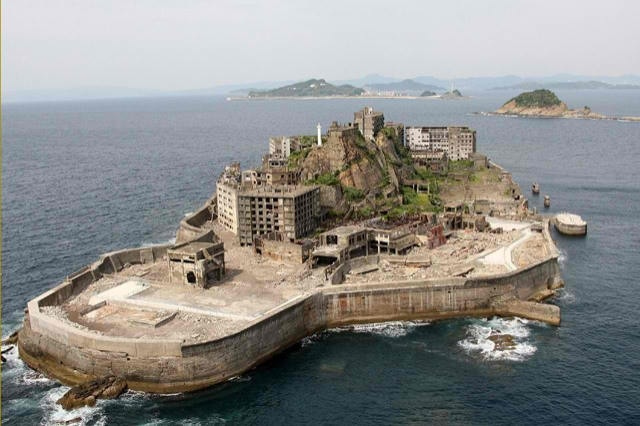
Here’s another gallery of awesome threshold spaces – thanks to Iain Maloney for pointing this one out to me. This is Hashima Island in Japan, also known as Battleship Island. It was used as a base for extracting and processing coal from the sea bed, and for housing the miners. The Mitsubishi corporation owned the island for almost a century, but the mines became unprofitable as coal was increasingly superseded by petroleum. Mitsubishi abandoned the place in 1974. Since then, the concrete has crumbled, the balconies have fallen from the buildings and plants have erupted in the courtyards. It’s an astonishing, ghostly space.

The sea will take its own.

Flashtag at The Nook & Cranny

Mon and I drove down to Manchester on Wednesday night for the live final of the Flashtag writing competition. Flashtag Writers are a five-strong collective of flash fiction devotees, organising and performing their work across Manchester, the northwest and beyond. This writing contest was part of Chorlton Arts Festival. Downstairs at the Nook & Cranny pub was the perfect place for my first reading in three years – small, close, and dark. It reminded me a little of Twin Peaks. I think the brightest thing in there was my shirt.

images-1      cache_2410604838

With eight writers on the shortlist, four Flashtaggers (plus a few of Benjamin Judge‘s excellent ‘Very Short Stories About Very Good Writers‘ read out in his absence – check out the blog – they’re brilliant. My favourite so far is Haruki Murakami…) and headlined by yer actual flash fiction titan David Gaffney, there was an astounding breadth and depth of storytelling on offer. I’m consistently delighted with the sensations and stories that can be conveyed in remarkably few words: Allie Rodgers gave us a dystopia without printed books; Dale Lately perfectly captured the melancholy of an empty nightclub after hours; Sarah Butler told the tale of a girl who lived on a bus stop. Michael Conley read my favourite story – ‘Looking for an Astrolabe’ was perfect flash fiction, bundling the profound into the darkly comic. David Gaffney’s piece conjured an infestation of acoustic singer-songrwriters, and blamed it all on Badly Drawn Boy. I also loved the work of Flashtaggers Sarah Clare Conlon, Fat Roland, Tom Mason and David Hartley.

I was the last of the shortlisted writers to perform, and – as ever – I was terrified. But the reading went quite well, the audience were very generous and it left me craving more live events. Despite the fear, I always end up enjoying myself. I’d like to think that a few more readings might settle my nerves, but maybe they’re there to stay. Ach weel.

Up against consistently strong competition, I was genuinely blown away to be awarded second place for ‘This Kitten I Knew‘. That was really humbling. I was delighted that Michael’s ‘Astrolabe’ won first prize – it was easily my favourite on the night, and I feel honoured to come second against such a great story.

More than anything else, it was truly uplifting to have some social contact centred around writing. Facing a late drive back to Kendal, we couldn’t stay very long, but it was a real thrill to stop and chat with the audience, the Flashtaggers, the shortlistees and Mr Gaffney. It’s strange, sometimes, to live in relative isolation halfway between the vibrant literary scenes of Manchester and Glasgow. Nights like Wednesday help me remember that other people are excited by stories – by writing and reading.