A love letter to an island

P1050513The idea for The Visitors fell into my head almost fully formed while on holiday in Grogport, a tiny hamlet on the east coast of the Kintyre peninsula. It’s connected to the mainland by a narrow isthmus, and it feels like an island. The beaches are sandy and studded with pebbles. Hills rise steeply from the shore and narrow roads wind around the coast, ducking inland to skirt the inlets. To the east, Arran lurks like a beached whale, and Gigha is smudge in the haze on the horizon to the west. Abandoned crofts explode with rowans, and in places the ferns fall into the road, wet and green.
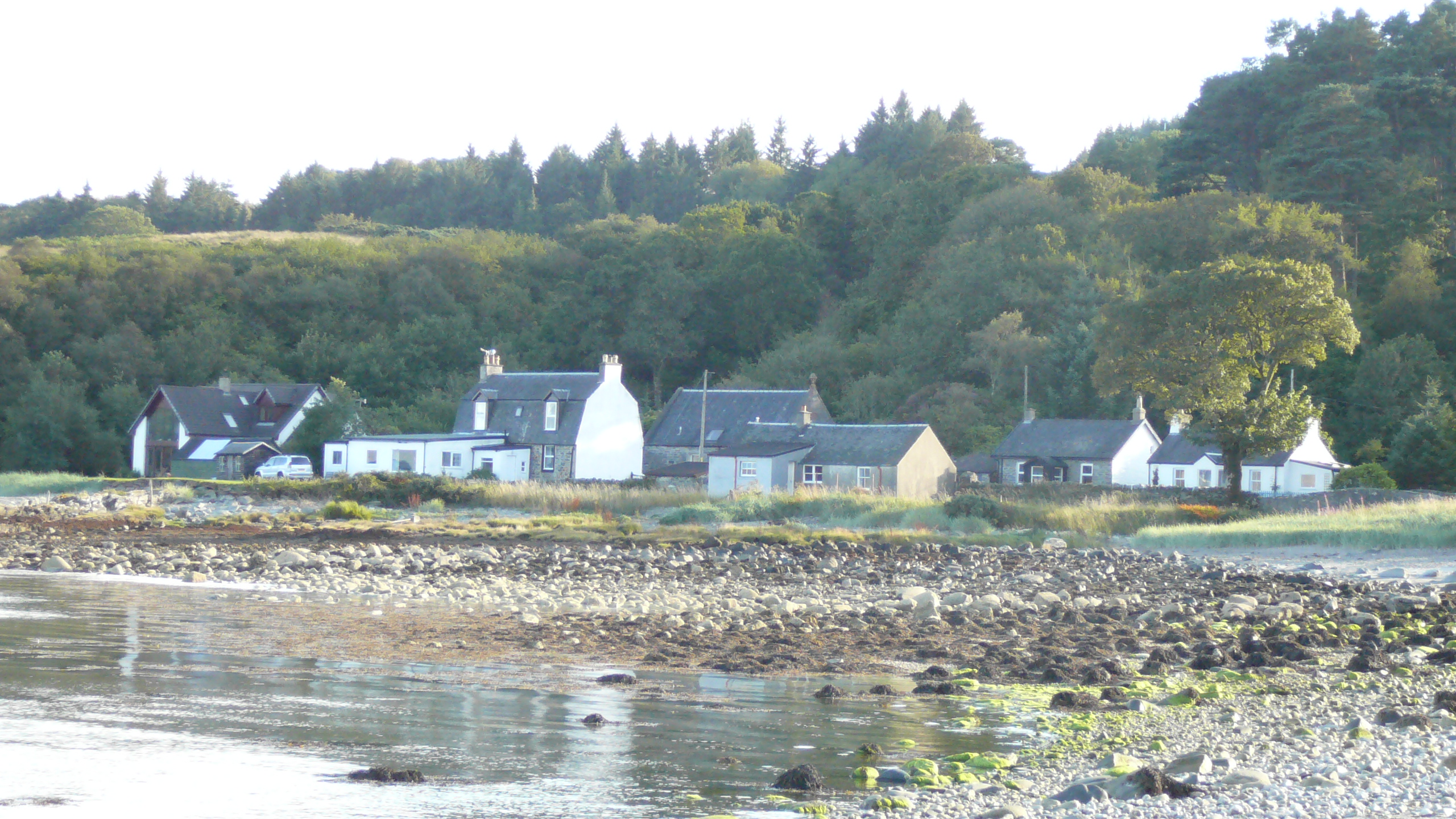
P1050459My daughter was three months old, and the long drive from Cumbria had unsettled her. She started waking early – around five in the morning – and wouldn’t go back to sleep. My wife and I made coffee and watched the sun rise over Arran, casting blue light on the millpond Kilbrannan Sound. From the kitchen window, we saw herons stalk the surf, lashing down on crabs or minnows. Seals hunted in the bay every evening, and an otter dismembered fish on the shoreline. The garden thronged with little birds, and at one point I saw a kestrel sitting on the washing line, no more than five yards from the house. When we walked around the island, there were butterflies in the gorse, spiders on the sand, bees in the grass, gulls wheeling on the updrafts. I was shaken, at times, by how much life was around me, living as it always had, as though the land itself was alive and conscious. In so many places, it looked as though people, civilisation, had simply given up and moved elsewhere. It felt as though the land was waking after centuries of slumber, and just beginning to stretch.

On the third or fourth morning, watching a seal swim like quicksilver in the bay, the spark of a story flared brightly inside me. It caught fast, and began to smoulder. That story became The Visitors. Selkies, living in Grogport. A murder mystery. A young girl, desperate to leave an island. And it would be an island, I decided; the Kintyre peninsula was beautiful, but didn’t do everything I wanted for the story. I started drafting a sense of what the island looked like. I called it Bancree. As I began to write the story, the island evolved too, morphing into something real enough to touch.

P1050458Bancree is a scrapbook of my Scotland. I grew up in Inverness, where I could see Ben Wyvis from my bedroom window. We walked our dogs on the shingle beach at Ardersier and through the sodden plantations of Culloden. I’ve been canoeing and camping on Loch Maree in torrential rain, and climbed the boulder fields of Torridon and Glen Nevis. I’ve been to the top of Schiehallion, and walked on the clifftops of Dumfries, and fallen out of bars on Tobermory, and seen friends crash cars by the shore of Loch Ness. I’ve taken the train from Edinburgh to Inverness so many times that the journey is engrained in my memory. From the top of Glen Affric, with June snowmelt still feeding the burns, I’ve seen both coasts glitter in the sun. Scotland has a hundred landscapes that sing to me, and I collected something from each of them to build Bancree.

P1050526The island is my love letter to Islay, Jura, Gigha, Mull, Iona, Ullapool, the Highlands, the Black Isle, Moray and the Great Glen – to the landscapes I grew up in, the landscapes I love. I’ve never tried to sketch Bancree or make a map. I know what it looks like, and where to find Grogport, and Tighna, and Izzy’s hut, and the windfarm on the Ben. But more importantly, I can drive the road around Bancree simply by closing my eyes. I can feel the scrunch of shingle underfoot, and the batter and bluster of the Atlantic coast. There is dew sagging on spiderwebs, spun between the thorns of gorse, and rafts of flotsam hefted on the beaches. Dead, empty crabs still scuttle on the breeze. The twiggy scratch of heather, the rivulets of water in the bracken. Titanic clouds, dark and warm and scudding low enough to touch. The fluttering machair, alive with bees. Fog that swallows the tops of trees and telegraph poles. The water in the bog pools, dark with peat, staining all the world around, pouring brown from every tap. Sands that hiss and sing as the wind rolls across the beach in waves.

Bancree is as real as a dream to me. It is vivid and bursting with life. I can feel the rub of sand between my fingers, but there is no map to go there.

P1050540

Roberto Bolano – The Third Reich

art-353-Bolano3-300x0

I’ve just finished The Third Reich by Roberto Bolano. He fascinates me, as both a writer and a reader, and I’ve now only two novels left before I’ve read all of his work. The Savage Detectives is my favourite ever novel, and I think Bolano’s prose is pretty much close to perfect. There’s no doubt, however, that a lot of his unpublished work wouldn’t have seen the light of day (in English, anyway) without his posthumous rise to fame. Some of his novels should have stayed in the drawer, and The Third Reich only just squeezes out of that category.

It’s an intense, engrossing study of one man’s slide into paranoia, returning to Bolano’s common themes – Fascism, the birth and death and being of nations, poetry, love, sex, anxiety, terror, innocence, dreams, language – but is very insular, very claustrophobic, and too long.

German war games champion Udo Berger goes on holiday with his partner Ingeborg. They meet another German couple, Hanna and Charly, and the four of them fall in with local layabouts and petty crooks. When Charly goes missing, only Udo stays, against all reason, drawn deeper into his WWII game, deeper into his obsession with the hotel owner.

The game allows Udo to replay World War II, as Germany, and win. He dominates the first few turns of a game against a complete novice, and then he starts to lose. His fatalistic delusions – like Adolf Hitler’s – drive him to a bitter defeat. As the net of Allies closes around him in the game, so Udo’s paranoias choke his spirit in real life, and his dreams merge with the everyday. His psychological collapse mirrors that of the Axis. ‘I’m not a Nazi,’ he bleats, at one point, ‘I’m more like an anti-Nazi.’ His protestations are interspersed with hero-worship of successful German generals. Bolano (who fought against Pinochet in Chile, and despised Fascism) uses The Third Reich to crush the Nazis all over again.

It’s a profound and complex book. As Udo unravels, his thought processes make increasingly random connections – this is one of Bolano’s greatest strengths, in both dialogue and inner monologue – and his claustrophobia is compelling. But Third Reich is also too slow and too long, and once Udo’s hubris has been established, his collapse is prolonged and the climax, when it comes, is vague and dissatisfying. This deliberately mimics the real War, I suppose (each turn of the board game is marked out in quarters – Winter ’42, Spring ’43, and so on) but means the narrative drags in a mirror of the attrition on the board.

It remains an interesting addition to Bolano’s astonishing canon, and I’m glad I had the chance to read it, but it’s far from his best or most interesting work. As with all his novels, though, the prose is nothing short of scintillating. Bolano was a truly gifted writer. Whenever I’m flagging, I read a sentence or two at random from one of his books, and it reminds me of what I should be aspiring to.

Dare!

I’m delighted to share the news that my 100-word story Dare has been Highly Commended in the National Flash Fiction Day writing competition. You can read it, along with the rest of the winners and commended stories, right here.

To reach the top 10 against such strong competition has really made my day. I’m also delighted to see Cathy Lennon take top spot with her story Never Let Me Go, because Cathy is lovely and her story is fantastic.

Someone landed on my blog a few days ago with the search term ‘is flash fiction a proper noun’. I’ve been giving that some thought, and the answer is no. But I love that flash fiction is becoming more established. It’s the perfect counterpart to my novel writing, and it keeps me keen. More thoughts on flash fiction to come soon, I think. I’ve written a host of shorter stories lately, and I want to take the time to explore what the format means to me.

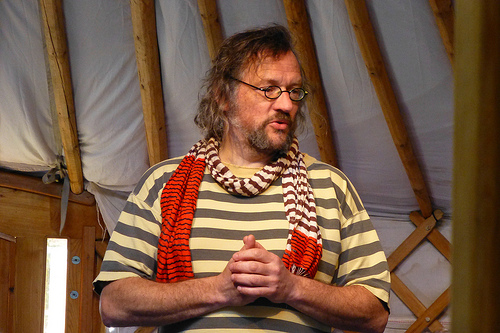
In celebration, I’m off to see international storytelling superstar Fred Versonnen perform at Dreamfired tonight; and even more exciting, tomorrow I’m off to Arnside to attend his clowning workshop. I’m hugely excited about what clowning could do for my performance, and seeing Fred tell his stories is a perfect start.

Fred looks like this:

9114900985_7e540c66d8


Not right not writing

I’m a bit behind on my blogging, so here’s a quick round-up while I have the time to do some rounding.

I’ve barely written a word for two months. A combination of college, gardening and film jobs has demanded every scrap of time, and my writing has taken a unfortunate but unavoidable back seat. That makes me ache. I’m not right when I’m not writing. I’ve only recently become aware of how writing relaxes me; and that not writing is one of the things that stresses me out. I’ve also noticed that ideas are more of a struggle when I’m not writing with any regularity. When I’m working often, I’m flooded with plots and characters and lines of dialogue. Not having that internal chatter makes me anxious, and I haven’t been feeling quite myself; this has been exacerbated by pushing myself to come up with new work for the Flashtag Short Short Story Slam, which is only a fortnight away. I think I have the three pieces now, but they’ve been hard work, and I’m not yet convinced they are the right stories.

I travelled to London last week to meet my agent Sue, editor Jane and publicist Margot. The amazing Quercus building feels like something from a James Bond film; everything is glass and aluminium, with automated barriers and security cards. It’s a far cry from my little house, where starlings and sparrows have started nesting in the slate walls. We popped down from the Quercus office to a quiet bar called Hardy’s, and we drank wine and talked about publicity for The Visitors. There’s an idea to offer short stories or flashes as bonus material with the book – and I might make a couple of short films about how it came to life, too. We also talked about some of my future ideas, including current work-in-progress The Hollows. It was a great meeting, and I left it feeling really enthused. With all the chaos of my day jobs, it’s easy to lose sight of the novel. It’s everything I’ve dreamed of for five years, and it’s actually happening. Sometimes I forget.

What else? I’ve written a post for Thievery, Kirsty Logan’s fascinating series of story inspirations. I decided to confess about a novel I started in 2009, but abandoned at 50,000 words (though I recovered the central strand for my novella Year Of The Whale – I really, really need to finish that). My Thievery post will be up in May – I’ll post links when it’s live.

Although I’ve not been writing as much as I’d like, I have been thinking a lot. The Hollows is never far from me, and though I haven’t even opened the document for three weeks, in my head, I’m streamlining it all the time. I’ve learned so much from writing and especially redrafting The Visitors, and I’m determined to make The Hollows a better first draft. In the background to my day jobs, characters have been changing everything from hair colour to their reasons to be alive. The plot is essentially unchanged, but how the characters arrive there is evolving all the time. I found this with The Visitors, too; even as I developed the threads of the manuscript, I returned constantly to the early chapters, forming and reforming them. This is like the twist of a rope; the threads need to be right at the start, or the rope tangles and disintegrates. I’m filming throughout this coming weekend, but next week I should be able to sit down and start making the changes.

Two nights ago, after a long and stressful day at work, I turned out the lights and tried to sleep. From nowhere, my head was thronged with ideas. I had to get up and write them down; first of all, three flash fiction ideas at once, about taxidermy, trains and cheating, and then, a few minutes later, the setting, start and main character of another novel – which looks like being number five in my current queue of books to write, after The Hollows, We Are Always Reaching Out For Heaven, Vanishings and Black Horse. I’m already really excited about it. Which is just as well, really; if I wasn’t excited about the story, I couldn’t expect anyone else to be. You need to be excited about a story to spend so long with it – both the hundreds of hours staring at a computer screen, writing and writing and thinking that I should get up and make a tea, just another minute, one more minute until I make a cup of tea, as soon as I finish the sentence, the paragraph, the chapter – and the time in the world of the book, observing and conversing with the characters, exploring the map of their world, listening to the crunch of dry grass beneath their feet – and back to the computer to sculpt it all together, working until you realise it’s cold and you forgot to find that other jumper two hours ago, and is there any wine left?

The other piece of big news is that in May, Iain Maloney and I will be co-headliners for legendary Manchester spoken word night Bad Language. I’ve known Iain since 1998. We’ve been bouncing work off each other for the last five or six years, and his excellent debut novel First Time Solo is out through Freight at the same time as The Visitors. Iain lives in Japan, but he’s in the UK for a whistle-stop book tour. I’m delighted to be sharing a stage with him for the first time.

Finally, another writer friend, the outrageously imaginative Ali Shaw, has sent me a draft of his next novel. I devoured the first chapter. It’s going to be really, really, really good. I’m currently taking a sabbatical from A Song Of Ice And Fire, and almost at the end of Third Reich by Roberto Bolano (which is also extremely good), and I can’t wait to read the rest of Ali’s book.

Here’s a picture of a scarecrow stick man:

scare crow

A year in the life

I’ve just realised that my blog is one year old. I had no idea when I wrote my first post, about Quitting Writing, that I’d be blogging so often. It’s become the space in which I organise my thoughts, and rationalise this topsy-turvy journey to publication. A year ago, I had an agent and the first draft of a manuscript called Riptide Heart. A year later, the novel is called The Visitors. I’ve completed multiple marathon redrafts, worked myself into exhaustion on insane strings of 11pm finishes, and spent hundreds of hours thinking about the book. Looking back, finishing the first draft feels like one of the smallest steps on a road that doesn’t truly finish – once the book is out there, it will continue the journey without me.

The proof copies should be going out any day, which is terrifying and exhilarating all at once. Because my day job remains so frantic, my experience of publishing tends to occur to milestones. I’ve been incredibly lucky, but I sometimes wish I had more space to enjoy it. It feels like I lurch from one deadline to the next, and seldom savour the completion of a job. The blog has therefore become essential to me personally: in sharing and formalising the milestones, I’ve created my own map of the voyage. Thanks to everyone who’s visited.

I’ve really enjoyed sharing some of the sights along the way. Of all the things I’ve posted to the blog, I think this is the one that’s stuck with me the most. Enjoy:

Slamadangadingdong

Like some crazy storytelling masochist, I’ve signed myself up for the Flashtag short short story slam. This is another level in terms of live performance – take a look at the highlights reel from last year to see a far more explosive, intimate and vociferous gig that I’m used to:

I think I’m going to write some new stories for this – I have something involving a hat in mind for the third round, if I’m lucky enough to make it that far, but I’m not really happy with any of my other shorter pieces. I have work that is elegiac or lyrical, but none of them feel quite right for the slam. That gives me five weeks to write two new pieces with teeth. When I get knocked out, I want to go down swinging.

rocky-balboa

Borderlines & The Writers Quarter

I’m delighted to share the news that Brindley Hallam Dennis has decided to organise a festival of writing in locations throughout Carlisle this September. Rather than traditional book festivals, which sustain the celebrity of authorship, Borderlines will celebrate writing itself, using workshops, readings and guerrilla flash fiction to connect reading and writing.

Given the location, this is especially exciting for Cumbrian, Scottish, Northumberland and Lancashire writers. I’d love to take part – I like the idea of celebrating writing for writing’s sake.

OLYMPUS DIGITAL CAMERA

Verbalised

On Saturday, I had the guest headline spot at Verbalise at the Brewery. It was an amazing night, for all the squirming terror I went through in the days before the show. It’s strange to get so nervous before a reading. As a teacher, I address large groups all the time, but everything changes when it’s my writing under the microscope. Usually, it goes like this: in the hours before a reading, I feel a pain low in my stomach, and then my throat grows tighter as those hours dissolve into minutes. When I walk onstage and begin to read, my heart pounds in my larynx. At last, around halfway through the reading, or halfway through my second piece – whichever comes first – something changes. In a matter of heartbeats, the nerves are gone, I calm down and enjoy the stories, enjoy the sound of my own words. My grail is to achieve that sense of enjoyment at the start of the reading, rather than the mid-point, and Verbalise was a big step in the right direction.

Before I talk about my reading, I want to sing the praises of the open mic. It was an absolute cracker, kicked off by flash fiction guru Brindley Hallam Dennis. I’m a huge fan of Brindley’s stories, and it was a thrill to see him performing again. He started with another of Kowalski’s Assertions, then read a gem of flash fiction called The Right Words, which looks like this:

After Brindley, I was doubly delighted that my photo challenge sparring partner BigCharlie Poet came north for his first Verbalise open mic. He read two of the poems from our challenge series – Cathedrals and Graffiti – which were even better in person than on the page. He was so good that compere Ann asked him back to headline later in the year. Another future headliner was at the open mic, too, in the glorious form of Joy France, and it was a wonder to witness her at work – she performed a wicked little flash piece and this scintillating poem:


The open mic also featured ace local poet, journalist and painter Helen Perkins, who read her poem for the Drowned Villages competition. South Lakes poet laureate Kate Davies performed a sinister piece about a caul-shrouded something that nipped at children and crunched their bones, and Luke Brown read a twisted tale of flooding and infanticide. Friend Harriet Fraser read three poems, including the exceptional ‘Michael’ from her project Landkeepers. This brooding piece sees the departure of an experienced farmhand from a remote Cumbrian valley, much to the regret of the farmer who worked with him – set against the Sisyphean job of plugging holes in drystone walls. It’s a beautifully bittersweet metaphor.

Finally and brilliantly, one of my best and oldest friends, Steven Malcolm, had come up for the weekend as well. Steve is a wonderful writer, but had never performed his work before. Verbalise marked his first ever open mic. He read two short stories – the first about a bystander struggling to process the accident they’d witnessed, and the second about a man who married a Volvo. They were dreamy, dark and very good.

After the interval – oh, lawks – it was my turn. I gabbled my way through a hapless introduction, and then I started reading stories from Marrow. For all the fear I’d endured throughout the day, I found my groove fairly quickly. I started with The Black And The White Of It, then read Hutch, then new piece The Jubilee Best Cake Competition. I’d originally planned on performing this last piece with an accent, in the style of a well-to-do Yorkshire dear (more like Alan Bennett, probably) but I bottled it at the last moment. I’ll try and summon courage at my next open mic. Maybe. After those three stories, I made a rare switch to poetry. I read Was I Scottish, which is about the dissonance I feel at being Scottish/English/British/whitever, and then my own entry for the Drowned Villages competition, which is called Coffin Routes. Both seemed to go over quite well. (Curiously, I found the poems much easier to perform than the stories. I’m still not sure why, given how fundamentally unsure I feel about my poetry. I’ll brew on this a wee while longer.)

After the poems, I went back to Marrow. I performed the title story, which I’m pleased to say elicited palpable disgust in the audience, followed it with Circle Stone, then finished with the elegiac After The Rain. I garbled something about my book and my blog, and then I fled the stage. I sat in my chair and stared at the floor for many minutes. I struggled to swallow. 

Here’s the thing. I think it was a good set. But I have no idea of the passage of time for the duration of the performance. I have no idea if I was up there for three minutes or thirty. Quite sincerely, I cannot comprehend how much time went by. My brain eliminated the tick of the clock, sacrificed to a balance of performance, finding the microphone, reading the book, reading the audience, judging myself, monitoring my breath and not falling over. I needed to recover.

Afterwards, still calming down, I nattered with friends old and new. I discovered that the event had sold out, which is most excellent – the Warehouse was over capacity even before a few more folk snuck in to stand. I also sold eight more books. A quarter of my hundred copies have gone in the first week. (If you’d like one, wander this way.) Even better, compere Ann The Poet has asked me back to headline again in 2015.

Despite the terrors of anticipation, I had a good time. The expansive open mic and the positive response to my own work left me feeling great about stories and writing. I still wish there were more events and open mics in South Lakes – I look to the scenes in Glasgow and Manchester with envious eyes – but what we have in Dreamfired and Verbalise is pretty special.

Here’s a picture of me juggling a pint, a poem and my copy of Marrow.

1621930_10152278926827433_788882446_n

The marrow

Here it is, folks. After all those late nights of InDesign tutorials, Photoshop forums, calculations, colour swatches, dimensions, budgets, cursing, blurry vision, uploads, downloads and even a little bit of writing, Marrow has arrived. I’m delighted with the print quality – thanks to Inky Little Fingers for a really good little book. Recycled paper, yo.

Marrow is a collection of 28 flash stories ranging from 13 to 1,000 words. Around half have been appeared elsewhere – in Gutter, Fractured West, Valve, Flashtag, Paragraph Planet, Causeway, Smoke, Dark Mountain and others. The stories feature fighter pilots and guinea pigs, wishing trees and wet weekends, untuned pianos, tattoos, voodoo, daydreams, ink and avocados. There are private eyes and talking poppets – lions and lemons – selkies and tsunamis.

I’ve done this so I have something to share at readings – something to hold in the hand. It feels slightly surreal, but good. If you’d like a copy, get in touch. It costs £5, plus another £1 for UK posting. If you’d like to buy one, mosey over here.

Thanks to everyone who helped me out with advice, proofing and redrafting. Couldn’t have done without you.

marrow stack

Scenes from a copy edit

I’ve just finished the first copy edit for The Visitors. Quercus sent the documents over a fortnight ago, but I didn’t have the time until last week to open the files and survey the damage. College has been relentless lately, and I haven’t had a chance to work on my writing in what feels like forever. At first glance, I was devastated at how much work seemed to be required. Every page of the manuscript was scarred with dozens of red marks, like this:

typos

At first glance, my heart shrivelled in my chest. The thought of that all work was painful – not least as my friend Ali Shaw had already warned me of the perils of copy edits. He explained that I’d need flagons of strong cider to get through it, and I was braced for some late nights.

Thankfully, it hasn’t been too bad. On closer inspection, virtually all the changes are simply a matter of house style – thousands and thousands of “double speech marks” have now become ‘single speech marks’. I had no idea they were allowed – I’ll try writing with single speech marks from now on, but it’s going to take quite some unlearning – hitting shift with the quote key has become hardwired into my typing. Similarly, hundreds of ‘alrights’ and ‘okays’ have become ‘all rights’ and ‘OKs’. Again, I didn’t know these were the preferred form. More startling, I hadn’t realised I used those words so often – especially in dialogue. I cut many of these where the copy edit drew my attention to repetition.

As well as those thousands of standardised changes, there were infrequent issues with capitalisation. I disagreed with some of these. I don’t consider ‘Internet’ to be a proper noun, for example – small things, but they all need looking at.

On top of all that, there were two typos where I’d accidentally omitted a word – which isn’t bad in a 93,000 word manuscript – and a few instances where the copy editor felt certain words (always adverbs – be warned!) didn’t gel. I agreed with all of these, and made the changes.

All in all, it’s been a fascinating process. It took me two days, in the end. I’ve huge respect for copy editors – to be so meticulous and so creative all at once is a massive challenge, but I felt the changes were fair and sensitive. That’s now gone back to Quercus.

This is my half-term from college. I have a few goals for this week. As well as some looking after Dora while Mon has her last week painting before an exhibition in London, I want to write some new work for National Flash Fiction Day, submit something to the Flashbang contest and finish my Drowned Villages poem. Most important, I’d like to spend some time with Grisleymires – I’ve had a month away from my novel, and I miss it.