Earlier today, my heart broke. I’ve been working on my second novel, The Hollows, for almost exactly a year – I started it on Christmas Eve 2013, though I couldn’t write for half the year. I’m now 30,000 words into my first draft. It’s excruciatingly hard to write this, but I’m about to change it all. The reason is the best-selling author Kate Mosse, who appears to have written my book already. I haven’t read it, but her latest novel, The Taxidermist’s Daughter, explores the same themes of memory – suppressed, regressed and rediscovered – as The Hollows. Her novel revolves around a father-daughter dynamic, like The Hollows. Her novel is set in a huge marsh, like The Hollows. I could handle all of that. I’d guess that was true of lots of novels. But today, I also discovered that the lead character of The Taxidermist’s Daughter has no early memories after a traumatic childhood experience; that a modern crime begins to unlock those hidden memories; and that the unlocking of those memories reopens the wounds of an old injustice. That was basically the plot of The Hollows. I’m heartbroken, because I was finally beginning to gain some traction. It was finally starting to move, but I can’t stomach those similarities. It’s too close. It’s no good.
I’m not going to start again, because I’ve written some good stuff. But I am going to change it radically. That means significant cuts – again – and it means the whole enterprise will take longer than I’d hoped, and that’s devastating. I was almost halfway through, and now I’m back to the beginning. I can’t just get hold of The Taxidermist’s Daughter, read it, and rewrite around it; no story is built from omission, and the thought of it makes me sick. But it does mean revisiting the crossroads I discussed last week, and taking another path. It hurts, and I’ll set out with heavy heart, but I know, with every fibre of my being, that I’m nourishing the kernel of a good story, and I’m not going to let it go.
Whales, mandolins and singing bottles… and once again, I find myself staggered at how my stories hurt me.
A very worthy work was published last week, and I wanted to take a moment to shout about it. In The Empty Places is an anthology of art and short stories published by the Bantuan Coffee Foundation, an amazing organisation that provides shelter and education for victims of child prostitution and trafficking in Indonesia. It’s a fantastic cause delivering real, practical solutions on the ground, and I’m honoured that they considered some of my work for the anthology. The editors accepted a short story about the Chinese cocklers that drowned in Morecambe Bay in 2001. I lived in Lancaster at the time, only a few miles away, and I never managed to shake off a sense of uncaring tragedy; relentless winter skies, the media circus, the restaurant owners protesting their innocence.
My piece is in the extraordinary company of writers including Toni Davidson, Rodge Glass, Tendai Huchu, Kirsty Logan, Anneliese Mackintosh, Iain Maloney, Suhayl Saadi and Chiew-Siah Tei. Some of these stories are appearing in translation for the first time. The book also includes artwork by Tomi Muller, Mayra Martins Redin and my wife, Monica Metsers.
In The Empty Places is helping to provide real solutions and real escapes for children who have been forced into prostitution. If you’d like to help too, then follow this link for a copy of the book; there are far worse ways to spend your money this Christmas.
A few months ago, I was asked by my friends in the Sprintmilling art collective to run a spoken word evening as part of their exhibition for the excellent C-Art open studio trail. My first instinct was to say no, because I’m so constantly swamped with work that I’m barely writing anything of my own. But on reflection, I decided to go ahead and give it everything I had. I’ve never organised or hosted a spoken word event, and Sprint Mill is a very special place to me. What swung it for me was a request of mill owner Edward Acland, who wondered if the performers might be interested in writing a piece or two inspired by the mill. I was so intrigued by this idea that I decided to take it on. I called the night In The Flow, and set about inviting writers I knew would do it justice.
In the end, we had a stellar line-up, including the slam-winning poetry dynamo that is Joy France; Guardian weekly pick BigCharlie Poet; Poet Laureate of the Tripe Marketing Board, Jonathan Humble; journalist, poet and painter Helen Perkins; poet of internal, external and emotional landscapes, Harriet Fraser; the frighteningly talented young Turk of the macabre, Luke Brown; Edward Acland himself; and me.
All the writers rose to Edward’s challenge, and all attended the mill at various points for inspiration and ideas. The place is soaked in stories. Sprint Mill is a wonder. It is both serene and madcap, combining perfect sense with complete bamboozlement. Over three floors, scores of chests, cabinets and workbenches line the walls, all laden with jars, boxes and objects. It’s no less than a portal into another time. The ceiling is lined with skis and 1950s shop signs. The windows gather dust, discarded toys, wood swarf and cobwebs in rafts. Military buttons sit beside bradawls and buckets of rusty nails. Washing machine parts are pinned in loops to a heavy magnet – an apothecary cabinet groans with esoteric contents, all neatly labelled: barbershop equipment, bird eggs, lightbulbs. The mill is a bipolar rabbithole of wonder and nonsense. Every time I visit, I find myself caught between poles of melancholy and childish joy. It’s a tangible place, and it’s a dream.
I didn’t hear or read any of the writers’ responses to the mill until the night. Somehow, between introducing the acts and reading a piece from The Hollows for the first ever time, I managed to film them at work. Here are the performances in order of appearance. Enjoy…
Edward Acland distills his decades of collecting into The Jars:
*
Jonathan Humble reads bombastic ballads of tripe, Daleks, and reckless rhubarb:
*
Helen Perkins performs three pieces, finishing with the utterly enthralling Edward’s Gunshop, which is one of the best poems I’ve heard for a long time:
*
Luke Brown reads a brilliant (untitled) short story of chaos, catastrophe and common sense. Fans of Roald Dahl and Jeremy Dyson in particular will devour this:
*
Harriet Fraser charts the life of a seedling, considers cagmagery and takes us into the nether regions of a sheep:
*
BigCharlie Poet delivers mouses, houses, foxes, and his Guardian pick-of-the-week, It’s The Grit That Makes The Pearl:
*
Joy France finishes the night with a wonderful sequence of poems touching on memory, loss, joy, patchouli oil and fracking:
*
There were more than thirty of us crammed into a smaller section of the mill, ruddy with stovelight and beer. We sat on hand-carved chairs and recovered benches, and dust crawled in columns from the ceiling. We laughed, we talked, we drank and we told each other stories. I’ve said it before, and I’ll say it again, but words mean nothing without the folk to hear them.
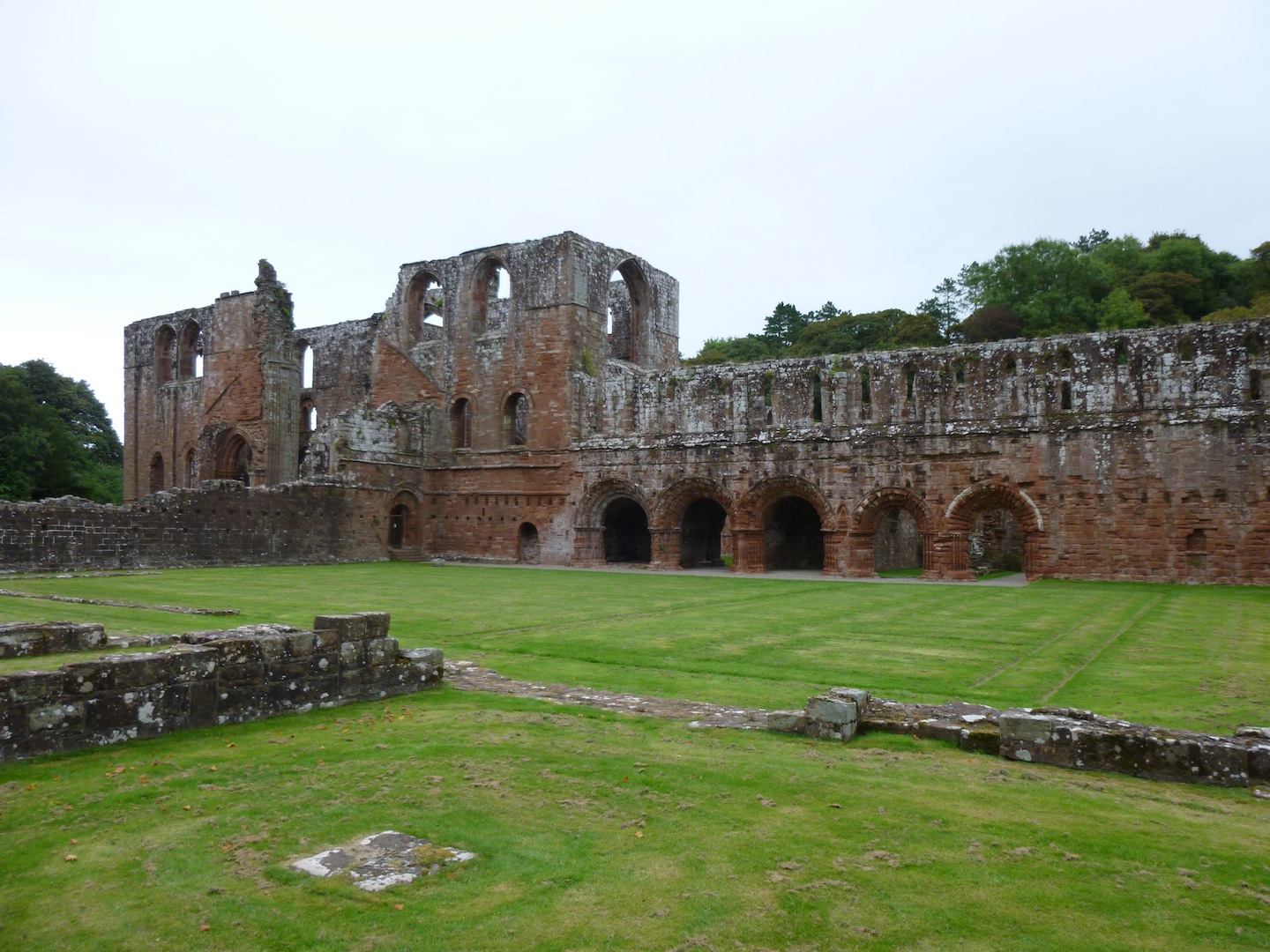
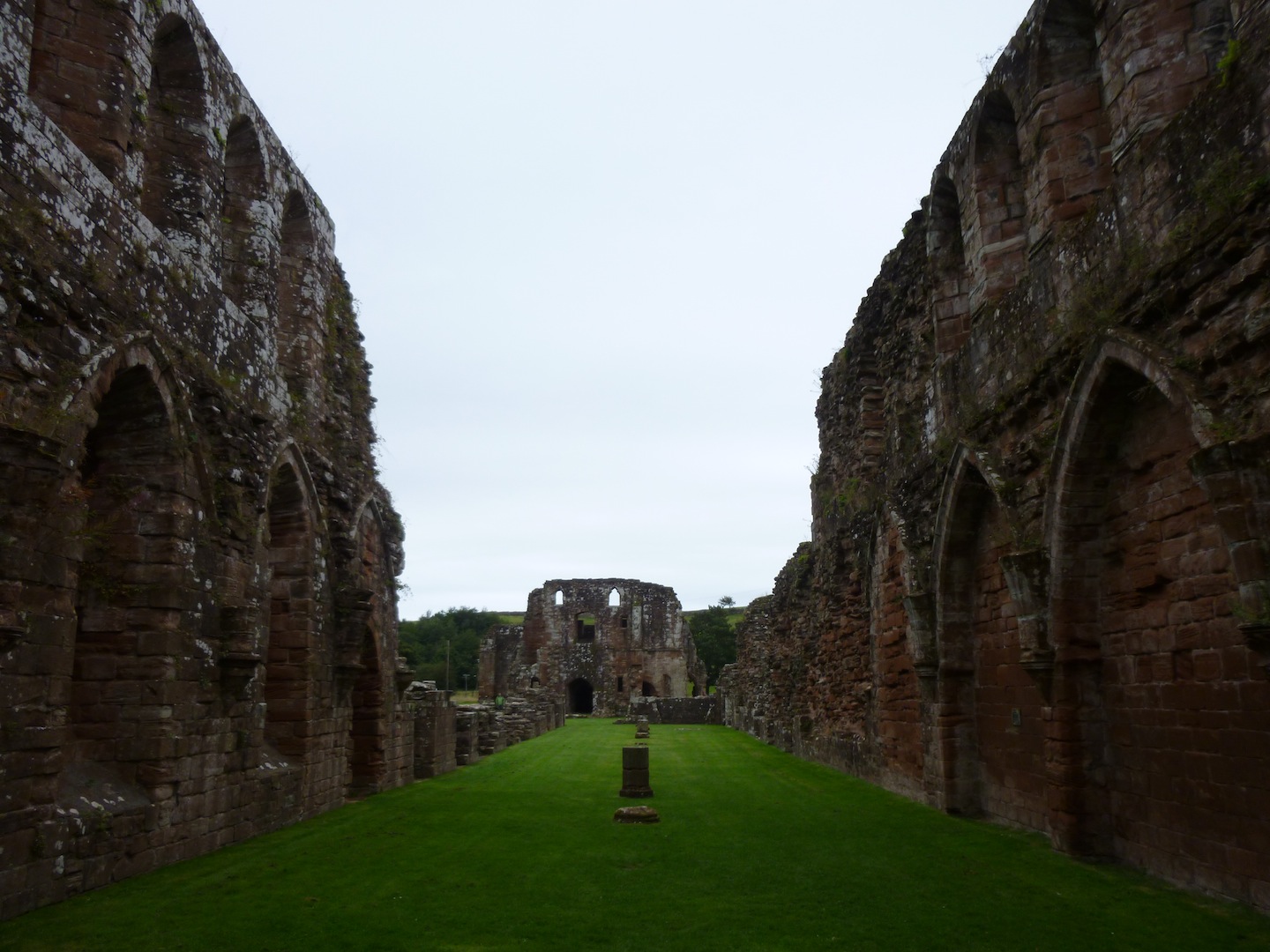
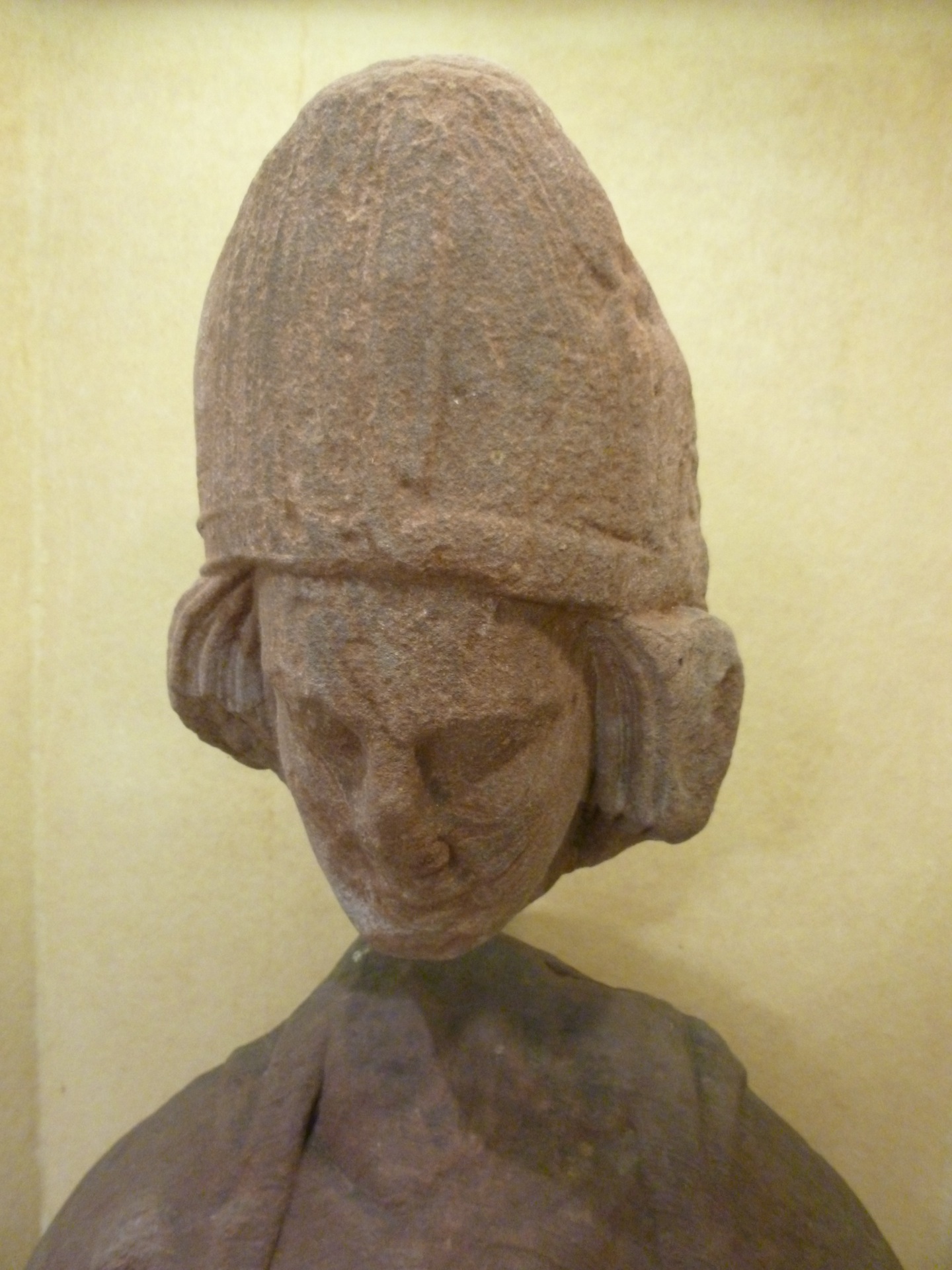
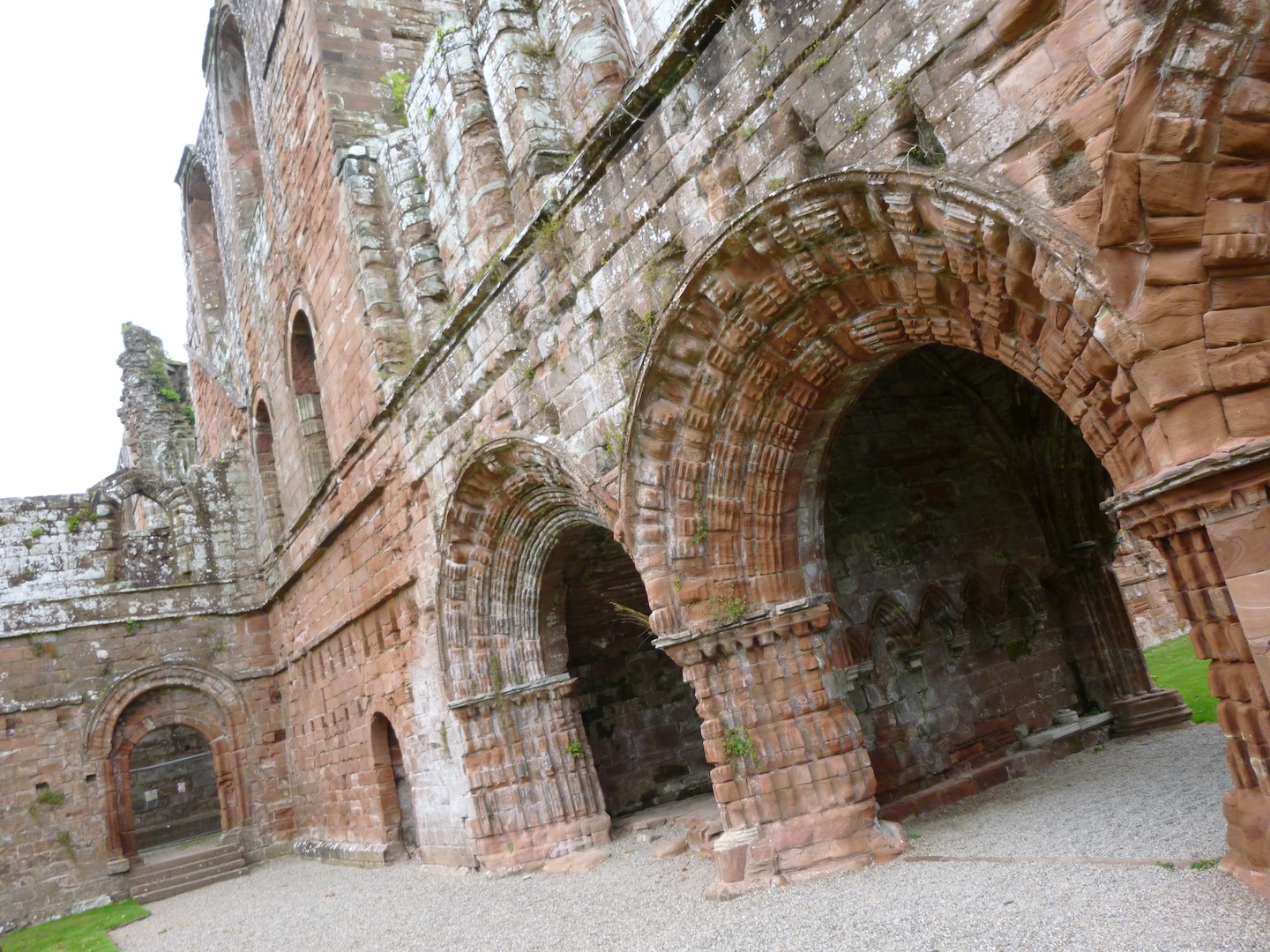
I visited the awe-inspiring Furness Abbey last week. It’s one of those places that I find very hard to describe, and although I’m going to try, I don’t feel I’ll come close, so I’ll probably keep this fairly short.
The abbey lies in ruins, but the utter majesty of the place remains. Sandstone soars into the sky in towers, even as the wind and rain carve it back down into organic shapes. It’s humbling beyond measure to walk the grounds, to sit in the buttery, to peer up tiny spiral staircases, to measure spans and arches – to walk the same paths the monks would have walked, centuries ago. A watercourse trickles through the ruins, tight with brick and riddled with tunnels and drains, but also dense with willowherb. It makes the abbey seem both antique and feral. There are plants trickling from upper ledges, and swallows nesting in the cells. There are tunnels and alcoves and windows and doors. What survives of the former halls still feels enclosed. Parts of the abbey are completely removed from the main walkways, and it’s unnerving to stand in silence and stillness and reflect on the hundreds of lives to pass through the same space. It’s crawling with ghosts. They’re in every stone, in every blade of grass. The site is surrounded by trees that hush in the wind, and the place is full of whispers. It embodies that sense of threshold I feel so drawn to. There are blind corners, where the space is shut abruptly out and your skin crawls with presence. Gravity weighs more in the abbey. The stones have grown gaunt on life and death and time.
Time. That’s the abbey means. The whole place aches and creaks with a ferocious sense of time. It’s massive. It echoes, it rebounds from the rock, from the moss. Walking the walls brings our few moments in this world into ferocious, ridiculous focus. It’s magnificent. It’s extraordinary. Go and explore it for yourself.
This is amazing: two skeletons have been discovered in Ireland with stones wedged in their mouths. This was supposed to prevent a return from death. In other words, these two were thought to be vampires or revenants. Consider the conviction needed to force a large stone into the mouth of one corpse – and then a second. Imagine the sound of stone on teeth as it was wedged inside. There was no doubt in the minds of whoever buried these bodies that theywere coming back.
I wrote a flash story a year or so ago, recalling a lucid dream in which my daughter and I were laid out on slabs with stones in our mouths. I could taste the grain of the stone on my tongue. Reading about these skeletons gave me the shivers. It also, bizarrely, made me hungry for the second series of The Returned…
Full article here, and here’s some Mogwai to keep you sharp. Get your spook on.
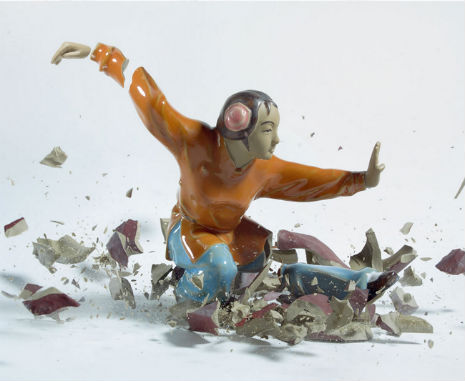
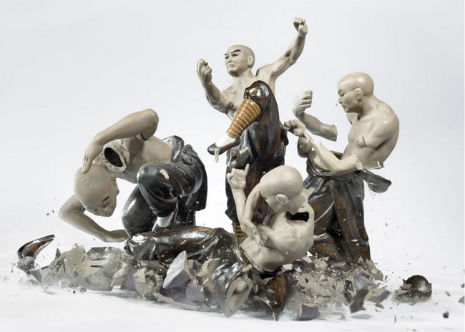
These are extraordinary – German photographer Martin Klimas drops these statuettes, and rigs his camera to trigger at the sound of their impact. In doing so, he creates a threshold: giving these porcelain figurines an explosive moment of life at the exact point of their death. His website has more of these amazing images, as well as other high-speed photographs. Mesmerising work.
A couple of weeks ago, Daniel Carpenter came up with the idea to blog about a book that changed everything he knew about reading and writing, then pass the baton onto others. He wrote, brilliantly, about The Wasp Factory, then nominated David Hartley and myself to continue the chain. David wrote, promptly and also brilliantly, about Frankenstein, then picked Benjamin Judge and Nija Dalal to follow. Benjamin Judge (seriously: who is Benjamin Judge? I’ve read in Manchester three times, and never met him. He’s either a front, Lawnmower Man, or a ghost) then wrote with intimidating speed and grace about Tom Clancy’s Red Storm Rising, which means I’m late and under pressure.
The brief is to write about a book that changed the way I understood literature – that made me realise “what writing could do”. That’s a tough call. My first instinct was also for The Wasp Factory, which had a massive impact on me. But I think, on reflection, that others that hit me deeper, if not harder, and I can’t come close to Dan’s thoughts on what remains an astonishing book. I’ve spent a lot of time weighing up what to write about instead. Fingersmith by Sarah Waters is my biggest recent influence, but that was more like rebalancing my compass. Bruce Chatwin’s Songlines shook me to my core, and Jasper Fforde’s Bookworld series changed the way I thought about stories. Before that, the Harry Potter books got me reading again after a long period of not reading at all.
In the first draft of this post, I wrote 500 words about The Proud Highway by Hunter S. Thompson. The first scintillating volume of his letters was the inspiration that started me blogging while I was backpacking in Australia; that blog taught me to write (albeit like him), which led to a job in magazine journalism, which led to me writing fiction in my words of my own…
I love Hunter S. Thompson. He remains an inspiration for his sheer, indomitable rage against the greed, corruption, insanity and monstrous terror of corporate government. His prose is flawless, and The Proud Highway was the book that definitively led me to becoming a writer.
But – having written 500 words about Thompson and his letters – I stopped short. A book I hadn’t thought about for years swum into my head, and I knew it mattered more. It’s The Wonderful Story of Henry Sugar (and Six More) by Roald Dahl. I don’t know when I first read Henry Sugar, but I think it was during the single year I spent in an Edinburgh boarding school while my parents lived in Germany.
I remember almost nothing before the age of 10 or 11, and my time at the boarding school sneaks up on me like spidersilk – fleeting, single strands, flickering with light, then gone. And although I don’t remember exactly, I know that I spent a lot of time in the school library. I know I read King Solomon’s Mines, and all The Hardy Boys books, and a bunch of Stephen Kings. I would have read Dahl’s children’s fiction when I was younger, but I’m pretty sure that was when I stumbled upon his more adult stories.
I rediscovered Dahl when I was in my early twenties. I found all his works in a charity shop in London, and bought the lot. I gorged on them. His stories are consistently excellent, but Henry Sugar is the strongest of many extraordinary collections. The tale of the boy and the turtle, or the mysterious hitchhiker, or the greedy landowner and the treasure hoard, or the title story, all explore the no-man’s-land, the thin threshold between the real and the impossible. They are all perfect stories, delivering just desserts to protagonists and antagonists alike. Another of the pieces, The Swan, haunts me still; Dahl’s tale of bullies brutalising a class loner is gut-wrenching, brilliant, beautiful, devastatingly sad and entirely magical.
Henry Sugar is ferocious. But how does it redefine my idea of what books can do? It didn’t have that impact on me as a child, certainly, because I had no concept of books doing anything other than taking me away – I simply read and read. But in my twenties, on rereading Henry Sugar, the ghost of it flooded back – the sad magic of The Swan sluiced through me, and it was utterly transporting. Where Sarah Waters holds back from explicit fantasy, and Neil Gaiman commits to it completely, The Wonderful Story Of Henry Sugar perfectly inhabits that edgeland between reality and fantasy. This is important because I see, now, how I’m drawn to that same space in my own work. I don’t want to write like Roald Dahl – I couldn’t – but I’m trying to walk that same tightrope between two places. And in that sense, no other book has so changed the way I think about books – about writing – about reading – about living.
So that’s me. I’m going to nominate Iain Maloney and Ali Shaw to continue the series, though I haven’t asked them yet.
Last night, with slightly more than an hour to go before the deadline of the MMU Novella Competition, I finally finished my novella The Year of the Whale. The image above is a randomised cloud of the most common words in the manuscript, which is a really satisfying way to look back on what I’ve made.
I started writing it in 2009, and it has spent entire years untouched, waiting for attention in the dusty recesses of my hard drive. It’s written in first person with a very particular voice, and it’s been strange to return to it so sporadically over the years, and take up the mantle of that voice again. I’ve wanted to finish it for a long time – it was one of my New Year’s resolutions, no less – and I’m thankful to the competition for giving me the spark to get it done. I don’t expect anything to come of it – that way madness lies – but I’m thrilled to have wrapped it up last.
The Year of the Whale is the story of a man called Henry Cowx. He is a fisherman and walking guide in Morecambe Bay, riddled with arthritis and wracked with guilt. His story explores that guilt, and gives some quiet thought to what it means to remember. It’s about walking and place and ghosts and folk tales, and our connections with the land. It’s at the heart of my obsession with threshold spaces. It’s a meditative, elegiac story, and a long way from where I’d like to develop my work – but Henry has never been far from my mind, and I’m glad to give him closure at last.
I discussed some of the genesis of the story in my Thievery post for Kirsty Logan.
I’m working my way through some film jobs at the moment, but it’s almost time to get back into The Hollows.
The Visitors is a little bit about selkies. Selkies are seals, and they are also people. They have a fur coat that allows them to take the form of a seal. When they step out of the coat, they become human. Selkies can be men or women, but they are always extraordinarily beautiful.
There are a multitude of selkie stories, but the most common starts with a selkie woman removing her coat and dancing on the shore. A young man – usually a fisherman or crofter – spies her dancing, and steals the coat. With her fur held hostage, the selkie has no choice but to marry the man. They live together for a while, but then the selkie finds her skin and escapes back into the sea. The man is left to nurse a broken heart. Often, the couple have children. In some stories, it is a child that finds the coat, and returns it to the mother. Sometimes the selkie takes her children back into the ocean, and sometimes they are left behind. In that version of the story, the mother and children meet in the surf to play.
In the other typical selkie story, an island woman cries seven tears into the sea to attract a selkie mate. Selkie men give children to barren women.
I love the idea of selkies, but I struggle with some aspects of these traditional stories. They crush female independence. In the first, the selkie is kidnapped and loses years of her life to captivity. The man takes what he wants, and is punished only by the accident of her escape. In the second story, the male selkie is a god, and the woman summons him on bended knee. Either human men dominate supernatural women, or supernatural men dominate human women. Both men and women mean more to me than that. When I started writing The Visitors, I wanted something different from selkie stories. I wanted equality. That’s been my guiding light for the novel, from start to finish. John and Izzy share traditional tales, but Ailsa and Flora question the validity of that tradition, and take a closer look at what it means to be a selkie.
Selkies are special. I watched the seals hunting in the bay at Grogport, and saw them bask and splash in Portnahaven harbour. There is life and knowledge in their eyes. When you look at them, they look back. On Kintyre, we walked the coast around Skipness on a grey, steely day, and we were followed by a seal. For half a mile or more, as we skirted the coast, the seal stayed twenty or thirty yards away from us. It seemed to move without locomotion, so that dark snub head simply kept pace with us, looking towards the shore. We sat on old stones to eat our lunch, and the seal bobbed and ducked at one end of the headland. It didn’t move away until we struck back inland, and then it vanished in a wink. I looked back to seek it out, but the seal had gone.
I asked my friends about seals and selkies, and they swamped me with stories. Chris gave his first pocket money to Save The Seals. Tom talked to the seals in a sealife centre, and the seals talked back. Dan’s friend confused swallows for seals in a dream, so he drew her a picture of a swallow with a seal’s head. Kirstin’s father whistled to the seals in Shetland, and they popped to the surface to see what all the fuss was about. Jon was kissed by a sealion. Sakina can’t shake the tale of the seal maiden. Ross works in Copenhagen, and daydreams that commuters with sealskin coats are modern-day selkies. Amy holidayed on Mull when she was seven, and spent the summer playing with a selkie called Della.
Why do we give seals such humanity? They are manifestly foreign to us, but the connection is overwhelming.
When I was 25 or 26, I spent a year working and backpacking in Australia. I remember snorkelling on Ningaloo Reef, diving as far down as I could go. I looked up exactly as the sun dropped behind a cloud. The water turned suddenly cold and pressed against me, and I felt very afraid, scared of the deep and the dark and the cold and the blue. When I think of selkies, they are underwater, floating with perfect neutral buoyancy, and shafts of sunlight sway woozy on the surface above. The darkness drops away behind them, and the selkie exists in two places: as a seal, utterly unafraid, and as a human, drawn against the current, compelled to the surface. Selkies live in thresholds. The selkie woman, when she escapes, returns to embrace her children in the surf. The shoreline, changing always with the tide, is where seals and people meet as selkies. It is a nowhere place, and yet it is all they have.
A hunter doesn’t know his wife is a selkie. While hunting, he sees her as a seal, and harpoons her. She becomes human, and dies in his arms.
The crofter is left heartbroken on the shore, and his selkie wife returns by stealth to see her children.
This selkie is allowed only one night of the year to be human.
Two lovers share a single skin, so that they can never be together in the same form; always one as a seal, and one as a human.
Selkies are born from the souls of drowned sailors.
Selkies are cousins to the muc-sheilche, the kelpie, the nokken, the finfolk. Those creatures are killers and enemies to men. So what makes the seal a victim? A romance? A tragedy?
When we visited Islay, we drove out to Portnhaven. We clambered across the rocks to the weedy edge of the harbour, and we watched the seals. Half a stone’s throw across the water, they gathered to sunbathe by the dozen. They winked as though the Atlantic was a hot tub. They flickered in the water, phantoms bound in straps of kelp. They came so close that I found myself laughing aloud – laughing in wonder, joy and disbelief.
When I started writing The Visitors, I wanted to explore that connection with the seals, that projection of knowledge, and emotion, and empathy. I don’t know if I succeeded, but I’ve fallen more in love with seals and selkies.
My wife found this picture of a seal. It was taken in California, rather than Coll, but it’s the way I see a selkie. Curious and cautious, incredibly close, and impossibly distant.










 Simon Sylvester