Black Bull Lane


11056204173_d9128c972a_o

I’m absolutely thrilled that friend and fantabulist writer David Hartley has gathered my short story Hutch into the sweeping, surreal cradle of The Hillside Curation, his excellent occasional mixtape. With a themed selection of stories and poems performed by Dave, and a swaggering electronic soundtrack mixed by his brother Rick, the show is 45 minutes of brain-bending brilliance. This episode is themed around animals — as well as my story (guinea pigs) there’s work by Kate Feld (cats), Lewis Carroll (crocodiles), Joanne Limburg (ants) and Dave himself (myriad sorts of buggy beasties).

I’ve written before about how professional performers can transform a story, and I feel the same here. Dave’s reading of Hutch is a hundred times more powerful than mine, and Rick’s soundtrack lifts it into another space altogether. It’s like hearing the story anew. My humble thanks to the brothers Hartley.

Friends, go seek thy headphones:

Always, always, always the sea

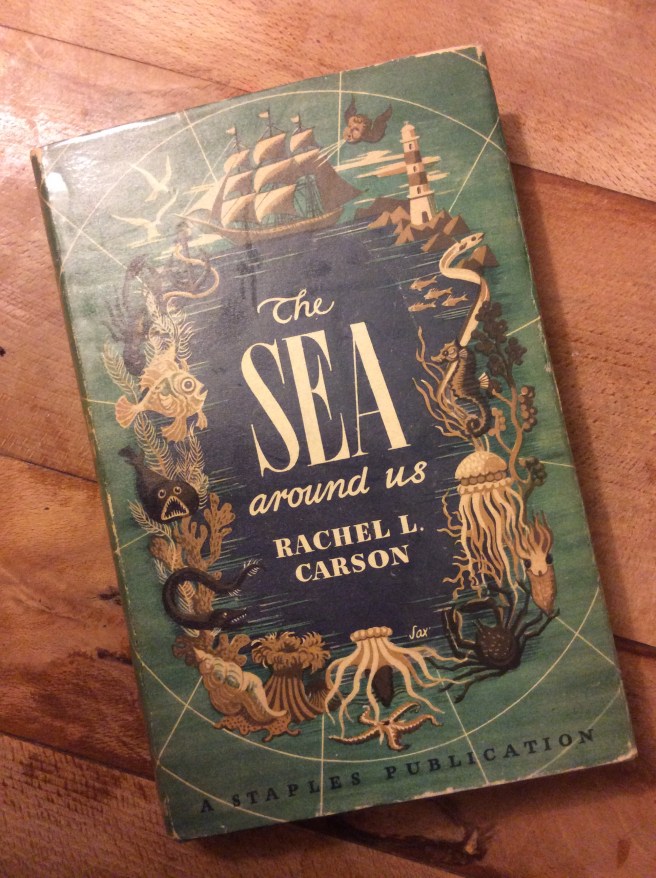
I’ve been thinking a lot about the sea, lately — I was lucky to be given several books about the sea for Christmas presents, and then my excellent wife tracked this stunner down for me too —

img_3843

The next story I write will be about the sea — the idea fell into my head, perfect as a cowrie, while I was working on the closing chapters of my last book. And although I was planning another novel altogether for my next one, the sea book has overtaken it. I’m excited.

I’m desperately trying to finish off a film edit right now, so bear with me — I’ll write more about the sea another time. For now, I’ll leave you with this — a quick mix I threw together of ocean songs, featuring British Sea Power, Bat For Lashes, Modest Mouse, Frightened Rabbit, James Yorkston, The Waterboys and many more. Enjoy.

Watershed

verbalise

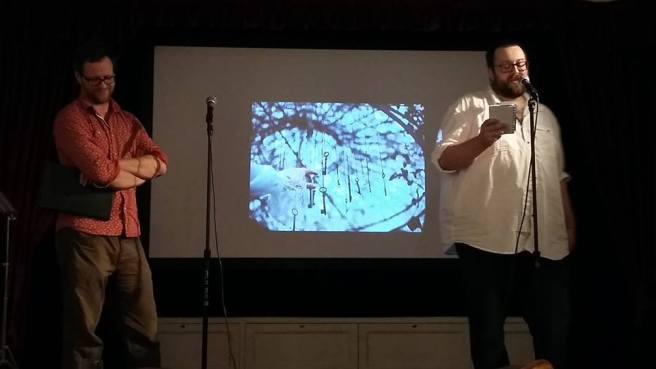
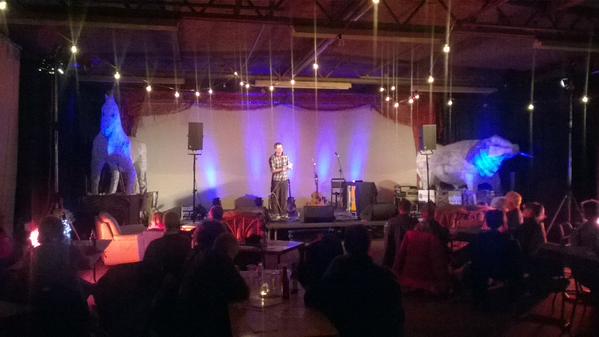
Last night, BigCharlie Poet and I headlined Verbalise at the Brewery. We’ve known each other for years, and we’ve been working on these photo challenges for almost as long, so to perform together for the first time was a real buzz. Thanks to all the glories of PowerPoint, we also projected the images onto the screen behind us, and hopefully the audience enjoyed seeing how and why we interpreted each picture.

It was a particularly good open mic, with stand-out performances from Harriet Fraser, John Scott, LD Brown, and three poets I hadn’t seen before — Clare Proctor, Louise Barklam and Roland Crowland (sorry if I’ve spelled your names wrong). I had an excellent time, and sold some more copies of Dare. They’re starting to run out, now, so get amongst it if you want one.

BigCharlie and I have now done the photo challenge for Cathedrals, Graffiti, Libraries, Foxes, Scarecrows, Suitcases, New York, Europe and Keys. These last four were the new pieces, and they seemed to go down okay. My stories were called Drums, Murmurations, The Slips And The Cracks, and The Four Things That Happen After You Die. These were the photos — can you guess which image goes with which title?

I’m not going to include the stories here, because they’re bound for another flash collection, probably late next year — that will be called Soup Stone. More on this another time. I might submit them for publication, too, when I work out who’s printing flash fiction these days. That scene changes so fast, and when I’ve been away from it, I struggle to catch up. Suggestions very welcome. (Please…)

The photo challenge always freshens me up as a writer. It breaks me out of whatever ruts I’ve worked myself into, and helps me to look at something new, to consider a story with fresh eyes. As ever, I’ve enjoyed working on these pieces, but I’m also glad they’re done. My head has been stuck in the novel for months, and dislodging myself for this has been a great wee holiday — now I’m ready to get back and get it finished. As if on cue, I woke early this morning, after a fortnight of sleeping in.

I’ve now written over 100,000 words on the book, which is psychologically well past that tipping point where the inevitability of finishing outweighs any possibility of abandoning it. This is the third (and bloody final) time I’ve tried to tell this story, and writing it has become like working with blueprints on top of blueprints on top of blueprints — the ghosts of the last drafts keep drifting through, whimpering for love. That said, with only another 20,000 or 30,000 words to go, the chance of the story evolving reduces with every new word I write, and there comes a point when it’s simply — done.

But I’m not there yet. I have some big scenes still to write, and it’ll need a lot of streamlining when I’m done. I’m trying to keep my head, but in the time I’ve been working on this novel, I’ve seen friends and peers publish one, two, three books, and it’s hard not to get disheartened sometimes about how    S    L    O    W    my progress has been. But that’s also when I need to remember that I’m writing the story for the story — for myself — and that thinking of anything else will drive me demented.

So Verbalise with BigCharlie will be my last gig for a while. I’m treating it as a watershed between then and next. I’m so desperate to focus on the novel and get it finished that I’ve been turning events down, lately — and while I’m reluctant to step away from the readings and the communities that I love, I absolutely need to have nothing else to do. No deadlines, no events, no short story submissions — nothing but novel until it’s done. My blogging has been sparse this year, and will probably become even sparser, but I’m so close to finishing, and finishing it properly — and then I’ll return to the world, and wonder at whatever comes next.


I’ve Got Heaven At My Door

I’ve now seen Penny Woolcock and British Sea Power‘s astonishing documentary, From The Sea To The Land Beyond, about ten times, including a live screening at Glasgow Film Festival last year. It’s an astonishing work—a feature length film comprising entirely of archive footage and BSP’s score, by turns haunting and playful. The footage was lifted entirely from the BFI archives, and tells nothing less than the social history of Britain through our relationship with the sea. It’s extraordinary: through the flickering windows of hundred-year old reels, the film explores Britain’s food, wars, suffrage, leisure, the rise of the middle class, industrial action, economic boom and bust, immigration, capitalism and more.

Ever since watching From The Sea To The Land Beyond, I’ve wanted to work with some archive footage. I used a little of it in my hay meadows documentary To The End We Will Go, but when I recently happened upon some fascinating public domain material, I decided to cut something entirely from archive. And here, then, is something of a music video; taken from my friend Dan Haywood‘s wonderful album Dapple, I’ve cut together footage of USAAF atomic bomb tests and the seminal agricultural documentary The Plow That Broke The Plains, all soundtracked by Dan’s glorious song I’ve Got Heaven At My Door.

It’s not the most complex thing in the world, but then again, I have very little time right now—I’ll write more about that in my next post—I threw this together over a couple of lunchtimes at college. For now, here’s the video, and I’ll get back to my novel.

The sounds of The Hollows

With a first draft of The Hollows finished and sent away, I’ve emerged, blinking, into the light, with pasty skin and mild RSI. I’m still hungry to keep working while I have these little windows, though, so I’ve tweaked and typeset all the stories in Dare, and sent it to the printers; I’ve started thinking about some new flash stories for my guest spot at Verbalise in October; and I’m catching up on some long overdue blog posts, including this one.

When I wrote The Visitors, I had a tight-knit soundtrack to shape my work. This consisted mostly of:

Come On Die Young by Mogwai

Mar of Aran by British Sea Power

Raise Your Skinny Fists Like Antennas To Heaven by Godspeed You Black Emperor

Just Beyond The River by James Yorkston

…and everything by Bat For Lashes.

In combination, they did what I needed them to do; for me, music for writing needs to hit several things at once. It must be engaging, immersive, transporting; but also neutral enough to let me tune out and play it in the background, and not get too involved. For this reason, I tend to go for records with minimal vocals; or, at least, records (like the James Yorkston and the Bat For Lashes) where the vocal is tonally consistent, drifting, utterly woven into the fabric of the music.

On starting The Hollows, I developed a new soundtrack. Some of the same culprits are there, but with different albums; listening to my Visitors soundtrack takes me back into The Visitors, and I needed to be somewhere very new for The Hollows, which is a more fantastical, more magical place. And I say ‘evolved’ quite deliberately; albums have dropped in and dropped out as the manuscript developed. Ys by Joanna Newsom was a big part of last year’s stumbles, but she gradually shifted down the running order as the story unfolded. Instead, Jonathan Eng’s wonderful soundtrack from the computer game Sailor’s Dream moved in to take her place (thanks in no small part to the wonderful vocals by Stephanie Hladowski). Another video game soundtrack has proven to be extremely good music for writing: Thomas Was Alone is an utterly beautiful game in and of itself, but the score by David Housden stands alone.

The most recent addition is I Want To See Pulaski At Night by violinist Andrew Bird. My friend and colleague Dom introduced me to this record while we were in the depths of a marking slump, and it parachuted into my writing soundtrack next day. Mostly instrumental, Pulaski takes its title from this glorious centrepiece:

The running order is important (to me, anyway – it’s totally cool if you don’t care). Andrew Bird is first on the list, as I Want To See Pulaski At Night is both sleepy and sparky, making for exactly the right way to start the day. Then comes Thomas Was Alone, which takes me somewhere deeper, calmer, more concentrated:

From Thomas Was Alone, British Sea Power take it up a notch with the drive, shift and transporting tumble of their film soundtrack From The Sea To The Land Beyond. Thanks to pal Kirstin Innes, Mon and I were lucky enough to witness them play this live at the Glasgow Film Festival earlier this year. Their performance was magisterial. I’ve now seen the film half-a-dozen times, and it’s a masterpiece: a social history of Britain told through our relationship with the sea, drawing together a century of archive footage from the British Film Institute. Watch it. Watch it again. Tell everyone.

Next up is Sailor’s Dream. By this time I’m ready for something less immersive, and the vocal interludes of the days of the week (this makes sense if you’ve played the game) saturate my head with little magics, thresholds, otherworlds.

Next comes Balmorhea. I discovered this post-rock band last year when friend Jon kindly gave me his old iPod, and I became addicted in days to their sweeping arrangements. There’s a timelessness to Balmorhea’s music that I find completely immersive. They sustain this over several records with different measures of minimalism, but it all works for me. After Sailor’s Dream I go into their album Constellations, but from this point they recur every other album, working up to Live At Sint-Elisabethkirk, which is perhaps the best £5 you’ll spend today, because this:

After Constellations, Mogwai strike back with Rock Action, the follow up to Come On Die Young. Here’s why it’s one of my favourites of their many awesome albums:

Then comes phase two of the mighty British Sea Power, with their short and astonishingly sweet soundtrack Happiness, then Balmorhea again, then Rachels and Remember Remember. I seldom make it all the way to the end, though. After Happiness, I tend to start the playlist over. It’s almost nine hours long, which is most of a working day for me.

Every time I think I won’t find any more music that’s right for me, something always comes along. Dom introduced me to Andrew Bird, and Jon to Balmorhea. I do wonder, looking ahead to next novels, how the soundtrack will change.

Cellar steps

Last night, more or less six months since I started, I gave the first draft of The Hollows to Mon to read, and I sent it to my amazing agent Sue. Mon and I took Dora out to tea, then she started reading. Sixty pages in and she hasn’t ditched it in a flurry of disgust, so there’s hope for me yet.

I thought it would easier to let go of the second book, but I was wrong. I thought I’d feel more confident, more certain. I don’t. If anything, the stakes feel higher. What if I’ve moved backwards? What if no one likes the story, the characters, the writing? I’m happier with this story than anything I’ve done before, but what if I’m wrong? What if I’ve got worse?

I didn’t entirely understand the proverb about not seeing the wood for the trees until I started writing novels. When I’m so immersed in my work, in my worlds, it’s easy to lose perspective on whether it’s actually any good. My own, personal instinct for story is stronger than ever, and getting stronger still; but there’s nothing on Earth to say it’s actually right. There’s no way to triangulate what happens in my heart with the world around me. In that sense, every novel – and I’ve written three of them now – is a first novel, feeling in the dark for cellar steps. Maybe it gets better in time. Maybe it gets easier. But I can’t imagine what that feels like, how that would be. It’s strange to be so terrified of the only thing I want to do. As Mon was reading, I glanced across at her every thirty seconds, every minute: which page is she on? What happens there? Oh lord, is that all right? Does that dialogue work? Do I believe it? Will she believe it?

Dora woke at 4.30am this morning, claiming it was too dark to sleep. I put her back to bed, where she fell asleep in moments, but then I couldn’t because, ahahaha, it was too light. So I’ve been up for hours, listening to songs I love, making a Mogwai mixtape for a friend, catching up on email, gazing out the window and thinking, thinking. There’s no light quite like the glow of dawn. The world is luminous, and then it turns to gold, and it sleeps on into the rising sun. No one knows but foxes, cats and milkmen. I imagined what it must look like on the river Kent between Burneside and Staveley right now, right now, with no one there at all, only the swallows and the martins flitting on the river, vapours coiling on the water, sun sliding sideways through the trees, a hidden valley with half the world in shadow and half the world on fire.

I know what my next four or five novels look like, and I have fourteen flash stories to write. Today, though, I’m taking my daughter swimming. She’ll be Peso the penguin and I’ll be Kwazi the cat, and we’ll look for treasure and help sick sea creatures along the way. Dora loves swimming, but she’s scared of having water on her head – she won’t jump in, and hates being splashed. But today, for the first time, we’re going to see how things go with goggles. Maybe – with some support, some courage, and some curiosity, today will be the day she looks underwater, the day she discovers there are other worlds, other places, other ways to see. Letting go is hard. Feeling for that cellar step is hard. Maybe all of us need to be brave.

Bad Language at Kendal Calling

KendalCalling_byBenGerrish
Photo by HDDN Media http://hidden-media.co.uk/

The excellent people at Manchester’s premium spoken word experience Bad Language kindly invited me to join them for a reading at Kendal Calling festival this weekend. Wading ankle-deep through mud to the Carvetti stage in the Lost Eden area, I was humbled to join Mark Powell, David Hartley and host Joe Daly in bringing words to the woods. They are fantastic writers, and it was an absolute delight to hear more of their work. And because we all camped together, I was actually able to have a natter with them afterwards – on the rare occasions Mon and I go to Manchester, we always have to leave early, so it was a pleasure getting to know them better. Good people. Between Dave’s otherworldly species-bending marvels, Mark’s lists of life hacks and surreal perfume adverts, and Joe’s wonderful reinventions of everyday struggles as particular and personal Everests, it was humbling company to keep.

I read Coffin Routes, some of my new circus stories and several bits of Marrow. It was a tough and mobile crowd – the stage was right beside a main walkway between much louder stages – but there were gasps, winces and laughs throughout, so I think we held our own. We made the Top 12 highlights of the festival for Gigwise, too.

We didn’t catch much else of the festival, but what we caught was fantastic. As always, British Sea Power were magnificent. There aren’t many bands who sustain years of constant reinvention without sacrificing their core identity – Mogwai, for sure, and maybe Super Furry Animals – but BSP are treasures. They made ferocious headliners of the Woodlands stage on Saturday night, tearing through their back catalogue to finish with a sprawling Spirit of St Louis complete with crowdsurfing and Ursa the bear. One day, I will be that bear. One day. That was the sixth time I’ve seen them, and they keep getting better.

And then there was Kate Tempest. Mon and I knew and liked what we’d already heard of her work, so thought we’d mosey along to see her set on Friday. We were there early enough to be right at the front for one of the most amazing hours of my life. We thought she’d be good, but she was extraordinary. Brimful of passion, rage, courage and love, she was electrifying from start to finish, scintillating, blazing her way through the set like a sermon. And the music, too, was titanic, walls of sound that towered upward, a perfect fusion with the words. It was magnificent. Near the end of the set, Kate made eye contact with Mon for ten, fifteen seconds, rapped to her, sung to her. For the rest of that night, and the next day, and even now, aftershocks of her performance are still shaking through my life. Nothing seems quite the same.

The only downer was missing Seven Seals. They were playing at the same time as the Bad Language set on Sunday. In between readings, I could hear them scorching through their psychedelic synth-punk wonders. More people need to know about Seven Seals. Everyone needs to know about Seven Seals. Go and see Seven Seals.

When the reading was done, Mon and I said our farewells to the Bad Language crew and fled while we could, squelching through the swamps to the car. The campsite was a happy, slightly delirious Lord Of The Flies. Festivals and mud. That’s how it goes, right? A hundred tons of woodchip to soak up the swamps. It’s just as well I’m writing about bogs. Kendal Calling proved invaluable research.

Thanks again to Bad Language. It was an honour to serve with you, gentlemen.

Here’s Kate Tempest:

Joan Shelley at Penrith Old Fire Station

Last night, I had the second of three gigs this week, supporting Joan Shelley at Penrith’s Old Fire Station for Eden Arts and New Writing Cumbria. I rattled through new stories, Marrow stories and selkie stories from The Visitors. I think it went OK. I always misplace my critical faculties while reading. I simply have no sense of how it’s gone across, whether people have liked it, hated it, how long I was reading for – nothing. But I think, I hope, it went well. Here’s the space and me wittering on about something:

simon in penrith

The headline act was just fantastic. Joan Shelley’s low-key, heart-rending folk and country songs were absolutely wonderful, at once crystalline and compelling, delicate and beautifully raw. She was joined by multi-instrumentalist Colm O’Herlihy for a few pieces, bringing new depths into the sound. Banjos and guitars, foot taps, a box of harmonic tones. It was mesmerising.

Have a listen here:

*

It was an honour and a privilege to share a stage with Joan and Colm, as well as a reminder to keep striving, to keep aiming high.

We drove to Penrith in dusk. On the way past Shap, we passed right beneath a gigantic murmuration of starlings – perhaps the biggest I’ve seen firsthand – curving and ballooning in twilight, speckles of black against the blue. We drove back beneath a full moon, trees silhouetted against the night, clouds above in grey and silver, an ocean lapping at the shores of the horizon. The mornings are beginning to bloom.

2014 and all that

This year has been both breathtakingly excellent and occasionally extraordinarily hard. I’m focusing on the good stuff though, because we’re all spinning through the mind-boggling vastness of space on a giant oxygen machine and really, when you think about it, where’s the sense in dwelling on the rough?

So here we go; in no particular order:

1. The Visitors being published

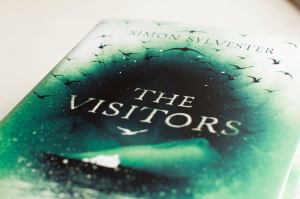
The culmination of two years’ work and the start of an awful lot more to come; in June, the wonderful folks at Quercus Books were kind enough to publish The Visitors. I wrote about the publication here, and it kept on running. Somehow, people keep enjoying it. I’ve summed up the reviews here, and there are reviews from actual real life readers on Goodreads and You-Know-Where. Writing was hard, editing was very hard, and now it’s out there in the wild – it doesn’t need me any more, if it ever did. I haven’t really come to terms with the book being published, other than it makes me scared, humble and really, really happy. Writing is all I want to do, but sometimes every step feels like the first step.
visitors

2. The Hollows

In the twelve months – to the day, madly – since I started, I’ve probably written about half The Hollows. Unfortunately, for reasons like this and especially this, I’ve had to cut gigantic chunks of it; so much, in fact, that I’ll basically have to start again next year, and crib the pieces I can still use from the manuscript. This would be a very bad thing, were it not for how excited I am about those pieces that are left. It’s been bruising, definitely, but the process is now beginning to tip me in positive directions I probably wouldn’t have gone by myself, and that’s terrific.

3. Flashtag short short story slam

Over the last two years, I’ve been trying to read more of my work aloud; I pushed myself further this year by entering a story slam in Manchester. I memorised my three stories so I could concentrate on performing them, rather than reading them, and I was lucky enough to win. That was great, and I was delighted, but what really blew my mind was the culture of live literature I witnessed in Manchester. It’s raw, it’s funny, it’s friendly, it’s immediate. It’s everything short stories and poetry and flash fiction should be about, and it completely affirmed the value of storytelling as an act of community. Stories are a thousand things, and one of those things is churches.

4. Clowning

Way back in February, I attended a clowning workshop run by Belgian storytelling maestro Fred Versonnen. This is the best £25 I’ve ever spent, and it’s true to say that my life hasn’t been quite the same ever since. I see things differently now – I write differently now.

fred

5. The Year Of The Whale

I started this novella more than five years ago. Getting it finished was a thrill – I surged through the final chapters, and I’m pleased with it. It still needs redrafting, but I’m not quite ready to get back into it. It’s waited five years – it can wait a little longer.

6. Marrow/Cerys Matthews reading Circle Stone

Finishing Marrow was another big deal in my writing year. I haven’t written as much flash fiction this year, because I’ve been mentally wasted from work, and that kinda gets in the way, but I did, finally, finish and self-publish a flash fiction collection called Marrow. Of the hundred I printed, I have about twenty copies left, and people seem to like it, which is a source of constant wonder. I wrote about my decision to self publish here. I sent a copy to the excellent Cerys Matthews, and because she’s absolutely awesome, she read out one of the stories on her BBC6 Music show. This is, and will always be, the coolest thing that ever happened to me.

7. Gruff Rhys at Kendal Library

Gig of the year, hands-down. I wrote about it here, but in summary, Gruff was majestic, wise and funny.

8. Greece

One of my favourite ever holidays. A week of sunshine, warm evenings, seashores, swimming and the boundless comedy available on tap from my daughter Dora. We had a fantastic time: ruins, eagles, Mythos and pizza. I love holidays because I’m with my favourite people, I get to read a lot, and I get to think a lot. It went like this.

9. Friends

It’s been another good year for my friends. Iain Maloney published First Time Solo, his excellent debut novel, with Freight Books; also with Freight, Anneliese Mackintosh’s debut novel/story collection/autobiography Any Other Mouth was released to stupendous acclaim, going on to win the Green Carnation Prize; Salt published one of my books of the year, The Rental Heart by Kirsty Logan; Kirstin Innes landed an agent and then a publishing deal for her debut novel Fishnet; and I was lucky enough to read a draft of Ali Shaw’s new novel, The Trees, which is simply scintillating. I’m delighted that Bloomsbury are going to publish it, because Ali is a wonderful human being, an outstanding writer and a great friend.

10. Getting married

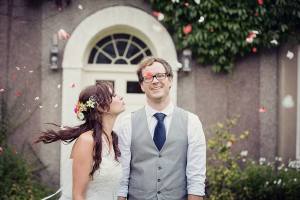
Just amazing. We did damn near all of it ourselves, and when I say ‘us’, I mean that I did 10% after I’d finished work, and my tireless, hilarious, wonderful, perfect new wife Mon did the rest. It was a lot of work to pull it all together, but we basically hosted a mini-festival in a back garden with a marquee, a stage, a band, a PA, scores of hay bales, lighting and decoration. We then partied till the following morning with our wonderful friends. My brother gave what was widely considered to be the best best man’s speech anyone had heard, and local legends Seven Seals played their very finest. It was phenomenal. What a day – a thousand thanks to everyone who brought it all together.

Mon is my everything, and I’m beyond proud to call her my wife.
si mon

So there we go. It’s been a good one, despite the harder stuff. Some of the things that have knocked me hard – like the Hollows, like the Scottish independence referendum – will come around again, and next time we will get them right. And other things – like working too hard – will change, because they have to.

Dora’s gone to bed. This is the first year she’s been old enough to really understand what’s going on. We helped her write a letter to Santa, which she signed herself, then made sure to leave a whiskey for Santa. (Jura, in case you’re asking. Santa’s quite particular about that.) I read her Where The Wild Things Are, and we roared our terrible roars, and gnashed our terrible teeth, and she asked me what the words mean: “…and …it …was …still …hot.”

These are the moments we’re working for.

Happy Christmas, folks.

dora