Solstice Songs

11243281064_7a896ac1e2_b

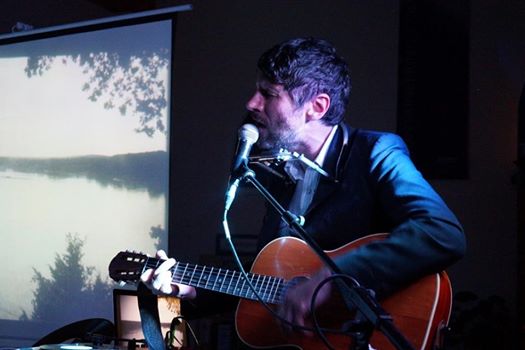
After mugging my way through a wonderful intimate spoken word night at Sprint Mill last year as part of the C-Art Open Studios, I’m delighted to say that I’ve thrown myself into running a follow-up event.

Solstice Songs will be held on midsummer’s eve in the amazing 18th century Sprint Mill near Burneside in Cumbria. I’ve gathered the estimable talents of some wonderful writers throughout the northwest and Scotland to read at the event, and you – yes, you – should come along and hear them do their thing.

I’m honoured to share the line-up. In alphabetical order, we have:

Edward Acland The owner and curator of Sprint Mill shares his startling, disarming and heartfelt reflections on people and place, distilling a lifetime of collection into magical focus.

BigCharlie Poet As well as hosting and running Lancaster’s Working Title night, BigCharlie Poet is a ferocious slam poet with word-perfect visions of life and love, all skewed nicely through a balance of wit and wonder.

Alan Bissett Fresh from having a street in his native Falkirk named after him, we’re thrilled to be joined by the multi-award-winning playwright, actor, poet, novelist, essayist and consummate performer Alan Bissett. I don’t know what he’s going to read, but whatever it is will be good.

Luke Brown Writing without exaggeration, I consider Luke to be a true heir to Roald Dahl. He is a superb storyteller of the macabre, bringing a host of weird and wonderful alter-egos to life in his darkly humorous tales.

Joy France The inexhaustible slam-winning poetry powerhouse that is Joy France joins us from Wigan with her witty and reflective take on life – life in the world, in the north, in the past, in the present, and in the weirder corners of her own wonderful mind. Here she is performing one of her signature poems, Hey Mrs B:

Harriet Fraser A multi-media poet of landscape, dreamscape, place and unusual word projects of all sorts: this summer she is poet in residence for a hay meadow, and one of Harriet’s most recent canvases was a herd of sheep.

Jonathan Humble Following the launch of his excellent debut collection My Camel’s Name Is Brian, the Tripe Poet Laureate™ brings his brilliant, laugh aloud ballads of tea cosies, leeks and rhubarb.

Kirstin Innes The multi-award-winning journalist, essayist, playwright and novelist brings her astonishing new novel Fishnet to Sprint Mill. Meticulously researched and brilliantly observed, Fishnet ducks sensationalism to explore the sex industry through the prism of a missing person.

Ann Wilson Fresh from the launch of her second collection Straight Bananas, the former South Lakes Poet Laureate and driving force behind spoken word night Verbalise delivers her unique blend of stand-up, song and rhyme.

…and me. Just me. (Sorry.)

All this wondrous wordsmithery comes for FREE, so bring a bottle, bring yourself, and shake your rump. Let’s get pagan.

Solstice Songs | Sunday 21st June | 7pm | Sprint Mill near Burneside, Cumbria

Waterstones Scotland Book of the Month

I should have written about this sooner, but the month since we returned from Thailand has been a blur of college, film and writing. In short, I’m honoured beyond measure that The Visitors has been February’s Book of the Month for Waterstones Scotland. It’s been incredible – my excellent friends in Scotland have been sending me pictures of the book for sale in Dundee, Edinburgh, Glasgow and beyond, and some of the window displays have been absolutely breathtaking. I’m a very lucky writer.

window display

The good people at Quercus asked if I could pop up to Scotland to sign some books and do a reading – which fortunately fell over half term. Cue a manic two days on the road with my wife – first dropping off Dora with her grandparents, then staying with my aunt and uncle in Edinburgh, stopping off at Waterstones stores in Edinburgh Princes Street and George Street, then Falkirk, on to Glasgow Argyle Street and Sauchiehall Street, and finishing up at the Braehead shopping centre. It was a real whistle-stop thing, calling in long enough to sign a stack of books, chat to the staff, and push on again.

I’m delighted to report that it seems to have been doing well – aided in no small part, I’m sure, by Leo Nickolls‘ stunning cover. Some stores only had a couple of copies left, and it had made the charts in others. It’s also been cropping up in Blackwells, W.H.Smiths, and Waterstones south of the border.

While we were in Glasgow Sauchiehall Street, I read a few chapters from The Visitors. I’ve read from it before at spoken word nights, but this was the first time I’d done anything like a proper talk on the book. I read three chapters. Having been so immersed in The Hollows, it was even a little strange to be back on Bancree and inside Flora’s head, but I enjoyed it. The reading was followed by some excellent questions from the audience, then catching up with old friends. Within 48 hours, we were back on the road to Cumbria.

I’ve been lucky. I know I’ve been lucky. I’m incredibly grateful to Quercus, and to Sue at Conville & Walsh, and to Waterstones, for showing this much faith in my work. I hope I won’t ever take that for granted, because I want to write until the day I drop. I’m still rising early to chip away at The Hollows. I’m finding that it doesn’t really matter how much I write in these dawn sessions, as blackbirds squabble in the garden and the radiators creak into life; whether I write 100 words or 500 words, it’s much more about keeping in touch the story, tagging in every day. Last year, I had to spend months at a time without writing at all, and I fell away from the manuscript. There were times I returned to it and couldn’t remember a word of what I’d written previously. Even if, or when, I get that busy again, I’m going to try to keep going with these little sessions every day – they mean that when I have a full writing day, I can hit the ground running. I’ve written more good material this February alone than all of last year put together. That gives me courage.

signing

2014 and all that

This year has been both breathtakingly excellent and occasionally extraordinarily hard. I’m focusing on the good stuff though, because we’re all spinning through the mind-boggling vastness of space on a giant oxygen machine and really, when you think about it, where’s the sense in dwelling on the rough?

So here we go; in no particular order:

1. The Visitors being published

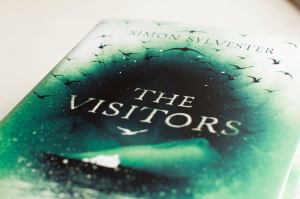
The culmination of two years’ work and the start of an awful lot more to come; in June, the wonderful folks at Quercus Books were kind enough to publish The Visitors. I wrote about the publication here, and it kept on running. Somehow, people keep enjoying it. I’ve summed up the reviews here, and there are reviews from actual real life readers on Goodreads and You-Know-Where. Writing was hard, editing was very hard, and now it’s out there in the wild – it doesn’t need me any more, if it ever did. I haven’t really come to terms with the book being published, other than it makes me scared, humble and really, really happy. Writing is all I want to do, but sometimes every step feels like the first step.
visitors

2. The Hollows

In the twelve months – to the day, madly – since I started, I’ve probably written about half The Hollows. Unfortunately, for reasons like this and especially this, I’ve had to cut gigantic chunks of it; so much, in fact, that I’ll basically have to start again next year, and crib the pieces I can still use from the manuscript. This would be a very bad thing, were it not for how excited I am about those pieces that are left. It’s been bruising, definitely, but the process is now beginning to tip me in positive directions I probably wouldn’t have gone by myself, and that’s terrific.

3. Flashtag short short story slam

Over the last two years, I’ve been trying to read more of my work aloud; I pushed myself further this year by entering a story slam in Manchester. I memorised my three stories so I could concentrate on performing them, rather than reading them, and I was lucky enough to win. That was great, and I was delighted, but what really blew my mind was the culture of live literature I witnessed in Manchester. It’s raw, it’s funny, it’s friendly, it’s immediate. It’s everything short stories and poetry and flash fiction should be about, and it completely affirmed the value of storytelling as an act of community. Stories are a thousand things, and one of those things is churches.

4. Clowning

Way back in February, I attended a clowning workshop run by Belgian storytelling maestro Fred Versonnen. This is the best £25 I’ve ever spent, and it’s true to say that my life hasn’t been quite the same ever since. I see things differently now – I write differently now.

fred

5. The Year Of The Whale

I started this novella more than five years ago. Getting it finished was a thrill – I surged through the final chapters, and I’m pleased with it. It still needs redrafting, but I’m not quite ready to get back into it. It’s waited five years – it can wait a little longer.

6. Marrow/Cerys Matthews reading Circle Stone

Finishing Marrow was another big deal in my writing year. I haven’t written as much flash fiction this year, because I’ve been mentally wasted from work, and that kinda gets in the way, but I did, finally, finish and self-publish a flash fiction collection called Marrow. Of the hundred I printed, I have about twenty copies left, and people seem to like it, which is a source of constant wonder. I wrote about my decision to self publish here. I sent a copy to the excellent Cerys Matthews, and because she’s absolutely awesome, she read out one of the stories on her BBC6 Music show. This is, and will always be, the coolest thing that ever happened to me.

7. Gruff Rhys at Kendal Library

Gig of the year, hands-down. I wrote about it here, but in summary, Gruff was majestic, wise and funny.

8. Greece

One of my favourite ever holidays. A week of sunshine, warm evenings, seashores, swimming and the boundless comedy available on tap from my daughter Dora. We had a fantastic time: ruins, eagles, Mythos and pizza. I love holidays because I’m with my favourite people, I get to read a lot, and I get to think a lot. It went like this.

9. Friends

It’s been another good year for my friends. Iain Maloney published First Time Solo, his excellent debut novel, with Freight Books; also with Freight, Anneliese Mackintosh’s debut novel/story collection/autobiography Any Other Mouth was released to stupendous acclaim, going on to win the Green Carnation Prize; Salt published one of my books of the year, The Rental Heart by Kirsty Logan; Kirstin Innes landed an agent and then a publishing deal for her debut novel Fishnet; and I was lucky enough to read a draft of Ali Shaw’s new novel, The Trees, which is simply scintillating. I’m delighted that Bloomsbury are going to publish it, because Ali is a wonderful human being, an outstanding writer and a great friend.

10. Getting married

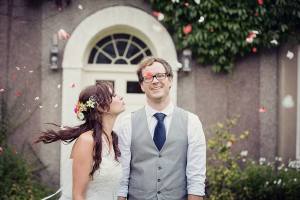
Just amazing. We did damn near all of it ourselves, and when I say ‘us’, I mean that I did 10% after I’d finished work, and my tireless, hilarious, wonderful, perfect new wife Mon did the rest. It was a lot of work to pull it all together, but we basically hosted a mini-festival in a back garden with a marquee, a stage, a band, a PA, scores of hay bales, lighting and decoration. We then partied till the following morning with our wonderful friends. My brother gave what was widely considered to be the best best man’s speech anyone had heard, and local legends Seven Seals played their very finest. It was phenomenal. What a day – a thousand thanks to everyone who brought it all together.

Mon is my everything, and I’m beyond proud to call her my wife.
si mon

So there we go. It’s been a good one, despite the harder stuff. Some of the things that have knocked me hard – like the Hollows, like the Scottish independence referendum – will come around again, and next time we will get them right. And other things – like working too hard – will change, because they have to.

Dora’s gone to bed. This is the first year she’s been old enough to really understand what’s going on. We helped her write a letter to Santa, which she signed herself, then made sure to leave a whiskey for Santa. (Jura, in case you’re asking. Santa’s quite particular about that.) I read her Where The Wild Things Are, and we roared our terrible roars, and gnashed our terrible teeth, and she asked me what the words mean: “…and …it …was …still …hot.”

These are the moments we’re working for.

Happy Christmas, folks.

dora

The infinite wilderness of America

10629583_372577442902040_2920714442364741548_n

Gruff Rhys played Kendal Library last night, and it was the best gig I’ve been to for a very long time: a madcap historical tour of 1790s America told in equal parts music, PowerPoint presentation, audience participation and something like stand-up. Gruff’s new album is a eulogy for John Evans, a penniless 20-year-old farm labourer who set off for the New World in search of legendary lost tribes of white Welsh Indians. Along the way, he faced the perils of disease, incarceration, war, assassination, hunting parties, alligators, and living in London. After every few slides in the presentation came a song, played on a combination of guitar, harmonica, some box full of electronic bleeps, a wired-up metronome and a turntable, as well as Gruff’s astonishing voice, crooning and whooping and soothing and floating through it all: pop, dub, techno, folk.

John Evans’ irresistible story was told with respect and gentle humour. One of the songs took its lyrics from his letters home; another focused on the unlikely friendship between Evans and a renegade Scottish general called McKay, finishing with a gorgeous refrain: “If we were words, we would rhyme.”

Of course, with Gruff being a Super Furry Animal, every part of the show walked a tightrope of the weird; unicorns, email, breadsticks and Easy Rider all played a part. It was a truly extraordinary gig, and I’m still reeling that we were amongst such a tiny audience – only 100 people – and in such a great venue as Kendal Library. Get It Loud In Libraries is a brilliant initiative, and I love how they bring new wonders to already vital places. I hope they’ll be doing more concerts soon. (I quietly suggested James Yorkston…)

We hung around after the show to ask Gruff to sign a poster. I’ve worked with some relatively famous people in my various careers, and never been starstruck, but last night I found myself completely tongue tied. I’ve been crazy about Super Furry Animals since I first heard Fuzzy Logic – I must have been 16 – and I was suddenly overawed by how much I love Gruff’s work, from SFA through Separado and his solo albums. Weirdly, he and I share a birthday (along with Hunter S. Thompson and Nelson Mandela). Mon and I garbled at him for a while, got our signature, and fled for the pub.

I think my residing memory will be the library sign on the wall above the stage. As Gruff sung his way so beautifully through the life and times of John Evans, the clipped font above his head announced:

Local Studies

Mountaineering

Music

Arts & Crafts

Travel

Computers

Maps

Just perfect.

What go on

Just a quick note to say that I’ve added an events page to the top of the blog. Hoping to keep this ticking over – I’ve really enjoyed spending so much time this year with Flashtag, Bad Language, Verbalise, Dreamfired and book groups. Good peoples, one and all.

In The Flow at Sprint Mill

A few months ago, I was asked by my friends in the Sprintmilling art collective to run a spoken word evening as part of their exhibition for the excellent C-Art open studio trail. My first instinct was to say no, because I’m so constantly swamped with work that I’m barely writing anything of my own. But on reflection, I decided to go ahead and give it everything I had. I’ve never organised or hosted a spoken word event, and Sprint Mill is a very special place to me. What swung it for me was a request of mill owner Edward Acland, who wondered if the performers might be interested in writing a piece or two inspired by the mill. I was so intrigued by this idea that I decided to take it on. I called the night In The Flow, and set about inviting writers I knew would do it justice.

In the end, we had a stellar line-up, including the slam-winning poetry dynamo that is Joy France; Guardian weekly pick BigCharlie Poet; Poet Laureate of the Tripe Marketing Board, Jonathan Humble; journalist, poet and painter Helen Perkins; poet of internal, external and emotional landscapes, Harriet Fraser; the frighteningly talented young Turk of the macabre, Luke Brown; Edward Acland himself; and me.

All the writers rose to Edward’s challenge, and all attended the mill at various points for inspiration and ideas. The place is soaked in stories. Sprint Mill is a wonder. It is both serene and madcap, combining perfect sense with complete bamboozlement. Over three floors, scores of chests, cabinets and workbenches line the walls, all laden with jars, boxes and objects. It’s no less than a portal into another time. The ceiling is lined with skis and 1950s shop signs. The windows gather dust, discarded toys, wood swarf and cobwebs in rafts. Military buttons sit beside bradawls and buckets of rusty nails. Washing machine parts are pinned in loops to a heavy magnet – an apothecary cabinet groans with esoteric contents, all neatly labelled: barbershop equipment, bird eggs, lightbulbs. The mill is a bipolar rabbithole of wonder and nonsense. Every time I visit, I find myself caught between poles of melancholy and childish joy. It’s a tangible place, and it’s a dream.

I didn’t hear or read any of the writers’ responses to the mill until the night. Somehow, between introducing the acts and reading a piece from The Hollows for the first ever time, I managed to film them at work. Here are the performances in order of appearance. Enjoy…

Edward Acland distills his decades of collecting into The Jars:

*

Jonathan Humble reads bombastic ballads of tripe, Daleks, and reckless rhubarb:

*

Helen Perkins performs three pieces, finishing with the utterly enthralling Edward’s Gunshop, which is one of the best poems I’ve heard for a long time:

*

Luke Brown reads a brilliant (untitled) short story of chaos, catastrophe and common sense. Fans of Roald Dahl and Jeremy Dyson in particular will devour this:

*

Harriet Fraser charts the life of a seedling, considers cagmagery and takes us into the nether regions of a sheep:

*

BigCharlie Poet delivers mouses, houses, foxes, and his Guardian pick-of-the-week, It’s The Grit That Makes The Pearl:

*

Joy France finishes the night with a wonderful sequence of poems touching on memory, loss, joy, patchouli oil and fracking:

*

There were more than thirty of us crammed into a smaller section of the mill, ruddy with stovelight and beer. We sat on hand-carved chairs and recovered benches, and dust crawled in columns from the ceiling. We laughed, we talked, we drank and we told each other stories. I’ve said it before, and I’ll say it again, but words mean nothing without the folk to hear them.

Art Is Long, Life Is Short

After years of occasional submissions, I’m delighted to report that the outstanding spoken word night Liars’ League London finally accepted one of my short stories. For those that don’t know, Liars’ League has grown into one of the finest story nights in the country (now with branches in Leeds, Leicester, New York and Hong Kong) by using professional actors to read stories. Or, as they rather more succinctly put it:

Writers write. Actors act. Audience listens. Everybody wins.

When I first started writing short stories, what feels like a century ago, I experimented relentlessly with different voices and techniques. Over the years, I’ve moved away from straight-up literary fiction and towards the modern genre fiction that I prefer to read myself. In doing so, my writing has become, to me, more believable; I believe my own stories more than I used to. At the same time, for reasons I’m still brewing on, most of my story narrators have become female. This wasn’t a conscious decision. It happened organically as I drifted happily into low fantasy and magic realism. When I thought of The Visitors, I always knew Flora would be Flora. In my current work-in-progress, I always knew Kerry would be Kerry. I have my next four or five novels blocked out, and they all have female narrators, because they could only have female narrators. That’s just the way it is.

The Liars’ League story is called Art Is Long, Life Is Short. It’s one of my oldest unpublished pieces, and one of my favourites. As one of my older stories, I wrote it with a male voice. I imagined someone like Larry Lamb. A grizzled gentleman of the world – a Cockney – down on his luck and pouncing on a break. A male actor was booked to read the piece, and I was delighted to be a contributor to Liars’ League.

But – with a week or so to go – they contacted me to say that the actor had to cancel. Would I consider an actress instead?

YES. Yes, I’d consider that. On re-reading the story, I was amused to notice that there isn’t a single marker of gender – and the more I thought about it, the more I liked the idea. Actress Carrie Cohen shows why Liars’ League were absolutely right. She reads better than I’d thought possible, and I’m really, really pleased. She embodies the character with humour and pathos, and the story works far better with a woman than a man. It’s a thrill beyond measure to see it all brought to life.

There’s something else, too. I loved giving the story away. It’s not mine anymore. It belongs to Carrie, and the audience, and that’s incredibly exciting. Having spent years sitting on a piece that I thought had some merit, it’s wonderful to share it out – to see it adapted, altered and ultimately evolve from my wee idea into something bigger.

So here it is. Please enjoy Art Is Long, Life Is Short, read by the wonderful Carrie Cohen:

Mountains

02bddc06a4b77584df98ab3c5d32bfb9-d4y3t5d

I’ve been climbing a mountain of college work, which is why I haven’t blogged for a while. There are a few things to report, though: my first ever panel event, for Waterstones Argyle Street in Glasgow; another open mic for Verbalise in Kendal; and some lovely reviews for The Visitors.

In the weeks beforehand, I made myself quietly terrified of the panel event, though I loved the theme. It was called ‘Islands Are The New Cities’, and brought me together with two other crime writers and a chair to discuss the attraction of islands as story locations. This is something I’ve already explored a little right here, and I was looking forward to discussing it. The terror came from the unknown: I can prepare for a reading, but had no sense of what the panel would involve.

I needn’t have worried. The Argyle Street Waterstones is a glorious bookstore, chair Douglas Skelton was funny and relaxed, and the other writers, Craig Robertson and Alex Gordon, were really engaging and easy to talk to. I was surprised at how far the discussion ranged. From a springboard of introducing our own books, we ending up debating alcohol, Faroese Hell’s Angels, caravan parks, the place of fantasy in crime novels, being a teenager in a small town, our daily working routines, tax deductible research and grandmothers. Douglas kept us on track whenever we wandered too far.

For the record, I think islands are perfect locations. They are miniature worlds, with all their own rules and laws contained within the boundaries of the coast. My friend Ben maintains there are two stories: either ‘boy/girl leaves to seek fortune’, or ‘trouble comes to town’. Islands make that sense of arrival or departure far more tangible, more immediate. The physical space of an island is an entire universe. Anything can happen on an island, and the rest of the world will never know.

There was a great moment before the event kicked off. I’d just met Alex, who is a veteran sports writer turned novelist. Breaking the ice, I pointed out that he, I, Craig and Douglas were all wearing shirts in shades of white or blue. I suggested that we should sit in a row from lightest to darkest, ha ha ha. He fixed me with a piercing eye.

‘What kind of a mind even thinks like that, man?’ he said.

george%20wallace

On to Verbalise. It was packed out for headlining act George Wallace, pictured above. George is an award-winning beat poet on a busman’s holiday from his residency in the Walt Whitman Centre. I was delighted to find my friends Joy France, BigCharlie Poet and Harriet Fraser at the open mic – I don’t see them as often as I’d like, and it was grand to catch up.

Almost until the moment I walked onstage, I was umming and aahing over which story to do. I’d settled on either The Matador, which is an old piece about a Spitfire pilot, or new story Cuts Like A. I’d already decided that if I did the second piece, I was going to read without notes. My dilemma was that the story was brand new – only a few weeks old – and I didn’t feel I’d quite yet come to know it. During the first interval, I raced off to scribble it from memory in my notebook, writing from start to finish without breaks. I hit everything important, as well as adding a few things in, and that gave me confidence to gamble on the new piece rather than the safety of the old.

It went well. I loved performing the story, using my hands and face and eyes to invest in my characters. I’m coming to feel more and more that this is how to read a story live. (David Hartley is right.) Writers read best when they’re committed. Cuts Like A is about a drunken knife thrower, and I enjoyed being able to mime the knives, and mime the rotating disc to which his wife is cuffed – to make those actions part of the story. I simply couldn’t have done that with paper in my hand. It felt even better than the Flashtag Short Short Story Slam, and it’s good to think I’m still making some progress on my reading. I’ll never be a professional performance storyteller, but that’s the sort of place I’d like to move towards.

Cuts Like A is here, if you’d like to read it.

The other open mic acts were very good. I’ve always found Verbalise to be consistently strong. Harriet, Joy and BigCharlie were brilliant as ever, and I enjoyed the work of those writers I haven’t yet met. After the second interval, George Wallace took the stage by storm. The next half hour was like being inside a Tom Waits album. I especially loved his first poem, I Want To Go Where The Garbage Men Go, a beat epic about pre-dawn New York. You can (and should) read it here.

Finally, the reviews are still coming in for The Visitors. Everyone so far has been really kind. It’s humbling to think that people are enjoying the book. I’m keeping a round-up of press articles on The Visitors page, and there are more reviews on Amazon and Goodreads.

If you’ve read the book, please do leave a review. After spending so long inside my own head while writing the novel, it’s simultaneously petrifying, compelling and rewarding to discover what people think of Flora, Ailsa, Izzy and the island of Bancree.

I’m going to sign off with Joy France and her mesmerising poem Home Truths. This is important: