Magpie

Image

In odd hours and half-hours, I’ve been chipping away at Heaven. I’m writing and rewriting the first chapter, combing through it over and over again, settling on a style and language that feels right. It’s starting to work, and the first draft of that first chapter is pretty much finished. My main character’s voice rings true, I can envisage the geography exactly, and I’m happy with the plot.

The biggest stumbling point so far has been the need to invent a religion. When I was blocking out the story, this wasn’t an obvious problem – I drifted past the religion that pervades the culture of my story. Now I’ve reached a point where it matters, and I’ve had to take a step back and consider details. I’ve always imagined this religion blending Buddhist and Hindu iconography with a militarised Catholic Inquisition attitude – almost like a junta, woven into the fabric of the culture. So far, so good… but now I need specific rituals, and the actual wording of prayers. That’s going to take a little time to make concrete, though it will develop as I go. Like most successful religions, I’ll be a magpie, stealing, adapting and borrowing from others on the way. So far I’m thinking shrines, tributes, sacrifices, tithes, prayer wheels, prayer flags, wind chimes, omniscience, monks, robes, bindis and torture.

Not much to report on the manuscript submissions so far. It’s hard to focus while that’s bubbling away in the background, but I’m making myself sit down with the new novel whenever I can. It’s a strange feeling, at once intimidating and exciting, to look ahead and see the rest of the story stretched out like an endless ladder, ready to be climbed.

Bogs and marshes

Will-o'-the-wisp_of_Russia

Okay; this is extremely premature, given I’ve just started writing the second novel, but there have been developments on another story I’ve had brewing in the background. I’ve known for ages that I wanted to write about bogs and marshes, and I had a very vague narrative in mind. That idea has been simmering away for a while, and last night, just before I went to sleep, an entirely new aspect bubbled to the surface. As simply as that, the full story swam into focus. I had the sense to tell Mon, thankfully, because otherwise I would have forgotten. My memory is appalling, so I carry a notebook everywhere – but not in my pajamas.

This new dimension transformed a vague story into a concrete story, and I can now envisage so much of how it will play out. While I’m working on second novel Heaven, all I’ll do is write up some notes and salt them away in the depths of my hard drive. Premature, but it’s good to have that skeleton structure in place for when I’m ready (in 2013? 2014? 2015?) to start writing.

In the meantime, new novel has crept up to 2,500 words. Small steps, but I’m pleased with how it’s going. I’m deliberately taking it slow while I develop a new vocabulary – I’m trying to be quite careful about making the language distinct from Riptide Heart.

Decline

On Tuesday, Sue started submitting Riptide Heart to editors. I’m excited, but the thought fills me with fear. It’s incredibly scary to think of publishers reading my work. With all the nerves, I have to keep reminding myself how far I’ve come since cooking up the idea in 2011.

It’s inevitable that there will be rejections. Rejection is inherent to writing. I reckon I’ve had no more than one acceptance for every four short story submissions. There’s a certain fatalism that comes with sending off a story. After all the graft and anguish, it’s a moment of horrible exposure to submit it for the consideration of editors. Rejections are raw, even when they feel inevitable, and that’s just for short stories. The stakes will be much higher with a novel.

Sue has asked whether I want to know who has declined Riptide Heart, and why – or whether I’d prefer not to know. I ummed and aahed about this for a wee while, before deciding that I’ll take all the feedback I can get. I think most writers would give eyeteeth for criticism from professional editors, and I’ll cherish anything constructive, no matter how raw the rejection.

Some editors have already been in touch with Sue to say they’re enjoying Riptide, which is a great start – but doesn’t translate into anything definitive. My nerves are frayed beyond measure, and I feel about two seconds behind the rest of reality, but it’s exciting stuff.

J. Robert Lennon: the ass-in-the-chair canard

Ever since I read his astonishing collection of flash fiction, ‘Pieces for the Left Hand‘, J. Robert Lennon has been my favourite not-dead writer. I say ‘not-dead’ because it saves me having to choose between him and Roberto Bolano, who is dead.

J. Robert Lennon has just written a great debunk of the classic advice on how to write: that you simply sit down and write. He punctures this myth with all the contempt it deserves, and states the truth with his customary humanity: that all writers are different, and that writing is a different experience for everyone, and that merely slogging away at your work is no guarantee of its quality:

“…ass-chair-contact hours engaged in this mess do not necessarily result in anything good. This varies from one writer to the next, and, for any given writer, from one hour to the next. You can spend six months on twenty shitty pages and six hours on twenty brilliant ones. None of it makes any sense.”

Beginnings

When Monica was pregnant, we didn’t tell anyone the baby’s name. We had a funny idea that telling someone else might jinx it, so Dora’s name remained a secret until the moment she was born.

It sounds daft, but I feel the same way about the title of my new novel. I know what it’s going to be called, but I’m not ready to talk about it just yet. I have this strange sense that I don’t want people to know. So, for the moment, I’ll use another name. This was actually the first title I thought of, but decided was a bit of a mouthful; it’ll do for now. When I talk about the new novel, I’ll call it ‘We Are Always Reaching Out For Heaven’.

I mention this because I started writing today. I didn’t think it would happen so quickly, because I’ve been stewing on the idea for months, but this morning I divided the story into chapters and blocked out the scenes, then copied the whole plan into a new document. Each of the chapters has a summary of the action, ready to go, so I can work on whichever part of the story shouts the loudest without losing sight of the whole. This method worked nicely for me with Riptide Heart, as I seldom write in chronological order (I like to write my ending early on – it gives me a destination to work towards).

Then I simply started writing. The first line was quick, and the rest of the paragraph took me an hour, trying sentences, rephrasing them, deleting them, rewriting them…. and it evolved, slowly, feeling out the words, building a story. It’ll take a while to settle on a voice and a vocabulary that works for this story – and to keep it distinct from Riptide Heart, which is still fresh in my mind after such intense redrafts.

So there it is – the first 500 words of my new novel, down on paper. It’s an odd sensation to be in a triple figure word count after dealing with a redraft of 105,000 words, but I’m quietly excited about it. And I need something to keep my mind off Riptide Heart while agent Sue starts the nerve-shredding process of submitting the manuscript to publishers.

Ladders upon ladders

Image

This brilliant photo gallery shows the vertical commute to school taken by mountain-dwelling children in rural China. This is exactly the sort of imagery which is feeding into my plans and dreams about the next novel – ladders upon ladders, and buildings upon buildings. I can picture the world and the culture so clearly, and I’ve almost finished blocking out the plot. The weight of my workload is making me hesitate a little, but I think it’s almost time to start writing.

Shap Fell Road

Image

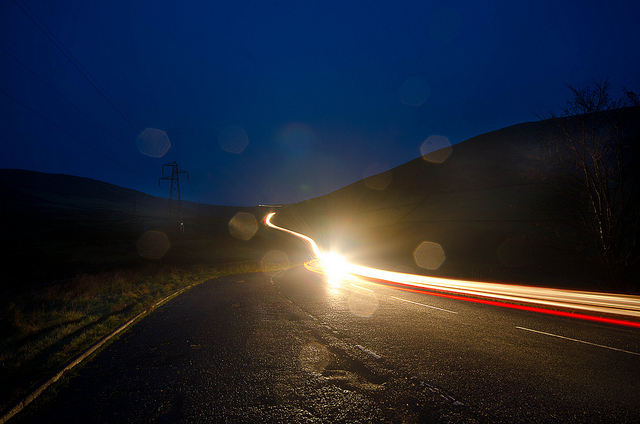
I had a few hours to write, yesterday, and managed to burn through the first draft of a 2,500 word ghost story. It’s set on the drive between Kendal and Shap on the surprisingly desolate A6 – a road I’ve driven hundreds of times when working in Great Strickland. This atmospheric photo, pinched from a very talented photographer called Richard Berry, shows the pylons that stalk the route just visible against the dusk. It’s a phenomenally stark landscape, with sections of the road blasted through steep slate hillside, and gigantic quarried cliffs glaring dark against a backdrop of the Lakes. Perfect for a foggy day and a haunting…

Mon read the story last night and gave me some great ideas for developing it further – obvious tweaks that I don’t always see on a first draft. Looking forward to working through a second draft and thinking about submission.

The novelists of 1993 had it easy… How will today’s writers publish their work?

I’m always interested in articles about the industry. It’s obviously a time of great flux in publishing, and it’s good to assimilate as much information as possible.  Opportunities for conventional publication are becoming fewer, even as new modes are developed. None of it changes my urge to write, nor my hope that people will read and enjoy my work. Stories are stories.

The most amusing thing about this article is the thought that, in another decade, I’ll be 43, which makes me too old to be a ‘young’ novelist. That doesn’t trouble me too much. In ten years’ time, I’d be perfectly happy being a 43-year-old novelist.

Kingfisher

Image  Image

I used to go climbing several nights a week, but I haven’t the time any more. And when we lived in the old house, I cycled to work; now my wife drops me off at the college before she goes to paint. In short, I don’t do any exercise. I’m constantly zipping about at a thousand miles an hour, juggling my different jobs, but that’s hardly a substitute.

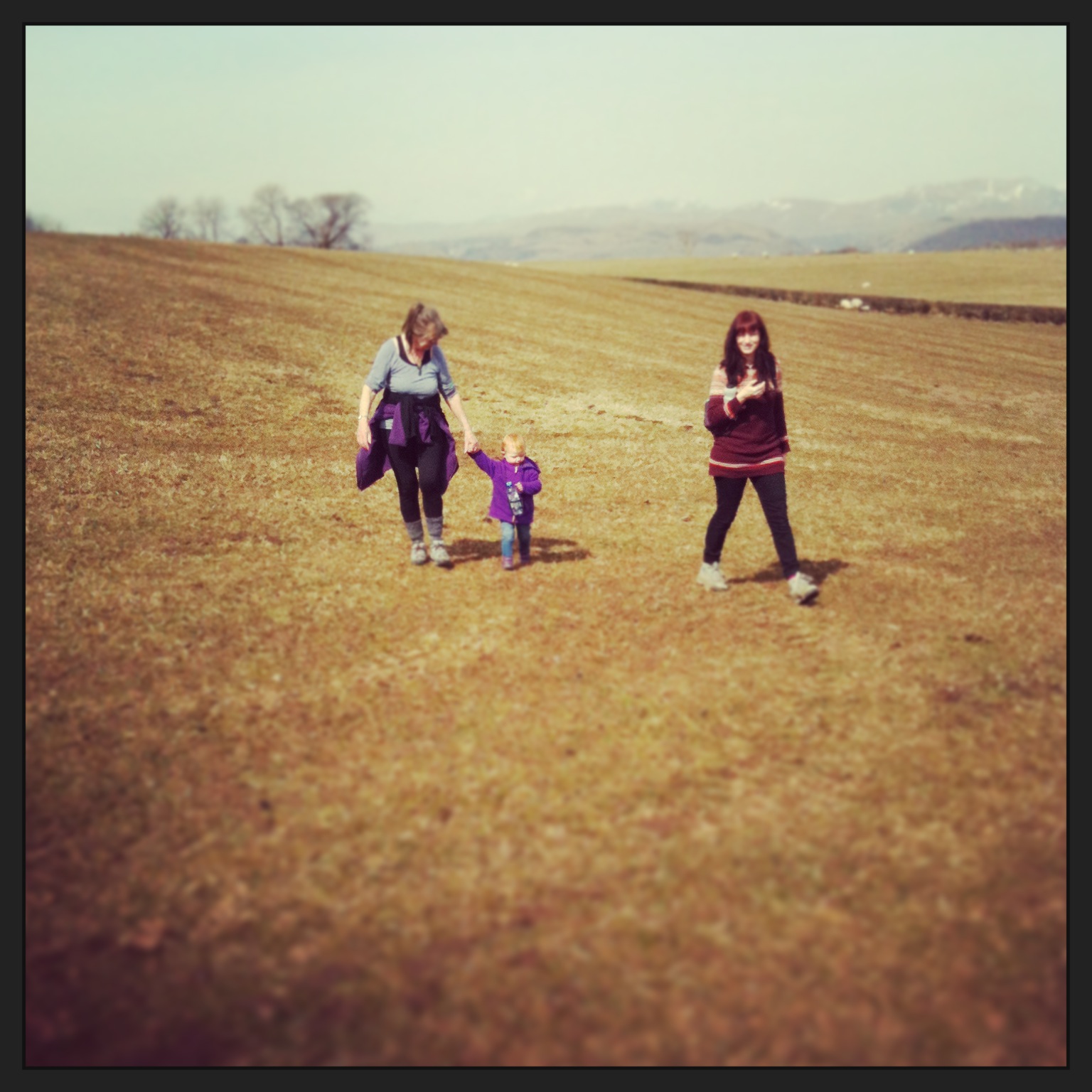
Walking is the only activity I can really make time for. Mon and I both love walking. We’re lucky enough to live in an amazing part of the planet, and our little corner of it has some excellent trails. We can walk from our wee cottage in Burneside to see friends in town – or strike out in any other direction to find open countryside.

I’m not a purist about the countryside. I like edgelands and places of threshold where the natural and the man-made have grown old together. Yesterday, we walked to Staveley in Kentmere and back. It’s a great walk for rusted farm machinery, gnarly stiles, fallen trees and tumbledown barns. There’s a troll bridge with missing slats, and a beech tree strangled by a noose of barbed wire. The tree’s bark has enveloped the wire completely, lapping over it like the slowest wooden wave. In one spot, a fence has been mended with an old iron bedhead. It’s lambing season – we passed new lambs, minutes old. I saw my first ever kingfisher.

Walking gives me more than physical exercise. It’s a source of constant, ever-changing inspiration. Walking around London fuelled my first short stories. My walks on Islay, Gigha and Kintyre fed into Riptide Heart and the fictional island of Bancree. My longstanding work-in-progress, Year of the Whale, is about walking – and the need to walk. Location is crucial to the way I write, and walking in real places fires my imagination. I try to create a geography – physical, atmospheric and emotional – that I believe in. When I get it right, my characters play out the story in that environment like a drop of water on a slope, finding the simplest route to ground.

Walking is good for the soul.

I’m calling a character in my next novel Kingfisher.